
Newsletter Subscribe
Enter your email address below and subscribe to our newsletter

All voices matter
All voices matter
 ByTravis
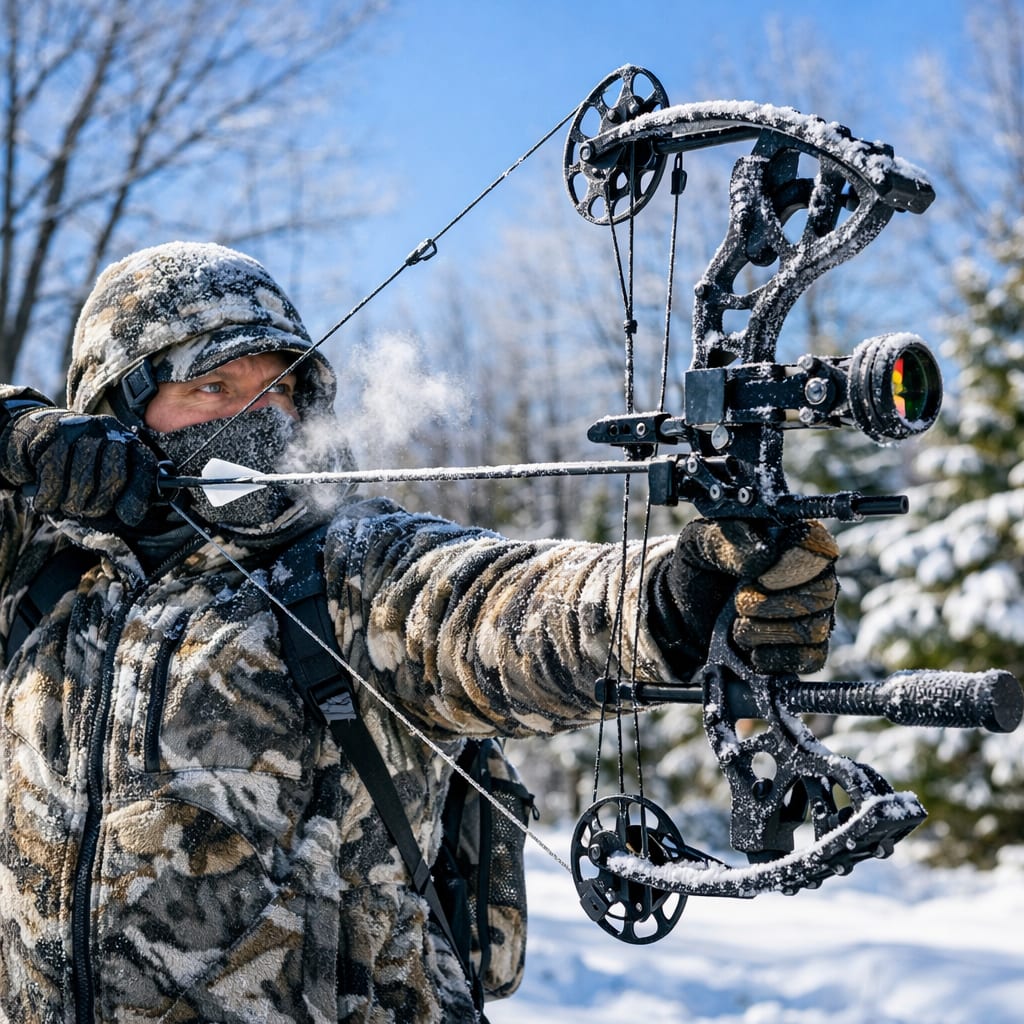
Cold weather changes nearly every part of your shot - reduced string elasticity, stiffer limbs, and altered arrow flight typically cost 2-5 fps and shift point of impact.
Affiliate Disclaimer: We are a participant in the Amazon Services LLC Associates Program, an affiliate advertising program designed to provide a means for sites to earn advertising fees by advertising and linking to Amazon.com. As an Amazon Associate I earn from qualifying purchases. We also participate in other affiliate programs.

Shooting a bow in cold weather changes nearly every aspect of your shot. Cold temperatures reduce bow string elasticity, increase limb stiffness, alter arrow flight dynamics, and affect your physical ability to hold steady aim. Most archers experience a 2-5 fps drop in arrow speed and noticeable point-of-impact shifts when temperatures fall below 40°F. Understanding these changes and adjusting your equipment and technique accordingly ensures consistent accuracy throughout winter hunting and practice sessions.
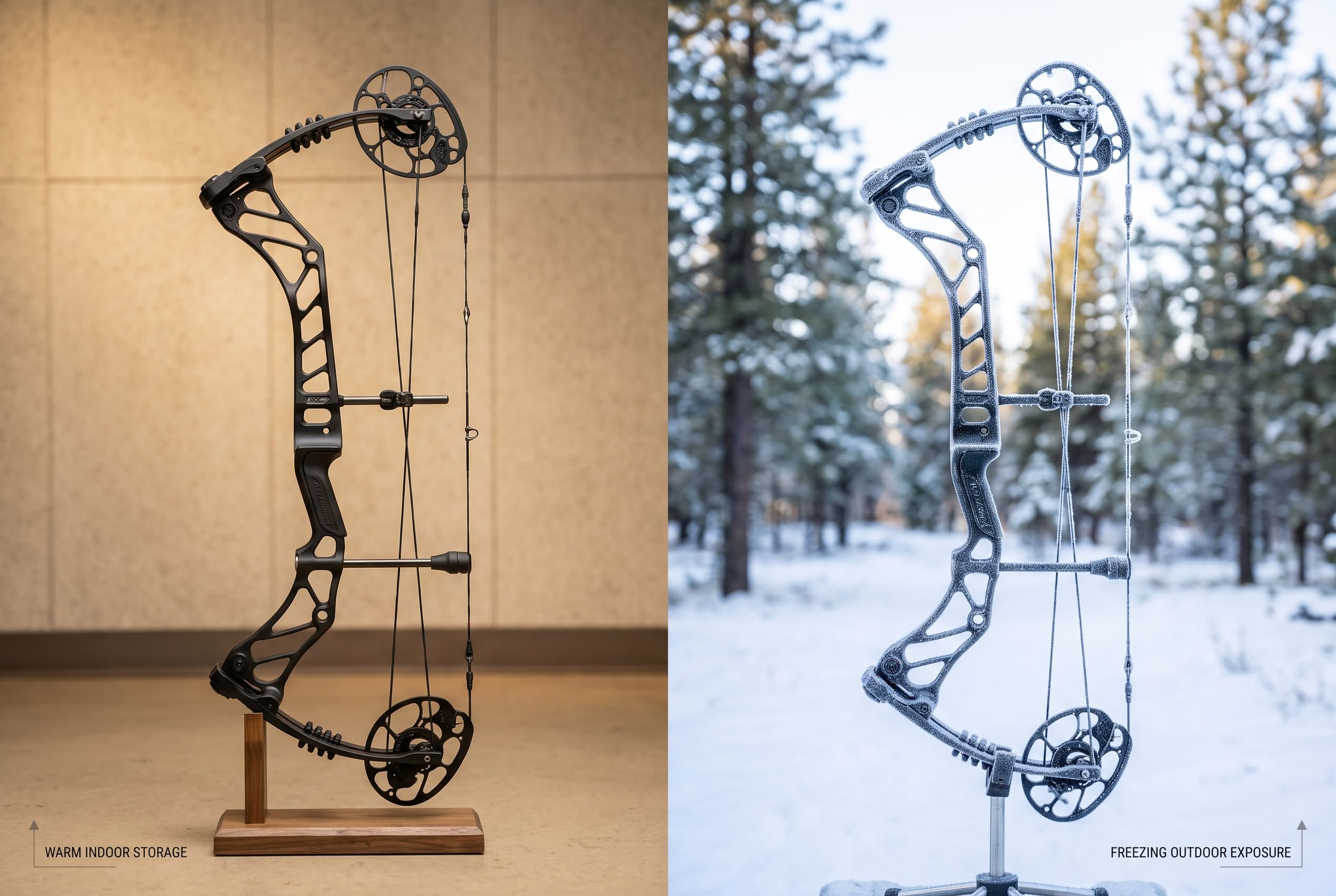
Cold weather reduces bow accuracy through multiple interconnected factors that compound each other. The primary impact comes from decreased string elasticity and limb flexibility, which reduce energy transfer to the arrow and create inconsistent release dynamics. Most archers notice their groups open up by 30-50% when shooting in temperatures below freezing compared to their summer baseline.
Physical factors affecting accuracy in cold:
Equipment factors:
The combination of these factors means you can’t simply “aim better” to compensate. You need systematic adjustments to both equipment and technique. Many experienced winter archers maintain separate sight tapes specifically for cold weather conditions and practice extensively in winter conditions before hunting season.
Your shooting technique fundamentals become even more critical in cold weather, as small form breaks are magnified by the reduced forgiveness of cold equipment.
Most modern bows can safely operate down to 0°F, but performance degradation becomes significant below 20°F and potentially dangerous below zero. The critical threshold depends on your bow’s construction materials, string type, and whether components are rated for cold weather use.
Temperature safety guidelines:
Warning signs your bow is too cold:
Carbon fiber limbs generally handle cold better than wood or fiberglass laminates. Modern synthetic strings outperform traditional materials in freezing conditions. If you’re serious about winter shooting, check your bow’s specifications for its rated temperature range and consider upgrading components that aren’t cold-rated.
Store your bow at moderate temperatures and allow it to acclimate gradually when moving between extreme temperature differences. A bow brought from a 70°F house directly into -10°F weather experiences thermal shock that can crack limbs or damage finish.
Arrows absolutely fly differently in cold weather, with changes in both trajectory and flight characteristics. Cold air is denser than warm air, creating more drag on the arrow in flight. Combined with reduced bow performance, most arrows impact 1-3 inches lower at 20 yards and 4-8 inches lower at 40 yards when temperatures drop from 70°F to 20°F.
Specific flight changes in cold:
The arrow spine change is particularly important. An arrow that spines perfectly at 70°F will act slightly stiffer at 20°F because the shaft material becomes less flexible. This can cause arrows to group differently even if you adjust your sight for the trajectory change. Some competitive winter archers use arrows with slightly weaker spine ratings for cold weather shooting.
Wind drift also increases in cold weather because the denser air has more effect on the arrow’s surface area. A 10 mph crosswind will push your arrow noticeably farther off course in 20°F weather than in 70°F conditions.
For more information on how arrow characteristics affect performance, see our guide on arrow spine considerations.
The differences between cold and warm weather bow shooting extend beyond simple temperature effects. Winter shooting requires a completely different approach to equipment setup, clothing choices, shooting routine, and mental preparation compared to summer archery.
Equipment setup differences:
| Aspect | Warm Weather (60-80°F) | Cold Weather (20-40°F) |
|---|---|---|
| String wax | Standard synthetic wax | Winter-grade cold formula |
| Draw weight | Full rated weight | Consider reducing 2-5 lbs |
| Sight settings | Standard tape | Separate cold weather tape |
| Arrow selection | Standard spine | May need weaker spine |
| Maintenance frequency | Monthly inspection | Weekly inspection |
Shooting routine differences:
In warm weather, you can grab your bow and start shooting immediately. Cold weather demands a structured warm-up routine. Spend 5-10 minutes doing arm circles, shoulder rotations, and light stretching before drawing your bow. Start with reduced draw weight or fewer shots to warm up muscles gradually.
Your shot sequence timing changes in cold weather. The longer you hold at full draw, the more your muscles fatigue in the cold. Many winter archers reduce their hold time by 1-2 seconds and focus on executing the shot more quickly once at anchor. This requires adjusting your mental routine and practicing the faster timing extensively.
Clothing creates new challenges. Bulky jackets can catch the string, requiring changes to your stance or anchor point. Heavy gloves reduce tactile feedback at the anchor point, making consistency harder. Many winter archers develop a slightly modified form that accommodates winter clothing while maintaining accuracy.
Winter archery requires specialized bow string wax formulated to remain pliable in freezing temperatures. Standard string waxes become hard and brittle below 40°F, providing inadequate protection and potentially causing premature string wear. The best winter waxes contain synthetic polymers that maintain flexibility down to -20°F while still providing moisture protection.
Top characteristics of quality winter string wax:
Application tips for cold weather:
Apply string wax more frequently in winter than summer. Cold, dry air and temperature cycling cause wax to break down faster. Inspect and re-wax your string every 2-3 shooting sessions in winter compared to monthly in summer. Apply wax in a warm environment when possible, allowing it to penetrate the string fibers before taking the bow into the cold.
Pay special attention to the serving areas where the string wraps around the nock point and peep sight. These high-stress areas are most vulnerable to cold weather damage. Some archers apply a thin layer of wax before each shooting session in extreme cold as preventive maintenance.
Avoid petroleum-based waxes in winter. They become extremely hard in freezing temperatures and can actually damage string fibers. Synthetic waxes specifically labeled for cold weather or winter use are worth the investment if you shoot regularly below 40°F.
Regular string maintenance is part of broader archery maintenance practices that become more critical in challenging conditions.
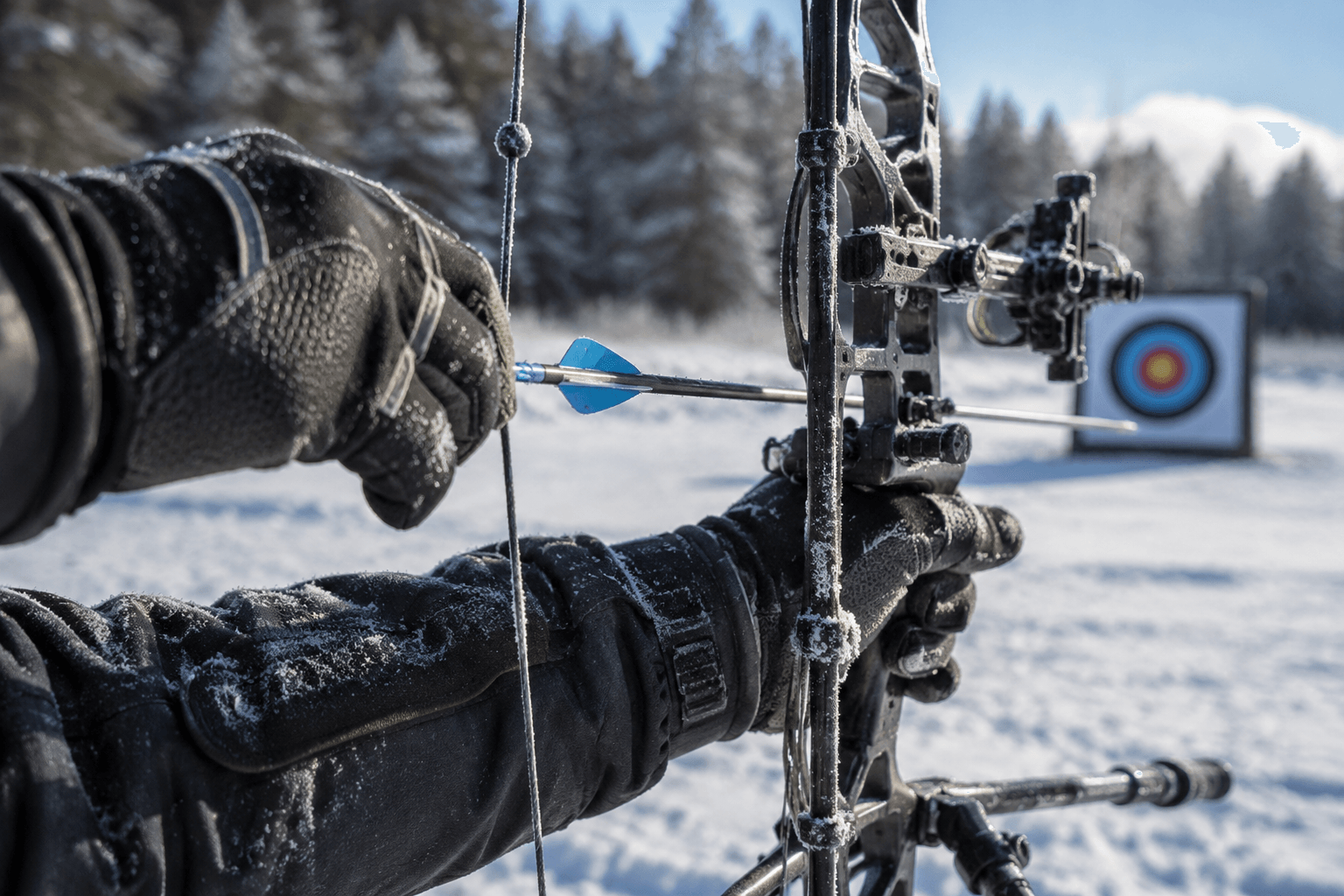
Your bow feels stiffer in cold weather because the materials in the limbs, cables, and string lose elasticity as temperatures drop. This is a fundamental property of most materials used in bow construction. Fiberglass, carbon fiber, and synthetic string materials all become more rigid when cold, requiring more force to achieve the same deflection.
Material changes in cold:
The perceived increase in draw weight is real, not imaginary. A bow rated at 60 pounds at 70°F may effectively pull 63-65 pounds at 20°F. This extra resistance comes from reduced material elasticity rather than actual mechanical changes. The bow hasn’t changed its specifications, but the materials are responding differently to the draw cycle.
This stiffness affects more than just the draw. The limbs store and release energy less efficiently when cold, contributing to the velocity loss discussed earlier. The shot feels harsher because the limbs don’t absorb vibration as effectively, and follow-through feels different because the bow doesn’t settle as smoothly.
Solutions for cold-stiffened bows:
Understanding proper draw weight selection becomes even more important when cold weather effectively increases your bow’s resistance.
Adjusting your bow sight for cold temperatures requires systematic testing and documentation rather than guessing. Most archers experience a point-of-impact drop in cold weather, typically requiring sight pins to move up (toward the archer) to compensate. The exact adjustment varies based on your bow setup, arrow selection, and the temperature difference.
Step-by-step cold weather sight adjustment:
Most archers find their arrows impact 1-2 inches low at 20 yards, 3-4 inches low at 30 yards, and 5-8 inches low at 40 yards when shooting in 20-30°F weather compared to 70°F baseline. The drop increases with distance because the cumulative effects of reduced arrow speed and increased air density compound over longer flight times.
Common adjustment mistakes:
Some serious winter archers maintain completely separate sight tapes for cold weather rather than adjusting individual pins. This approach works well if you shoot frequently in consistent cold conditions. Modern multi-pin sights make it easy to swap between warm and cold weather tapes.
For more advanced aiming techniques that work in various conditions, explore our guide on how to aim with a multi-pin sight.
Winter archery mistakes often stem from treating cold weather shooting the same as warm weather practice. The most common errors involve inadequate preparation, improper equipment maintenance, and failure to adjust technique for cold conditions. These mistakes not only reduce accuracy but can also lead to equipment damage or injury.
Critical mistakes to avoid:
Over-drawing cold equipment: Forcing a cold bow to full draw without warming up risks limb damage or string breakage. Always perform several partial draws before reaching full draw weight, allowing materials to flex gradually.
Neglecting string and cable inspection: Cold weather accelerates string wear, and brittle strings can fail catastrophically. Inspect serving, wax coating, and individual strands before every cold weather shooting session. Look for fraying, separation, or dry spots that indicate inadequate protection.
Inadequate personal warm-up: Jumping straight into shooting with cold muscles invites injury and poor form. Spend at least 10 minutes warming up with dynamic stretching, focusing on shoulders, back, and arms. Cold muscles are more prone to strains and tears.
Wearing improper gloves: Standard winter gloves destroy shooting consistency. Invest in archery-specific cold weather gloves with reinforced fingertips and proper trigger finger design. Some archers use hand warmers between shots and remove gloves only for the actual draw and release.
Ignoring equipment acclimation: Bringing a warm bow from indoors into freezing weather causes thermal shock. Allow your bow to acclimate gradually, ideally over 15-30 minutes, before shooting. The same applies when bringing a cold bow indoors, condensation can damage components if temperature change is too rapid.
Shooting too long in extreme cold: Extended shooting sessions in severe cold lead to deteriorating form and potential frostbite. Limit practice sessions to 30-45 minutes in temperatures below 20°F, taking frequent warm-up breaks.
Failing to adjust expectations: Your groups will open up in cold weather. Expecting summer-level accuracy in winter conditions leads to frustration and over-correction. Accept that cold weather shooting has inherent limitations and focus on consistent fundamentals rather than perfect groups.
Understanding these mistakes helps you develop better shooting fundamentals that work across all conditions.
Compound bows generally handle cold weather better than recurve bows due to their mechanical advantage, let-off, and modern materials. The cam system in compound bows reduces the stress on limbs during the hold, and synthetic cables and strings maintain performance better than traditional materials. However, compound bows have more components that can be affected by cold, requiring more maintenance attention.
Compound bow advantages in cold:
Recurve bow challenges in cold:
That said, traditional recurve archers who shoot regularly in cold conditions often develop superior cold weather skills because they can’t rely on mechanical aids. The simplicity of recurve bows also means fewer components to fail or require adjustment in extreme conditions.
Crossbow consideration: Crossbows handle cold weather best of all bow types because the mechanical cocking and trigger system eliminates most human performance variables. The shooter doesn’t need to hold draw weight or execute a manual release, removing the two biggest cold weather challenges.
For hunters choosing equipment, compound bows offer the best balance of cold weather performance and versatility. For target archers and traditionalists, recurve bows remain viable with proper technique and equipment preparation. Learn more about different shooting styles in our traditional bow shooting resources.
Cold weather archery is safe for beginners if approached progressively with proper equipment, supervision, and realistic expectations. However, beginners should not start their archery journey in extreme cold conditions. The combination of learning new motor skills, managing unfamiliar equipment, and dealing with cold-induced physical challenges creates unnecessary difficulty and potential safety issues.
Beginner-friendly cold weather progression:
Start archery training in comfortable temperatures (60-75°F) to establish proper form and safety habits. Once you can consistently group arrows and demonstrate safe range behavior, gradually introduce cooler conditions. Begin cold weather practice in moderate cold (40-50°F) before attempting freezing temperatures.
Safety considerations for beginners in cold:
When beginners should avoid cold weather shooting:
Beginner-appropriate cold weather setup:
If you’re new to archery and want to shoot in cold weather, reduce draw weight by 5-10 pounds below your normal setting. This compensates for both the cold-stiffened bow and your reduced muscle performance in cold conditions. Use a mechanical release aid rather than finger shooting to maintain consistency with gloves.
Consider starting your archery journey with proper instruction through programs like bowhunter education that cover safety fundamentals before tackling challenging conditions.
Preventing bow string breakage in freezing temperatures requires proactive maintenance, proper waxing, and regular inspection. String failure in cold weather typically results from brittleness caused by inadequate protection, pre-existing damage that worsens in cold, or thermal shock from rapid temperature changes.
Prevention strategies:
Use winter-grade string wax: Apply cold-weather formulated wax every 2-3 shooting sessions. The wax should remain pliable below freezing and provide moisture protection. Focus application on high-stress areas including the nock point, peep sight serving, and cam contact points.
Inspect before every session: Cold weather makes existing damage worse. Before shooting in freezing conditions, inspect the entire string length for:
Control temperature transitions: Never take a warm bow directly into extreme cold or vice versa. Allow 15-30 minutes for gradual acclimation. Rapid temperature changes cause materials to contract or expand at different rates, creating internal stress that can lead to failure.
Replace strings proactively: Strings have a finite lifespan measured in shots and time. In cold weather conditions, replace strings after 10,000-12,000 shots or annually, whichever comes first. Don’t push string life to the maximum when shooting in harsh conditions.
Avoid dry-firing: This should be obvious, but it’s especially critical in cold weather. A dry-fire (releasing without an arrow) puts extreme stress on the string and can cause immediate failure when materials are already brittle from cold.
Store properly: Between shooting sessions, store your bow in a climate-controlled environment at moderate temperatures (50-70°F). Avoid storage in unheated garages, sheds, or vehicles where temperature extremes and humidity fluctuations accelerate string degradation.
Warning signs of imminent string failure:
If you notice any of these signs, stop shooting immediately and replace the string. A string failure at full draw can cause serious injury and bow damage. The cost of a new string is trivial compared to the risk.
Arrow spine does change in cold weather, becoming effectively stiffer as temperatures drop. This occurs because the shaft material, whether carbon fiber or aluminum, loses flexibility in cold conditions. An arrow that spines perfectly for your bow at 70°F will act approximately 5-10 spine points stiffer at 20°F, potentially affecting arrow flight and grouping.
How spine stiffness affects cold weather shooting:
Arrow spine determines how the shaft flexes around the bow during the shot (archer’s paradox). When an arrow becomes stiffer in cold weather, it flexes less during release. This can cause the arrow to fly as if it’s over-spined, potentially resulting in impacts to the right (for right-handed shooters) or erratic flight if the mismatch is severe.
Practical implications:
For most recreational archers and hunters, the spine change from cold weather is noticeable but not dramatic enough to require different arrows. The bigger factors affecting accuracy are reduced bow performance and trajectory changes. However, competitive archers shooting in winter tournaments may benefit from arrows with slightly weaker spine ratings (higher numbers) to compensate for cold-induced stiffening.
Carbon vs. aluminum in cold:
Carbon arrows experience less spine change in cold weather compared to aluminum arrows. Carbon fiber’s material properties remain more stable across temperature ranges. Aluminum arrows can become noticeably stiffer in extreme cold, and aluminum’s higher thermal conductivity means they reach ambient temperature faster than carbon.
Testing your arrows in cold:
If you shoot regularly in cold weather, test your arrow flight at various temperatures. Shoot paper or through a chronograph in both warm and cold conditions. If you notice significant left-right grouping changes (not just vertical drop) between temperatures, your arrows may be experiencing spine mismatch due to cold.
When to consider cold-weather arrow selection:
For most applications, proper sight adjustment and technique adaptation matter more than changing arrow spine for cold weather. Focus on fundamentals and equipment maintenance before investing in temperature-specific arrows.
Winter bow hunting requires specialized gear beyond your standard archery equipment. The challenge is maintaining shooting accuracy while staying warm, dry, and safe in harsh conditions. Your gear must allow full range of motion for drawing and shooting while providing adequate protection from cold, wind, and precipitation.
Essential cold weather archery gear:
Archery-specific gloves: Standard winter gloves destroy shooting consistency. Invest in gloves designed for archery with reinforced fingertips, trigger finger openings, or flip-back finger covers. Some hunters use thin liner gloves for shooting and heavy mittens for warmth between shots.
Layered clothing system: Avoid bulky jackets that interfere with string clearance. Use a base layer for moisture management, insulation layer for warmth, and outer shell for wind and water protection. The outer layer should be quiet (not crinkly) and allow full shoulder rotation for drawing.
Arm guard and chest protector: More critical in winter than summer because bulky clothing can catch the string. A good arm guard prevents clothing interference, and a chest protector keeps jackets flat against your body.
Hand and body warmers: Chemical hand warmers maintain dexterity between shots. Place them in pockets or use hand warmer pouches built into hunting clothing. Body warmers in core areas help maintain overall body temperature.
Insulated boots: Your feet will get cold before anything else when sitting in a stand or blind. Insulated, waterproof boots rated for temperatures 10-20 degrees colder than expected conditions are essential.
Face mask and head covering: Significant heat loss occurs through the head and face. A balaclava or face mask that doesn’t interfere with bow string or sight picture keeps you warm without compromising shooting.
Equipment protection:
Cold weather bow setup modifications:
Consider reducing draw weight by 2-5 pounds for winter hunting. The combination of cold-stiffened bow and reduced muscle performance from cold and bulky clothing makes your normal draw weight feel heavier. Accuracy matters more than the small velocity loss from reduced draw weight.
Install a larger peep sight for winter hunting. Your eye’s pupil dilates in low light conditions common in winter, and a larger peep (1/4 inch vs. 3/16 inch) gathers more light and is easier to align quickly.
For hunters preparing for challenging shooting positions in winter conditions, our guide on shooting from a tree stand covers angle adjustments that become even more critical when wearing bulky clothing.
Extreme cold can cause permanent damage to your bow if temperatures fall below the equipment’s rated specifications or if the bow experiences thermal shock from rapid temperature changes. Modern bows are remarkably durable, but they have limits. Permanent damage typically occurs below -10°F or when a warm bow is suddenly exposed to extreme cold.
Types of permanent cold weather damage:
Limb delamination: The most serious cold weather damage occurs when adhesives bonding limb layers fail. This happens when temperature extremes cause different materials to contract at different rates, creating shear stress between layers. Delaminated limbs may show visible separation, bubbling, or unusual flex patterns. Once delaminated, limbs cannot be repaired and must be replaced.
String and cable failure: Extreme cold makes synthetic fibers brittle. A string that survives normal use in moderate temperatures can snap suddenly in extreme cold, especially if it has pre-existing wear. Cable failure is equally serious and can cause catastrophic bow malfunction.
Cam bearing damage: Lubricants in cam bearings thicken or solidify in extreme cold, increasing friction. Forcing cold, stiff cams to rotate can damage bearings, creating permanent rough spots that affect cam timing and performance even after warming.
Finish cracking: Paint and protective finishes become brittle in extreme cold. Thermal shock (rapid temperature change) can cause finish to crack or flake, exposing underlying materials to moisture and UV damage. While cosmetic, finish damage can lead to structural problems over time.
Riser stress cracks: Aluminum and magnesium risers can develop micro-cracks from thermal stress in extreme cold, especially if the bow is shot hard in sub-zero temperatures. These cracks may not be visible initially but can propagate over time, eventually causing riser failure.
Prevention strategies:
Signs of cold weather damage:
If you suspect cold weather damage, have your bow inspected by a professional technician before continuing to shoot. The cost of inspection is minimal compared to the risk of catastrophic failure during a shot.
Manufacturer warranties and cold weather:
Most bow manufacturers specify operating temperature ranges in their documentation. Damage caused by shooting outside these ranges may void warranty coverage. If you plan to shoot in extreme cold regularly, choose equipment specifically rated for cold weather use and maintain documentation of proper care.
Should I reduce my draw weight for cold weather shooting?
Yes, reducing draw weight by 2-5 pounds for cold weather shooting is recommended. Cold temperatures stiffen bow limbs and strings, effectively increasing the force needed to reach full draw. Combined with reduced muscle performance in cold conditions, your normal draw weight will feel heavier and be harder to control accurately.
How often should I wax my bow string in winter?
Wax your bow string every 2-3 shooting sessions in winter, compared to monthly in warm weather. Cold, dry air and temperature cycling cause wax to break down faster. Use winter-grade wax formulated to remain pliable in freezing temperatures and inspect the string before each cold weather shooting session.
Can I leave my bow in a cold car overnight?
Avoid leaving your bow in a cold car overnight if possible. Extreme temperature exposure and rapid temperature cycling can damage limbs, strings, and finish. If you must leave your bow in a vehicle, use an insulated case and allow gradual acclimation before shooting. Never bring a frozen bow directly indoors to a warm room.
Why do my arrows hit lower in cold weather?
Arrows hit lower in cold weather due to reduced arrow speed from decreased bow performance and increased air density creating more drag. Most archers experience 1-2 inches of drop at 20 yards and 5-8 inches at 40 yards when shooting in 20-30°F weather compared to 70°F conditions. Adjust your sight pins upward to compensate.
What’s the best type of release aid for cold weather?
Wrist strap release aids with index finger triggers work best in cold weather because they can be operated while wearing thin gloves. Thumb-button releases are also good options. Avoid handheld releases that require bare fingers or precise grip, as cold reduces dexterity. Keep a backup release in an inside pocket as a spare.
Do I need different arrows for winter shooting?
Most archers don’t need different arrows for winter shooting. The spine stiffness change from cold weather is noticeable but not dramatic enough to require different arrows for recreational shooting or hunting. Competitive archers shooting in extreme cold may benefit from arrows with slightly weaker spine ratings to compensate for cold-induced stiffening.
How long should I warm up before shooting in cold weather?
Warm up for at least 10-15 minutes before shooting in cold weather. Start with dynamic stretching focusing on shoulders, back, and arms. Perform several partial draws before reaching full draw weight. Begin shooting at close distances with reduced intensity before moving to longer ranges or full practice sessions.
Can cold weather affect my bow sight?
Yes, cold weather can affect bow sights through metal contraction causing slight pin movement and changes in arrow trajectory requiring sight adjustment. Most archers need to move their sight pins up (toward themselves) to compensate for arrows hitting lower in cold conditions. Some competitive archers maintain separate sight tapes for cold weather.
Is it safe to shoot a bow in freezing rain or snow?
Shooting in light snow is generally safe, but avoid freezing rain or heavy precipitation. Moisture can damage bow components, reduce string performance, and create safety hazards. Ice formation on limbs, strings, or sights can cause equipment failure. If you must shoot in precipitation, use equipment covers and inspect thoroughly afterward.
What temperature should I store my bow at?
Store your bow at moderate temperatures between 50-70°F with low humidity. Avoid storage in unheated garages, sheds, or vehicles where temperature extremes and humidity fluctuations can damage limbs, strings, and finish. Climate-controlled indoor storage extends equipment life and maintains consistent performance.
Do mechanical broadheads work in cold weather?
Mechanical broadheads can work in cold weather but require special attention. Cold can cause lubricants to thicken and O-rings to stiffen, potentially preventing proper deployment. Test mechanical broadheads in cold conditions before hunting, consider fixed-blade broadheads for extreme cold, and keep arrows warm until the shot. Learn more about broadhead selection for various conditions.
How do I prevent my peep sight from freezing?
Prevent peep sight freezing by applying a thin layer of chapstick or petroleum jelly to the inside of the peep before shooting in wet, cold conditions. This prevents moisture from accumulating and freezing. Some archers use larger peep sights in winter to reduce the impact of any ice formation and improve low-light visibility.
Shooting a bow in cold weather presents unique challenges that affect every aspect of archery performance, from equipment function to personal shooting ability. Understanding what changes in cold conditions allows you to adapt your setup, technique, and expectations for consistent accuracy throughout winter months.
The key changes to remember: cold weather reduces bow performance by 2-5 fps, increases arrow drop by several inches at hunting distances, stiffens equipment materials requiring more maintenance, and reduces your physical ability to execute shots with summer-level precision. These factors compound each other, making cold weather shooting significantly more challenging than warm weather archery.
Action steps for successful cold weather shooting:
Start by establishing your baseline performance in comfortable temperatures, then gradually introduce colder conditions while documenting the changes you experience. Invest in proper cold weather gear including archery-specific gloves, layered clothing that doesn’t interfere with shooting, and winter-grade string wax. Adjust your sight settings for cold weather and maintain separate documentation for winter shooting.
Increase your maintenance schedule, inspecting strings, cables, and limbs before every cold weather session. Allow your equipment to acclimate gradually when moving between temperature extremes, and never push your bow beyond its rated temperature specifications. Reduce draw weight if needed and extend your warm-up routine to prevent injury and maintain form.
Most importantly, adjust your expectations. Your groups will open up in cold weather, and that’s normal. Focus on consistent fundamentals and safe shooting practices rather than achieving perfect accuracy. The skills you develop shooting in challenging winter conditions will make you a better archer year-round.
Whether you’re a hunter pursuing game during winter seasons or a dedicated target archer who shoots through all conditions, mastering cold weather archery expands your capabilities and deepens your understanding of the sport. Start with moderate cold conditions, build your skills progressively, and always prioritize safety over performance. With proper preparation and realistic expectations, cold weather shooting can be both effective and enjoyable.
For those new to archery looking to build a strong foundation before tackling challenging conditions, explore our comprehensive bowhunting for beginners guide to establish proper fundamentals first.


