Newsletter Subscribe
Enter your email address below and subscribe to our newsletter
All voices matter
All voices matter
 ByTravis
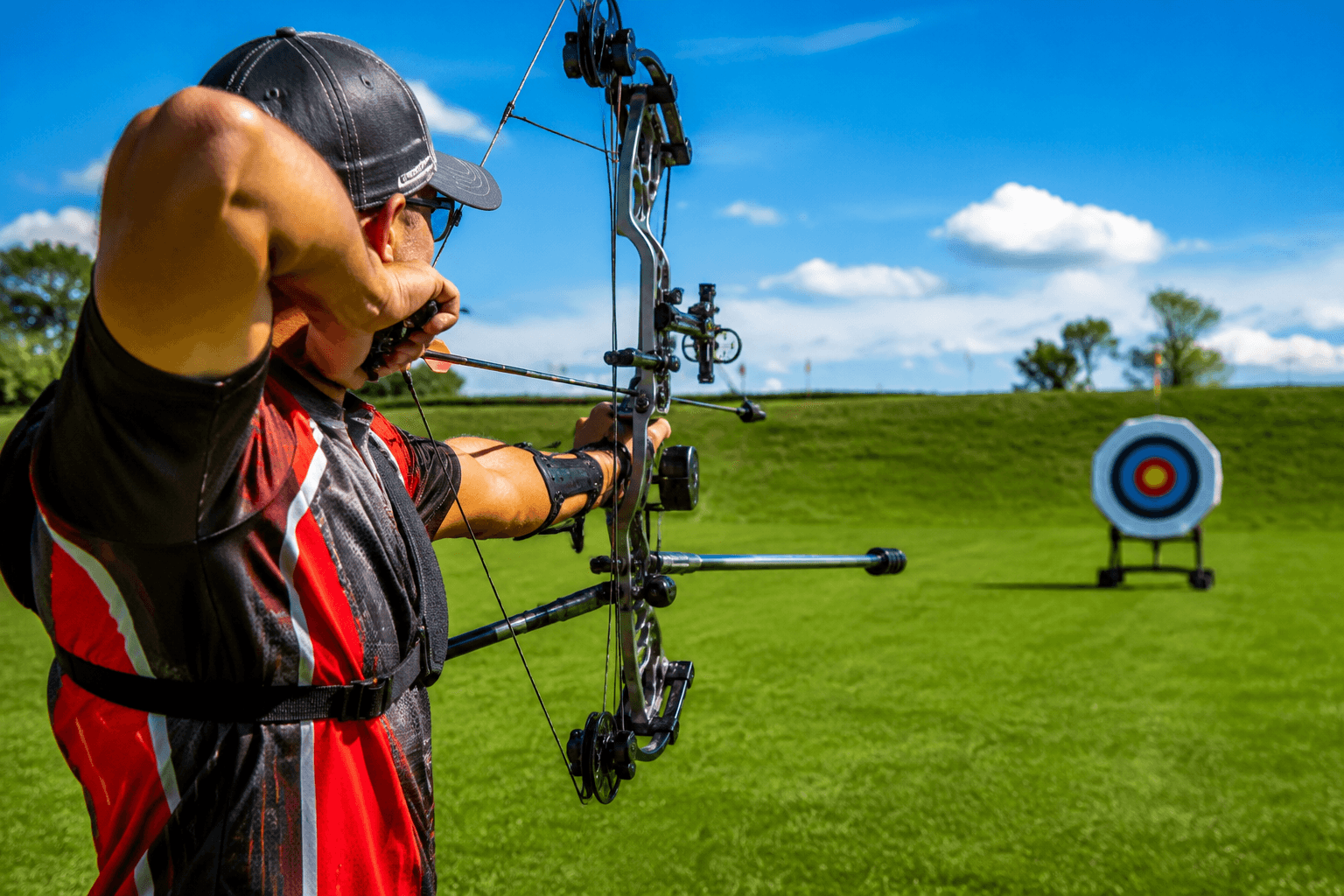
Extending your effective range safely means mastering fundamentals up close first, upgrading gear strategically, and practicing distance-specific drills before pushing your maximum range.
Affiliate Disclaimer: We are a participant in the Amazon Services LLC Associates Program, an affiliate advertising program designed to provide a means for sites to earn advertising fees by advertising and linking to Amazon.com. As an Amazon Associate I earn from qualifying purchases. We also participate in other affiliate programs.

Quick Answer: Extending your effective range safely in archery requires mastering fundamentals at shorter distances first, upgrading equipment strategically (better sights, stabilizers, and rangefinders), practicing distance-specific drills regularly, and understanding the critical difference between maximum range and effective range. Most archers can safely extend their effective range by 10-20 yards over 3-6 months with consistent practice and proper technique, but attempting shots beyond your skill level creates safety hazards and reinforces bad habits.
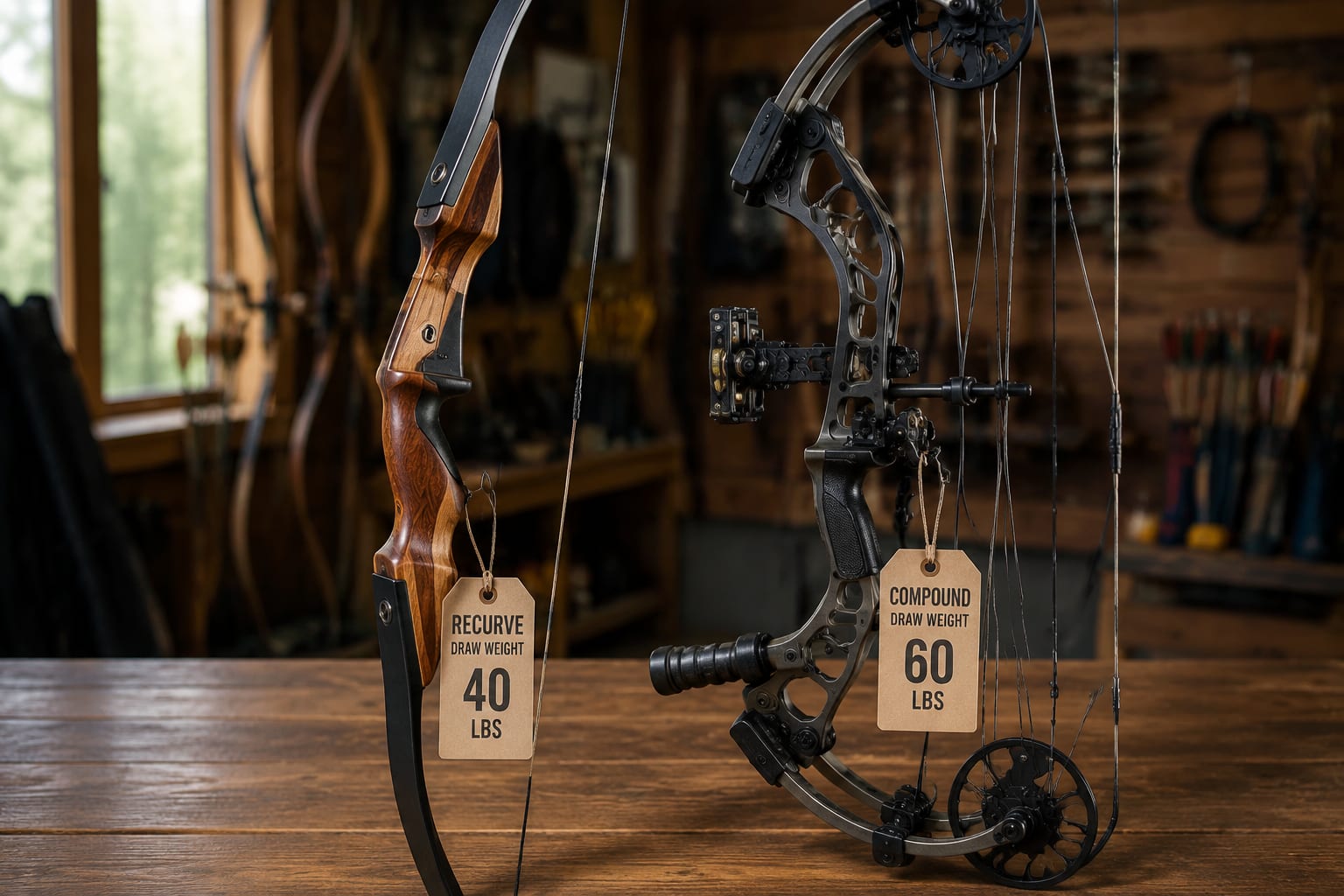
Effective range is the maximum distance at which you can consistently place arrows in a vital-zone-sized target (typically 8-10 inches for hunting applications) under field conditions. This differs fundamentally from maximum range, which is simply how far your arrow can travel before hitting the ground.
For most compound bow hunters, effective range falls between 30-50 yards, though competitive target archers may shoot accurately at 70-90 yards. The key qualifier is consistency,if you can hit a target once at 60 yards but miss seven out of ten shots, your effective range is not 60 yards.
Effective range depends on several factors:
Understanding your true effective range prevents unethical shots in hunting situations and keeps practice sessions productive. Many archers overestimate their effective range by 10-20 yards, leading to wounded game or missed opportunities.
Determining your current effective range requires honest assessment through structured testing. Shoot a full quiver (5-6 arrows) at various distances and measure group size, not your best single shot.
Testing protocol:
Record these results in a practice log. Your effective range will fluctuate based on practice frequency, equipment changes, and physical condition. Retest every 4-6 weeks to track progress accurately.
Common mistake: Testing only on perfect-condition days. Your effective range should reflect typical shooting conditions, not ideal scenarios. Test in light wind, varying light conditions, and after physical exertion to get realistic data.
Choose 20 yards if you’re new to archery (under six months of practice), 30 yards if you’re an intermediate shooter with consistent form, or 40 yards if you’ve been shooting regularly for over a year. Starting too far back creates frustration and reinforces poor habits.
Maximum range is a physics calculation, how far your arrow flies before gravity brings it down. Effective range is a skill measurement, how far you can shoot accurately and ethically. The gap between these two numbers is often 100+ yards.
A modern compound bow shooting a 400-grain arrow at 280 fps can send an arrow 300+ yards at a 45-degree angle. But that same archer might only shoot accurately at 40 yards. The difference matters critically for safety and ethics.
Maximum range considerations:
Effective range considerations:
When building a safe backyard archery range, plan for maximum range even though you’ll practice within effective range. A 40-yard practice lane needs backstops rated for 80+ yard arrow flight.
Decision rule: If you’re practicing for hunting, your field effective range should be 10-15 yards shorter than your practice effective range. This buffer accounts for adrenaline, awkward shooting positions, and animal movement.
Progressive distance drills build the muscle memory and consistency needed to extend range without developing bad habits. These drills emphasize form maintenance as distance increases.
Ladder drill (primary range-building exercise):
This drill teaches your body to maintain form under increasing difficulty. When form breaks down, you’ve found your current working limit.
Blind distance drill:
Have a partner set targets at unmarked distances between 25-45 yards. You must estimate range, adjust your sight, and shoot. This builds range estimation skills and sight adjustment speed. Use a rangefinder to verify after each shot.
Fatigue test drill:
Shoot your normal practice routine, then immediately attempt longer-distance shots while tired. This simulates hunting conditions where you might take a shot after hiking or climbing into a stand. If accuracy drops significantly, your effective range under field conditions is shorter than your fresh effective range.
Form-check drill at distance:
Video yourself shooting at your maximum effective range. Compare your form to video shot at 20 yards. Look for:
Any form breakdown indicates you’re shooting beyond your current capability. Address the specific form issue before pushing distance further. Our guide on anchor point consistency helps maintain form under pressure.
Common mistake: Practicing only at your maximum distance. Spend 70% of practice time at comfortable distances (20-30 yards) to reinforce good habits, and only 30% pushing your limits.
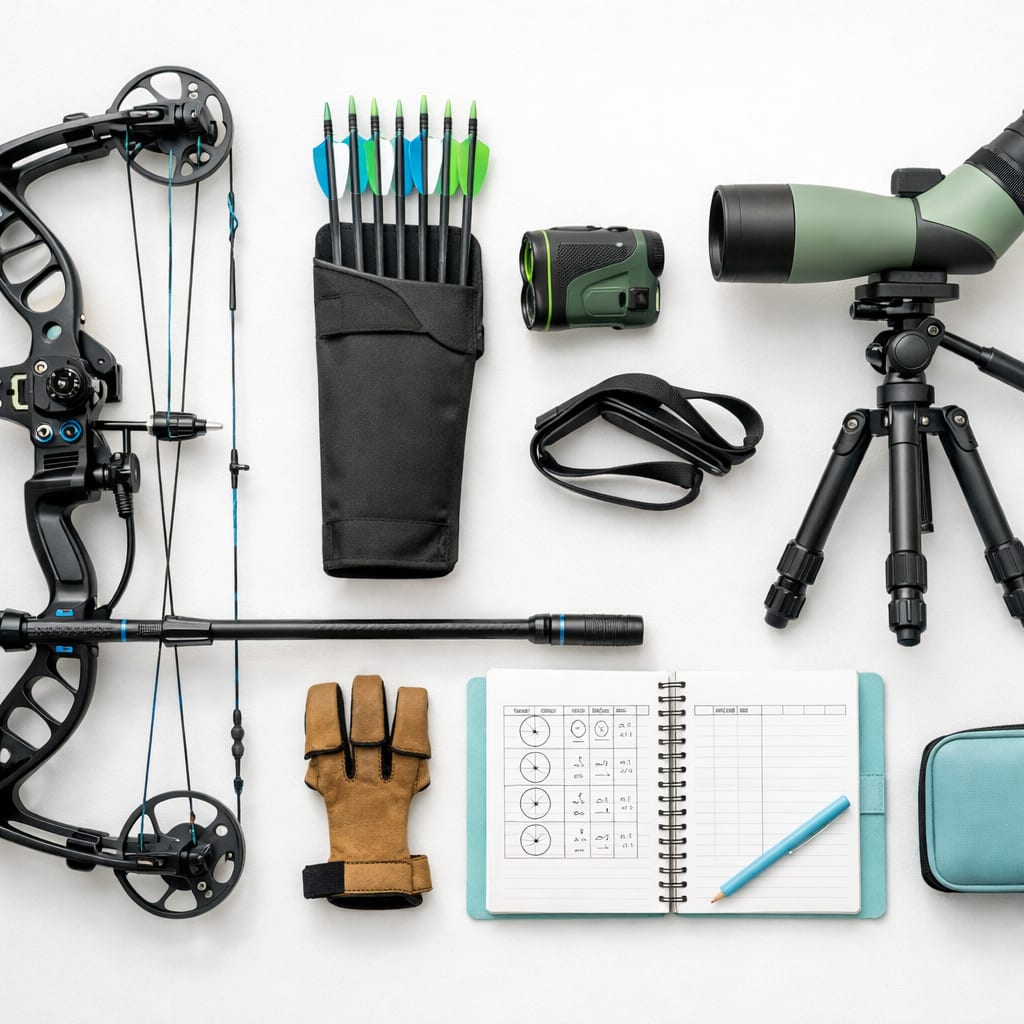
Equipment upgrades support range extension but cannot replace fundamental skills. Prioritize these upgrades in order as you extend beyond 40 yards.
Essential equipment for long-range shooting:
Multi-pin or adjustable sight: Single-pin sights work for hunting but multi-pin sights (5-7 pins) let you practice multiple distances without adjustment. Adjustable sights with yardage tapes provide precision at any distance. Budget $150-400 for quality sights.
Stabilizer system: A front stabilizer (8-12 inches) and optional side bars reduce bow movement during the shot. Longer stabilizers (10-12 inches) provide more stability at distance. Expect to spend $100-300 for a complete system.
Quality rangefinder: Laser rangefinders accurate to ±1 yard are essential for practice and hunting beyond 30 yards. Models with angle compensation calculate true horizontal distance on slopes. Budget $200-500 for reliable units.
Upgraded arrows: Carbon arrows with tighter weight tolerance (±1 grain) fly more consistently. Spine consistency matters more at distance where small variations amplify. Expect $120-180 per dozen for premium arrows.
Release aid: Wrist-strap or handheld releases provide more consistent trigger control than finger releases at long range. Back-tension releases eliminate trigger punch entirely. Budget $80-250.
Spotting scope: A 20-60x spotting scope lets you see arrow impact at 50+ yards without walking downrange repeatedly. Particularly valuable for group analysis. Budget $150-400.
Optional but helpful:
Decision rule: If you’re shooting under 40 yards, invest in fundamentals and practice time before equipment. Beyond 40 yards, a quality sight and stabilizer become necessary for consistent accuracy.
Equipment won’t fix form problems. Many archers shoot better at 50 yards with basic equipment and solid form than with premium gear and poor technique. Master the fundamentals through structured practice drills before upgrading.
Archers attempting to extend range often make predictable errors that slow progress or create safety hazards. Recognizing these patterns helps you avoid them.
Skipping intermediate distances: Jumping from comfortable 30-yard shots to 50-yard attempts skips the progressive adaptation your muscles and neural pathways need. Your body can’t build the micro-adjustments required for accuracy. Always progress in 5-10 yard increments.
Changing multiple variables simultaneously: Upgrading your sight, arrows, and release aid in the same week makes it impossible to know what’s helping or hurting. Change one variable at a time and test for 2-3 practice sessions before adding another change.
Neglecting close-range practice: Spending entire sessions at maximum distance degrades fundamentals. Form breaks down subtly at long range, and those bad habits migrate back to shorter distances. Maintain 70% of practice volume at comfortable distances.
Inadequate backstop planning: Arrows that miss at 50 yards travel much farther than misses at 20 yards. Ensure your practice area has backstops rated for your maximum range, not your target distance. Review backyard archery safety requirements.
Ignoring wind effects: Wind deflection increases exponentially with distance. A 10 mph crosswind that moves your arrow 2 inches at 30 yards might move it 8 inches at 60 yards. Practice in various wind conditions to understand these effects.
Forcing shots when fatigued: Muscle fatigue destroys form faster than any other factor. When your groups open up mid-session, stop shooting long distances. Finish with close-range shots to end on good form.
Confusing lucky shots with skill: One perfect shot at 60 yards doesn’t mean you can shoot 60 yards. Effective range requires consistency, 80% of arrows in the vital zone, not 20%.
Equipment over-reliance: Believing new gear will instantly add 20 yards to your range leads to disappointment. Equipment provides incremental improvements (typically 5-10% accuracy gain), not transformative changes.
Structured practice prevents the form degradation that often accompanies range extension. These protocols keep your technique clean as distances increase.
The 80% rule: Only practice at distances where you maintain 80% accuracy. If your groups open beyond acceptable size, move closer immediately. Practicing at distances where you miss frequently reinforces poor neural pathways.
Form-first shooting: Before each practice session, shoot 20-30 arrows at 15-20 yards focusing exclusively on perfect form. This establishes the neural baseline you’ll maintain at longer distances. Use the surprise release technique to prevent target panic.
Video analysis routine: Record yourself monthly shooting at your maximum effective range. Compare to baseline video shot at 20 yards. Look for:
Blind shooting drill: Have a partner call random distances between your comfortable range and maximum range. This prevents you from developing distance-specific habits that don’t transfer to field conditions.
Pressure inoculation: Simulate hunting pressure by shooting after physical exertion (jog in place for 2 minutes), with distractions (partner talking), or with consequences (miss = 10 pushups). This builds the mental resilience needed for field shots.
Rest intervals: Take 2-3 minute breaks between groups at maximum distance. Fatigue accumulates faster at long range because you’re working harder to maintain form. Shooting tired reinforces bad habits.
Common mistake: Practicing only from level ground in perfect conditions. Long-range hunting shots often come from elevated stands, kneeling positions, or awkward angles. Practice these scenarios regularly. Our guide on shooting from your knees covers unconventional positions.
Beginners should establish solid fundamentals at 20-30 yards before attempting 40+ yard shots. Rushing to long distances creates safety risks and ingrains poor technique that takes months to correct.
Minimum prerequisites for safe long-range practice:
Beginners lack the proprioceptive awareness to notice form breakdown at distance. What feels like good form often includes subtle errors (grip tension, shoulder creep, inconsistent anchor) that become magnified at 50 yards.
Age considerations: Youth archers under 14 should focus on form and consistency at 15-25 yards regardless of skill level. Physical development and attention span matter more than raw ability. Our guide to introducing kids to archery covers age-appropriate progression.
Physical limitations: Archers with shoulder, back, or elbow issues should consult a coach before extending range. The increased draw cycle repetitions and holding time at full draw can aggravate existing conditions. Consider archery-specific exercises to build supporting muscle strength.
Decision rule: If you’re asking whether you’re ready for long-range shooting, you probably aren’t. Archers ready for 50+ yard practice know they’re ready because their 40-yard groups are consistently tight and their form is automatic.
Safe progression timeline:
This timeline assumes 2-3 practice sessions weekly. Less frequent practice requires proportionally longer development time.
Accuracy degradation at distance results from multiple compounding factors, each contributing small errors that multiply as arrow flight time increases.
Physics factors:
Arrow flight time: An arrow traveling 280 fps takes 0.21 seconds to reach 20 yards but 0.64 seconds to reach 60 yards. That’s three times longer for wind, gravity, and bow movement to affect trajectory. Any form inconsistency has more time to influence impact point.
Trajectory arc: At 50+ yards, arrows follow a pronounced arc. Small errors in sight alignment or bow cant cause larger point-of-impact shifts than at close range. A 2-degree cant might move impact 1 inch at 20 yards but 6 inches at 60 yards.
Wind deflection: Wind effect increases exponentially with distance. A 10 mph crosswind deflects a typical hunting arrow approximately 2 inches at 30 yards, 5 inches at 50 yards, and 10 inches at 70 yards.
Human factors:
Sight picture degradation: At longer distances, your sight pin covers more of the target, making precise aiming harder. A 0.019-inch pin that looks tiny at 20 yards might obscure the entire bullseye at 60 yards.
Muscle fatigue: Holding at full draw while aiming at distant targets takes longer, causing muscle fatigue that degrades form. Your bow arm drops slightly, your anchor point shifts, or your grip tightens, all invisible to you but visible in your groups.
Mental pressure: Knowing you’re shooting at maximum range creates performance anxiety that manifests as target panic, trigger punch, or rushed shots. This psychological factor often contributes more to accuracy loss than physical factors.
Form breakdown: Small form errors invisible at 20 yards become obvious at 50 yards. A slight grip torque, inconsistent anchor point (even 1/4 inch), or premature bow arm drop all amplify at distance.
Equipment factors:
Sight adjustment precision: At long range, sight adjustments require finer precision. Moving your sight 1/16 inch might equal 2 inches of impact change at 20 yards but 6 inches at 60 yards. Cheap sights lack the micro-adjustment capability needed.
Arrow consistency: Weight and spine variations between arrows matter little at 20 yards but create significant point-of-impact differences at 60 yards. Premium arrows with ±1 grain weight tolerance perform noticeably better at distance than budget arrows with ±5 grain tolerance.
Addressing accuracy loss: Focus on the factors you control, form consistency, equipment quality, and practice structure. Accept that some accuracy loss at distance is inevitable and plan your effective range accordingly.
A spotter or coach significantly accelerates long-range skill development and catches safety issues you can’t see yourself, but isn’t strictly required for practice sessions under 60 yards on a controlled range.
Benefits of shooting with a spotter:
Form feedback: A spotter sees form breakdowns you can’t feel, grip tension, shoulder creep, anchor point shifts, or bow arm drop. These subtle errors cause accuracy problems at distance but feel normal to you.
Safety monitoring: A second person ensures the range stays clear, watches for equipment failures (fraying strings, loose screws), and can provide first aid if needed. This matters more at long range where equipment stress increases.
Immediate feedback: Walking 60 yards to check arrow impact, then walking back, then shooting again creates a 5-minute feedback loop. A spotter with binoculars or a spotting scope provides instant impact information, letting you make sight adjustments without breaking rhythm.
Motivation and accountability: Solo practice sessions often end early when fatigue sets in. A practice partner keeps you engaged and honest about form quality.
When you can practice safely alone:
When a spotter is essential:
Decision rule: If you’re working to extend your effective range (actively pushing boundaries), shoot with a spotter or coach. If you’re maintaining established skills at known distances, solo practice is acceptable.
Consider joining a local archery club or finding a practice partner with similar goals. Many clubs offer coaching specifically for long-range development. The investment in guided practice prevents months of reinforcing bad habits.
Certain conditions make long-range shooting unsafe or counterproductive. Recognizing these situations prevents accidents and maintains skill quality.
Environmental conditions to avoid:
High wind: Sustained winds over 15 mph or gusts over 20 mph make long-range practice dangerous. Arrows become unpredictable, and you’ll develop compensation habits that don’t transfer to calm conditions. Practice at closer distances or postpone the session.
Poor visibility: Shooting at distances where you can’t clearly see the target (fog, rain, low light) creates safety hazards. You can’t verify the range is clear or see where arrows impact.
Inadequate backstop: Never shoot long range without a backstop rated for your maximum arrow range (300+ yards for most compound bows). Natural terrain, buildings, or roads within your arrow’s flight path create unacceptable risk.
Personal conditions to avoid:
Physical fatigue: If you’re tired from work, exercise, or previous shooting, your form will degrade rapidly at long range. Save long-distance practice for days when you’re fresh.
Injury or pain: Shoulder, back, elbow, or hand pain indicates you’re compensating somehow. Shooting through pain at long range reinforces bad movement patterns and risks worsening the injury.
Mental distraction: Long-range shooting requires full attention. If you’re stressed, distracted, or rushed, practice at comfortable distances where form is automatic.
Equipment conditions to avoid:
Untuned bow: If your bow hasn’t been tuned recently (paper tuning, walk-back tuning), don’t practice beyond 40 yards. Equipment issues amplify at distance and you’ll blame your form for equipment problems.
Worn equipment: Frayed strings, loose screws, bent arrows, or damaged fletching all become dangerous at long range where equipment stress increases. Inspect gear before every long-range session.
New equipment: Don’t test new arrows, sights, or releases at maximum distance. Establish baseline performance at 20-30 yards first, then gradually extend range as you adapt to the new gear.
Hunting-specific considerations:
Even if you can shoot 60 yards accurately in practice, many situations make long shots unethical in the field:
Most experienced bowhunters limit field shots to 40 yards or less regardless of practice capability. The ethical margin for error matters more than proving maximum range. For more on ethical hunting practices, see our bowhunting for beginners guide.
How long does it take to extend effective range by 10 yards? Most archers can safely extend effective range by 10 yards in 6-8 weeks with consistent practice (3-4 sessions weekly) and proper progression. This assumes solid fundamentals at the starting distance and no major form issues to correct.
What’s the maximum ethical hunting range for compound bow? Most experienced bowhunters limit shots to 40 yards or less, even if they can shoot accurately at 60+ yards in practice. Ethical range depends on your skill level, equipment quality, environmental conditions, and the specific hunting situation. Always include a safety margin between practice range and field range.
Can you damage your bow shooting at long range? Shooting at long range doesn’t inherently damage your bow, but the increased shot volume during long-range practice accelerates normal wear on strings, cables, and cams. Inspect equipment more frequently and follow manufacturer maintenance schedules. Most compound bows handle thousands of shots without issues when properly maintained.
Do heavier arrows extend effective range? Heavier arrows retain energy better at distance and are less affected by wind, potentially improving accuracy at 50+ yards. However, they also have more pronounced trajectory arcs requiring more precise range estimation. The optimal arrow weight balances penetration, trajectory, and wind resistance for your specific shooting style.
Should I practice long range if I only hunt at 30 yards? Practicing at 40-50 yards when you hunt at 30 yards builds a skill margin that makes closer shots feel easier and more confident. This approach is common among successful hunters. Just ensure long-range practice doesn’t degrade your close-range form.
How much does a rangefinder improve long-range accuracy? A quality rangefinder eliminates range estimation errors, which are the primary cause of high/low misses beyond 35 yards. Most archers see immediate improvement in vertical accuracy (high/low) when switching from estimated to measured distances. Horizontal accuracy (left/right) still depends on form and wind reading.
What’s the difference between 3-pin and 5-pin sights for long range? Five-pin sights provide more reference points across your effective range without adjustment, useful for quick shots at varying distances. Three-pin sights require either larger gaps between pins (less precision) or more frequent sight adjustment. For dedicated long-range target shooting, single-pin adjustable sights offer the most precision.
Can you shoot long range with a recurve bow? Recurve archers regularly shoot 70+ yards in Olympic competition, but the skill development timeline is longer than for compound bows. Recurve shooting requires more strength, more precise form, and more practice volume to achieve the same effective range as a compound bow.
How do I know if my arrows are tuned for long range? Properly tuned arrows fly with minimal oscillation and group tightly at all distances. Perform a walk-back tune: shoot at 20, 30, 40, and 50 yards with the same sight setting. If arrows impact in a vertical line (not diagonal), your arrows are well-tuned. Diagonal patterns indicate tuning issues.
What causes arrows to drift left or right at long range? Horizontal drift at long range typically results from wind, bow torque (grip pressure), inconsistent release (plucking the trigger), or arrow spine mismatch. Video your shooting to check for form issues, then verify arrow spine matches your bow’s specifications.
Should beginners use a release aid for long range? Release aids provide more consistent trigger control than finger releases, making them beneficial for any archer attempting 40+ yard shots. However, beginners should establish basic form with whatever release style they plan to use long-term before pushing distance.
How often should I practice at maximum effective range? Limit maximum-distance practice to 20-30% of your total practice volume. Spend most time at comfortable distances (20-35 yards) reinforcing good habits, with shorter maximum-distance sessions to push boundaries. Practicing exclusively at maximum range degrades form and creates bad habits.
Extending your effective range safely in archery requires patience, structured practice, and honest self-assessment. The process isn’t about shooting as far as possible, it’s about expanding the distance at which you can shoot accurately and consistently under field conditions.
Start by establishing your current effective range through objective testing, then progress in 5-10 yard increments as you maintain 80% accuracy. Invest in quality equipment strategically, prioritizing sights, stabilizers, and rangefinders that support precision at distance. Practice using progressive drills that maintain form quality as distances increase, and always dedicate the majority of practice time to comfortable distances where fundamentals remain solid.
Remember that effective range differs from maximum range, and ethical shooting requires a safety margin between what you can do in practice and what you attempt in the field. Avoid common mistakes like skipping intermediate distances, practicing only at maximum range, or attempting long shots when fatigued or distracted.
Your next steps:
Long-range shooting capability develops over months and years, not weeks. Focus on consistent improvement rather than rapid gains, and your effective range will expand safely and sustainably. The skills you build through patient progression will serve you far better than rushing to maximum distance with compromised form.