
Newsletter Subscribe
Enter your email address below and subscribe to our newsletter

All voices matter
All voices matter

 ByTravis
At 10 yards you can isolate specific skills - anchor consistency, release execution, follow-through - and get immediate feedback without distance variables getting in the way.
Affiliate Disclaimer: We are a participant in the Amazon Services LLC Associates Program, an affiliate advertising program designed to provide a means for sites to earn advertising fees by advertising and linking to Amazon.com. As an Amazon Associate I earn from qualifying purchases. We also participate in other affiliate programs.

Archery practice drills you can do at 10 yards focus on perfecting form, building muscle memory, and diagnosing technical flaws without the distraction of distance variables. At this close range, archers can isolate specific skills like anchor consistency, release execution, and follow-through while receiving immediate visual feedback on every shot. These drills benefit everyone from beginners learning fundamentals to experienced competitors fine-tuning their mechanics before moving to longer distances.
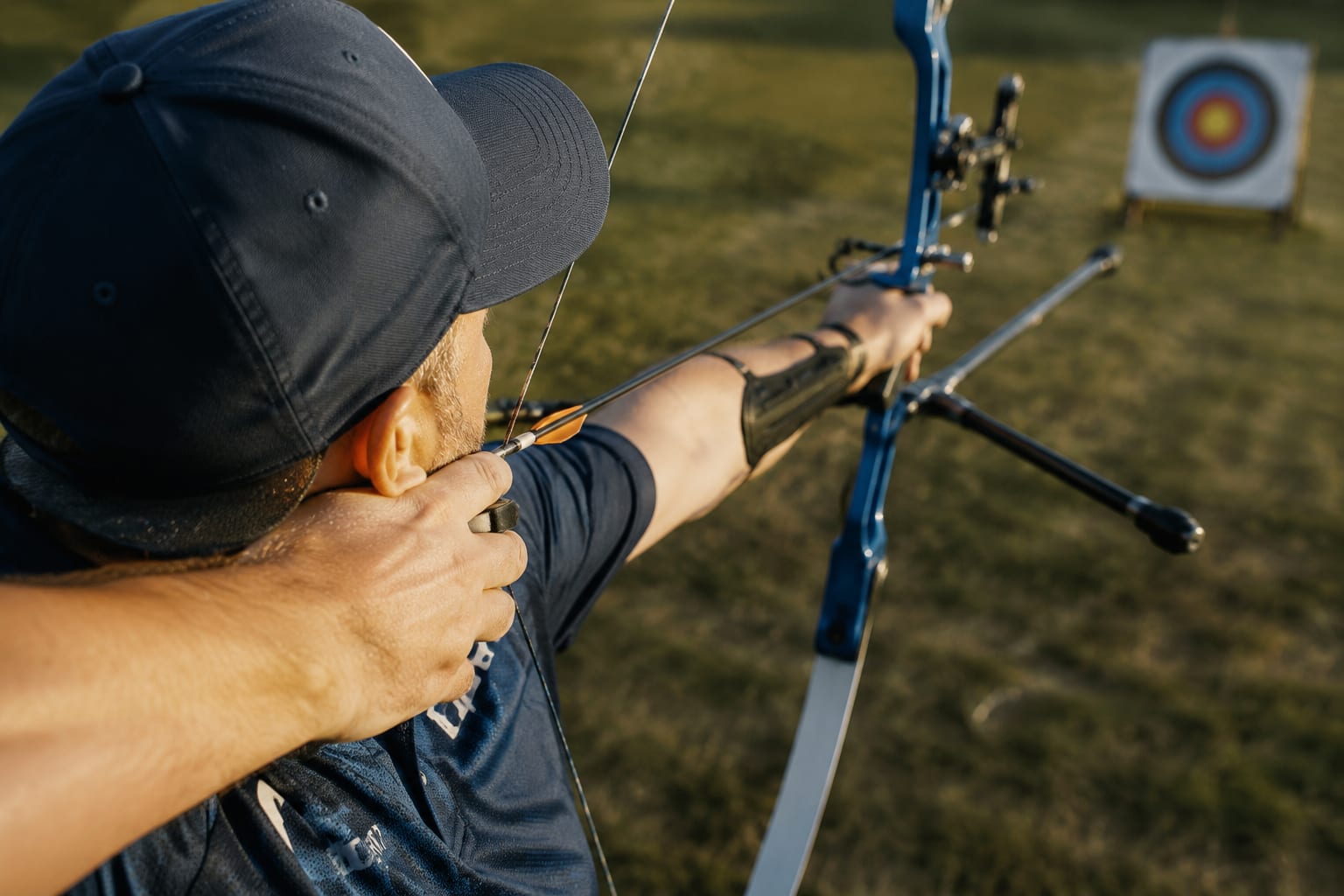
Beginners should start with blank bale shooting at 10 yards, which removes the pressure of hitting a target and allows complete focus on repeating correct form. This drill involves shooting into a plain target face or foam block without aiming, concentrating solely on the physical sequence of drawing, anchoring, releasing, and following through.
Essential beginner drills at 10 yards:
Beginners should avoid scoring their shots during these drills. The goal is building repeatable form, not hitting the center. A tight group anywhere on the target indicates good consistency, which can then be adjusted for accuracy through sight or aiming changes.
Common beginner mistake: rushing through arrows to “practice more.” Quality repetitions with full attention to each shot build better habits than high-volume shooting with poor focus.
Improving accuracy at 10 yards requires identifying and correcting specific form breakdowns through systematic diagnosis. At this distance, even minor technical flaws create visible patterns in arrow grouping that reveal exactly what needs adjustment.
Diagnostic approach for accuracy improvement:
Start by shooting a group of 6 arrows with your normal form. Analyze the grouping pattern:
Targeted correction drills:
Anchor consistency drill: Place a small piece of tape on your face at the anchor point. Shoot 10 arrows, verifying contact with the tape on each shot. All arrows should impact within a 2-inch circle.
Bow hand pressure drill: Shoot groups alternating between death-gripping the bow and using minimal pressure with relaxed fingers. Compare groupings to find optimal hand tension.
Release timing drill: Count to three at full draw before releasing. This eliminates rushed shots and builds consistent hold time.
Follow-through freeze: Hold your release position for 3 seconds after each shot, maintaining bow arm extension and draw hand position. This prevents premature collapse.
Choose one drill per practice session rather than mixing multiple corrections. Isolating variables makes it easier to identify what actually improves your grouping.
Neither distance is inherently better; they serve different training purposes and should both be incorporated into a balanced practice routine. Ten-yard drills excel at form refinement and technical diagnosis, while 20-yard practice introduces aiming precision and minor environmental factors without overwhelming beginners.
When to prioritize 10-yard practice:
When to prioritize 20-yard practice:
Optimal training split:
Most coaches recommend spending 30% of practice time at 10 yards, 40% at 20 yards, and 30% at competition distances. This ratio ensures strong fundamentals while building distance-specific skills.
For archers struggling with accuracy issues, temporarily increasing 10-yard work to 50% of practice time helps isolate and correct technical problems before they become ingrained at longer distances.
Ten-yard practice requires minimal specialized equipment beyond your standard bow setup. The short distance allows for compact practice spaces and reduces the need for expensive backstops or large target systems.
Essential equipment:
Optional but beneficial:
Equipment you don’t need:
The compact nature of 10-yard practice makes it ideal for home setups. A single-car garage or 15-foot section of backyard provides sufficient space with proper safety measures.
Missing at 10 yards typically indicates fundamental form problems rather than aiming errors, since the short distance minimizes trajectory and environmental factors. The most common culprits are inconsistent anchor points, target panic, and poor bow hand position.
Primary causes of 10-yard misses:
Inconsistent anchor point: Your draw hand stops at slightly different positions on each shot, changing arrow trajectory. Solution: Establish multiple reference points (corner of mouth, tip of nose, under jawbone) and verify all three make contact on every draw.
Target panic: Subconscious flinching or premature release when the sight pin approaches the target center. Solution: Practice blank bale shooting for 2-3 weeks to break the anxiety cycle, then gradually reintroduce targets starting with large aiming areas.
Bow hand torque: Twisting or gripping the bow handle during release, pushing arrows left or right. Solution: Use a wrist sling so you can maintain relaxed fingers, allowing the bow to jump forward naturally without grip pressure.
Inconsistent draw length: Pulling to different positions at full draw, especially when fatigued. Solution: Install a clicker (for recurve) or use a draw check device (for compound) to ensure identical draw length every shot.
Rushed shot sequence: Skipping steps in your mental checklist or releasing before fully settled. Solution: Develop and verbalize a consistent shot sequence (draw, anchor, aim, settle, release, follow-through) and never release until completing all steps.
Diagnostic test: Shoot 6 arrows with eyes closed after reaching anchor. If they group tightly (even if off-center), your form is consistent but your aiming needs adjustment. If they scatter widely, you have form inconsistencies to address first.
Most archers who miss at 10 yards improve dramatically by slowing down their shot sequence and adding verification checkpoints rather than trying to aim more carefully.
Short-distance form drills isolate specific components of the shot cycle, allowing archers to perfect individual mechanics before integrating them into the complete sequence. These drills work best at 10 yards where immediate feedback is visible without the complexity of longer-range variables.
Core form drills:
1. Draw-and-hold drill: Draw to full anchor and hold for 10 seconds without releasing. Focus on maintaining back tension, steady bow arm, and relaxed bow hand. Repeat 10 times. This builds holding stamina and reveals shaking or instability issues.
2. Blind release drill: Partner places a small object (coin, sticker) randomly on the target. Shoot without knowing where it is, focusing entirely on execution rather than outcome. This eliminates result-oriented anxiety.
3. Micro-adjustment drill: Shoot one arrow, then make the smallest possible sight adjustment. Shoot again and verify the change. This teaches precise cause-and-effect relationships between adjustments and impact.
4. Rhythm drill: Use a metronome or count cadence to standardize shot timing. Draw on count 1, anchor on 2, aim on 3, release on 4. Repeat until the rhythm becomes automatic.
5. Transfer drill: Shoot 3 arrows focusing on one specific element (anchor point), then 3 arrows focusing on another element (release), then 3 combining both. This progressively integrates isolated skills.
6. Fatigue test: Shoot 50 arrows in one session at 10 yards, comparing the grouping of arrows 1-10 versus arrows 41-50. Significant degradation indicates form breakdown under fatigue that needs strengthening work.
Advanced form drill: Video record yourself from three angles (front, side, overhead) while shooting at 10 yards. Compare your form to professional archers, identifying specific differences in alignment, posture, or timing.
Form drills should constitute at least one full practice session per week, separate from score-focused shooting. Treating form work as distinct from performance shooting prevents the frustration of “bad scores” during technical refinement periods.
Ten yards is not too close for compound bow practice; it serves essential training purposes for compound archers at all skill levels. While compound bows are designed for longer distances, close-range work remains critical for form development, equipment tuning, and mental game training.
Benefits of 10-yard compound practice:
Compound bows’ let-off (typically 70-80%) makes them ideal for extended hold time at full draw, allowing detailed form analysis at 10 yards without fatigue. The mechanical advantages of compounds can mask form flaws at longer distances, but close-range shooting reveals inconsistencies immediately.
Specific compound drills at 10 yards:
When 10 yards is too close:
For final competition preparation or confidence building before tournaments, compound archers should practice primarily at competition distances (typically 18-50 meters). Spending excessive time at 10 yards immediately before competition can make longer distances feel intimidating.
Recommended approach: Compound archers should begin every practice session with 20-30 arrows at 10 yards for warm-up and form verification, then move to working distances. Dedicate one full session per week to 10-yard technical work regardless of competition schedule.
The most common mistake archers make at 10 yards is treating it as “easy” shooting and rushing through arrows without purposeful focus. Close-range practice requires the same mental discipline as competition shooting to build transferable skills.
Frequent 10-yard practice errors:
Shooting too fast: Rushing through arrows because “it’s just 10 yards” prevents the deliberate repetition needed for muscle memory. Solution: Enforce a minimum 20-second interval between shots, using the time to mentally review the previous shot and reset focus.
Ignoring misses: Dismissing poor shots as flukes rather than diagnosing the cause. At 10 yards, every miss indicates a specific technical breakdown. Solution: After any shot outside your normal group, immediately identify what felt different before shooting again.
Using targets that are too large: Shooting at full-size 80cm or 122cm target faces at 10 yards provides insufficient challenge. Solution: Use 40cm faces or smaller, or shoot at individual spots on multi-spot target faces.
Practicing only what you’re good at: Spending entire sessions on comfortable drills while avoiding weaknesses. Solution: Dedicate 60% of practice time to your weakest skill area identified through honest self-assessment.
No session structure: Shooting random arrows without specific goals or progression. Solution: Plan each 10-yard session with defined objectives (example: 30 arrows blank bale, 30 arrows single-spot grouping, 20 arrows timed release).
Comparing 10-yard scores to longer distances: Feeling frustrated that tight groups at 10 yards don’t immediately translate to perfect scores at 20+ yards. Solution: Recognize that 10-yard work builds the foundation; distance skills develop separately through distance-specific practice.
Skipping warm-up: Starting immediately with scored shooting rather than progressive warm-up. Solution: Begin every session with 10-15 blank bale shots or large-target shooting before moving to precision work.
The underlying principle: 10-yard practice should be harder mentally than longer-distance shooting because you’re focusing on perfect execution rather than just hitting the target.
Archers should incorporate 10-yard drills into 3-4 practice sessions per week, with at least one session dedicated entirely to close-range technical work. The frequency depends on current skill level, specific goals, and whether addressing technical problems or maintaining established form.
Recommended practice frequency by goal:
For beginners (first 6 months): 80% of practice time should be at 10 yards until consistent grouping is achieved. Practice 4-5 times per week if possible, with sessions of 60-100 arrows focusing on form repetition rather than scoring.
For intermediate archers: 30-40% of practice time at 10 yards, typically 2-3 sessions per week. Use close-range work for warm-up (20 arrows) and dedicated form sessions (100+ arrows) weekly.
For advanced competitors: 20-30% of practice time at 10 yards, primarily for warm-up, equipment verification, and periodic form checks. One full 10-yard technical session every 2 weeks maintains fundamentals.
When making equipment or form changes: Temporarily increase to 60-70% of practice at 10 yards for 2-4 weeks until new patterns are established, then gradually reintroduce longer distances.
Session structure example (intermediate archer, 90-minute practice):
Minimum effective dose: Even experienced archers should shoot at least 20 arrows at 10 yards during every practice session as warm-up and form verification. Skipping close-range work allows technical flaws to develop unnoticed.
Signs you need more 10-yard practice: Inconsistent grouping at any distance, frequent unexplained misses, difficulty diagnosing accuracy problems, or performance degradation under pressure.
The best target faces for 10-yard drills are smaller than standard competition faces, creating appropriate challenge levels that demand precision without being impossibly difficult. Vegas 3-spot faces and 40cm single-spot targets are optimal for most practice scenarios.
Recommended target faces by drill type:
For blank bale and pure form work: Plain cardboard, foam, or unmarked target faces. The absence of aiming points eliminates target panic and allows complete focus on execution mechanics.
For grouping and consistency drills: 40cm single-spot FITA faces or NFAA 5-spot faces. These provide clear aiming references while requiring genuine precision at 10 yards.
For precision and mental training: Vegas 3-spot faces (4cm center X-ring) or custom dot targets (1-2 inch circles). Small aiming areas at close range simulate the angular challenge of longer distances.
For scoring practice: NFAA indoor faces or WA 40cm faces scored at full value. This allows realistic score tracking while working on form.
For diagnosis and analysis: Unmarked paper faces that show every arrow impact clearly. After shooting groups, draw circles around them to visualize consistency patterns.
Target face selection by bow type:
Cost-effective options: Print custom target faces on standard paper (8.5×11 inches) with circles of varying sizes. A single sheet with 2-inch, 3-inch, and 4-inch circles provides multiple difficulty levels for progressive drills.
Target face mistake to avoid: Using the same target face for every practice session. Varying target styles prevents over-familiarity and keeps practice mentally engaging while developing adaptable aiming skills.
Replace target faces when centers become torn or unclear, as damaged aiming points encourage sloppy aim and reduce practice effectiveness.
Experienced archers benefit significantly from regular 10-yard practice, using close-range work for equipment tuning, form maintenance, and advanced mental training that would be difficult at longer distances. Elite competitors often spend 20-30% of training time at short range despite shooting competitions at much longer distances.
Specific benefits for advanced archers:
Equipment optimization: At 10 yards, equipment issues (rest contact, nocking point problems, spine mismatches) create visible patterns without distance variables. Experienced archers can quickly diagnose and correct gear problems before they affect competition performance.
Form refinement under pressure: Advanced drills like shooting tiny dots (quarter-sized) at 10 yards create intense mental pressure similar to competition stress. Missing at close range on easy targets trains pressure management.
Release execution perfection: Experienced archers use 10-yard blank bale work to refine subtle release mechanics (back tension activation, trigger timing, finger relaxation) that determine consistency at all distances.
Rehabilitation and comeback training: After injury breaks or off-seasons, starting with high-volume 10-yard work rebuilds muscle memory and strength safely before returning to competition distances.
Pre-competition warm-up: Most elite archers shoot 30-50 arrows at close range before competition rounds to verify equipment function and establish rhythm without fatigue.
Advanced 10-yard drills for experienced archers:
Perspective from competitive archery: Olympic-level recurve archers regularly practice blank bale at 5-10 meters despite competing at 70 meters. The principle applies across all disciplines: close-range work builds the foundation that longer distances depend on.
Experienced archers who neglect 10-yard practice often develop subtle form degradations that go unnoticed until they cause significant accuracy problems at competition distances.

Setting up a safe and effective 10-yard archery range at home requires only 15 feet of shooting space plus adequate backstop area, making it feasible in most garages, basements, or backyards. Proper setup prioritizes safety, accurate distance measurement, and sufficient arrow containment.
Space requirements:
Essential setup components:
1. Accurate distance measurement: Use a tape measure to mark exactly 30 feet (10 yards) from the target face to the shooting line. Mark the shooting line with tape on the floor or ground stakes outdoors.
2. Target and backstop system:
3. Safety considerations:
4. Lighting: Adequate illumination of both target face and shooting line. Indoor ranges need 500-1000 lumens focused on the target area.
5. Shooting line markers: Clear visual indicators of the 10-yard distance, preventing gradual creeping forward or backward during practice.
Budget-friendly setup (under $150):
Premium setup ($300-500):
Setup mistakes to avoid: Placing targets against hard surfaces (concrete, wood walls) that can damage arrows; inadequate backstop allowing pass-throughs; shooting toward windows, doors, or areas where people might unexpectedly appear.
Maintenance: Inspect backstop integrity weekly, rotate target faces to distribute wear, and verify distance markers haven’t shifted. Replace worn targets before arrows begin passing through.
At 10 yards, archers can improve virtually all fundamental skills except distance-specific abilities like trajectory compensation, wind reading, and long-range sight picture. The close range isolates and amplifies technical elements, making it ideal for developing the foundational skills that determine accuracy at all distances.
Skills directly improved at 10 yards:
Form consistency: Repeatable anchor point, draw length, bow hand position, and release execution. These fundamentals transfer directly to all distances and determine maximum potential accuracy.
Release quality: Clean, surprise releases with proper back tension or trigger control. Close-range feedback immediately reveals punching, flinching, or premature releases.
Mental discipline: Shot sequence adherence, focus maintenance, and pressure management. Small targets at 10 yards create genuine mental challenge despite the short distance.
Muscle memory: Subconscious execution of correct form through high-volume repetition without the fatigue of longer-distance shooting.
Equipment tuning: Arrow spine matching, rest position, nocking point location, and sight alignment. Technical issues are easier to diagnose at close range.
Aiming precision: Fine motor control of sight pin or instinctive aim point, though the angular challenge differs from longer distances.
Follow-through: Maintaining position after release, preventing premature collapse or target checking that disrupts arrow flight.
Skills that require longer distances:
The 10-yard foundation principle: Every skill that matters at 50 yards must first be perfected at 10 yards. Archers who struggle at long distances almost always have fundamental issues visible at close range but masked by the complexity of distance variables.
Practical application: Spend 4-6 weeks focusing primarily on 10-yard work when learning archery or making significant form changes. Once consistent 2-inch groups are achievable at 10 yards, gradually extend distance while maintaining the form quality established at close range.
Limitation to understand: Perfect shooting at 10 yards doesn’t automatically translate to perfect shooting at longer distances, but imperfect shooting at 10 yards will always limit performance at distance. Close-range work is necessary but not sufficient for complete archery development.
How long should I practice at 10 yards before moving to longer distances?
Beginners should practice primarily at 10 yards until they can consistently group arrows within a 4-inch circle, typically requiring 4-8 weeks of regular practice. Once grouping consistency is established, gradually introduce longer distances while maintaining regular 10-yard sessions for form verification.
Can I practice archery at 10 yards indoors safely?
Yes, indoor 10-yard practice is safe with proper backstop setup including a rated target, safety netting 2-3 feet behind the target, and clear shooting lanes with no cross-traffic. Ensure adequate ceiling height (8+ feet) and verify arrows cannot pass through the target into walls or adjacent rooms.
What size target should I use for 10 yard practice?
Use 40cm target faces for general practice, Vegas 3-spot faces for precision drills, or blank faces for form work. Avoid targets larger than 60cm at 10 yards as they provide insufficient challenge and don’t effectively develop accuracy skills.
Is 10 yards good for compound bow tuning?
Yes, 10 yards is excellent for initial compound bow tuning including paper tuning verification, rest position adjustment, and nocking point location. After basic tuning at 10 yards, verify adjustments at 20 yards and your primary shooting distance before finalizing settings.
Why do my arrows group well at 10 yards but not at 20 yards?
Consistent grouping at 10 yards but poor grouping at 20 yards typically indicates form breakdown under the longer hold time or aiming difficulty at distance rather than fundamental form problems. Practice progressive distance extension, adding 5 yards only after achieving consistent groups at the current distance.
How many arrows should I shoot at 10 yards per practice session?
Shoot 50-100 arrows at 10 yards per session depending on your experience level and practice goals. Beginners benefit from higher volume (80-100 arrows) for repetition, while experienced archers may shoot 30-50 arrows for warm-up and specific drill work before moving to longer distances.
Can traditional archers benefit from 10 yard drills?
Traditional and barebow archers benefit significantly from 10-yard blank bale work and form drills, though they should also practice instinctive aiming at varied distances since gap shooting and instinctive techniques require distance-specific training that close-range work alone doesn’t provide.
What’s the best warm-up routine at 10 yards?
Start with 10-15 blank bale shots focusing purely on form, then shoot 10-15 arrows at a large target face (60cm) without scoring, gradually reducing target size over the next 10 arrows. This 30-40 arrow warm-up prepares muscles and establishes mental focus before working distances.
Should I score my practice at 10 yards?
Score selectively based on practice goals. Use scoring for specific drills testing consistency under pressure, but avoid scoring during form work, blank bale practice, or technical experimentation. Excessive focus on scores during 10-yard practice can create target panic and undermine skill development.
How do I prevent target panic at 10 yards?
Prevent target panic by regularly incorporating blank bale shooting without aiming, using large target faces that remove pressure to hit small spots, and practicing timed releases where you hold at full draw for a predetermined count before releasing regardless of where the sight pin is positioned.
What’s the difference between 10 yard practice and blank bale shooting?
Blank bale shooting is a specific drill type done at close range (typically 5-10 yards) without aiming at any target, focusing purely on form execution. Ten-yard practice is a distance category that includes blank bale work plus targeted drills, grouping exercises, and scored shooting at the 10-yard distance.
Can I build enough skill at 10 yards to hunt or compete?
Ten-yard practice builds essential foundational skills but must be supplemented with distance-specific training at your intended hunting or competition ranges. Allocate 20-30% of practice time to 10 yards for form maintenance while spending the majority of time at working distances relevant to your goals.
Archery practice drills you can do at 10 yards form the foundation of accurate shooting at all distances. Close-range work eliminates the complexity of trajectory, wind, and distance estimation, allowing complete focus on the technical execution that determines consistency. Whether you’re a beginner building fundamental form or an experienced competitor fine-tuning release mechanics, regular 10-yard practice provides immediate feedback and accelerates skill development.
The most effective approach combines blank bale shooting for subconscious form development, small-target precision drills for mental training, and diagnostic grouping analysis to identify specific technical issues. Dedicate at least 20-30% of your total practice time to 10-yard work, using it as both warm-up and focused technical training regardless of your primary shooting distances.
Take action today: Set up a safe 10-yard practice space, select two drills from this guide that address your current weaknesses, and commit to one focused 10-yard session per week for the next month. Track your grouping size and consistency, and you’ll see measurable improvement that translates directly to better performance at all distances. The skills you perfect at 10 yards become the automatic execution that defines your shooting at every range.


