
Newsletter Subscribe
Enter your email address below and subscribe to our newsletter

All voices matter
All voices matter

 ByTravis
A surprise release means not consciously timing the exact moment the string lets go - it happens naturally from back tension, eliminating the anticipation that causes target panic.
Affiliate Disclaimer: We are a participant in the Amazon Services LLC Associates Program, an affiliate advertising program designed to provide a means for sites to earn advertising fees by advertising and linking to Amazon.com. As an Amazon Associate I earn from qualifying purchases. We also participate in other affiliate programs.
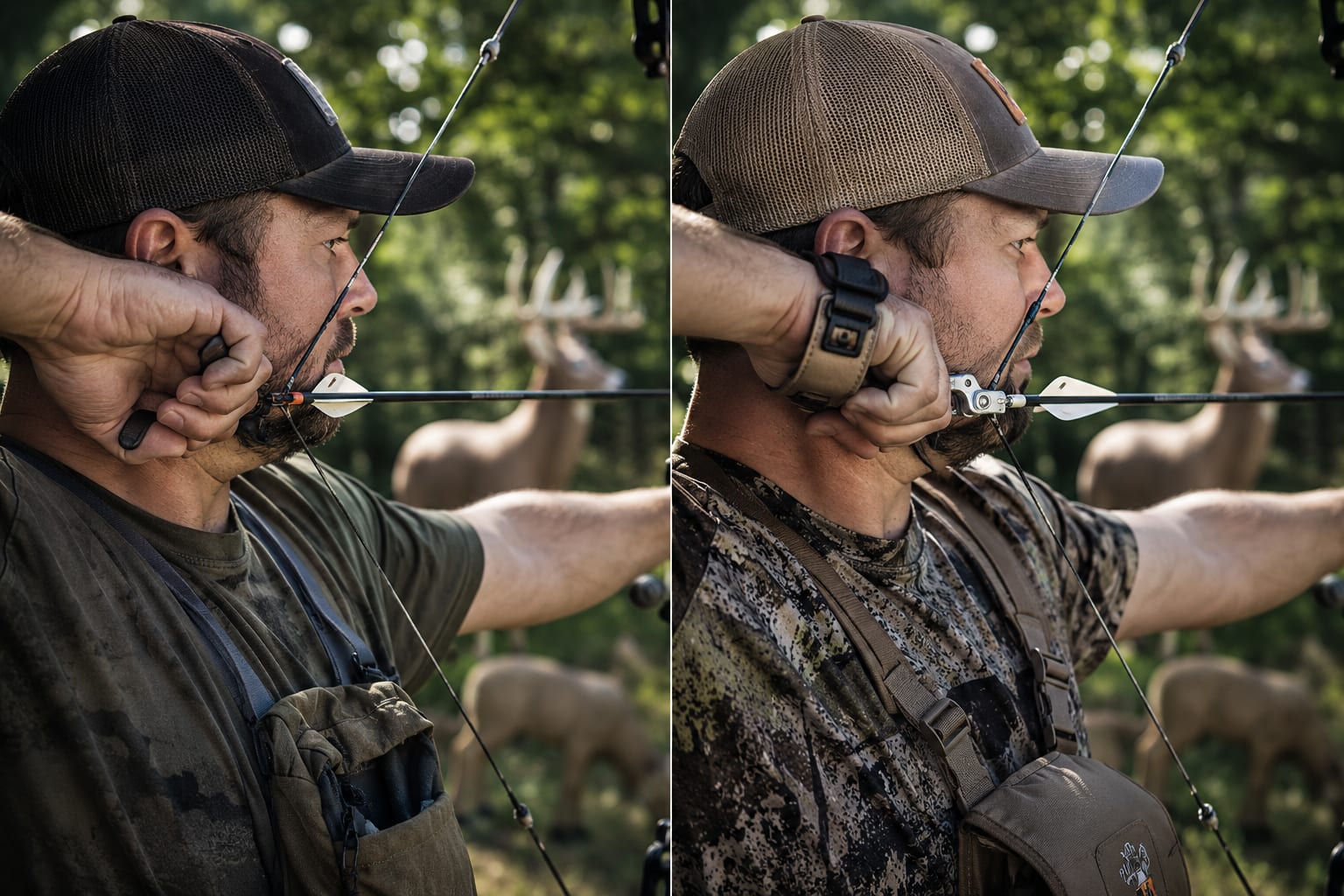
A surprise release in archery is a shooting technique where the archer does not consciously control the exact moment the bowstring is released. Instead, the release happens as a natural result of proper back tension and continued pulling through the shot, eliminating the anticipation and target panic that plague many archers. This method produces cleaner, more accurate shots by preventing the flinching and jerking that occur when an archer tries to time the release manually.


A surprise release is a shooting execution method where the bowstring or release aid fires without the archer consciously deciding the exact instant of release. The shot “surprises” the archer by breaking naturally as they continue proper shooting form, specifically by increasing back tension and pulling through their shoulder blades while maintaining aim on the target.
This technique stands in direct contrast to command shooting, where an archer deliberately decides “now” and triggers the release. With surprise release, the archer focuses on executing proper form continuously until the mechanical or biomechanical threshold is reached and the arrow launches. The archer knows the shot will happen soon but cannot predict the precise millisecond.
The mechanics work like this: As you reach full draw and settle into your anchor point, you begin a slow, steady increase in back tension by pulling your drawing elbow backward and squeezing your shoulder blades together. This continuous motion either activates a mechanical release aid (in compound archery) or causes your fingers to relax and slip off the string (in traditional archery). Because you’re focused on the pulling motion rather than the release itself, your body doesn’t tense up or flinch in anticipation.
The surprise element is crucial. When archers know exactly when they’ll release, they unconsciously prepare for the shot by tensing muscles, moving the bow, or jerking the trigger. These micro-movements destroy accuracy. A true surprise release eliminates these problems because there’s nothing to anticipate.
Archers adopt surprise release primarily to eliminate target panic and achieve consistent, accurate shot execution. Target panic is a psychological condition where an archer cannot hold steady on the target or involuntarily triggers the release before proper aim is achieved. This affects an estimated 80-90% of archers at some point in their shooting career, making it one of the most common performance barriers in the sport.
Key benefits of surprise release include:
Professional target archers competing in Olympic recurve, compound, and field archery divisions almost universally employ surprise release principles. The technique is equally valuable for bowhunters, where a single shot opportunity requires maximum accuracy under pressure. Even traditional barebow and longbow archers use surprise release concepts by focusing on continuous draw and relaxation rather than conscious string release.
Choose surprise release if: You struggle with target panic, experience inconsistent accuracy, punch your trigger, or want to compete at higher levels. Avoid this technique if you’re still learning basic form and anchor points, as you need conscious control to build foundational skills first.
The fundamental difference between surprise release and command release lies in conscious control of the shot timing. Command release means the archer deliberately decides when to fire and consciously activates the trigger or releases the string. Surprise release means the shot breaks as a result of proper form execution without conscious timing control.
Command Release characteristics:
Surprise Release characteristics:
Many archers mistakenly believe they’re using surprise release when they’re actually using a very fast command release. True surprise release means you genuinely cannot predict the exact instant within a 2-3 second window when the shot will break. If you can count “3, 2, 1, now” and release on “now,” you’re using command release.
The transition challenge: Moving from command to surprise release requires retraining your brain to trust the process. Most archers go through an awkward phase where accuracy temporarily decreases before improving significantly. This transition typically takes 4-8 weeks of consistent practice.
A surprise release aid is a mechanical device that attaches to the bowstring and triggers automatically when the archer applies proper back tension, eliminating the need for conscious finger activation. These devices are designed specifically to facilitate surprise release technique by making the shot break through continuous pulling motion rather than deliberate trigger pressing.
The three main types of surprise release aids are:
Back Tension Releases (True Hinge Releases):
These devices have no trigger at all. They feature a rotating head that holds the bowstring loop. As you increase back tension and your drawing hand rotates slightly, the head rotates until it reaches a mechanical threshold and releases the string. The rotation angle required is typically 1-3 degrees, making the exact release moment unpredictable. Popular models include the Carter Evolution and Stan Shootoff.
Hinge Releases (Hybrid Style):
Similar to back tension releases but with a safety mechanism or slight trigger. The release still fires primarily through rotation and back tension, but offers more control for hunting situations. These provide a middle ground between pure back tension and thumb triggers.
Thumb Trigger Releases (Used with Surprise Technique):
While thumb triggers can be used for command shooting, advanced archers use them with surprise release principles by applying steady increasing pressure to the trigger while pulling through the shot. The trigger breaks at an unknown pressure threshold, creating the surprise element. This requires significant discipline to avoid punching.
How to use a back tension release properly:
The key advantage is that these devices make it mechanically impossible to punch the trigger. You must execute proper form for the release to fire, which ingrains correct technique and eliminates target panic over time.
Executing a proper surprise release requires a systematic approach that coordinates multiple elements of shooting form into a continuous, flowing motion. The technique works for both mechanical release aids and finger shooting, though the specific mechanics differ slightly.
Step-by-step surprise release execution:
Establish your anchor point: Draw the bow and settle into a consistent, repeatable anchor position. Your hand, release, or fingers must contact the same reference points every shot (corner of mouth, jawbone, etc.).
Aim and settle: Place your sight pin or arrow point on the target center. Allow 1-2 seconds for your pin to settle into a natural float pattern. Don’t try to hold perfectly still; accept the small movement.
Initiate back tension: Begin pulling your drawing elbow straight backward, as if trying to touch your elbow to someone standing behind you. This motion should come from your back muscles, not your arm.
Squeeze shoulder blades: Focus on bringing your shoulder blades together. Imagine crushing a walnut between them. This creates the continuous pulling motion that will trigger the release.
Maintain aim throughout: Keep your sight pin floating in the target center while you pull. Don’t stop aiming to focus on the release.
Let the shot surprise you: Continue the pulling motion until the release fires or your fingers slip off the string. You should not know the exact instant this will happen.
Follow through: After the shot breaks, maintain your anchor position and back tension for 1-2 seconds. Your bow hand should stay extended toward the target.
Common execution mistakes to avoid:
For finger shooters (recurve, longbow, barebow): The surprise release happens when you focus on relaxing your fingers while maintaining back tension. Think of your fingers as a hook that gradually opens rather than a trigger you pull. The string should slip away as you continue to pull through your back, not because you consciously opened your hand.
The equipment requirements for surprise release depend on whether you shoot compound or traditional archery, but the fundamental principle remains the same: your gear should facilitate continuous pulling motion and prevent conscious triggering.
For compound bow archers:
Back tension or hinge release aid (150-250 dollars): This is the gold standard for learning surprise release. Models like the Carter Evolution, Stan Shootoff, or Scott Hinge eliminate the trigger entirely, making proper technique mandatory. Choose a model with adjustable tension so you can start with lighter settings and increase difficulty as you improve.
Thumb trigger release (100-200 dollars): Can be used for surprise release with proper discipline. Look for models with adjustable trigger travel and weight, such as the Scott Archery Shark or Carter Target 4. Set the trigger heavier than you think necessary to prevent punching.
Wrist strap or handheld: Both styles work for surprise release. Wrist straps (Carter, Scott, Tru-Ball) provide more consistency for target shooting. Handheld releases offer better feel but require more practice to maintain consistency.
For traditional archers (recurve, longbow, barebow):
Finger tab or shooting glove: A quality leather tab (30-60 dollars) provides consistent finger placement and smooth release. The tab should fit snugly and position your fingers consistently on the string. Popular options include the AAE Free Flyte or Cavalier Elite tabs.
Consistent anchor reference: A kisser button, nocking point, or string serving that touches your nose or lip provides a tactile reference for consistent anchor, which is essential for surprise release execution.
Clicker (for recurve): An arrow length indicator that clicks when you reach full draw (15-30 dollars). This audible signal can help trigger the surprise release by indicating when to begin your final pulling motion.
Additional equipment that supports surprise release:
What you don’t need: Expensive equipment doesn’t teach surprise release. A basic back tension release and consistent practice will produce better results than premium gear with poor technique. Many archers waste money on multiple release aids trying to find a “magic solution” when the real issue is execution, not equipment.
Learning surprise release typically requires 4-8 weeks of consistent practice for most archers, though the timeline varies significantly based on prior shooting experience, practice frequency, and whether you’re overcoming target panic. Archers without target panic who practice 4-5 times per week usually see meaningful improvement within 3-4 weeks, while those retraining from severe target panic may need 8-12 weeks.
Week-by-week progression for typical learners:
Weeks 1-2: Awkward phase. Accuracy often decreases as you learn to trust the process. You’ll feel like you’re not in control. Practice at close range (5-10 yards) with large targets to build confidence. Expect 30-40% of shots to feel “right.”
Weeks 3-4: Breakthrough phase. The surprise element starts to feel natural. You’ll have sessions where everything clicks, followed by sessions where you regress. Accuracy begins matching or exceeding your previous command release performance. Expect 50-60% of shots to feel “right.”
Weeks 5-6: Consistency phase. Surprise release becomes your default technique. You can execute it reliably under mild pressure. Accuracy improves noticeably, especially on longer shots. Expect 70-80% of shots to feel “right.”
Weeks 7-8: Integration phase. The technique feels automatic. You can focus on aiming and strategy rather than execution mechanics. Target panic symptoms (if present) are significantly reduced or eliminated. Expect 85-90% of shots to feel “right.”
Factors that accelerate learning:
Factors that slow learning:
Age and learning speed: Younger archers (under 25) typically learn surprise release faster due to neuroplasticity, but older archers often have better discipline and patience, which compensates for slower motor learning. The technique is learnable at any age with proper practice.
The most common mistake archers make when learning surprise release is stopping the pulling motion after reaching full draw, which converts the technique back into a command release. This happens because the continuous pull feels unnatural at first, and the archer’s brain defaults to the familiar pattern of “aim, then shoot” rather than “aim while shooting.”
Critical mistakes and how to fix them:
Mistake 1: Freezing at full draw
You reach your anchor point, aim, and then stop all motion while trying to “let the release happen.” This creates a static hold that eventually forces a conscious trigger.
Fix: Think of full draw as the beginning of the shot, not the end. Your pulling motion should never stop; it only changes from fast (during the draw) to slow (during execution). Practice blank bale shooting where you draw and immediately begin increasing back tension without any pause.
Mistake 2: Aiming too hard
You focus so intensely on keeping the pin on target that you forget to pull through the shot. The release never fires, or you eventually punch it out of frustration.
Fix: Accept that your sight pin will float in a small area. Aim for “good enough” rather than perfect. Your subconscious will keep the pin near center while your conscious mind focuses on pulling.
Mistake 3: Anticipating the shot
You start to recognize the feeling just before the release fires and unconsciously tense up or move the bow. This defeats the entire purpose of surprise release.
Fix: Vary your pulling speed slightly from shot to shot so the timing stays unpredictable. If you catch yourself anticipating, stop, let down, and start over. Never reward an anticipated shot by continuing.
Mistake 4: Setting the release too light
Your back tension release or trigger is adjusted so light that it fires during the draw or immediately at anchor, giving you no time to aim.
Fix: Start with heavier settings than you think necessary. You should be able to hold at full draw for 3-4 seconds while pulling before the release fires. Gradually decrease tension as your technique improves.
Mistake 5: Practicing only at long distance
You try to learn surprise release while shooting 40-60 yards, where aiming is difficult and pressure is high.
Fix: Practice 80% of your surprise release training at 10-20 yards on large targets. This removes outcome pressure and lets you focus on execution. Add distance only after the technique feels automatic.
Mistake 6: Mixing techniques
You use surprise release for practice but switch to command release for hunting or competition because you “trust it more.”
Fix: Commit fully to surprise release for at least 8 weeks. Mixing techniques confuses your motor patterns and prevents either from becoming automatic. If you must use command release for specific situations, practice them in completely separate sessions.
Mistake 7: Neglecting follow-through
The shot breaks and you immediately drop your bow arm or turn to see where the arrow hit.
Fix: Hold your position for 2 full seconds after every shot. Your bow hand should stay extended, your anchor should stay solid, and your back tension should remain engaged. This ensures you’re not anticipating the release.
The “creeping” problem: Some archers unconsciously let their draw length shorten slightly as they try to increase back tension. This changes your anchor point and destroys consistency. Use a clicker (recurve) or draw length check (compound) to ensure you’re maintaining position throughout the shot.
Surprise release works effectively for both bowhunting and target archery, but the application differs based on the shooting environment, pressure levels, and practical constraints of each discipline. Target archers can optimize their setup purely for surprise release, while bowhunters must balance surprise release principles with the need for quick shot execution and versatility in unpredictable field conditions.
Target archery applications:
Target shooting provides the ideal environment for pure surprise release technique. You shoot from a known distance, at a stationary target, with time to execute proper form. Competitive target archers in Olympic recurve, compound, and field archery divisions almost universally use surprise release or back tension principles.
Bowhunting applications:
Bowhunting introduces variables that complicate pure surprise release: awkward shooting positions, limited time windows, cold weather affecting feel, and high-pressure single-shot opportunities. However, the accuracy benefits of surprise release are equally valuable (or more so) when you have only one chance at an animal.
Hybrid approach for hunters:
Many successful bowhunters use a modified surprise release that maintains the core principles (continuous back tension, no punching) while allowing faster execution. This involves:
When to use command release in hunting:
Some hunting situations genuinely require command release: extremely close encounters where the animal might detect your movement, shots requiring precise timing (animal walking behind a tree), or emergency situations requiring instant release. These represent less than 10% of hunting shots for most hunters. The other 90% benefit from surprise release principles.
The accuracy difference: Field testing shows that archers using surprise release technique typically shoot 20-30% tighter groups at hunting distances (20-40 yards) compared to command release, even under pressure. This translates to more ethical, lethal hits and fewer wounded animals.
When surprise release technique isn’t working properly, the problem usually falls into one of five categories: mechanical setup issues, execution breakdown, mental interference, physical limitations, or incomplete understanding of the technique. Systematic troubleshooting can identify and fix most problems within 2-3 practice sessions.
Problem: The release never fires
You reach full draw, aim, and pull, but the release doesn’t activate even after 8-10 seconds of holding.
Diagnosis: Your release is set too heavy, you’re not actually increasing back tension, or your pulling direction is wrong.
Solution: Check your release adjustment and lighten it slightly. Verify you’re pulling straight back through your elbow, not down or to the side. Practice blank bale shooting where you focus only on the pulling sensation without aiming. Your release should fire within 4-6 seconds of reaching anchor.
Problem: The release fires too early
The shot breaks during your draw or immediately upon reaching anchor, before you can aim.
Diagnosis: Your release is adjusted too light, or you’re jerking into your anchor position.
Solution: Increase release tension significantly. Practice drawing to anchor in slow motion, taking 3-4 seconds for the draw itself. The release should not be “hot” (ready to fire) until you’re fully settled at anchor.
Problem: Inconsistent execution
Some shots feel perfect and surprise you; others feel like you punched the trigger or anticipated.
Diagnosis: You’re not maintaining consistent mental focus throughout the shot sequence. Your brain is switching between surprise and command release.
Solution: Develop a verbal or mental shot sequence you repeat identically for every arrow. For example: “Draw, anchor, aim, pull, pull, pull, follow through.” The repetition keeps your conscious mind occupied with process rather than outcome. If a shot feels wrong, let down and start over rather than reinforcing bad execution.
Problem: Accuracy is worse with surprise release
Your groups are larger using surprise release than they were with command release.
Diagnosis: You’re either still in the learning phase (normal temporary decrease), or you’re executing the technique incorrectly.
Solution: Video record 10 shots and watch for these signs of incorrect execution: bow arm moving during release, head lifting to watch the arrow, anchor point shifting, or visible flinching. If your form looks solid but accuracy is still poor, you may need to give the technique more time. Most archers see accuracy improvement by week 4-6.
Problem: Target panic returns
You successfully learned surprise release and overcame target panic, but the symptoms are coming back.
Diagnosis: You’ve gradually reverted to command release without realizing it, or you’re putting too much pressure on outcomes.
Solution: Return to blank bale practice for 2-3 sessions to reset your execution. Remove all outcome pressure by shooting at unmarked targets or very large targets at close range. Rebuild the surprise element by varying your pulling speed and accepting whatever happens.
Problem: Technique works in practice but fails in competition
Your surprise release is perfect during practice but breaks down under pressure during tournaments or hunting.
Diagnosis: You haven’t trained the technique under realistic pressure, or your mental game needs development.
Solution: Add pressure to practice sessions through timed drills, shooting for score, or practicing with observers watching. Simulate competition by shooting one arrow at a time with consequences (if you miss, do pushups). Work with a sports psychologist if pressure consistently breaks your technique.
Physical limitations affecting surprise release:
Some archers struggle with surprise release due to physical factors: insufficient back strength to maintain tension, shoulder injuries limiting range of motion, or hand/wrist issues affecting release grip. If you’ve practiced correctly for 8+ weeks without improvement, consult an archery coach and possibly a physical therapist to rule out physical limitations.
Can beginners use surprise release technique?
Beginners should master basic form, consistent anchor points, and proper aiming before attempting surprise release. Start with command release for your first 3-6 months of shooting to build foundational skills, then transition to surprise release once you can group arrows consistently at 20 yards. Jumping to surprise release too early creates confusion because you lack the body awareness to know if you’re executing correctly.
Does surprise release work with wrist-strap releases?
Yes, surprise release works with both wrist-strap and handheld releases. Wrist-strap back tension releases are actually the most common tool for learning the technique. The strap provides consistent hand position and eliminates grip pressure variables, making it easier to focus on the pulling motion. Many target archers prefer wrist straps specifically because they facilitate surprise release.
How do I know if I’m really using surprise release or just fast command release?
True surprise release means you cannot predict the exact moment within a 2-3 second window when the shot will break. Test yourself: if you can count down “3, 2, 1” and release on “1,” you’re using command release. With surprise release, the shot should break at an unpredictable point during your continuous pull. Video recording helps identify anticipation behaviors like flinching or bow movement just before release.
Can you use surprise release with a thumb trigger?
Yes, but it requires significant discipline. Set your thumb trigger with enough tension that it requires 2-4 pounds of pressure to fire. Apply steady increasing pressure while pulling through your back, allowing the trigger to break at an unknown threshold. The challenge is avoiding the temptation to punch it. Many archers find pure back tension releases easier for learning because they eliminate the trigger temptation entirely.
Will surprise release slow down my shooting speed?
Initially yes, but experienced surprise release shooters can execute shots in 3-4 seconds, which is adequate for both target archery and bowhunting. The technique requires continuous motion, not slow motion. As you develop proficiency, you can increase your pulling speed while maintaining the surprise element. The slight time increase is offset by dramatically improved accuracy.
Does surprise release eliminate target panic permanently?
Surprise release is the most effective technique for overcoming target panic, with success rates above 80% when practiced correctly for 8-12 weeks. However, target panic can return if you revert to command release habits or place excessive pressure on outcomes. Maintaining surprise release discipline and periodic blank bale practice keeps target panic at bay for most archers.
What’s the difference between back tension and surprise release?
Back tension is the physical mechanism (pulling through your shoulder blades) that creates surprise release. Surprise release is the outcome (shot breaking unexpectedly). You use back tension to achieve surprise release. Some archers mistakenly think back tension only applies to specific release aids, but the principle works with any release method, including fingers.
Can you hunt effectively with a hinge release?
Yes, many bowhunters successfully use hinge releases, though they require more practice to execute quickly from awkward positions. Hinge releases work best for hunters who primarily shoot from tree stands or ground blinds where they can settle into a shot. For spot-and-stalk hunting or situations requiring fast shots, a thumb trigger used with surprise release principles offers more versatility.
How tight should a back tension release be set?
Start with your back tension release adjusted so it fires after 4-6 seconds of continuous pulling at full draw. This gives you time to aim while ensuring the shot breaks before muscle fatigue sets in. As your technique improves, you can adjust it lighter (faster break) or heavier (more control) based on your shooting style and discipline.
What if I can’t maintain back tension long enough?
Insufficient back strength is common when learning surprise release. Build strength through resistance band exercises targeting your rhomboids and rear deltoids. Practice holding at full draw for 10-15 seconds (without releasing) to build endurance. Start with lower draw weight if necessary. Most archers develop adequate strength within 3-4 weeks of consistent practice.
Should I use surprise release for 3D archery?
Yes, surprise release works excellently for 3D archery and often improves scores because it eliminates the anxiety of unknown distances and awkward angles. The technique helps you focus on execution rather than worrying about yardage estimation. Many top 3D competitors use back tension or hinge releases specifically because surprise release produces more consistent results under the pressure of competition.
Can traditional archers use surprise release without a clicker?
Yes, traditional archers can execute surprise release by focusing on continuous draw and finger relaxation without a clicker. The technique involves reaching your anchor point and continuing to pull through your back while allowing your fingers to gradually relax and slip off the string. A clicker helps by providing an audible signal, but it’s not mandatory. Many instinctive shooters use surprise release principles without any mechanical aids.
Surprise release represents one of the most significant technique improvements an archer can make, transforming shooting from a conscious trigger-pulling exercise into a smooth, automatic execution of proper form. By eliminating the anticipation and flinching that plague command release shooting, this method produces tighter groups, higher scores, and more ethical hunting shots.
The technique requires patience and commitment. Most archers need 4-8 weeks of consistent practice to make surprise release feel natural, and the initial learning phase often includes temporary accuracy decreases that test your resolve. However, archers who push through this awkward phase almost universally report that surprise release becomes their permanent shooting method because the accuracy improvements are undeniable.
Your next steps to master surprise release:
Start with equipment that facilitates the technique. If you shoot compound, invest in a quality back tension or hinge release (150-250 dollars) rather than trying to learn with a trigger you’re tempted to punch. Traditional archers should ensure they have a consistent anchor point and consider adding a clicker to their recurve setup.
Dedicate your next 30 practice sessions exclusively to surprise release. Begin with blank bale shooting from 5-10 feet to isolate execution from aiming pressure. Progress to large targets at close range (10-20 yards) before attempting longer distances. Resist the urge to mix command and surprise release during this learning period.
Record video of your shooting to identify execution flaws you can’t feel. Watch for signs of anticipation: bow arm movement just before release, head lifting to watch the arrow, or visible flinching. These behaviors indicate you’re predicting the shot rather than being surprised by it.
Build a shot sequence you repeat identically for every arrow. This mental checklist keeps your conscious mind occupied with process rather than outcome, allowing the surprise release to happen naturally. A simple sequence might be: “Draw smoothly, settle anchor, find target, pull through, maintain position.”
Accept that surprise release is a skill that requires ongoing maintenance. Even experienced archers benefit from periodic blank bale sessions to reinforce proper execution and prevent the gradual drift back toward command release habits. Schedule one blank bale session every 2-3 weeks to keep your technique sharp.
The investment in learning surprise release pays dividends for your entire archery career. Whether you’re pursuing tournament podiums, hunting success, or simply the satisfaction of shooting your personal best, this technique provides the consistency and accuracy that separates good archers from great ones.


