Newsletter Subscribe
Enter your email address below and subscribe to our newsletter

All voices matter
All voices matter
 ByTravis
Arrow weight in grains is the total mass of your arrow - properly weighted arrows ensure safe shooting, good accuracy, and enough kinetic energy for hunting or target work.
Affiliate Disclaimer: We are a participant in the Amazon Services LLC Associates Program, an affiliate advertising program designed to provide a means for sites to earn advertising fees by advertising and linking to Amazon.com. As an Amazon Associate I earn from qualifying purchases. We also participate in other affiliate programs.
Arrow weight in grains is the total mass of your complete arrow measured in grains (where 437.5 grains equals one ounce). A properly weighted arrow for your bow’s draw weight ensures safe shooting, optimal accuracy, and adequate kinetic energy for your intended purpose, whether hunting or target shooting. Most archers should aim for 5-10 grains per pound of draw weight, with heavier arrows providing better penetration and quieter shots, while lighter arrows offer flatter trajectories and faster speeds.

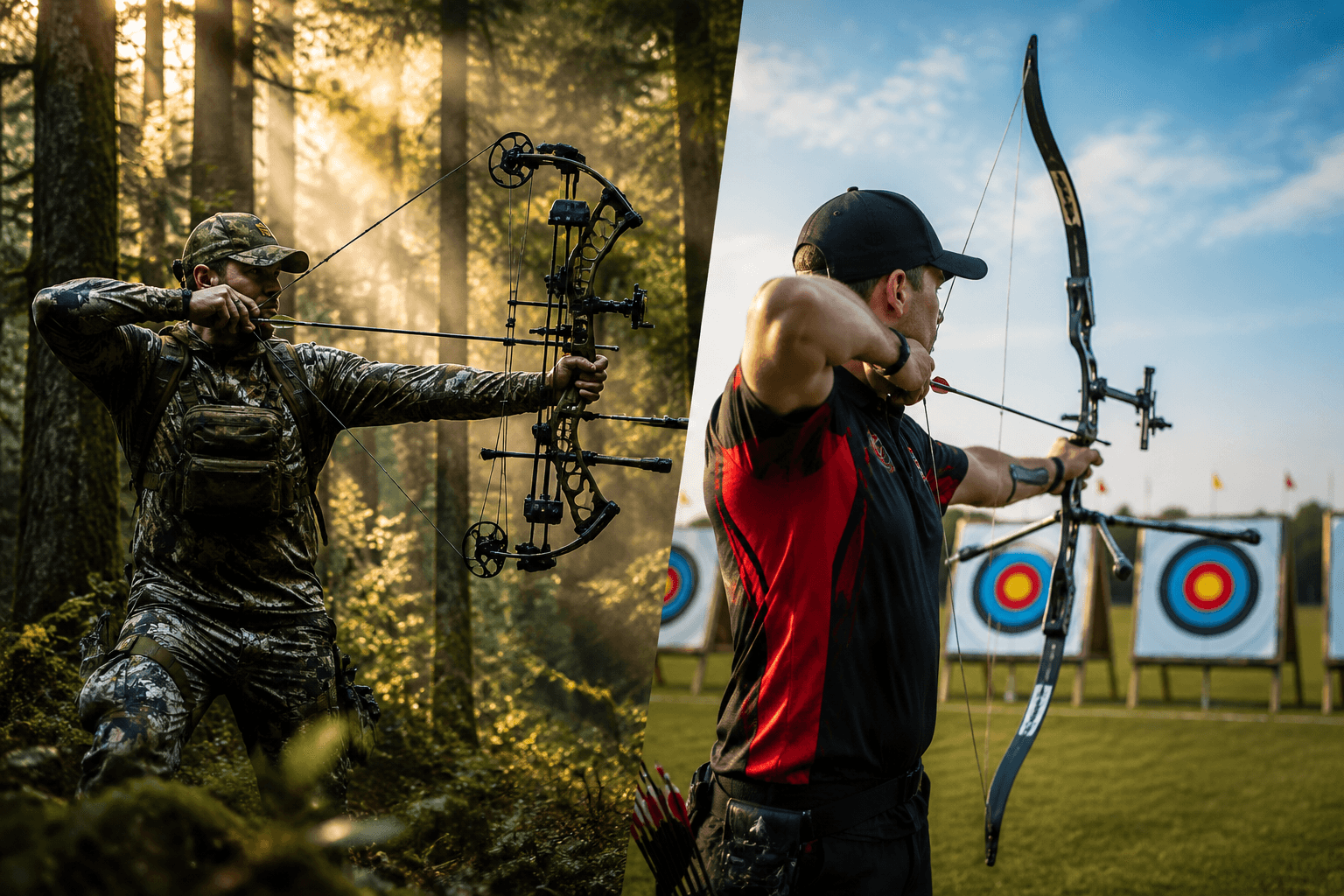
In archery, a grain is a unit of mass equal to exactly 1/7000th of a pound or approximately 64.8 milligrams. This measurement system dates back centuries and remains the universal standard for weighing arrows, broadheads, and arrow components across all archery disciplines.
To put grains in perspective, 437.5 grains equals exactly one ounce. A typical hunting arrow weighs between 400-550 grains total, while target arrows often range from 300-450 grains depending on the discipline and bow setup.
Why grains instead of ounces or grams? The grain system provides precision for small components. A single grain represents a tiny increment that matters when fine-tuning arrow performance. For example, changing from a 100-grain broadhead to a 125-grain broadhead adds 25 grains, a difference you’ll notice in trajectory and impact.
Common grain measurements you’ll encounter:
Understanding grains helps you make informed decisions when selecting components and ensures you’re shooting safe, effective arrows for your specific bow setup.
Calculating total arrow weight requires adding up every component attached to your arrow shaft. The complete arrow weight includes the shaft itself, point (field point or broadhead), nock, fletching, insert, and any wraps or additional accessories.
Step-by-step calculation process:
Example calculation for a hunting arrow:
Most arrow manufacturers provide shaft weight specifications in grains per inch (GPI). Multiply the GPI by your arrow length to get the bare shaft weight. For instance, an arrow with 9.5 GPI cut to 29 inches weighs approximately 275.5 grains before adding components.
Common mistake: Forgetting to include the insert weight. Many archers only add shaft plus point, but inserts, nocks, and fletching contribute 50-70 grains combined, enough to significantly affect your calculations and performance.
For precise measurements, use a digital grain scale rather than estimating from manufacturer specifications, as actual weights can vary slightly from published numbers.
Hunting arrows should weigh 400-550 grains for most compound bow setups, prioritizing penetration and kinetic energy over speed. Target arrows typically range from 300-450 grains, emphasizing flat trajectory and speed for accuracy at known distances.
Hunting arrow requirements:
Heavier arrows deliver more kinetic energy to the target, creating better penetration through hide, bone, and muscle. Most experienced bowhunters prefer arrows in the 450-500 grain range for whitetail deer and similar-sized game, with heavier setups (500-650 grains) for elk, moose, or dangerous game.
Benefits of heavier hunting arrows:
Target shooting arrow requirements:
Target archers shooting at known distances benefit from lighter, faster arrows that produce flatter trajectories. This makes aiming easier and reduces the impact of small range estimation errors. Most competitive target shooters use arrows in the 350-425 grain range.
Benefits of lighter target arrows:
Decision rule: Choose hunting-weight arrows (450+ grains) if you plan to hunt medium to large game. Select target-weight arrows (350-400 grains) if you primarily shoot at known distances on a range. For beginners who want versatility, a mid-weight arrow around 400-425 grains works well for both applications.
Remember that your bow’s draw weight also influences ideal arrow weight, see the grains per pound rule below for specific calculations based on your setup.
Shooting arrows that are too light for your bow can cause catastrophic damage to your compound bow, similar to dry-firing, and will void most manufacturer warranties. Light arrows fail to absorb enough energy from the bow’s limbs, causing excessive vibration and stress on cams, limbs, and the riser.
Immediate risks of shooting underweight arrows:
Most bow manufacturers specify a minimum arrow weight in their owner’s manuals, typically expressed as grains per pound (GPP) of draw weight. Shooting below this minimum voids your warranty and puts you at risk.
Performance problems with light arrows:
Beyond safety concerns, arrows that are too light create accuracy and consistency issues:
Real-world threshold: Most compound bow manufacturers recommend a minimum of 5 grains per pound of draw weight. For a 60-pound bow, that’s 300 grains minimum. However, many experienced archers and bow technicians suggest 6 grains per pound (360 grains for a 60-pound bow) as a safer practical minimum.
Common mistake: Assuming faster always means better. While arrow speed matters, an arrow that’s too light sacrifices kinetic energy, penetration, and bow longevity for marginal speed gains. The sweet spot balances speed with safety and effectiveness.
If you’re unsure whether your arrows are safe, visit a pro shop with a chronograph and grain scale to verify your setup meets manufacturer specifications.
For a 60-pound draw weight bow, your arrow should weigh between 300-600 grains depending on your intended use, with 420-480 grains representing the ideal range for most applications. This calculation follows the industry-standard grains per pound (GPP) formula that ensures both safety and performance.
Minimum safe weight: 300 grains (5 GPP)
Target shooting optimal: 350-420 grains (5.8-7 GPP)
All-purpose optimal: 420-480 grains (7-8 GPP)
Hunting optimal: 450-540 grains (7.5-9 GPP)
Heavy hunting/dangerous game: 540-600+ grains (9-10+ GPP)
Why the range matters:
The 60-pound draw weight provides enough energy to shoot a wide spectrum of arrow weights effectively. Your choice within this range depends on your priorities:
Choose lighter arrows (350-420 grains) if you:
Choose heavier arrows (450-540 grains) if you:
Practical example for a 60-pound bow:
A versatile setup might include a 350-grain carbon shaft (29 inches at 12 GPI) plus a 100-grain field point, 20-grain insert, 12-grain nock, and 24 grains of fletching, totaling 506 grains, exactly 8.4 GPP. This arrow weight works well for both hunting and target practice.
For those interested in understanding how draw weight selection affects your overall setup, check out our guide on what draw weight should a beginner start with.
The grains per pound (GPP) rule calculates minimum and optimal arrow weight by dividing total arrow weight in grains by your bow’s draw weight in pounds. This ratio ensures your arrows are heavy enough to safely absorb the bow’s energy while meeting your performance goals.
Standard GPP guidelines:
How to calculate your GPP:
Total arrow weight (grains) ÷ Draw weight (pounds) = GPP
Example: 450-grain arrow ÷ 60-pound draw weight = 7.5 GPP
Why this ratio matters:
The GPP ratio ensures proportional energy absorption regardless of bow strength. A 40-pound bow and an 80-pound bow both need arrows that can safely handle their respective energy outputs. The ratio scales appropriately across different draw weights.
Adjusting for different draw weights:
| Draw Weight | 6 GPP | 7 GPP | 8 GPP | 9 GPP | 10 GPP |
|---|---|---|---|---|---|
| 40 lbs | 240 gr | 280 gr | 320 gr | 360 gr | 400 gr |
| 50 lbs | 300 gr | 350 gr | 400 gr | 450 gr | 500 gr |
| 60 lbs | 360 gr | 420 gr | 480 gr | 540 gr | 600 gr |
| 70 lbs | 420 gr | 490 gr | 560 gr | 630 gr | 700 gr |
Decision rule: Start with 7-8 GPP if you’re unsure. This range provides safety margin above manufacturer minimums while maintaining good speed and trajectory for most applications. Adjust up for hunting or down for pure target work based on your specific needs.
Understanding draw weight fundamentals helps you make better decisions about arrow weight selection for your specific bow setup.

Neither heavy nor light arrows are universally “better”, the optimal choice depends on whether you prioritize penetration and quiet shots (heavy) or flat trajectory and speed (light). Heavy arrows excel at hunting applications, while light arrows perform better for target shooting at known distances.
Heavy arrows (9-10+ GPP) advantages:
Heavy arrows disadvantages:
Light arrows (5-7 GPP) advantages:
Light arrows disadvantages:
Practical comparison:
A 450-grain arrow (7.5 GPP) from a 60-pound bow at 28-inch draw might achieve 280 feet per second (fps) with 78 foot-pounds of kinetic energy. A 350-grain arrow (5.8 GPP) from the same setup might reach 310 fps but only 75 foot-pounds, faster but with less energy and penetration.
Choose heavy arrows if: You hunt, want maximum penetration, shoot outdoors frequently, or prefer a quieter, smoother shot experience.
Choose light arrows if: You compete in target archery, shoot primarily at known distances indoors, or prioritize flat trajectory over penetration.
Choose mid-weight arrows if: You want versatility for both hunting and target practice, or you’re a beginner still exploring different archery disciplines.
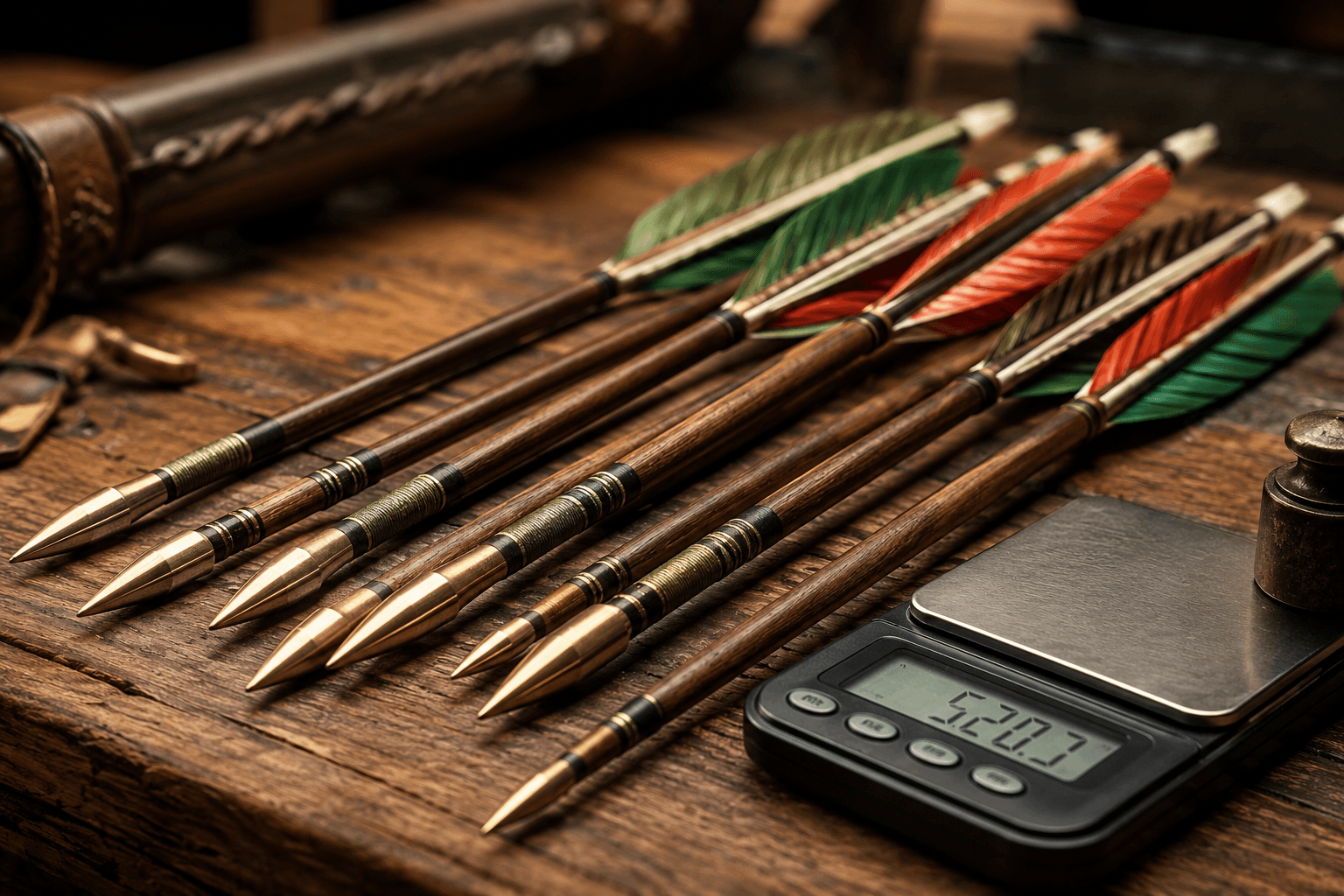
You can estimate arrow weight using a standard kitchen scale that measures in grams, though a dedicated digital grain scale ($15-30) provides far more accuracy for serious arrow tuning. One gram equals approximately 15.43 grains, so multiply your gram measurement by 15.43 to convert to grains.
Method 1: Kitchen scale conversion (least accurate)
Limitations: Kitchen scales typically measure in 1-gram increments, which equals about 15 grains, too imprecise for fine-tuning. A 1-gram measurement error translates to a 15-grain error in your arrow weight.
Method 2: Postal scale (moderate accuracy)
Digital postal scales often measure in 0.1-ounce or 0.1-gram increments, providing better precision than kitchen scales. Follow the same conversion process, but expect accuracy within ±5-10 grains.
Method 3: Digital grain scale (most accurate)
Invest in a digital grain scale designed for reloading or archery. These scales measure directly in grains with 0.1-grain precision and cost $15-30 from archery retailers or online. This one-time purchase pays for itself in accurate arrow tuning.
Features to look for in a grain scale:
Weighing individual components:
To verify manufacturer specifications or troubleshoot weight issues, weigh each component separately:
This process helps identify which components contribute most to total arrow weight and where you can make adjustments.
Common mistake: Assuming all arrows in a dozen weigh exactly the same. Manufacturing tolerances mean arrows can vary by 5-15 grains even from the same package. Weigh each arrow individually for competition or hunting to ensure consistency.
For archers serious about performance, a grain scale ranks among the most valuable pieces of archery equipment you can own.
Total arrow weight includes every component attached to the arrow shaft: the shaft itself, point (field point or broadhead), insert, nock, fletching (all vanes or feathers), and any wraps, lighted nocks, or other accessories. Nothing attached to the arrow should be excluded from the total weight calculation.
Complete component breakdown:
1. Arrow shaft (250-450 grains)
2. Point (75-200 grains)
3. Insert (10-30 grains)
4. Nock (8-15 grains)
5. Fletching (15-35 grains)
6. Optional accessories (5-20 grains)
Why every component matters:
Changing from a 100-grain to a 125-grain broadhead adds 25 grains, enough to noticeably affect trajectory and impact point. Similarly, switching from standard to lighted nocks adds 4-7 grains per arrow. These small changes accumulate, especially when you’re trying to hit a specific total arrow weight for optimal performance.
Practical example of component weights:
Common mistake: Forgetting to account for inserts when calculating arrow weight. Many archers add shaft plus point and stop there, missing 50-70 grains from inserts, nocks, and fletching combined.
When building or buying arrows, request the complete specifications including all components to ensure you’re getting the total arrow weight you need for your bow and application.
Arrow weight directly influences both accuracy and penetration through different mechanisms: heavier arrows deliver more kinetic energy and momentum for penetration, while arrow weight affects trajectory, wind drift, and consistency, all factors in accuracy. The relationship is complex because “accuracy” means different things in hunting versus target contexts.
How arrow weight affects penetration:
Penetration depends primarily on momentum (mass × velocity) rather than kinetic energy alone. Heavier arrows maintain momentum better after impact, driving deeper through resistance. A 500-grain arrow at 260 fps delivers more penetration than a 350-grain arrow at 300 fps, even though the lighter arrow has slightly higher kinetic energy.
Penetration factors influenced by weight:
How arrow weight affects accuracy:
Accuracy is multifaceted and depends on your shooting context. Heavier arrows are more accurate in some situations, lighter arrows in others.
Heavier arrows improve accuracy by:
Lighter arrows improve accuracy by:
Real-world accuracy considerations:
For target archery at known distances, lighter arrows (6-7 GPP) typically produce tighter groups because trajectory is predictable and wind is often minimal indoors. For hunting in field conditions with unknown distances and wind, heavier arrows (8-9 GPP) often prove more accurate because they’re less affected by environmental variables and form inconsistencies.
The accuracy-penetration tradeoff:
You can’t maximize both simultaneously. Target archers sacrifice penetration for flat trajectory. Hunters sacrifice some trajectory predictability for penetration and momentum. The key is matching arrow weight to your primary goal.
Decision rule: If you need to punch through heavy bone and muscle on game animals, prioritize penetration with heavier arrows (8-10 GPP). If you shoot at known distances where trajectory is predictable, prioritize flat flight with lighter arrows (6-7 GPP). For versatility, mid-weight arrows (7-8 GPP) balance both factors reasonably well.
Understanding these tradeoffs helps you make informed choices rather than chasing arbitrary speed numbers that may not serve your actual shooting goals.
Beginner archers should start with arrows weighing 7-8 grains per pound of draw weight, which provides a safe, forgiving, and versatile setup for learning proper form while exploring different archery disciplines. For a typical beginner bow at 40-50 pounds draw weight, this translates to arrows in the 280-400 grain range.
Why mid-weight arrows work best for beginners:
Mid-weight arrows offer the best balance of safety, forgiveness, and versatility while you’re still developing consistent form and deciding which aspects of archery interest you most.
Benefits for new archers:
Specific recommendations by draw weight:
What to avoid as a beginner:
Don’t start with ultra-light arrows (5-6 GPP) because:
Don’t start with ultra-heavy arrows (9-10+ GPP) because:
Practical starter arrow example:
For a beginner shooting a 45-pound bow, a 350-grain arrow (7.8 GPP) built with:
This setup costs $60-90 per dozen, provides excellent learning characteristics, and works well for both backyard target practice and exploring archery for beginners activities.
When to adjust from your starter arrows:
After 3-6 months of consistent practice, you’ll have developed preferences and skills that justify more specialized arrows. If you gravitate toward hunting, move up to 8-9 GPP. If you prefer target competition, consider dropping to 6-7 GPP. Until then, mid-weight arrows let you focus on form rather than equipment optimization.
For more guidance on starting your archery journey, explore our resources on beginner bows and getting started with proper equipment selection.
The most common mistake when choosing arrow weight is prioritizing speed over safety and effectiveness, leading archers to shoot arrows that are too light for their bow’s draw weight. This error can damage equipment, reduce penetration, and create accuracy problems that undermine shooting performance.
Critical mistakes to avoid:
1. Shooting below manufacturer minimum weight
Many archers ignore the minimum arrow weight specified in their bow’s manual, chasing advertised speed ratings. This voids warranties and risks catastrophic bow failure. Always verify your arrows meet or exceed the manufacturer’s minimum GPP requirement, typically 5 grains per pound.
2. Forgetting to include all components in calculations
Calculating arrow weight using only shaft plus point weight, while forgetting inserts, nocks, and fletching, can leave you 50-70 grains lighter than you think. Always weigh complete, finished arrows rather than estimating from component specs.
3. Assuming faster always means better
Speed matters, but not at the expense of penetration, accuracy, and bow longevity. A 350-grain arrow at 310 fps sounds impressive but may deliver less effective performance than a 450-grain arrow at 280 fps for hunting applications. Match arrow weight to your actual goals, not marketing hype.
4. Buying arrows before determining draw weight
Arrow selection depends on your bow’s draw weight, but many beginners buy arrows before finalizing their bow setup. If you later increase draw weight (common as strength improves), your arrows may become too light. Finalize your bow setup first, then select appropriate arrows.
5. Mixing arrow weights in your quiver
Using arrows of significantly different weights creates inconsistent point of impact and makes practice less effective. Keep arrow weights within 5-10 grains of each other for consistent performance. Weigh each arrow individually rather than assuming they’re identical.
6. Ignoring the application-specific requirements
Choosing target-weight arrows for hunting or hunting-weight arrows for 3D competition creates unnecessary compromises. If you participate in multiple disciplines, consider maintaining separate arrow sets optimized for each rather than using one compromise setup for everything.
7. Overlooking front-of-center (FOC) balance
Arrow weight distribution matters as much as total weight. Arrows with poor FOC (less than 10%) fly erratically regardless of total weight. When adjusting arrow weight, maintain proper balance by adding weight to the front (heavier points or inserts) rather than the rear.
8. Changing too many variables at once
Switching arrow weight, point weight, and fletching configuration simultaneously makes it impossible to identify which change affected performance. Adjust one variable at a time, test thoroughly, then make additional changes if needed.
9. Trusting arrow spine charts without considering weight
Arrow spine (stiffness) and arrow weight are related but separate considerations. An arrow with correct spine but wrong weight still performs poorly. Verify both spine and total weight match your bow’s specifications.
10. Skipping the pro shop consultation
Experienced bow technicians can identify arrow weight issues quickly and recommend solutions based on your specific bow, draw length, and intended use. A $20 consultation can save hundreds in damaged equipment or poor-performing arrows.
Decision checklist before buying arrows:
Avoiding these common mistakes ensures your arrow investment delivers safe, effective performance matched to your actual shooting needs.
The minimum arrow weight to avoid dry fire damage is typically 5 grains per pound of draw weight, as specified by most compound bow manufacturers, though 6 grains per pound provides a safer practical minimum with more margin for error. Shooting arrows below this threshold fails to absorb sufficient energy from the bow’s limbs, creating shock loads similar to dry-firing that can crack limbs, damage cams, or cause catastrophic failure.
Why minimum arrow weight matters:
When you release a bowstring, the limbs transfer stored energy into the arrow. An arrow of appropriate weight absorbs this energy gradually as it accelerates. An arrow that’s too light leaves excess energy in the bow system, causing violent vibration and stress on components designed to transfer energy, not absorb it.
Damage mechanisms from underweight arrows:
Manufacturer specifications by brand:
Most major bow manufacturers specify minimum arrow weights in their owner’s manuals:
Practical safety margins:
While 5 GPP represents the absolute minimum, experienced bow technicians recommend 6 GPP as a practical floor for several reasons:
Calculating your minimum arrow weight:
Draw weight (lbs) × 5 grains = Absolute minimum
Draw weight (lbs) × 6 grains = Practical minimum
Examples:
Warning signs you’re shooting arrows that are too light:
What to do if your arrows are too light:
Common mistake: Assuming that because your bow hasn’t failed yet, your arrows are safe. Damage from underweight arrows is cumulative, each shot stresses components until they eventually fail, often without warning.
Respecting minimum arrow weight isn’t about performance optimization; it’s about equipment safety and personal protection. Always err on the side of heavier arrows when in doubt.
Arrow weight in grains explained comes down to understanding that every component matters, from the shaft to the nock, and that the right total weight depends on your bow’s draw weight and your shooting goals. Whether you’re pursuing game animals in the field or punching paper at the range, matching your arrow weight to your application ensures safe, effective, and enjoyable shooting.
The 5-10 grains per pound rule provides a reliable framework for arrow selection, with lighter setups (6-7 GPP) favoring target archery and heavier configurations (8-10 GPP) excelling at hunting. Beginners benefit from starting in the middle range (7-8 GPP) while developing skills and preferences, then specializing as their shooting style emerges.
Action steps to optimize your arrow weight:
Remember that arrow weight affects every aspect of your shooting experience, from the sound of your shot to the depth of penetration, from trajectory predictability to bow longevity. Taking time to select appropriate arrow weight for your specific setup pays dividends in performance, safety, and satisfaction every time you draw your bow.
For more guidance on building your archery setup, explore our resources on compound bows, hunting bows, and target archery to continue your journey toward becoming a more knowledgeable and effective archer.
What does GPP mean in archery?
GPP stands for grains per pound and represents the ratio of total arrow weight in grains divided by your bow’s draw weight in pounds. A 450-grain arrow shot from a 60-pound bow equals 7.5 GPP. This ratio helps ensure arrows are heavy enough to safely absorb your bow’s energy.
Can I use the same arrows for hunting and target shooting?
Yes, arrows in the 7-8 GPP range work reasonably well for both hunting and target shooting, though specialized arrows perform better for each discipline. If you frequently do both, consider maintaining separate arrow sets optimized for each application rather than compromising with one setup.
How do I know if my arrows are too light for my bow?
Check your bow’s owner’s manual for minimum arrow weight specifications (typically 5 grains per pound). If you experience excessive hand shock, loud bow noise, or unusual vibration, your arrows may be too light. Weigh your complete arrows on a grain scale and compare to the manufacturer’s minimum.
Does arrow weight affect arrow speed?
Yes, heavier arrows fly slower than lighter arrows from the same bow. Expect to lose approximately 2-3 feet per second for every 10 grains of additional arrow weight. However, heavier arrows often deliver more kinetic energy and penetration despite lower speed.
What happens if I switch from 100-grain to 125-grain broadheads?
Adding 25 grains to your arrow weight will lower your point of impact and slightly reduce arrow speed. You’ll need to re-sight your bow and verify that your total arrow weight still provides appropriate spine stiffness. Most archers can make this switch without changing arrow shafts.
How much do arrows typically weigh?
Complete arrows typically weigh 300-550 grains depending on intended use. Target arrows often range 300-425 grains, while hunting arrows typically weigh 400-550 grains. Your specific arrow weight should be calculated based on your bow’s draw weight using the grains per pound formula.
Can arrow weight affect bow noise?
Yes, heavier arrows significantly reduce bow noise because they absorb more energy from the bow’s limbs, leaving less energy to create vibration and sound. Hunters often prefer heavier arrows (8-10 GPP) specifically for quieter shots that are less likely to spook game animals.
Should I weigh each arrow individually?
Yes, especially for hunting or competition. Manufacturing tolerances mean arrows from the same package can vary by 5-15 grains. Weighing each arrow individually and grouping arrows of similar weight ensures consistent point of impact and better accuracy.
How often should I check my arrow weight?
Check arrow weight when you first build arrows, after replacing any components, and periodically throughout the season as fletching and nocks wear. Damaged fletching or worn nocks can reduce arrow weight by 5-10 grains, potentially affecting performance and safety.
What’s the difference between arrow weight and arrow spine?
Arrow weight measures total mass in grains, while arrow spine measures shaft stiffness. Both are critical for proper arrow performance, but they’re independent characteristics. An arrow can have correct spine but wrong weight, or vice versa. Both must match your bow’s specifications.
Can I add weight to arrows that are too light?
Yes, you can add weight by switching to heavier points, installing heavier inserts, or adding weight tubes inside the shaft. However, adding weight changes the arrow’s front-of-center balance, which may require adjustments to fletching or other components for optimal flight.
Do carbon arrows weigh less than aluminum arrows?
Not necessarily. While carbon material is lighter than aluminum by volume, carbon arrows can be built to any target weight by adjusting wall thickness, diameter, and length. Both carbon and aluminum arrows are available across the full spectrum of hunting and target weights.