Newsletter Subscribe
Enter your email address below and subscribe to our newsletter

All voices matter
All voices matter

 ByTravis
FOC (Front of Center) measures how much of an arrow's weight sits in the front half - higher FOC improves penetration and flight stability for hunting big game.
Affiliate Disclaimer: We are a participant in the Amazon Services LLC Associates Program, an affiliate advertising program designed to provide a means for sites to earn advertising fees by advertising and linking to Amazon.com. As an Amazon Associate I earn from qualifying purchases. We also participate in other affiliate programs.

FOC (Front of Center) measures how much of an arrow’s total weight sits in the front half, expressed as a percentage. For hunting, FOC typically ranges from 10-20%, with higher percentages (15%+) improving penetration and flight stability on big game like elk and deer. While not essential for every hunting scenario, proper FOC balance significantly affects arrow performance when it matters most.
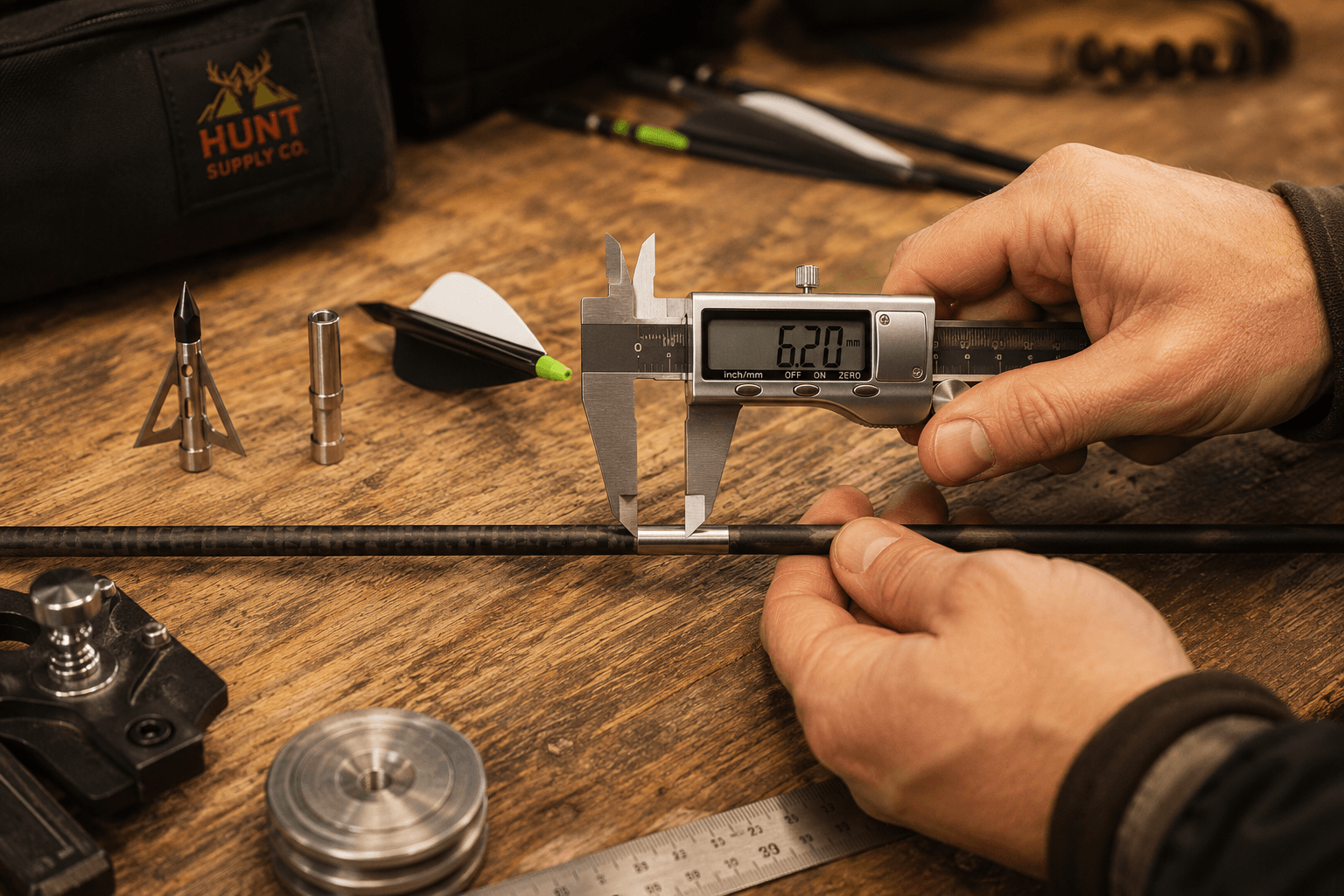
FOC stands for Front of Center, a measurement that tells you how much of your arrow’s weight is positioned forward of the arrow’s physical midpoint. The concept comes from aerospace engineering, where weight distribution affects how projectiles fly and penetrate.
In archery, FOC is expressed as a percentage. A 15% FOC means the arrow’s balance point sits 15% of the arrow’s length forward from the exact center. This forward weight bias affects everything from how your arrow flies to how deeply it penetrates game animals.
Why FOC matters for arrow performance:
The physics behind FOC is straightforward: heavier objects in motion want to keep moving in a straight line. When the front of your arrow weighs more than the back, that forward momentum helps punch through hide, muscle, and bone more effectively than a balanced or rear-heavy arrow.
Calculating FOC requires three measurements: your arrow’s total length, its balance point, and the distance from the nock throat to the balance point. The formula is simple once you have these numbers.
Step-by-step FOC calculation:
Example calculation:
Many archery shops and online retailers offer FOC calculators where you input your measurements and get instant results. These tools are helpful, but understanding the math helps you predict how component changes will affect your FOC before you buy new archery equipment.
Common measurement mistakes to avoid:
A good FOC percentage for hunting arrows typically falls between 10-15% for most North American game, with higher percentages (15-20%+) reserved for larger animals or hunters prioritizing maximum penetration. The “best” FOC depends on what you’re hunting and your shooting setup.
FOC ranges and their applications:
Most factory arrows with standard components land around 10-12% FOC without modification. This works perfectly fine for the majority of hunting bow applications, especially if you’re shooting whitetail deer, hogs, or black bear at typical hunting distances.
The key is matching your FOC to your hunting situation. A hunter in the Midwest shooting whitetails from a tree stand at 20 yards doesn’t need the same setup as someone chasing elk in the mountains where quartering shots through heavy shoulder bones are common.
High FOC setups outperform standard configurations for penetration and stability, but standard setups (10-12% FOC) offer flatter trajectories and are easier to tune. The “better” choice depends on whether you prioritize penetration or speed and trajectory.
High FOC advantages:
Standard FOC advantages:
The practical difference shows up most clearly when things go wrong. A high FOC arrow that hits a rib bone at an angle is more likely to punch through and reach vitals. A standard FOC arrow with the same kinetic energy might deflect or stop short. For perfect broadside shots on smaller game, this difference matters less.
Choose high FOC if:
Choose standard FOC if:
High FOC does improve arrow penetration on deer, particularly on quartering shots or when arrows encounter bone, but the improvement is less dramatic on broadside shots through soft tissue where even standard FOC arrows typically achieve complete pass-throughs. The benefit increases with tougher shot angles and heavier bone structure.
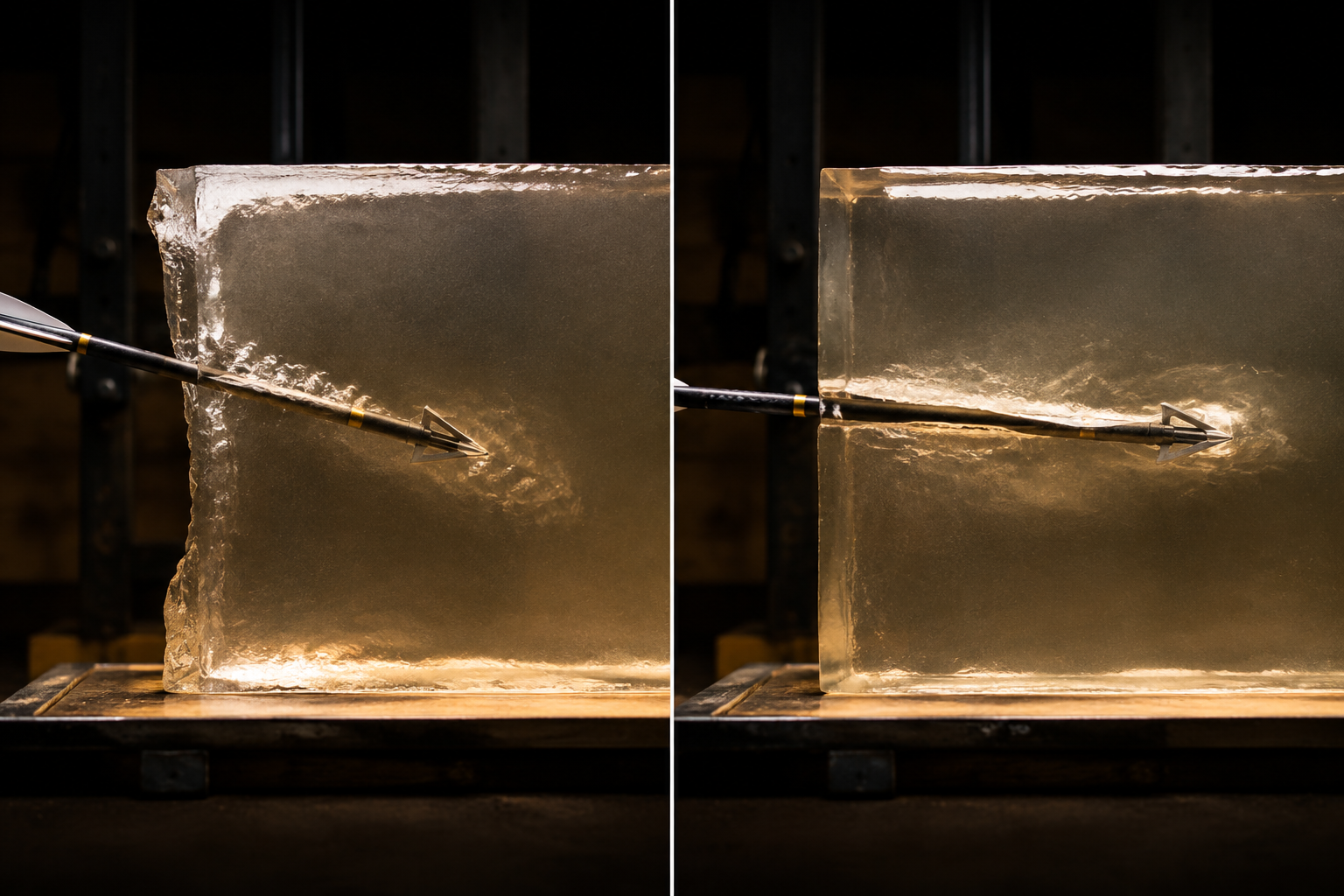
Field testing and hunter experience consistently show that arrows with 15%+ FOC penetrate 2-4 inches deeper on average than 10% FOC arrows with identical kinetic energy. On a perfect broadside shot through the ribs, this extra penetration may not matter since both arrows pass completely through. But on a quartering-away shot where the arrow must travel through 18-20 inches of deer, that extra penetration can mean the difference between a quick recovery and a long tracking job.
Penetration factors beyond FOC:
The penetration advantage of high FOC becomes most apparent when arrows hit the scapula (shoulder blade) or heavy leg bones. The forward weight bias helps the arrow maintain its trajectory through bone rather than deflecting or stopping. Hunters who regularly take quartering-to shots on deer see the most practical benefit from high FOC setups.
For hunters who wait for perfect broadside shots and use sharp fixed-blade broadheads, standard FOC (10-12%) provides plenty of penetration on whitetail deer. The extra investment in high FOC components delivers diminishing returns in these scenarios.
Experienced elk bowhunters typically recommend 15-20% FOC or higher for elk hunting, with many serious elk hunters running setups in the 18-22% range. Elk have heavy bone structure, thick hide, and dense muscle that demands maximum penetration, especially since shot opportunities often come at less-than-ideal angles.
Elk hunting presents unique challenges that make FOC more critical than deer hunting. Elk vitals sit behind a massive shoulder blade that can stop or deflect arrows. The chest cavity is deep, requiring 20-24 inches of penetration to reach far-side vitals. Quartering shots are common in mountain hunting situations where elk rarely present perfect broadside opportunities.
Recommended elk arrow specs:
The combination of high FOC and heavy overall arrow weight creates the momentum needed to punch through elk anatomy. Many elk hunters use brass inserts weighing 75-100 grains combined with 125-150 grain broadheads to achieve these FOC percentages.
Common mistake: Focusing only on FOC while using lightweight arrows. A 350-grain arrow with 20% FOC still lacks the total momentum to reliably penetrate elk. You need both high FOC and adequate total arrow weight.
Bowhunters who consistently kill elk with standard FOC setups do exist, but they’re typically very selective about shot angles and wait for perfect broadside opportunities. If you hunt elk in thick timber or mountain terrain where shot angles vary, the high FOC investment pays off in better penetration and more margin for error.
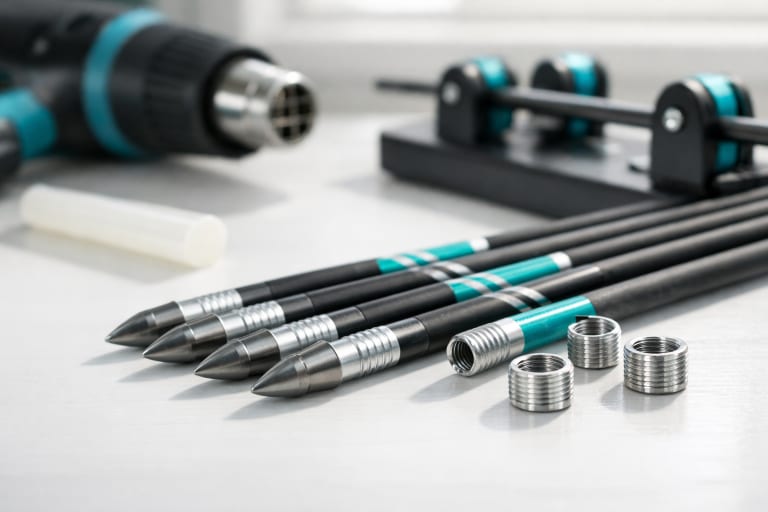
Increasing FOC requires adding weight to the front of your arrow or removing weight from the back. The most effective method is installing heavier components up front, particularly brass or steel inserts and heavier broadheads.
Most effective ways to increase FOC:
Step-by-step FOC increase example:
Starting setup: 29-inch arrow, 100-grain broadhead, standard insert, 12% FOC
The brass insert upgrade provides the biggest FOC jump for the money. A set of brass inserts costs $30-50 and can increase FOC by 4-6 percentage points. This single change often gets hunters into the 15-18% range without other modifications.
Important considerations:
Start with one change at a time and test your arrow flight after each modification. Jumping from 10% to 20% FOC in one step can create tuning challenges that are easier to address incrementally.
FOC is far less important for target shooting than hunting because target archers prioritize accuracy and tight groups over penetration. Most competitive target archers run lower FOC setups (8-12%) that maximize arrow speed and create flatter trajectories, making range estimation and aiming easier.
Target archery focuses on hitting small scoring rings on foam or paper targets where penetration depth is irrelevant. The arrow only needs to stick in the target, not punch through bone and tissue. This changes the optimization equation entirely.
Why target shooters prefer lower FOC:
That said, some target archers do use moderate FOC (10-12%) because it helps with arrow stability and consistency. The forward weight bias makes arrows less sensitive to release errors and helps them fly straighter despite minor form flaws.
3D archery sits in the middle: Shooters who compete in 3D archery tournaments (shooting foam animal targets at unknown distances) often use hunting-style setups with 12-15% FOC. These competitions simulate hunting scenarios, so the equipment philosophy follows hunting logic.
If you shoot both target and hunt with the same bow, a moderate FOC around 12-14% provides a good compromise. You’ll sacrifice a bit of speed compared to dedicated target arrows but gain the penetration benefits when hunting season arrives.
The most common FOC mistake is adding front weight without considering total arrow weight and spine, which can create tuning problems and poor arrow flight. Many archers also miscalculate FOC by measuring incorrectly or forget that FOC is just one factor in arrow performance.
Critical mistakes to avoid:
The spine issue explained: When you add weight to the front of your arrow, it increases the arrow’s resistance to bending during the shot. This makes the arrow act like a stiffer spine. If you’re already shooting the correct spine and then add 100 grains up front, your arrows may fly stiff (hitting left for right-handed shooters). You might need to drop one spine rating to compensate.
Another frequent mistake is obsessing over FOC while neglecting broadhead sharpness and shot placement. A perfectly tuned 10% FOC arrow with a razor-sharp broadhead and good shot placement will outperform a poorly tuned 20% FOC arrow with a dull broadhead every time.
Testing protocol after FOC changes:
Both FOC and momentum matter for hunting, but momentum (arrow weight × velocity) determines total penetration potential while FOC affects how efficiently that momentum transfers through tissue and bone. You need adequate momentum first, then optimize FOC to maximize penetration from that momentum.
Think of momentum as the total energy available to drive your arrow through an animal, while FOC determines how effectively that energy gets used. A heavy arrow with low FOC has plenty of momentum but may deflect or veer off course when hitting bone. A light arrow with high FOC has good weight distribution but lacks the total mass to punch through heavy tissue.
The relationship explained:
A 450-grain arrow at 270 fps generates 0.52 slugs of momentum. That same arrow with 10% FOC will penetrate less than the same arrow with 18% FOC, even though momentum is identical. The high FOC version maintains its trajectory better through tissue and bone, using the available momentum more efficiently.
Optimal combination for hunting:
Many bowhunters make the mistake of building ultra-light arrows (350-400 grains) with high FOC and wondering why penetration disappoints. The FOC helps, but the lack of total momentum limits penetration regardless of weight distribution.
Conversely, shooting very heavy arrows (550+ grains) with low FOC (8-10%) generates excellent momentum but gives up some penetration efficiency. The arrow has the mass to punch through but may deflect more easily when hitting bone at an angle.
You don’t strictly need high FOC for whitetail deer hunting if you take broadside shots and use sharp broadheads, but 12-15% FOC provides extra insurance for less-than-perfect shot angles and bone contact. Standard FOC setups (10-12%) work fine for most whitetail hunting situations.
Whitetail deer are relatively thin-skinned with lighter bone structure compared to elk or moose. A well-placed arrow from a properly tuned bow with standard FOC typically achieves complete pass-through on broadside shots. The extra penetration from high FOC becomes beneficial in specific scenarios:
When high FOC helps on whitetails:
When standard FOC is sufficient:
Many successful whitetail hunters use factory arrows with 10-12% FOC and achieve consistent pass-throughs. The key factors are sharp broadheads, proper shot placement, and adequate total arrow weight (400+ grains). If you’re already achieving pass-throughs consistently, increasing FOC may not provide noticeable benefits.
That said, building a 14-16% FOC setup for whitetails is inexpensive (usually just adding a brass insert) and provides extra margin for error. If you hunt in areas where shot angles vary or you occasionally take quartering shots, the modest investment in higher FOC makes sense.
Arrows with too-low FOC (under 8%) tend to fly erratically, especially with broadheads, and penetrate poorly when hitting bone or dense tissue. The rear-heavy balance makes arrows more sensitive to wind, release errors, and steering problems after impact.
Low FOC creates a “tail-heavy” arrow that wants to swap ends in flight. The fletching at the back weighs more than the point up front, creating instability. While the arrow may fly acceptably with field points, adding a broadhead often reveals the problem through poor groups and erratic flight.
Problems caused by low FOC:
The penetration issue stems from physics. When a rear-heavy arrow hits resistance (bone, hide, muscle), the heavy back end wants to keep moving while the light front end slows down. This creates a tumbling effect that kills penetration. A front-heavy arrow keeps driving forward because the heavy point maintains momentum.
How to diagnose low FOC problems:
If you’re experiencing these issues, calculate your FOC using the formula from earlier. If it’s under 8%, adding front weight should solve most problems. Even bringing FOC up to 10-12% typically eliminates erratic flight and improves penetration noticeably.
Quick fix: Add a 50-75 grain brass insert and retest. This simple change usually increases FOC by 3-5 percentage points and costs less than $40 for a dozen arrows.
Fixed-blade broadheads in the 125-150 grain range work best with high FOC setups because they add front weight while maintaining durability and flight characteristics. Popular choices include Grizzly Stik Maasai, Iron Will S-Series, and Cutthroat 150-grain models that complement the forward weight bias.
High FOC arrows already carry substantial front weight from brass inserts and heavy points. The broadhead needs to match this setup philosophy by adding weight without creating flight problems. Fixed-blade broadheads accomplish this better than mechanicals because they’re simpler, more durable, and less likely to fail on heavy bone contact.
Top broadhead characteristics for high FOC:
Recommended models:
Mechanical broadheads can work with high FOC setups, but they’re not ideal. The deployment mechanism adds complexity and potential failure points. When you’re already running heavy arrows with high FOC for maximum penetration, fixed blades make more sense because they’re more reliable on heavy bone contact.
Blade count considerations:
For high FOC hunting setups focused on elk and larger game, 2-blade or 3-blade fixed broadheads in 125-150 grains provide the best combination of weight, durability, and penetration. Match your broadhead weight to your field points during practice, then verify they fly identically before hunting.
FOC is not a marketing gimmick; it’s a measurable physical property that demonstrably affects arrow flight and penetration, backed by both physics principles and extensive field testing. However, some manufacturers do oversell FOC as a magic solution while downplaying other important factors like total arrow weight and broadhead sharpness.
The physics behind FOC is sound and comes from aerospace engineering. Forward weight bias improves projectile stability and penetration, which is why bullets, missiles, and darts are all designed with more weight up front. This isn’t controversial or debatable; it’s basic physics that applies to arrows just as it applies to other projectiles.
Verified benefits of proper FOC:
Where marketing exaggerates:
Thousands of bowhunters have tested FOC changes on their own setups and consistently report improved penetration and flight characteristics when moving from 8-10% FOC to 15-18% FOC. This isn’t marketing hype; it’s reproducible results from real-world hunting.
The controversy around FOC typically comes from hunters who’ve successfully killed game with standard FOC setups and therefore dismiss high FOC as unnecessary. They’re not wrong that standard FOC works, but that doesn’t make high FOC a gimmick. It’s simply an optimization that provides extra margin for error and better performance in challenging situations.
Bottom line: FOC is real and beneficial, but it’s one factor among many. Focus on building a complete arrow system with adequate total weight, proper FOC for your game species, sharp broadheads, and good shot placement. FOC helps, but it’s not magic.
What is the minimum FOC for hunting arrows?
The minimum FOC for hunting arrows is 8-10%, though 10-12% is more reliable for consistent penetration on deer-sized game. Anything below 8% FOC typically causes flight and penetration problems, especially with broadheads.
Can FOC be too high?
FOC can be too high if it exceeds 25-30%, at which point arrows become difficult to tune and may exhibit erratic flight. For practical hunting purposes, 15-20% FOC provides maximum benefits without tuning challenges.
Does FOC affect arrow speed?
FOC itself doesn’t directly affect arrow speed, but achieving high FOC usually requires adding front weight, which increases total arrow weight and reduces speed. The FOC percentage is about weight distribution, not total weight.
How much does brass insert weight affect FOC?
A 75-100 grain brass insert typically increases FOC by 4-6 percentage points compared to a standard 12-20 grain aluminum insert. This is the most cost-effective way to significantly boost FOC.
Should I use the same FOC for practice and hunting arrows?
Yes, your practice arrows should match your hunting arrow FOC as closely as possible. Use field points that weigh the same as your broadheads to ensure identical flight characteristics and practice with realistic setups.
Does draw weight affect what FOC I need?
Draw weight doesn’t change the ideal FOC percentage, but lower draw weights (50-60 pounds) benefit more from high FOC because they generate less kinetic energy. Higher FOC helps maximize penetration from limited energy.
Can I calculate FOC without special tools?
Yes, you only need a ruler and a way to balance your arrow (your finger works fine). Measure arrow length, find where it balances, measure from nock to balance point, and apply the formula: [(Balance Point – Length/2) / Length] × 100.
What FOC do Olympic archers use?
Olympic recurve archers typically use 8-12% FOC because they prioritize arrow speed and flat trajectory over penetration. Their arrows are optimized for accuracy on paper targets, not hunting performance.
Does arrow length affect FOC?
Arrow length affects the FOC calculation because FOC is a percentage of total length. Shorter arrows with the same components will have higher FOC percentages than longer arrows because the balance point represents a larger percentage of the shorter length.
How often should I check my arrow FOC?
Check FOC whenever you change arrow components (broadheads, inserts, nocks, or fletching) or if you notice changes in arrow flight or penetration. Otherwise, FOC remains constant unless components wear out or get damaged.
Will high FOC help with crosswind drift?
Yes, high FOC reduces crosswind drift because the forward weight bias helps arrows maintain their trajectory. The heavier front end resists being pushed sideways by wind better than balanced or rear-heavy arrows.
Can I use high FOC arrows in a fast bow?
Yes, you can use high FOC arrows in any bow, but fast bows (IBO speeds over 340 fps) typically require heavier arrows to achieve high FOC, which reduces the speed advantage. The combination still works well for hunting.
Understanding what FOC is and whether it matters for hunting comes down to matching your arrow setup to your hunting situations. FOC measures how much of your arrow’s weight sits forward of center, and for most hunting applications, 12-15% FOC provides excellent performance. Hunters pursuing larger game like elk or taking quartering shots benefit from pushing FOC to 15-20% for maximum penetration.
The practical steps are straightforward: calculate your current FOC using the simple formula, determine whether your typical hunting scenarios demand higher FOC, and make targeted upgrades like brass inserts or heavier broadheads if needed. Don’t chase extreme FOC numbers at the expense of total arrow weight or proper tuning. A well-balanced arrow system with adequate momentum, appropriate FOC for your game, and razor-sharp broadheads will serve you better than obsessing over any single metric.
Start by measuring your current setup’s FOC and testing penetration on foam targets or ballistic gel. If you’re achieving complete pass-throughs on your target game species, your current FOC is working. If penetration seems lacking or you’re planning to hunt larger game, incrementally increase FOC and retest. The investment in brass inserts and heavier broadheads is modest compared to the confidence gained from knowing your arrows will penetrate when it matters most.
For more guidance on selecting the right equipment for your hunting style, explore our hunting bow resources and archery equipment guides.