
Newsletter Subscribe
Enter your email address below and subscribe to our newsletter
All voices matter
All voices matter

Learn how to sight in a bow at 20 yards with step-by-step instructions, adjustment techniques, and expert tips for compound and recurve bows.
 ByTravis
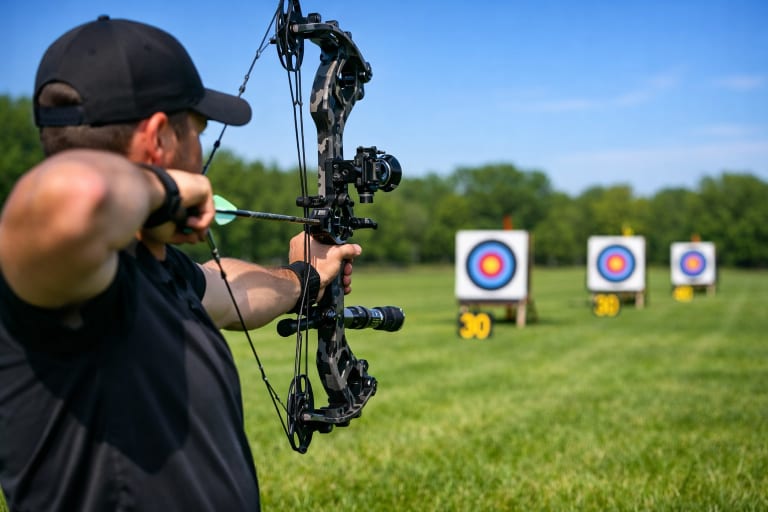
Most archers should build fundamentals at 20 yards before extending to longer distances - beginners start at 10-15 yards, intermediate shooters practice at their common distance plus 10-20 yards.
ByTravisA bow stringer is the safest way to string a recurve - seat the pockets on each limb tip, step on the cord, and pull the bow upward while sliding the string into the grooves.
ByTravis
A DIY archery target needs 12-18 inches of layered dense foam in a wooden frame with a weatherproof cover for outdoor use - total cost runs - depending on materials.
ByTravis
Yes - you should unstring a recurve bow after shooting if you won't use it again soon. Leaving it strung continuously puts constant stress on the limbs, risking deformation and shortened bow life.
ByTravis
Most archers need 6-12 arrows to start - enough for practice sessions, with hunters typically carrying 3-6 in the field and competitive archers owning a dozen or more.
ByTravis
Aluminum arrows offer straightness, durability, and lower cost, while carbon arrows deliver more speed, lighter weight, and better penetration for hunting.
ByTravis
Your arrows should extend 1-2 inches past the arrow rest at full draw - measure your draw length and add that margin to find the right arrow length.
ByTravis
A bow shooting consistently left or right usually comes down to shooter form, equipment problems, or tuning errors - here's how to diagnose which one is causing yours.
ByTravis
Bow tuning is the process of adjusting your bow's components - rest position, nocking point, cam timing, centershot - so arrows fly straight and consistently.
ByTravis