Newsletter Subscribe
Enter your email address below and subscribe to our newsletter
All voices matter
All voices matter
 ByTravis
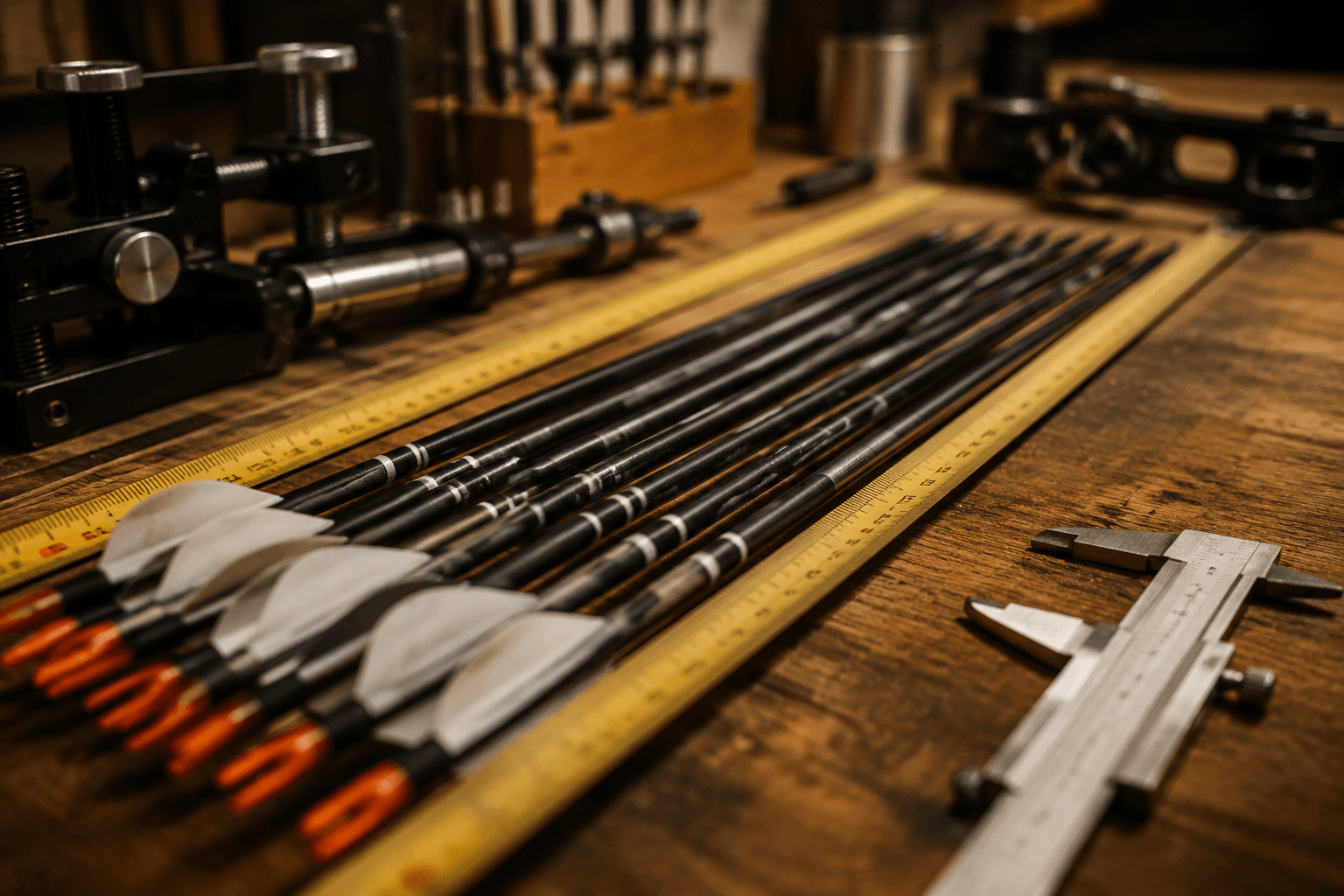
Your arrows should extend 1-2 inches past the arrow rest at full draw - measure your draw length and add that margin to find the right arrow length.
Affiliate Disclaimer: We are a participant in the Amazon Services LLC Associates Program, an affiliate advertising program designed to provide a means for sites to earn advertising fees by advertising and linking to Amazon.com. As an Amazon Associate I earn from qualifying purchases. We also participate in other affiliate programs.

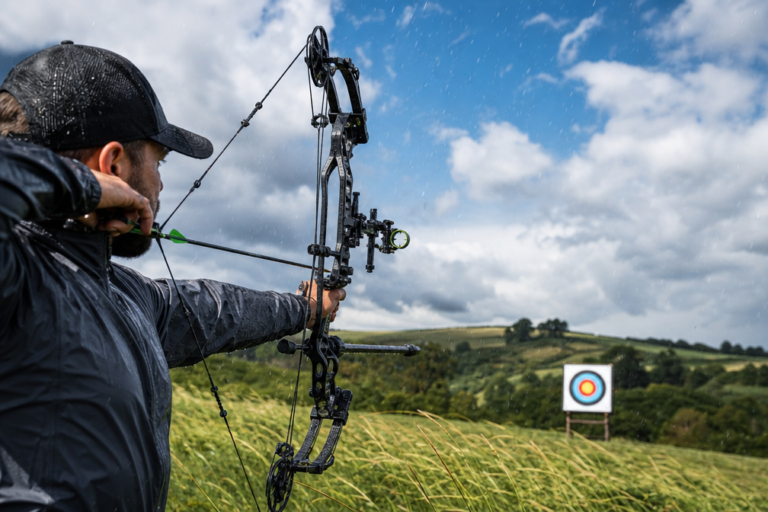
Your arrows should extend 1 to 2 inches past the front of your arrow rest when you’re at full draw. To determine the correct arrow length, measure your draw length and add 1 to 2 inches for safety and clearance. Most archers with a 28-inch draw length will need arrows between 29 and 30 inches long, though individual bow setup and shooting style can affect this measurement.
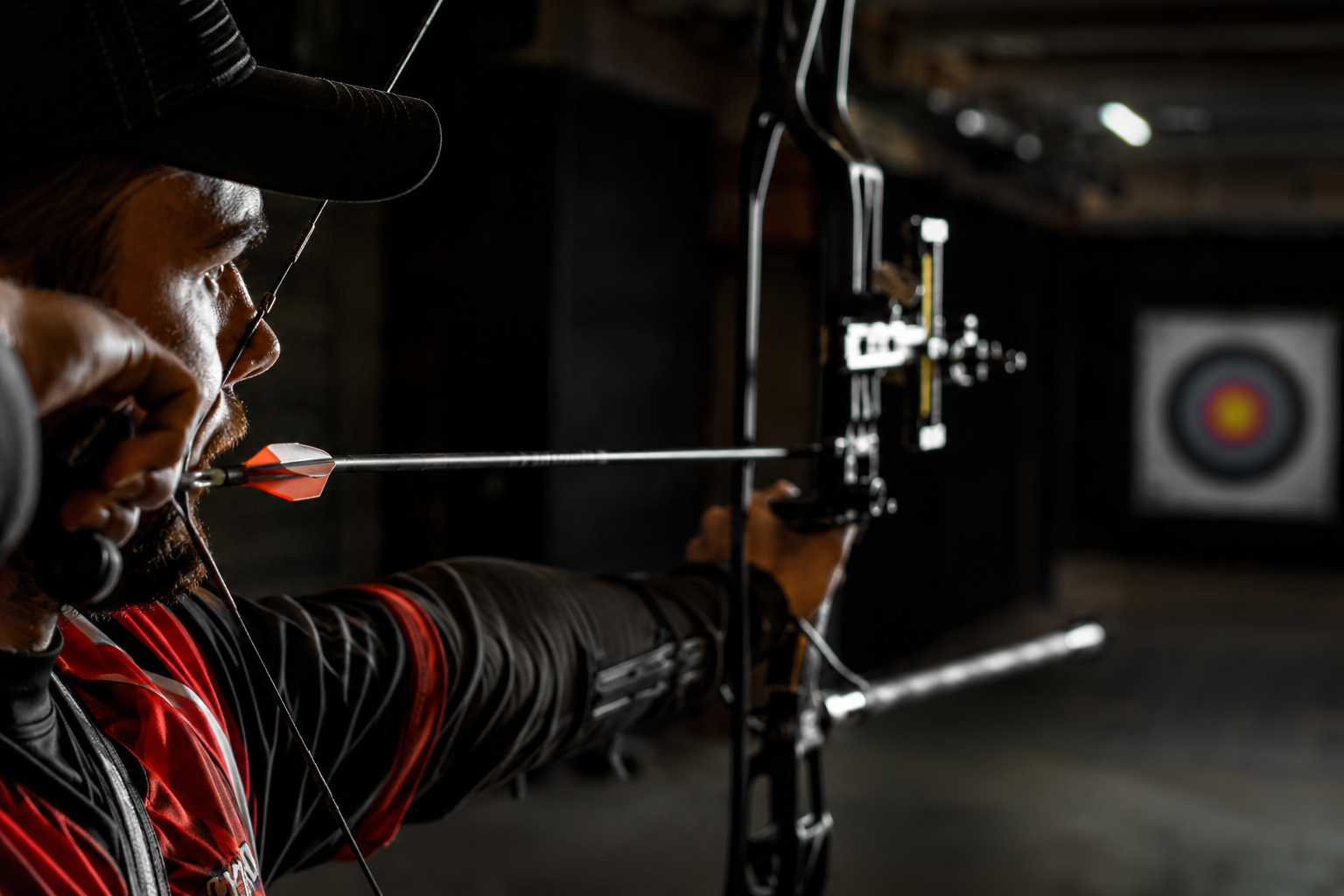
Arrow length is measured from the bottom of the nock groove (where the string sits) to the end of the arrow shaft, not including the field point or broadhead. This standardized measurement ensures consistency across all arrow manufacturers and makes it easier to compare different arrow models.
To measure your arrows accurately:
This measurement differs from how you might naturally think about arrow length. Many beginners mistakenly measure from the very back of the nock or include the point in their measurement, which leads to ordering arrows that are actually too short when they arrive.
Common mistake: Measuring from the outside of the nock instead of the groove can add nearly half an inch to your measurement, resulting in arrows that are dangerously short when properly installed.
Arrows that are too short create serious safety hazards and can damage your bow. When an arrow doesn’t extend past the arrow rest at full draw, it can fall off the rest during the draw cycle, causing the bow to dry-fire (release without an arrow). A dry-fire releases all the bow’s stored energy directly into the limbs and cam system, often causing catastrophic damage that can cost hundreds of dollars to repair.
Safety risks of short arrows include:
Beyond safety concerns, arrows that barely clear the rest at full draw leave no margin for error. Small changes in your anchor point, different clothing thickness, or shooting in cold weather when you’re wearing gloves can all affect your draw length slightly. That safety buffer of 1-2 inches accommodates these natural variations.
Choose arrows on the longer side if: You’re a beginner still developing consistent form, you shoot in varying conditions, or you’re still growing (for youth archers).
This chart provides recommended arrow lengths based on standard draw lengths for compound and recurve bows. These recommendations include the standard 1-2 inch safety margin.
| Draw Length | Recommended Arrow Length | Notes |
|---|---|---|
| 24″ | 25-26″ | Common for youth archers |
| 26″ | 27-28″ | Youth to small adult |
| 27″ | 28-29″ | Small to average adult |
| 28″ | 29-30″ | Average adult male |
| 29″ | 30-31″ | Above average adult |
| 30″ | 31-32″ | Tall adult |
| 31″ | 32-33″ | Very tall adult |
| 32″ | 33-34″ | Extra tall adult |
These measurements work for most standard bow setups. However, bows with longer or shorter brace heights, different rest positions, or specialized setups may require adjustments. When in doubt, start longer and trim down gradually.
For compound bows specifically: Modern compound bows with aggressive cam systems and short brace heights may benefit from the full 2-inch addition, while older single-cam or hybrid-cam bows might work fine with just 1 inch added.
Draw length and arrow length are related but distinct measurements that serve different purposes. Draw length measures the distance from the nock point to the throat of the grip (pivot point) plus 1.75 inches, following the standard AMO (Archery Manufacturers Organization) measurement method. Arrow length, as discussed earlier, measures only the arrow shaft itself from nock groove to cut end.
Key differences:
Your draw length determines your arrow length, but they’re never the same number. If your bow is set to a 28-inch draw length, you need arrows that are 29-30 inches long. The extra length ensures the arrow point stays safely on the rest throughout your entire draw cycle.
For those just starting out, getting an accurate draw length measurement is the critical first step. Many archery equipment shops offer free draw length measurements, or you can use the wingspan method: measure your wingspan from fingertip to fingertip and divide by 2.5.
Yes, arrows can be too long, though this creates performance issues rather than safety hazards. Excessively long arrows add unnecessary weight to the front of the arrow (FOC – Front of Center), which slows arrow speed, increases drop over distance, and can affect accuracy. Each extra inch of arrow shaft typically adds 5-10 grains of weight depending on the shaft material and diameter.
Performance impacts of overly long arrows:
However, arrows that are 1-2 inches longer than the minimum safe length rarely cause noticeable problems for most archers. The performance difference between a 29-inch and 31-inch arrow for a 28-inch draw length is minimal for recreational shooting and target archery at typical distances.
Choose slightly longer arrows if: You’re a beginner still refining your form, you want maximum safety margin, or you might increase your draw length as your form develops. You can always cut them shorter later, but you can’t add length back.
At full draw, your arrow point should extend 1 to 2 inches past the arrow rest. This measurement provides adequate safety clearance while avoiding excessive length that would hurt performance. The exact amount within this range depends on your shooting discipline, experience level, and personal preference.
Recommended extensions by discipline:
To check this measurement, have someone mark your arrow at the front of the rest while you’re at full draw (with the bow unloaded and safe), or use a draw-check arrow designed for this purpose. Never attempt to measure this yourself while at full draw.
Edge case: Archers using drop-away rests on compound bows may prefer arrows closer to the 2-inch mark because the rest drops completely out of the way, and the extra clearance ensures the arrow never contacts the rest during any part of the shot cycle.
Beginners should always err on the side of longer arrows, typically adding the full 2 inches to their draw length. New archers are still developing consistent anchor points and draw length, which can vary by half an inch or more between shots. The extra length provides a safety buffer during this learning phase and prevents dangerous situations as form develops.
Beginner recommendations:
Experienced archers with consistent form can optimize arrow length more precisely. Many competitive archers use arrows that extend just 1 to 1.25 inches past the rest, maximizing performance while maintaining adequate safety. These archers have thousands of shots under their belt and know their draw length won’t vary.
Experienced archer considerations:
For those new to the sport, our guide on what draw weight should a beginner start with covers another critical setup decision that works hand-in-hand with arrow length selection.
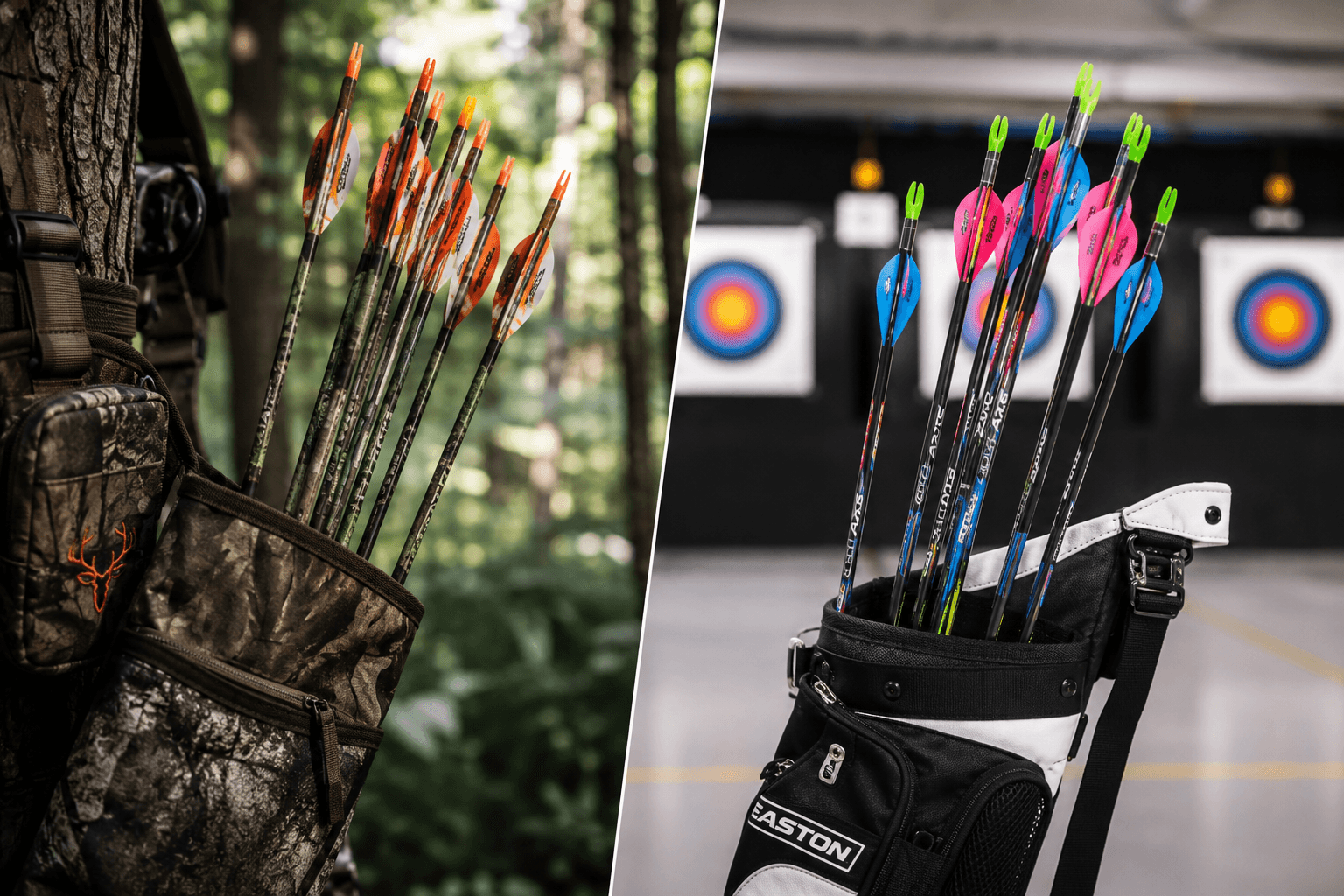
Most archers can use the same arrow length for both hunting and target shooting, though some hunters prefer slightly shorter arrows for specific advantages. The primary difference isn’t usually length but rather arrow weight, broadhead type, and shaft durability. However, if you’re optimizing separate setups, hunting arrows are often cut 0.5 to 1 inch shorter than target arrows.
Reasons hunters choose shorter arrows:
Target shooters prefer longer arrows for:
The difference is usually minimal. An archer with a 28-inch draw might shoot 30-inch arrows for target practice and 29-inch arrows for hunting. Both are safe; the hunting arrows just optimize for the specific demands of bowhunting where every bit of kinetic energy and noise reduction matters.
Important: Never compromise safety for marginal performance gains. If you’re uncertain, stick with the same arrow length for both disciplines.
Many archers make predictable errors when selecting arrow length, often because they prioritize the wrong factors or receive poor advice. Understanding these common mistakes helps you avoid them and choose arrows that are both safe and effective.
Most frequent arrow length mistakes:
The “buddy’s recommendation” trap: Just because your friend shoots 28-inch arrows doesn’t mean you should. Draw length varies significantly between individuals, and arrow length must match your specific measurements, not someone else’s successful setup.
Another critical mistake is failing to re-check arrow length when changing bows or making significant equipment modifications. A new bow with a different brace height or rest position might require different arrow length even if your draw length hasn’t changed.
Accurate draw length measurement is the foundation of proper arrow length selection. The most reliable method is to visit an archery pro shop where trained technicians can measure you with a draw-check bow, but you can also get a good estimate at home using the wingspan method.
Wingspan method (home measurement):
For example, if your wingspan is 70 inches, your draw length is approximately 70 ÷ 2.5 = 28 inches.
Professional measurement method:
Pro shops use a draw-check bow (a bow with a marked arrow and adjustable draw length) to measure your actual draw length at your natural anchor point. This method accounts for your individual shooting style, anchor point preference, and body mechanics, making it more accurate than the wingspan calculation.
Factors that affect draw length:
Once you know your draw length, add 1-2 inches to determine your arrow length. For archery for beginners, this measurement should be verified by a professional before purchasing arrows.
For a 28-inch draw length, you need arrows that are 29 to 30 inches long. Most archers with this draw length will find 29.5-inch arrows provide the ideal balance of safety and performance. This gives you approximately 1.5 inches of arrow extending past the rest at full draw, which is sufficient for safe shooting while not adding unnecessary weight.
Specific recommendations for 28-inch draw:
When ordering arrows, many manufacturers offer standard lengths in 1-inch increments (28″, 29″, 30″, etc.). If you need 29.5 inches, order 30-inch arrows and have them cut to your exact specification. Most archery shops provide free arrow cutting with purchase.
Compound bow considerations: Modern compound bows with short brace heights (6-7 inches) and aggressive cams may benefit from the longer end of this range (30 inches) because the arrow travels farther forward during the draw cycle.
Recurve bow considerations: Traditional recurve and Olympic recurve shooters with 28-inch draw lengths often use 30-31 inch arrows because the arrow rest position is farther forward on the riser, and the arrow must extend significantly past the rest for proper clearance.
Incorrect arrow length creates serious safety hazards that can result in injury to the archer or damage to equipment. Understanding these risks reinforces why proper arrow length is non-negotiable, not just a performance optimization.
Critical safety issues with too-short arrows:
Problems with excessively long arrows:
The most dangerous scenario is an arrow that seems “just long enough” but doesn’t account for variations in form, clothing, or shooting conditions. An arrow that clears the rest by a quarter-inch in summer clothing might not clear it when wearing a heavy jacket in cold weather.
Safety rule: If you’re ever uncertain whether an arrow is long enough, it isn’t. Always choose the longer option and trim down only after confirming adequate clearance through multiple shooting sessions.
Carbon arrows deserve special attention because they fail catastrophically when they break, unlike aluminum arrows that typically bend. Never shoot a carbon arrow with any visible damage, cracks, or splinters, and always inspect arrows before each shooting session.
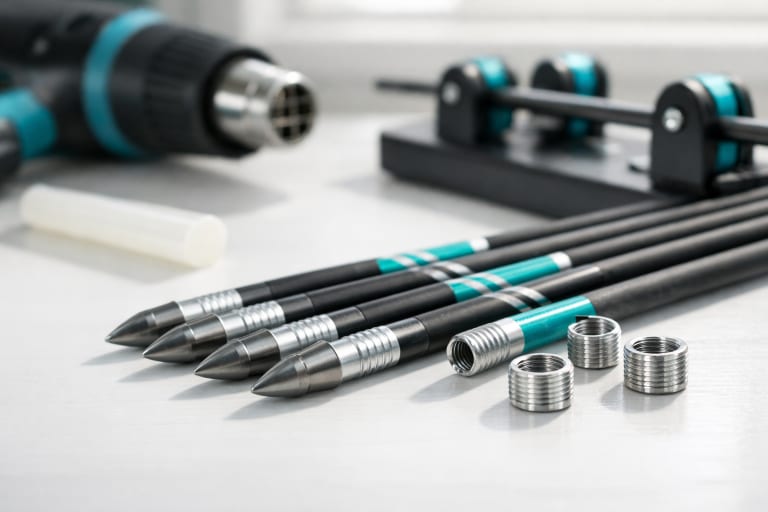
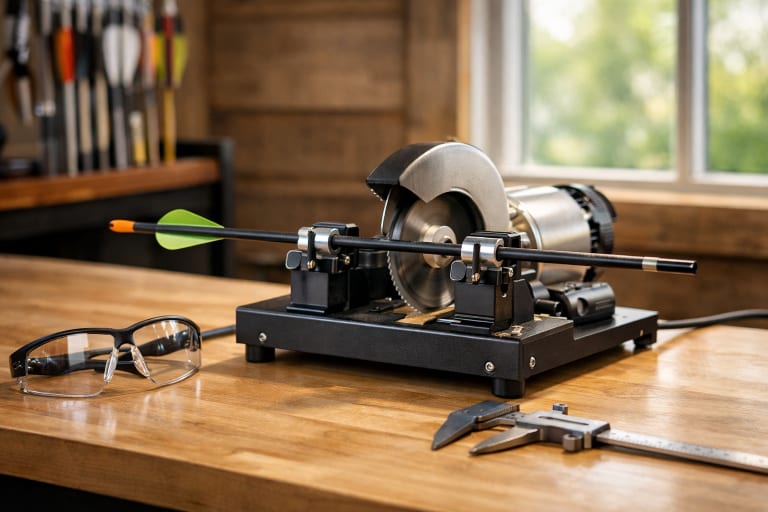
Most archers should have arrows cut by a professional archery shop rather than attempting to cut them at home. Professional shops have specialized arrow saws that create clean, square cuts without damaging the shaft, and they can install inserts properly at the same time. The service is typically free or costs just a few dollars per dozen arrows.
Advantages of professional arrow cutting:
When DIY cutting makes sense:
If you shoot frequently and need to make minor adjustments, investing in a quality arrow saw ($100-300) can be worthwhile. However, this only makes sense for experienced archers who understand proper cutting technique and have cut dozens of arrows under supervision first.
DIY cutting requirements:
Critical mistake to avoid: Never cut carbon arrows with a pipe cutter, hacksaw, or any tool not designed specifically for arrows. These tools crush the shaft, create splinters, and compromise structural integrity. A damaged arrow can explode on release, sending carbon splinters into your hand or arm.
For youth archery participants, always have arrows cut professionally. As young archers grow and their draw length increases, they’ll need arrows recut multiple times, making the professional relationship valuable.
Can I shoot arrows that are too long?
Yes, you can safely shoot arrows that are longer than necessary, though they’ll be slightly slower and may drop more at distance. Arrows up to 2-3 inches longer than optimal won’t significantly affect recreational shooting performance.
How often should I check my arrow length?
Check arrow length whenever you change bows, modify your bow setup, or notice changes in your shooting form. Most archers should verify arrow clearance at the beginning of each season.
Do heavier draw weights require longer arrows?
No, draw weight doesn’t directly affect arrow length requirements. However, heavier draw weights often correlate with longer draw lengths (because larger, stronger archers typically pull heavier weights), which would require longer arrows.
Can I use the same arrows on different bows?
Only if both bows have the same or shorter draw length than the bow the arrows were sized for. Arrows sized for a 28-inch draw bow can work on a 27-inch draw bow but not safely on a 29-inch draw bow.
What if my arrows are half an inch too short?
Half an inch too short is potentially dangerous. If your arrows don’t extend at least 1 inch past the rest at full draw, they should be replaced with properly sized arrows.
Do I need different arrow lengths for different shooting distances?
No, arrow length remains constant regardless of shooting distance. The same arrows work for 20 yards and 60 yards. However, you might choose different arrow weights or spine ratings for different purposes.
How do I know if my arrows are the right length?
At full draw, your arrow point should extend 1-2 inches past the front of your arrow rest. Have someone observe and measure this while you’re at full draw (with an unloaded bow in a safe environment).
Can arrow length affect accuracy?
Indirectly, yes. Arrows that are too short create safety concerns that affect confidence and form. Arrows that are excessively long add weight that can affect trajectory and wind drift, particularly at longer distances.
Should I buy arrows longer than I need and cut them later?
Yes, this is the recommended approach, especially for beginners. Buy arrows 1-2 inches longer than your calculated need, verify proper length through shooting, then have them trimmed if necessary.
Do different arrow materials require different length considerations?
The length calculation remains the same regardless of material (carbon, aluminum, or hybrid), but carbon arrows are less forgiving of being too short because they fail catastrophically rather than bending like aluminum.
How does arrow length affect spine selection?
Longer arrows act more flexible (weaker spine) than shorter arrows of the same shaft. When you cut arrows shorter, they become stiffer. This is why spine charts always ask for both draw weight and arrow length.
What’s the minimum safe arrow length?
The minimum safe arrow length is your draw length plus 1 inch, but this leaves almost no margin for error. For most archers, draw length plus 1.5-2 inches is the practical minimum.
Determining how long your arrows should be comes down to a simple formula: measure your draw length accurately and add 1 to 2 inches for safety clearance. For most archers, this means arrows that extend 1 to 2 inches past the arrow rest at full draw, providing adequate safety margin without adding excessive weight or length.
Your action steps:
Remember that arrow length is a safety issue first and a performance consideration second. Arrows that are slightly too long will still shoot accurately and safely, while arrows that are too short create dangerous situations that can damage equipment or cause injury.
Whether you’re just getting started with archery training or optimizing your setup for competition, proper arrow length is one of the most important equipment decisions you’ll make. Take the time to measure correctly, and don’t hesitate to consult with professionals at your local archery shop, most offer free advice and arrow cutting services that ensure you get it right the first time.