Newsletter Subscribe
Enter your email address below and subscribe to our newsletter
All voices matter
All voices matter
 ByTravis
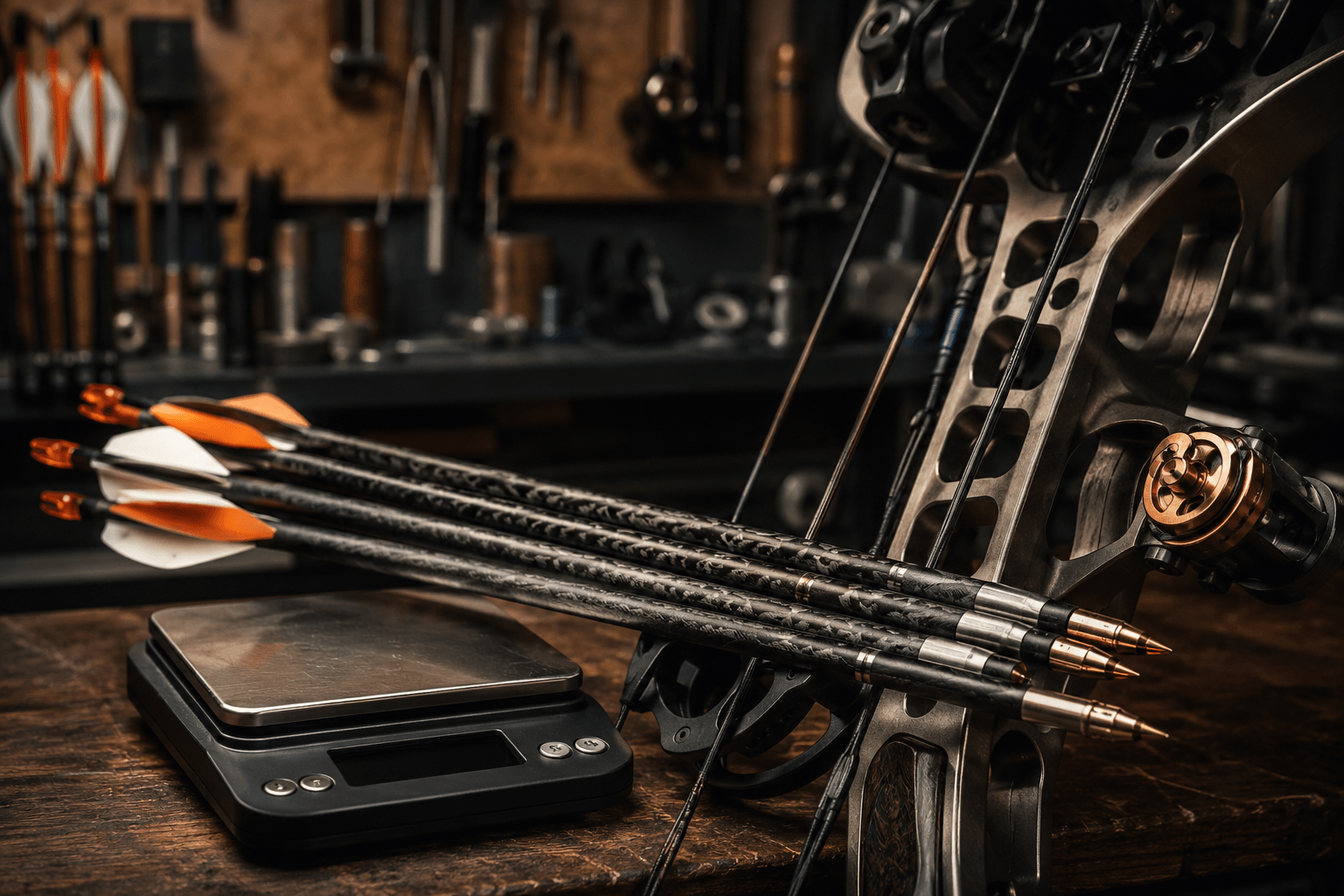
Yes - arrows lighter than your bow's minimum weight spec can damage limbs, cams, and strings, void your warranty, and create a real safety hazard.
Affiliate Disclaimer: We are a participant in the Amazon Services LLC Associates Program, an affiliate advertising program designed to provide a means for sites to earn advertising fees by advertising and linking to Amazon.com. As an Amazon Associate I earn from qualifying purchases. We also participate in other affiliate programs.

Yes, arrows can absolutely be too light for your bow. Shooting arrows that fall below the manufacturer’s minimum weight specification can damage your bow’s limbs, cams, and strings, void your warranty, and create dangerous situations. Most bow manufacturers recommend a minimum arrow weight of 5 grains per pound of draw weight, though many hunters and experienced archers prefer 6-10 grains per pound for better performance and equipment longevity.
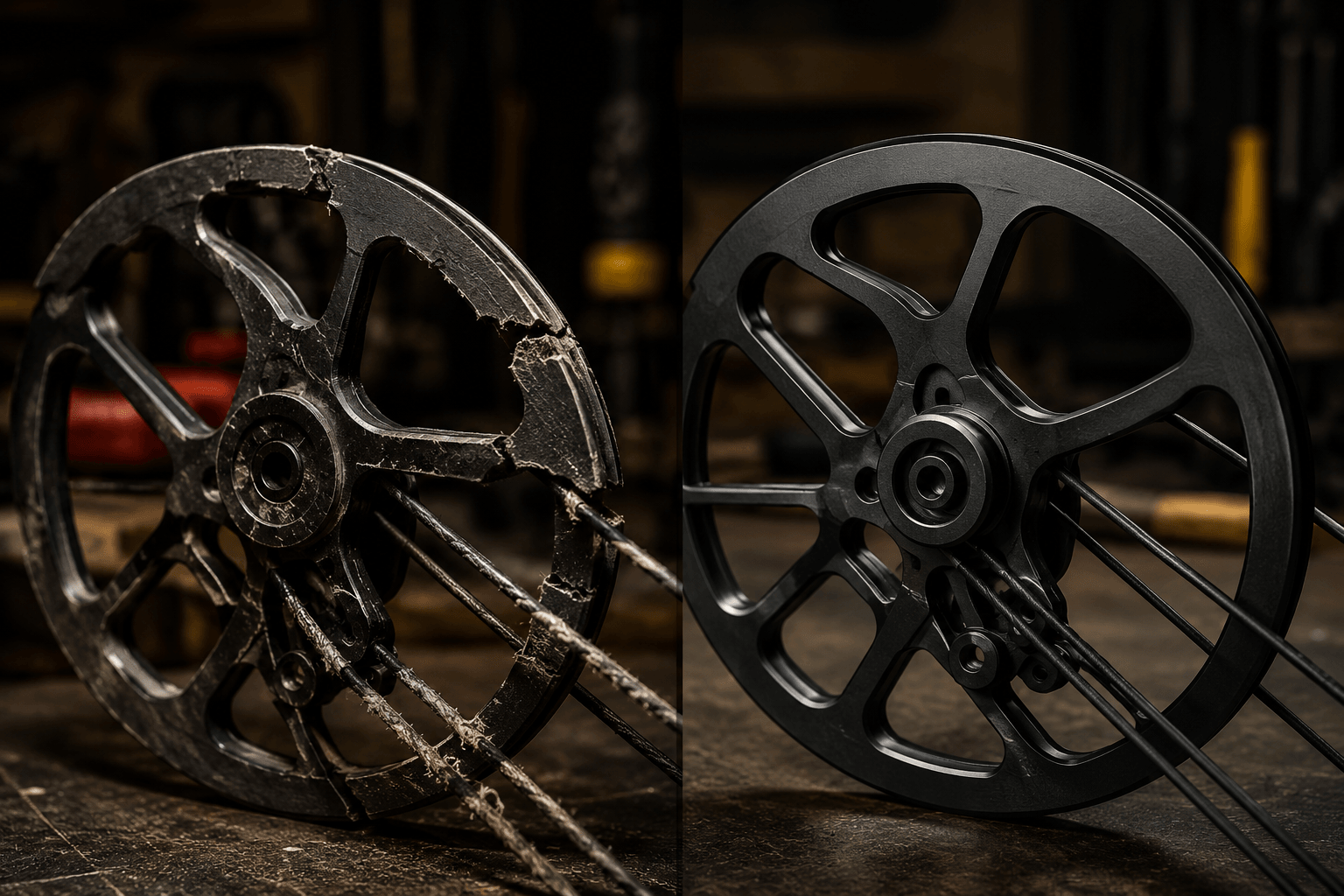
Shooting arrows that are too light for your bow creates excessive shock and vibration that transfers directly into your bow’s limbs, cams, and riser. When you release an arrow, the stored energy in your bow’s limbs needs somewhere to go. A properly weighted arrow absorbs most of this energy and carries it downrange. An underweight arrow fails to absorb enough energy, leaving the excess to reverberate through your bow’s components.
This excess energy manifests in several damaging ways:
The damage accumulates over time. You might not notice problems after a few shots, but shooting underweight arrows regularly will shorten your bow’s lifespan significantly. Some catastrophic failures happen suddenly, creating dangerous situations where limbs or cams can break during the draw cycle.
Light arrows absolutely can damage your bow, and the damage often occurs in ways that aren’t immediately visible. The physics are straightforward: your bow stores energy when you draw it back, and that energy must go somewhere when released. An arrow that’s too light doesn’t absorb enough of that stored energy, forcing your bow to absorb the excess instead.
Common damage patterns from shooting underweight arrows:
Modern compound bows are engineered with specific arrow weight minimums in mind. When you exceed those design parameters by shooting arrows that are too light, you’re essentially asking your equipment to perform outside its safe operating range. The materials and construction methods used in bow manufacturing assume you’ll be shooting arrows within the recommended weight range.
For those just getting started with archery, understanding arrow weight is as fundamental as choosing the right draw weight for your physical capabilities.
A dry fire occurs when you draw and release a bow without an arrow nocked, causing all the stored energy to slam back into the bow itself. This is one of the most destructive things you can do to a bow, often causing immediate and catastrophic damage. Shooting arrows that are too light creates a similar effect, though less extreme.
The relationship between arrow weight and dry-firing exists on a spectrum. A properly weighted arrow might absorb 75-85% of your bow’s stored energy. An underweight arrow might only absorb 50-60%, leaving 40-50% to reverberate through the bow. A dry fire leaves 100% of the energy in the bow with nowhere to go.
Energy absorption comparison:
| Scenario | Energy Absorbed by Arrow | Energy Returned to Bow | Risk Level |
|---|---|---|---|
| Proper arrow weight (6-10 GPP) | 75-85% | 15-25% | Safe |
| Minimum arrow weight (5 GPP) | 65-75% | 25-35% | Acceptable |
| Underweight arrow (3-4 GPP) | 50-60% | 40-50% | Dangerous |
| Dry fire (no arrow) | 0% | 100% | Catastrophic |
This is why bow manufacturers are so specific about minimum arrow weights. They’re not being overly cautious; they’re protecting both you and your equipment from a scenario that closely mimics dry-firing.
Calculating the correct arrow weight for your bow is straightforward once you know your draw weight. The industry standard uses “grains per pound” (GPP) as the measurement unit. One grain equals 1/7000th of a pound, and arrow weights typically range from 300 to 600+ grains total.
The basic formula:
Draw Weight × Grains Per Pound = Minimum Arrow Weight
For example, if you shoot a 60-pound bow:
Step-by-step calculation process:
Remember that your complete arrow includes everything: the shaft, field point or broadhead, nock, vanes or feathers, and insert. Many archers make the mistake of only weighing the bare shaft and wondering why their calculations are off.
When selecting your first bow, ask about recommended arrow specifications to ensure you start with compatible equipment.
Most bow manufacturers specify a minimum arrow weight of 5 grains per pound of peak draw weight. This is the absolute floor, not a recommendation. Shooting below this threshold typically voids your warranty and puts your equipment at risk.
Standard minimum weights by draw weight:
These minimums exist for legal and safety reasons. Bow manufacturers test their equipment extensively and determine the lowest arrow weight that won’t cause premature failure. Going below these specifications means you’re in uncharted territory where the manufacturer can’t guarantee safe operation.
Important considerations:
If you’ve lost your bow’s manual, contact the manufacturer directly or check their website. Never assume the 5 GPP rule applies universally without verification. Some manufacturers, particularly those making high-speed bows, specify higher minimums to protect their equipment.
The grains per pound (GPP) system provides a standardized way to match arrow weight to bow power across different draw weights and bow types. This ratio-based approach ensures that a 40-pound bow and a 70-pound bow both use appropriately weighted arrows relative to their stored energy.
GPP categories and their applications:
The GPP rule works because it scales with the bow’s power. A 40-pound bow at 6 GPP shoots a 240-grain arrow, while a 70-pound bow at 6 GPP shoots a 420-grain arrow. Both arrows are appropriately matched to their bow’s energy output, even though the actual weights differ significantly.
Why the ratio matters more than absolute weight:
A 300-grain arrow is too light for a 70-pound bow (only 4.3 GPP) but perfectly acceptable for a 50-pound bow (6 GPP). The ratio accounts for the different energy levels these bows produce. The higher the draw weight, the more energy stored in the limbs, and the heavier the arrow needs to be to safely absorb that energy.
Your bow will tell you when arrows are too light, though the signs aren’t always obvious to beginners. Learning to recognize these symptoms can prevent equipment damage and improve your shooting experience.
Physical symptoms you’ll notice:
Equipment symptoms to watch for:
Many archers dismiss excessive noise and vibration as normal, especially if they haven’t experienced a properly tuned bow with correct arrow weight. A well-matched bow and arrow combination should be relatively quiet and produce minimal hand shock. If your bow feels harsh to shoot, arrow weight is one of the first things to investigate.
Compare your shooting experience with other archers at your local range. If their bows sound noticeably quieter and smoother than yours, and you’re shooting similar equipment, arrow weight might be the culprit.
Light arrows do negatively impact accuracy, particularly at longer distances and in outdoor conditions. While they fly faster initially, their lower mass makes them more susceptible to environmental factors and amplifies any form flaws in your shooting technique.
Accuracy problems caused by underweight arrows:
The physics are straightforward: a heavier object in motion is harder to deflect than a lighter one. A 500-grain arrow maintains its trajectory better than a 300-grain arrow when both encounter the same 10 mph crosswind. The heavier arrow also retains velocity better over distance, making range estimation less critical.
For target archery applications, many competitive shooters actually prefer heavier arrows despite the slightly slower speed. The improved consistency and wind resistance often produce better scores than the marginal speed advantage of lighter arrows.
Real-world accuracy comparison:
At 20 yards indoors with no wind, you might not notice much difference between a 350-grain arrow and a 450-grain arrow. Move outdoors to 60 yards with a 15 mph crosswind, and the heavier arrow will consistently group tighter. The difference becomes even more pronounced as distance increases.
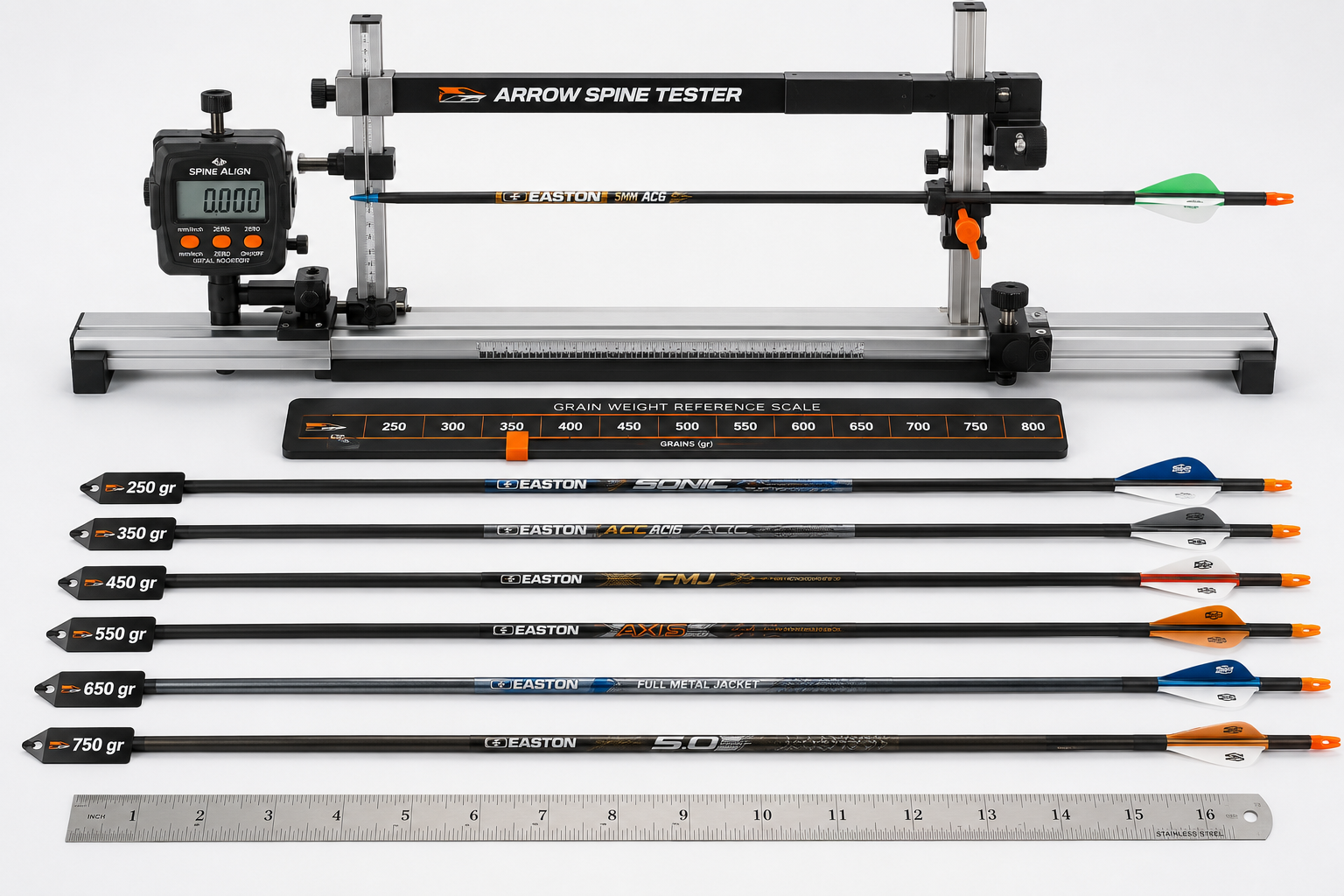
Neither light nor heavy arrows are universally “better”, the optimal choice depends on your specific application, shooting style, and goals. Understanding the trade-offs helps you make an informed decision for your situation.
Light arrows (5-6 GPP) excel at:
Heavy arrows (8-11 GPP) excel at:
The middle ground (6-8 GPP):
Most recreational archers and many hunters find the sweet spot between 6-8 GPP. This range offers reasonable speed while maintaining good kinetic energy, acceptable accuracy in wind, and safe operation that won’t stress your bow excessively.
Decision framework:
Choose lighter arrows (6-7 GPP) if you primarily shoot indoors, focus on target archery, shoot at known distances under 40 yards, and prioritize flat trajectory over penetration.
Choose heavier arrows (8-10 GPP) if you hunt medium to large game, shoot outdoors frequently, need maximum penetration, want the quietest possible setup, or shoot at varying distances beyond 40 yards.
Never choose arrows below 5 GPP regardless of application. The minimal performance gains aren’t worth the equipment risk and warranty concerns.
Hunting and target shooting have fundamentally different requirements that drive arrow weight selection in opposite directions. Understanding these requirements helps you optimize your setup for your primary use.
Target shooting priorities:
Target archers prioritize flat trajectory, tight groups, and consistent point of impact. Since targets don’t require penetration and most competitive shooting happens at known distances, speed becomes more valuable than kinetic energy. Indoor target shooters can use lighter arrows (6-7 GPP) because wind isn’t a factor. Outdoor target shooters often increase to 7-8 GPP for better wind resistance while maintaining reasonable speed.
Hunting priorities:
Bowhunters need penetration, kinetic energy, and quiet operation. An arrow must carry enough energy to penetrate hide, muscle, and bone to reach vital organs. Heavier arrows (8-10 GPP) deliver more momentum and kinetic energy at impact, even though they fly slower. The increased mass also makes the bow quieter, giving game animals less warning before the arrow arrives.
Specific recommendations by application:
Many archers maintain two arrow sets: lighter arrows for practice and target shooting, and heavier arrows for hunting season. This approach lets you enjoy the benefits of each weight range while ensuring your hunting arrows meet ethical standards for clean, humane kills.
If you’re training for archery competition, practice with the same arrow weight you’ll use in competition to develop consistent muscle memory.
Determining whether your arrows are too light requires both calculation and observation. Start with the math, then confirm with real-world shooting experience.
Step 1: Weigh your complete arrow
Use a grain scale (available at any archery shop) to weigh your complete arrow including the point, nock, vanes, and insert. Don’t estimate, actual weight varies significantly from manufacturer specifications.
Step 2: Calculate your GPP ratio
Divide your arrow weight by your bow’s draw weight. For example: 360-grain arrow ÷ 60-pound draw weight = 6 GPP.
Step 3: Compare to minimums
Step 4: Observe shooting characteristics
Even if your arrows meet the minimum GPP requirement, watch for these warning signs that suggest you should add weight:
Quick field test:
Shoot your current arrows, then borrow heavier arrows from a friend (at least 50-75 grains heavier). If the heavier arrows feel noticeably smoother, quieter, and more pleasant to shoot, your current arrows are probably too light for optimal performance, even if they meet the technical minimum.
Check your bow’s manual:
Some manufacturers specify minimums higher than 5 GPP. High-performance bows with aggressive cam systems often require 6 GPP minimum. Always defer to your manufacturer’s specifications over general industry guidelines.
Yes, shooting arrows below your bow manufacturer’s specified minimum weight will void your warranty in virtually all cases. This isn’t a technicality, it’s a clearly stated condition in most warranty agreements that manufacturers actively enforce.
How manufacturers determine warranty claims:
When you submit a warranty claim for a broken limb, cracked riser, or damaged cam, the manufacturer will ask about your arrow weight. Many companies now include this question on their warranty claim forms. If you were shooting arrows below the specified minimum, they’ll deny the claim because you operated the bow outside its design parameters.
Common warranty language:
Most bow warranties include phrases like “warranty void if arrows weighing less than 5 grains per pound of peak draw weight are used” or “manufacturer not responsible for damage caused by improper arrow selection.” These clauses protect manufacturers from liability when users make unsafe equipment choices.
Why this matters financially:
A replacement set of limbs can cost $200-400. A new riser might run $300-600. If you’re shooting a high-end bow, you could be looking at $500-1000 in repairs that insurance won’t cover and the manufacturer won’t warranty. The cost of adding 50-100 grains to your arrows (heavier points or inserts) is negligible compared to these potential expenses.
Documentation matters:
If you’re shooting arrows at or above the minimum weight and still experience equipment failure, keep your arrows and be prepared to weigh them for the manufacturer. Legitimate manufacturing defects are covered by warranty, but you’ll need to prove you weren’t shooting underweight arrows.
For beginners choosing their first setup, understanding what draw weight to start with is just as important as selecting appropriate arrow weight.
The difference between 5 GPP and 10 GPP arrows is substantial, affecting everything from speed and trajectory to penetration and bow longevity. For a 60-pound bow, this means comparing a 300-grain arrow to a 600-grain arrow, literally double the weight.
Performance comparison (60-pound bow example):
| Characteristic | 5 GPP (300 grains) | 10 GPP (600 grains) | Difference |
|---|---|---|---|
| Arrow speed | ~290 FPS | ~240 FPS | 50 FPS slower |
| Kinetic energy | ~56 ft-lbs | ~77 ft-lbs | 37% more energy |
| Momentum | ~0.39 slug-ft/s | ~0.64 slug-ft/s | 64% more momentum |
| Trajectory drop at 40 yards | ~18 inches | ~26 inches | 8 inches more drop |
| Wind drift (10 mph crosswind) | ~6 inches | ~4 inches | 33% less drift |
Real-world implications:
The 5 GPP arrow flies faster and flatter, making range estimation less critical and reducing pin gap on your sight. However, it carries significantly less kinetic energy and momentum, limiting penetration on large game. It’s also louder, creates more bow stress, and drifts more in wind.
The 10 GPP arrow flies noticeably slower with more trajectory arc, requiring more precise range estimation. However, it delivers substantially more kinetic energy and momentum at impact, penetrates deeper, resists wind better, and operates much quieter. It also extends your bow’s lifespan by reducing stress on components.
Choosing between them:
Use 5-6 GPP only for target shooting where penetration doesn’t matter and you want the flattest possible trajectory. Use 8-10 GPP for hunting medium to large game where penetration and energy transfer are critical. Most recreational archers find 6-8 GPP offers the best balance for mixed use.
The 10 GPP setup isn’t “better” than 5 GPP, it’s optimized for different priorities. Match your arrow weight to your primary use case rather than chasing arbitrary performance metrics.
What is the minimum safe arrow weight for my compound bow?
The minimum safe arrow weight is 5 grains per pound of draw weight for most compound bows. Multiply your draw weight by 5 to find your minimum. For example, a 60-pound bow requires at least 300-grain arrows. Always check your specific bow’s manual as some manufacturers specify higher minimums.
Can I use the same arrows for hunting and target practice?
You can use the same arrows for both, but most archers prefer separate sets. Target arrows optimized for speed (6-7 GPP) lack sufficient penetration for ethical hunting. Hunting arrows (8-10 GPP) work fine for practice but fly slower with more arc than dedicated target arrows.
How much does arrow weight affect bow speed?
Every 25 grains of added arrow weight typically reduces arrow speed by 5-7 feet per second. A 60-pound bow shooting a 350-grain arrow at 280 FPS will shoot a 450-grain arrow at approximately 250-260 FPS. The relationship isn’t perfectly linear but follows this general pattern.
Will heavier arrows damage my bow?
No, heavier arrows will not damage your bow. There’s no maximum arrow weight that causes damage, only a minimum weight below which damage can occur. Heavier arrows actually reduce stress on bow components and extend equipment life, though they do sacrifice some speed.
What happens if I dry fire my bow accidentally?
Dry firing (releasing without an arrow) can cause catastrophic damage including broken limbs, cracked risers, shattered cams, and destroyed strings. Never dry fire a bow intentionally. If it happens accidentally, have a qualified bow technician inspect your bow thoroughly before shooting again, even if no damage is visible.
How do I add weight to my arrows?
Add weight by installing heavier field points or broadheads, using brass inserts instead of aluminum, adding weight tubes inside the shaft, or using heavier arrow shafts. The easiest method is switching from 100-grain points to 125-grain or 150-grain points.
Do carbon arrows need to be heavier than aluminum arrows?
No, the material doesn’t determine required weight, your bow’s draw weight does. Both carbon and aluminum arrows must meet the same minimum GPP requirement for your specific bow. Carbon arrows tend to be lighter per inch of length, so you may need heavier points to reach target weight.
Can I shoot light arrows if I reduce my draw weight?
Yes, if you reduce draw weight, you can shoot lighter arrows proportionally. A 400-grain arrow that’s too light for a 70-pound bow (5.7 GPP) becomes acceptable for a 60-pound bow (6.7 GPP). Always recalculate minimum arrow weight when adjusting draw weight.
How often should I weigh my arrows?
Weigh arrows when you first build them, after replacing any components (points, nocks, vanes), and periodically throughout the season to check for consistency. Arrows from the same dozen should weigh within 5-10 grains of each other for optimal consistency.
What’s better for beginners: light or heavy arrows?
Beginners should use moderate-weight arrows in the 6-8 GPP range. These arrows offer a good balance of speed and forgiveness while protecting equipment. Avoid the temptation to shoot the lightest possible arrows, the marginal speed gain isn’t worth the reduced accuracy and increased equipment stress.
Do I need different arrows for my recurve bow vs compound bow?
The same GPP principles apply to both recurve and compound bows, but recurves typically benefit from slightly heavier arrows (7-9 GPP) due to their different energy storage and release characteristics. Always follow the manufacturer’s specifications for your specific bow type.
How does arrow weight affect broadhead flight?
Heavier arrows stabilize broadheads better because they have more momentum to overcome the steering effect of broadhead blades. If your broadheads fly erratically but field points group well, increasing arrow weight often improves broadhead flight without requiring extensive tuning.
Arrow weight isn’t just a performance preference, it’s a critical safety and equipment protection issue. Shooting arrows below 5 grains per pound of draw weight risks damaging your bow, voiding your warranty, and creating dangerous situations. While lighter arrows offer speed advantages for target shooting, they sacrifice penetration, accuracy in wind, and equipment longevity.
Calculate your minimum arrow weight by multiplying your draw weight by 5, but aim for 6-8 GPP for general use or 8-10 GPP for hunting. Weigh your complete arrows on a grain scale to verify they meet requirements, and watch for warning signs like excessive noise, vibration, and erratic flight that indicate your arrows are too light.
Take action now:
The small investment in proper arrow weight protects hundreds or thousands of dollars in bow equipment while improving your accuracy and shooting experience. Don’t risk your equipment or safety by cutting corners on arrow weight, the physics and engineering are clear, and the consequences of ignoring them can be expensive and dangerous.
For more guidance on selecting the right archery equipment and building a safe, effective setup, explore our comprehensive resources for archers at every skill level.