Newsletter Subscribe
Enter your email address below and subscribe to our newsletter
All voices matter
All voices matter
 ByTravis
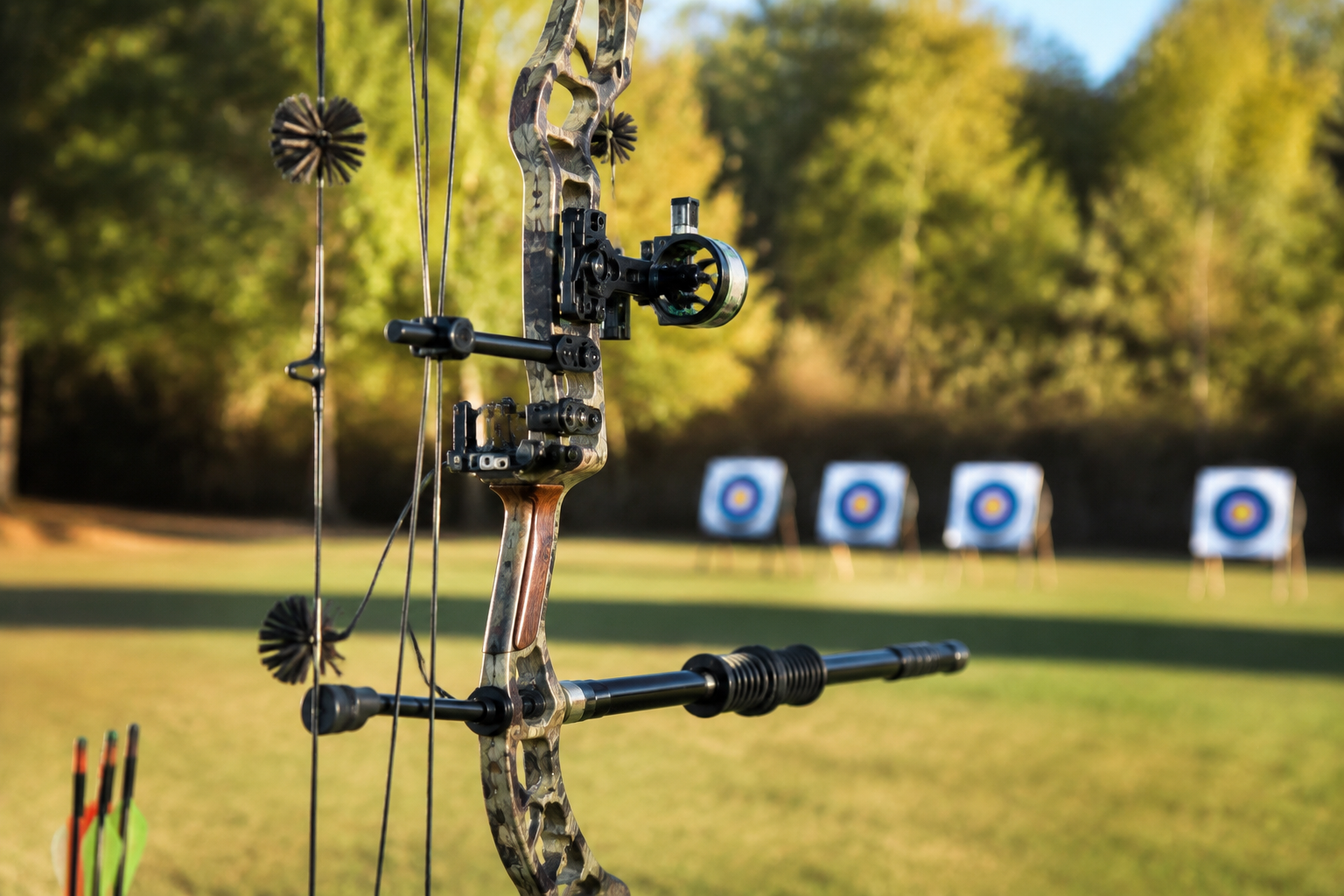
Learn how to quiet a noisy bow with string silencers, limb dampeners, and stabilizers - a complete guide to reducing bow noise for hunting and target shooting.
Affiliate Disclaimer: We are a participant in the Amazon Services LLC Associates Program, an affiliate advertising program designed to provide a means for sites to earn advertising fees by advertising and linking to Amazon.com. As an Amazon Associate I earn from qualifying purchases. We also participate in other affiliate programs.

A noisy bow can be silenced by installing string silencers, limb dampeners, and stabilizers that absorb vibration and reduce sound at the shot. Most bow noise comes from string oscillation, limb vibration, and loose accessories rattling during the release. Adding rubber dampeners to strategic locations on your bow typically reduces noise by 60-80%, with most installations taking less than 30 minutes and costing between $15-$75 for a complete silencing kit.
Bow noise results from three primary sources: string vibration after the arrow leaves, limb oscillation as stored energy dissipates, and loose accessories rattling from the shot’s impact. When you release an arrow, only about 75-85% of the bow’s stored energy transfers to the arrow, leaving 15-25% as residual energy that creates vibration and sound throughout the bow’s components.
The bowstring oscillates rapidly after release, creating a distinctive twang or hum that carries significant distance. This string vibration alone accounts for roughly 40-50% of total bow noise in an undampened setup. The frequency and amplitude of this vibration depend on string material, length, and tension.

Limb vibration contributes another 30-40% of bow noise. As the limbs snap forward and then recoil slightly, they flex and vibrate at their natural frequency. Faster bows with aggressive cam systems typically produce more limb vibration because they store and release energy more rapidly.
Common noise sources include:
Accessories account for the remaining 10-20% of noise, but these rattles and clicks are often the most noticeable because they occur at different frequencies than the fundamental bow vibration. A single loose screw can create a distinctive metallic click that carries farther than the deeper tones of string and limb vibration.
Limb dampeners reduce vibration by attaching rubber or polymer pads directly to the bow’s limbs, absorbing oscillation before it can create noise or transfer to the riser. These accessories work best when placed on the flat surfaces of the limbs, typically 6-8 inches from the riser on compound bows or near the fadeout area on recurve bows.
The most effective limb dampeners use high-density rubber compounds that match the vibration frequency of modern bow limbs. LimbSaver and Bowjax are two popular brands that offer adhesive-backed pads specifically designed for this purpose. Installation takes 5-10 minutes and requires only cleaning the limb surface with alcohol before applying the adhesive.
Limb dampener installation steps:
Split-limb compound bows require two dampeners per limb (one on each limb section), while solid-limb designs need only one per limb. Recurve bows benefit from placement on both the belly and back of each limb near the fadeout, though this requires through-bolt style dampeners rather than adhesive types.
Some archers report that limb dampeners reduce hand shock by 30-40% in addition to noise reduction. This dual benefit makes them particularly valuable for hunters who shoot from cold stands where hand shock becomes more noticeable and uncomfortable. For more insights on bowhunting tips, explore our comprehensive guides.
String silencers for hunting applications should prioritize maximum noise reduction over minimal weight, with rubber spider-style dampeners and cat whisker designs offering the best performance for stalking game. Rubber dampeners like Sims Limbsaver String Leeches reduce string oscillation by 70-80% and cost $8-$15 per pair, while cat whiskers (synthetic fiber bundles) reduce noise by 50-60% and cost $5-$10 per set.
For deer hunting specifically, rubber dampeners provide superior performance because they absorb both high-frequency string buzz and lower-frequency vibration that deer can detect. Install one dampener 4-6 inches from each axle on compound bows, or 8-10 inches from the string loop on recurve setups.
Top string silencer options for hunting:
Rubber dampeners work better in cold weather because they maintain flexibility down to 0°F, while some synthetic fiber silencers can stiffen and lose effectiveness below 20°F. This matters for late-season archery hunting when temperatures drop and deer are most alert.
The trade-off for maximum silencing is arrow speed reduction. Heavy rubber dampeners typically cost 2-4 fps, while lightweight cat whiskers reduce speed by only 0.5-1 fps. For hunting inside 40 yards, this speed difference has negligible impact on arrow trajectory or penetration, making the noise reduction well worth the trade-off.
Both limb dampeners and string silencers serve different functions and work best when used together rather than as alternatives. String silencers address string oscillation and the characteristic twang sound, while limb dampeners reduce vibration in the limbs themselves and minimize hand shock, meaning a complete silencing setup requires both types of accessories.
String silencers provide more noticeable noise reduction for the sound that travels to game animals because string vibration creates higher-frequency noise that carries farther. Limb dampeners primarily improve shooter comfort by reducing the vibration felt in the bow hand and reducing the lower-frequency hum that resonates through the riser.
Comparison of dampening approaches:
| Feature | String Silencers | Limb Dampeners |
|---|---|---|
| Primary target | String oscillation | Limb vibration |
| Noise reduction | 50-80% of string noise | 30-50% of limb noise |
| Hand shock reduction | Minimal | Significant (30-40%) |
| Arrow speed impact | 0.5-4 fps loss | Negligible |
| Installation difficulty | Easy (5 minutes) | Easy (10 minutes) |
| Cost range | $5-$15 | $10-$25 |
For hunting applications, prioritize string silencers first because they address the noise component most likely to alert game. Add limb dampeners second to eliminate residual vibration and improve shooting comfort during long sits in tree stands. Target shooters who prioritize maximum arrow speed might skip heavy rubber string dampeners but still benefit from limb dampeners to reduce hand shock.
The most effective silencing strategy combines both approaches with a stabilizer system. This three-part approach addresses string noise, limb vibration, and riser resonance simultaneously, creating a bow that’s 80-90% quieter than an undampened setup.
Bow dampening accessories range from $5 for basic cat whisker string silencers to $150 for premium stabilizer systems, with most archers spending $40-$75 for a complete noise-reduction setup that includes string silencers, limb dampeners, and a basic stabilizer. Individual components typically cost $5-$30, making bow silencing one of the most affordable upgrades available.
Budget-conscious archers can achieve 60-70% noise reduction for under $25 by installing rubber string dampeners ($10-$15) and adhesive limb pads ($8-$12). Mid-range setups in the $50-$75 range add a quality stabilizer and premium dampeners that push noise reduction to 75-85%. High-end systems exceeding $100 include carbon stabilizers, advanced dampening compounds, and multiple accessories that approach 90% noise reduction.
Price breakdown by component:
Generic or off-brand dampeners cost 30-50% less than name-brand options but may use lower-quality rubber compounds that harden or crack after one season. Spending an extra $5-$10 for established brands like LimbSaver, Bowjax, or Sims typically provides better long-term value because these products maintain effectiveness for 3-5 years.
Installation costs nothing if you do it yourself, as most dampeners require only basic tools (Allen wrenches, scissors) and 20-30 minutes of time. Pro shops typically charge $15-$30 for installation if you prefer professional setup, though this is unnecessary for most archers.
A bow that remains loud after installing dampeners typically has loose accessories, improper dampener placement, or insufficient dampening for the bow’s speed and design. String silencers placed too close to the cams (less than 3 inches) or too far toward the center (more than 12 inches from the axle) lose effectiveness because they’re not positioned at the string’s maximum oscillation points.
Check every accessory mounting point for tightness, as a single loose screw can create rattling that negates the benefit of properly installed dampeners. Sights, quivers, arrow rests, and cable guards are common culprits. Remove accessories one at a time and test-shoot to isolate the noise source.
Common reasons for persistent bow noise:
Fast bows with IBO speeds above 330 fps require heavier dampening than slower traditional bows. If you’ve installed lightweight cat whiskers on a speed bow, upgrade to heavy rubber dampeners and add limb savers to handle the additional energy. Some aggressive cam systems need dampeners on both the string and the cables to fully silence the setup.
String stretch or serving separation can also create noise that dampeners can’t address. Inspect your string and cables for fraying, serving gaps, or excessive wear. Strings typically need replacement every 2-3 years or after 5,000-10,000 shots, and worn strings become progressively noisier as they age.
Environmental factors matter too. Dampeners lose effectiveness in extreme cold (below 10°F) as rubber compounds stiffen. If your bow is quiet at the range but loud in the field during late season, temperature may be the issue rather than the dampeners themselves.
Target shooters benefit from bow silencing primarily through reduced hand shock and improved shooting comfort rather than noise reduction for stealth, while hunters require maximum noise suppression to prevent game from reacting to the shot. A target bow can remain effective with 40-50% noise reduction, whereas hunting bows should achieve 70-80% reduction for optimal performance on alert game.
Competitive target archers often skip heavy rubber dampeners to maintain maximum arrow speed, but most still use limb dampeners to reduce hand shock during high-volume practice sessions. Shooting 100-200 arrows per day creates cumulative fatigue, and reducing vibration helps maintain consistent form throughout long practice sessions.
Indoor target shooters at 18-20 meters rarely need string silencers because arrow speed and noise don’t affect scoring. Outdoor target archers shooting 50-90 meters might add minimal dampening to reduce equipment vibration that can affect accuracy in windy conditions, but stealth remains irrelevant.
Target shooting vs hunting silencing needs:
Hunters shooting from tree stands benefit significantly from silencing because the elevated position amplifies sound and deer can pinpoint the shot location more easily. Ground-level hunters and those using blinds need maximum silencing because game is often within 15-25 yards when the shot occurs. For more on shooting from a tree stand, see our angle adjustment guide.
The practical difference is measurable: an undampened bow at 75 decibels gives deer enough time to “jump the string” (react and move) at distances beyond 25 yards, while a properly silenced bow at 55-60 decibels reduces reaction time significantly, allowing successful shots out to 35-40 yards on alert animals.
Beginners can successfully install most bow dampeners without professional help using basic tools and following manufacturer instructions, with string silencers and adhesive limb dampeners being the easiest installations requiring only 10-20 minutes. The only installations that might require pro shop assistance are those involving bow press work (cable dampeners) or permanent modifications to the bow.
String silencers that slide onto the string require no tools and take less than 5 minutes to install. Simply separate the string strands, slide the dampener into position 4-6 inches from the axle, and twist to secure. Adhesive limb dampeners require only cleaning the limb surface with alcohol and pressing the pad firmly in place.
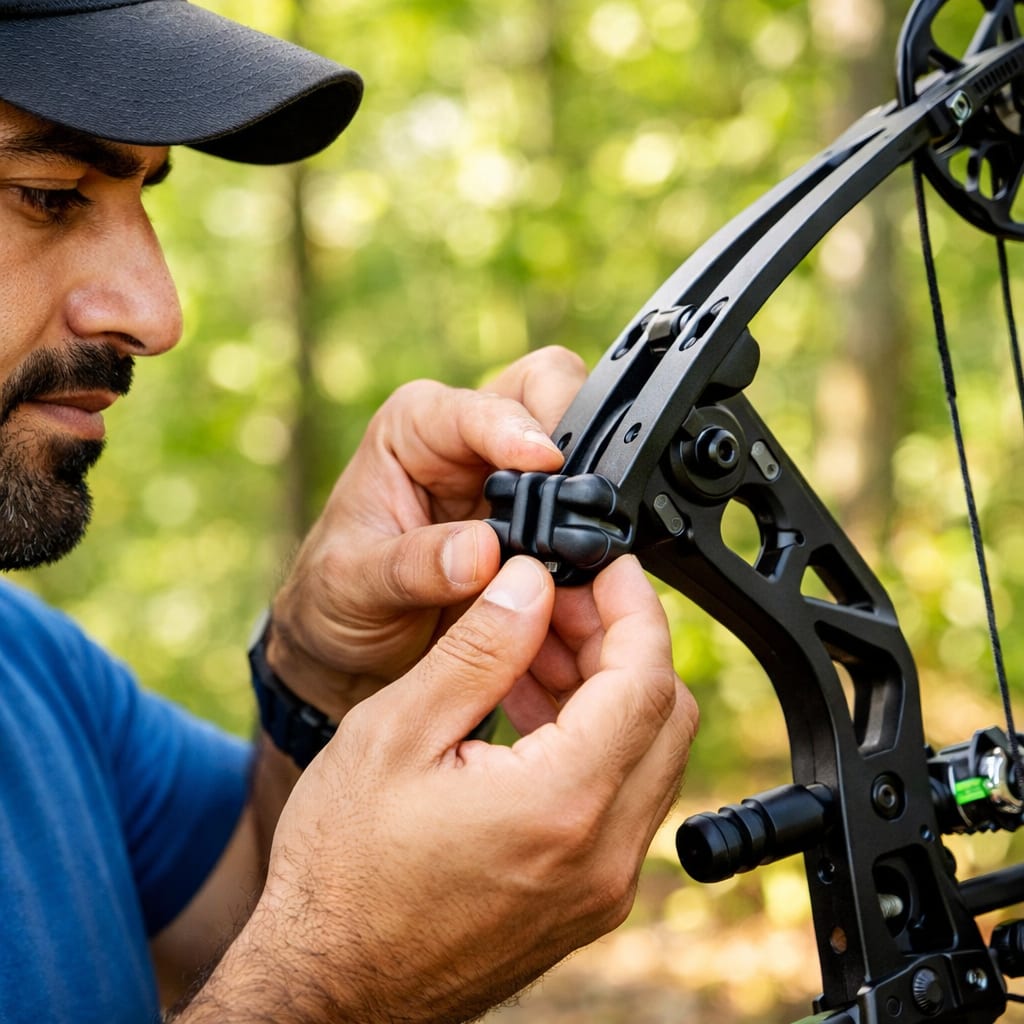
Beginner-friendly installations:
The most common beginner mistake is placing string dampeners too close to the center of the string rather than near the axles. String oscillation is greatest near the cams, so dampeners work best when positioned 4-6 inches from each axle on compound bows. On recurve bows, place dampeners 8-10 inches from the string loop.
Avoid over-tightening stabilizers, as this can strip the threads in the riser’s mounting hole. Hand-tight plus a quarter turn is sufficient for most stabilizers. If you’re unsure about proper torque, pro shops can install stabilizers for $5-$10.
For those new to beginner archery, starting with simple string dampeners builds confidence before moving to more complex installations. Most manufacturers include detailed instructions with photos showing exact placement and installation steps.
Rubber stabilizers attach to the threaded mounting hole on the front of the bow’s riser, directly below the grip, with the stabilizer extending forward toward the target. Most compound bows have a standard 5/16-24 threaded hole that accepts all major stabilizer brands, making installation straightforward with a 3/16-inch Allen wrench.
The stabilizer’s primary function is adding forward weight to reduce bow torque and absorb vibration after the shot. Longer stabilizers (8-12 inches) provide more vibration dampening and better balance, while shorter stabilizers (4-6 inches) offer easier maneuverability in tight hunting situations like ground blinds or thick cover.
Stabilizer placement guidelines:
Some hunting setups use a short front stabilizer (6 inches) combined with a rear-facing back bar for maximum balance without excessive length. This configuration requires a stabilizer mounting bracket that provides multiple threaded holes for different angles. Target archers often use 12-inch front bars with 10-12 inch side bars in a V-configuration for maximum stability.
The stabilizer should align with the bow’s vertical centerline when viewed from the front. If it angles left or right, the mounting threads may be damaged or the stabilizer’s threads are cross-threaded. Remove and reinstall carefully, ensuring the threads engage smoothly without forcing.
Rubber dampeners inside the stabilizer absorb vibration more effectively than solid aluminum or carbon stabilizers alone. Look for stabilizers with internal rubber or gel dampening systems rather than hollow tubes, as these provide 30-40% better noise reduction.
The most frequent mistake when silencing a bow is adding dampeners without first tightening all accessory mounting screws, which allows rattling to continue despite proper dampener installation. Every screw on your sight, rest, quiver, and cable guard should be checked with the appropriate Allen wrench before adding any silencing accessories.
Over-dampening represents another common error. Adding excessive rubber to the string or limbs can slow arrow speed by 5-8 fps and create erratic arrow flight due to unbalanced weight distribution. Start with minimal dampening and add components incrementally while testing between additions.
Mistakes that reduce silencing effectiveness:
Some archers place limb dampeners on the curved edges of limbs rather than the flat surfaces, reducing contact area and dampening effectiveness by 50% or more. Dampeners need maximum surface contact to absorb vibration efficiently, so always place them on the widest, flattest part of the limb.
Neglecting cable dampeners is another oversight. On compound bows, the cables vibrate almost as much as the string but are often ignored during silencing efforts. Cable-mounted dampeners cost $8-$12 and can reduce overall bow noise by an additional 10-15%.
Using the wrong dampener type for your bow’s speed creates problems too. Lightweight cat whiskers work well on traditional bows and slower compounds (IBO under 300 fps) but provide insufficient dampening on modern speed bows. Match dampener weight and size to your bow’s energy output for optimal results.
Excessive dampening can negatively impact accuracy by adding unbalanced weight that changes the bow’s dynamic spine requirements and reduces arrow speed beyond the point where trajectory becomes noticeably affected. Adding more than 4-6 ounces of dampening accessories (string silencers, limb pads, and stabilizer) typically creates diminishing returns where the accuracy cost exceeds the noise reduction benefit.
The primary accuracy concern is unbalanced weight distribution. String dampeners should be installed symmetrically (same weight and position on both sides of the string) to maintain balanced string oscillation. Asymmetric dampening causes the string to twist during the shot, creating inconsistent arrow nock travel and reduced accuracy at distances beyond 30 yards.
Heavy dampening also reduces arrow speed, which affects trajectory and wind drift. Each 1 fps of speed loss translates to approximately 0.5-0.75 inches of additional drop at 40 yards. For hunters shooting inside 30 yards, this is negligible, but target archers shooting 60-90 meters will notice the difference.
Signs of over-dampening:
The optimal dampening setup reduces noise by 70-80% while maintaining 95-98% of the bow’s original arrow speed. This typically means one pair of rubber string dampeners, two limb pads, and a 6-8 inch stabilizer with internal dampening. Adding beyond this baseline provides minimal additional noise reduction while increasing the risk of accuracy degradation.
Some competitive archers remove all dampening to maximize arrow speed and minimize weight, accepting the increased noise and hand shock as trade-offs for peak performance. This approach makes sense for target shooting but is counterproductive for hunting where stealth matters more than 2-3 fps of arrow speed.
Accessory rattling typically results from loose mounting screws, worn mounting brackets, or components with inherent play in their design, and can be eliminated by systematically tightening every screw and adding rubber washers or O-rings to eliminate gaps. Start with the sight, as it’s the most common source of metallic rattling due to multiple adjustment screws and moving parts.
Remove your sight and inspect the mounting bracket for wear or damage. Apply a small amount of blue threadlocker (not red, which is permanent) to the mounting screws and reinstall, tightening firmly but not excessively. Check every adjustment screw on the sight body, including windage, elevation, and pin adjustments.
Systematic accessory noise elimination:
Quivers create rattling in two ways: the mounting bracket vibrating against the riser, and arrows rattling inside the quiver hood. Address bracket noise by tightening mounting screws and adding thin foam tape between the bracket and riser. Eliminate arrow rattle by using foam inserts inside the quiver hood or rubber grippers that hold arrows firmly.
Cable guards often develop noise as the rod wears in its mounting hole, creating play that allows vibration. Replace worn cable guard rods or add a rubber O-ring around the rod where it enters the mounting block to eliminate gaps.
Peep sights can rotate in the string during the shot, creating a subtle clicking noise. Ensure the serving above and below the peep is tight and hasn’t separated. Some archers add a small drop of super glue to the serving to prevent rotation, though this makes future peep adjustments more difficult.
For arrow rests, check that the launcher arm has proper tension and doesn’t bounce or rattle after the arrow leaves. Drop-away rests should have their activation cord properly tensioned, as loose cords can slap against the bow during the shot.
Premium bow dampeners from established brands like LimbSaver, Bowjax, and Sims typically outperform budget alternatives by 15-25% in noise reduction and last 3-5 years compared to 1-2 years for generic options, making the $5-$10 price premium worthwhile for serious hunters. The performance difference comes from higher-quality rubber compounds that maintain flexibility across wider temperature ranges and resist hardening from UV exposure.
Budget dampeners in the $5-$8 range work adequately for recreational shooters and provide 50-60% noise reduction when new. However, these products often use lower-grade rubber that hardens after one season, losing effectiveness and requiring replacement. Premium dampeners maintain 90-95% of their original dampening capability after three years of use.
Value comparison by price tier:
The most significant performance difference appears in cold-weather hunting. Premium dampeners maintain flexibility down to -10°F, while budget options stiffen and lose 40-50% effectiveness below 20°F. For late-season deer hunters in northern climates, this temperature performance justifies the higher cost.
For target shooters who prioritize arrow speed over maximum noise reduction, budget dampeners provide sufficient vibration control without the weight penalty of premium options. The performance difference matters less when stealth isn’t a factor.
The best value typically sits in the mid-range tier ($12-$20), where brands like Sims and Bowjax offer proven designs with quality materials at reasonable prices. These products deliver 90-95% of premium performance at 60-70% of the cost, making them ideal for most hunting applications.
A bow needs to be quiet enough that a deer at 20-30 yards cannot react and move significantly before the arrow arrives, which typically requires reducing bow noise to 55-60 decibels or achieving 70-80% noise reduction from an undampened baseline. At this noise level, deer may hear the shot but lack sufficient time to drop and jump away before the arrow reaches the vitals.
The “jump the string” phenomenon occurs when deer hear the bow and instinctively crouch to load their leg muscles for escape, often causing arrows aimed at the chest to sail over the back. This reaction takes approximately 0.15-0.25 seconds, while an arrow traveling 280 fps covers 20 yards in about 0.21 seconds. The margin is tight, making every decibel of noise reduction valuable.
Noise level targets for hunting:
Arrow speed also factors into the equation. A faster bow (300+ fps) gives deer less reaction time even if noise levels are identical to a slower bow. However, faster bows typically generate more noise due to increased energy release, partially offsetting the speed advantage. The optimal combination is a moderately fast bow (280-300 fps) with comprehensive dampening.
Environmental conditions affect how far bow noise carries. Cold, still mornings amplify sound, while windy conditions mask bow noise. Adjust your maximum shooting distance based on conditions, keeping shots inside 25 yards on calm days and extending to 35 yards when wind provides natural sound masking.
Turkey hunting requires even more aggressive silencing than deer hunting because turkeys have more acute hearing and can react faster. A bow that’s adequately quiet for deer may still alert turkeys at 20 yards, requiring additional dampening or closer shot opportunities.
For practical bowhunting success, invest in comprehensive dampening that includes string silencers, limb dampeners, and a quality stabilizer. This combination typically achieves the 55-60 decibel target that allows confident shots on alert deer inside 30 yards.
How long do bow dampeners last before needing replacement?
Quality rubber dampeners last 3-5 years with regular use, while budget options typically need replacement after 1-2 years as the rubber hardens and loses effectiveness. Replace dampeners when they become stiff, crack, or show visible deterioration.
Can I use the same dampeners on recurve and compound bows?
String dampeners work on both bow types but require different placement: 4-6 inches from the axle on compounds, 8-10 inches from the string loop on recurves. Limb dampeners designed for compounds may not fit recurve limb profiles properly.
Will dampeners void my bow warranty?
Adhesive limb dampeners and string silencers do not void warranties as they don’t modify the bow permanently. Drilling holes for bolt-on dampeners may void warranties, so check with your manufacturer before permanent modifications.
How much noise reduction is enough for hunting?
Aim for 70-80% noise reduction from your bow’s undampened baseline, which typically brings noise levels to 55-60 decibels. This allows successful shots on alert deer at 25-30 yards without significant string-jumping.
Do I need to re-tune my bow after adding dampeners?
Minor dampening (string silencers and limb pads) rarely requires re-tuning. Heavy stabilizers or significant weight additions may shift your bow’s balance and require sight adjustments, but arrow flight typically remains consistent.
Can dampeners fall off during hunting season?
Adhesive dampeners can fail in extreme cold or if not properly installed. Apply them to clean surfaces, allow 24 hours to cure, and inspect them before each hunting season. Quality brands rarely fail when properly installed.
What’s the quietest possible bow setup?
The quietest setups combine rubber string dampeners, limb savers, a dampened stabilizer, cable dampeners, and string stop systems, achieving 85-90% noise reduction. However, this level of dampening may reduce arrow speed by 5-8 fps.
Are there any disadvantages to silencing a bow?
The main disadvantages are reduced arrow speed (2-5 fps typical), added weight (4-8 ounces), and potential accuracy impacts if dampening is unbalanced. For hunting inside 40 yards, these trade-offs are minimal compared to the stealth benefits.
How do I know if my dampeners are working?
Record your bow shooting before and after dampener installation using a smartphone. The difference should be clearly audible. You should also feel less vibration in your bow hand after the shot.
Can I make homemade bow dampeners?
Homemade options like rubber bands or yarn can provide basic dampening but rarely match commercial products’ effectiveness. For $10-$15, commercial dampeners offer better performance and reliability than DIY alternatives.
Do professional hunters use bow dampeners?
Nearly all professional bowhunters use comprehensive dampening systems because stealth directly impacts success rates. The minor speed loss is considered an acceptable trade-off for improved close-range effectiveness.
Will dampeners help with target panic?
Dampeners reduce hand shock and vibration, which can improve shooting comfort and potentially help with target panic by making the shot feel smoother. However, they don’t address the psychological aspects of target panic that require specific training techniques. For more on this topic, see our guide on what is target panic and how to fix it.
Learning how to quiet a noisy bow transforms your hunting effectiveness and shooting comfort through strategic placement of dampening accessories that address string vibration, limb oscillation, and accessory rattling. The most effective approach combines string silencers positioned 4-6 inches from each axle, adhesive limb dampeners on the flat surfaces of your limbs, and a quality stabilizer with internal dampening systems.
Start by tightening every accessory mounting screw on your bow before adding dampeners, as loose components create rattling that silencers cannot address. Then add dampening incrementally, testing between additions to find the optimal balance between noise reduction and arrow speed retention. Most hunting setups achieve 70-80% noise reduction with minimal accuracy impact by investing $40-$75 in quality dampening components.
For deer hunters, prioritize maximum noise reduction over arrow speed, as the stealth advantage at 20-30 yards far outweighs the 2-4 fps speed loss from comprehensive dampening. Target shooters can use lighter dampening focused on reducing hand shock rather than maximum silence. Beginners should start with simple string dampeners and limb pads that require no special tools or expertise to install.
Take action today by inspecting your bow for loose accessories, installing string dampeners if you haven’t already, and testing your setup to identify remaining noise sources. A properly silenced bow not only improves your hunting success but also makes every practice session more enjoyable by reducing the fatigue and discomfort associated with excessive vibration and hand shock. For additional guidance on improving your overall archery skills, explore our archery practice drills and continue developing your technique alongside your equipment upgrades.