
Newsletter Subscribe
Enter your email address below and subscribe to our newsletter

All voices matter
All voices matter

 ByTravis
Target panic is an involuntary response that stops archers from executing a controlled shot - freezing off target, punching the release, or being unable to aim at center.
Affiliate Disclaimer: We are a participant in the Amazon Services LLC Associates Program, an affiliate advertising program designed to provide a means for sites to earn advertising fees by advertising and linking to Amazon.com. As an Amazon Associate I earn from qualifying purchases. We also participate in other affiliate programs.
Target panic is an involuntary psychological and physical response that prevents archers from executing a controlled shot, typically manifesting as freezing off target, punching the release, or inability to aim at the center. It affects archers of all skill levels and equipment types, from beginners to Olympic competitors. The condition can be fixed through systematic retraining using blank bale shooting, back tension development, mental conditioning, and progressive desensitization to targets, though recovery timelines vary from weeks to months depending on severity.

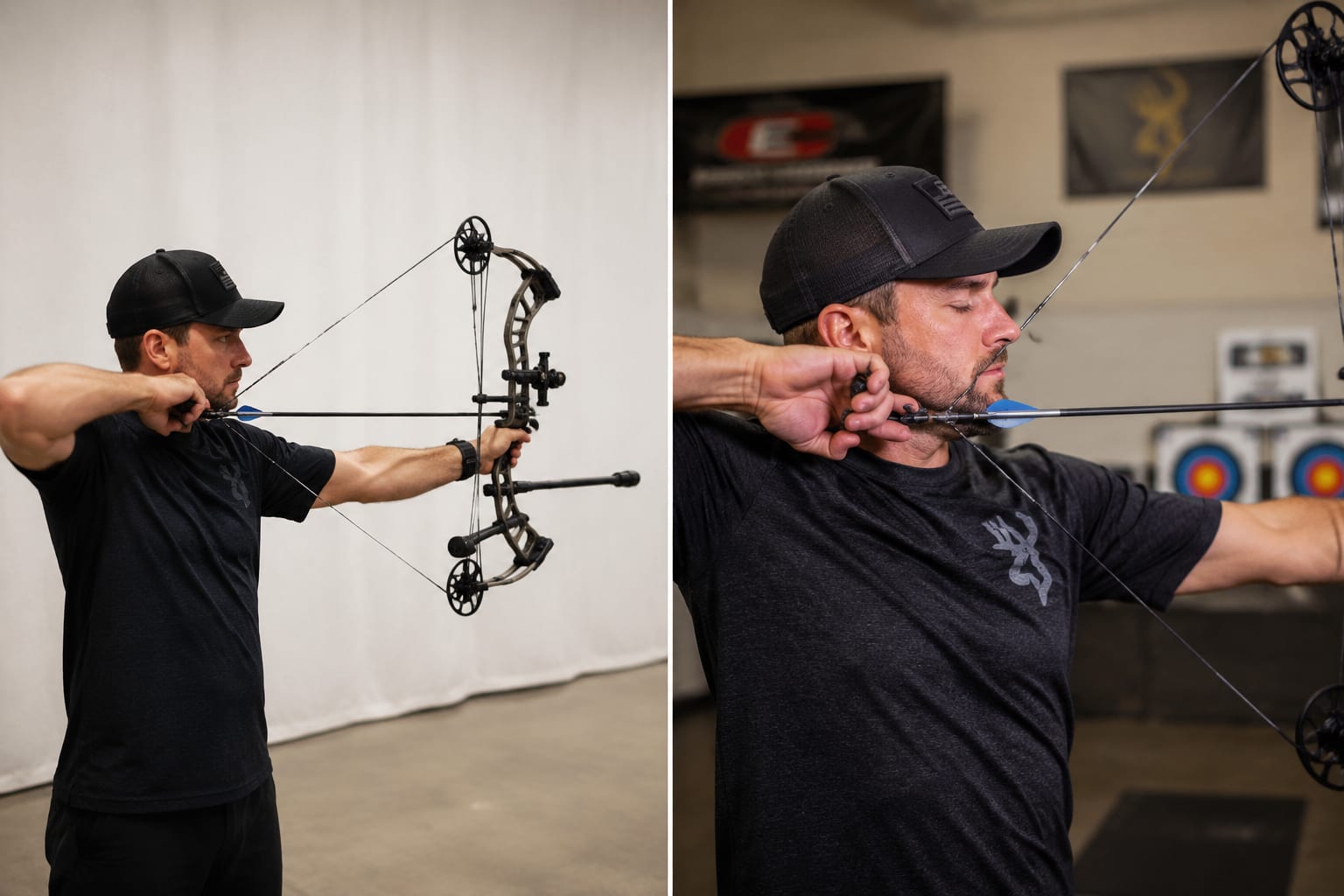
Target panic is a psychological condition where an archer loses voluntary control over the aiming and release process, resulting in involuntary movements or freezing that prevent proper shot execution. The archer’s subconscious mind takes over the shot sequence, bypassing conscious decision-making and creating a conditioned response that sabotages accuracy.
This condition develops as a learned behavior, not a physical limitation. When archers repeatedly focus on the target outcome rather than shot process, the brain creates neural pathways that associate full draw with immediate release. Over time, these pathways become so ingrained that the archer cannot hold on target or execute a deliberate release.
Common manifestations include:
Target panic differs from simple nervousness or competition jitters. While anxiety may worsen symptoms, target panic persists even during relaxed practice sessions. The condition represents a fundamental breakdown in the shot execution sequence that requires systematic retraining to correct.
Archers often describe the experience as watching themselves make mistakes without being able to stop. The conscious mind recognizes the error, but the subconscious pattern overrides intentional control. This disconnect between knowing what to do and being unable to execute creates significant frustration and can drive skilled archers away from the sport.
Gold shyness is a milder form of target anxiety where an archer experiences slight hesitation or discomfort when aiming at the center of the target but retains basic control over the shot. Target panic represents a complete loss of voluntary control over the release mechanism, making it a more severe condition that prevents proper shot execution entirely.
An archer with gold shyness can still bring the sight to the bullseye and execute a release, though they may feel uncomfortable doing so and might subconsciously favor aiming slightly off-center. The shot process remains under conscious control, even if psychological pressure influences aim point selection.
Key distinctions:
Gold shyness often serves as an early warning sign that can progress to full target panic if not addressed. Archers who notice themselves consistently favoring one side of the target or feeling relief when aiming away from the center should implement preventive measures before the pattern becomes entrenched.
The treatment approaches differ in intensity. Gold shyness typically responds to mental game work, positive reinforcement, and gradual exposure to center-target shooting. Target panic requires more aggressive intervention, including temporary removal of targets and complete rebuilding of shot mechanics.
You have target panic if you experience involuntary movements during your shot sequence, cannot hold your sight on the intended aim point, or find yourself releasing without conscious decision. The defining characteristic is loss of voluntary control, not simply poor accuracy or nervousness.
Diagnostic indicators include:
Self-assessment test: Draw your bow and attempt to hold your sight on a specific small spot for 5-10 seconds before releasing. If you cannot maintain aim on that spot, release prematurely, or freeze indefinitely without being able to execute, you likely have target panic.
The condition often develops gradually. Early stages might involve slight hesitation or minor accuracy decline that archers attribute to other factors. As the neural pathways strengthen, symptoms become more pronounced and consistent. Experienced archers sometimes develop target panic suddenly after years of symptom-free shooting, often triggered by a particularly stressful competition or period of intense practice.
Video recording your shooting can reveal involuntary movements you might not consciously notice. Watch for micro-movements in your release hand, changes in anchor position, or timing inconsistencies between shots. These physical manifestations often appear before you consciously recognize the problem.
Blank bale shooting forms the foundation of target panic recovery, requiring archers to shoot at a blank target or backstop from close range (3-5 yards) while focusing exclusively on shot execution rather than aiming. This drill removes target anxiety and allows conscious rebuilding of proper shot sequence without the subconscious interference that targets trigger.
Core recovery drills:
1. Blank Bale Protocol
2. Back Tension Development
3. Progressive Desensitization
4. Mental Rehearsal
5. Clicker Training (for recurve archers)
The common mistake is rushing back to target shooting before the new neural pathways are established. Archers often feel confident after a few blank bale sessions and immediately return to scored rounds, only to have symptoms return. Patience during the retraining phase determines long-term success.

Target panic affects both compound and recurve archers but manifests differently due to the mechanical differences in release mechanisms and holding characteristics. Compound archers typically experience trigger-related symptoms like punching or freezing, while recurve archers more commonly struggle with premature release or inability to reach full draw.
Compound-specific manifestations:
Recurve-specific manifestations:
Compound archers have the advantage of using back tension or hinge releases that eliminate conscious trigger activation, making these tools particularly effective for breaking target panic cycles. The mechanical advantage of compound bows also allows longer holding times, which can either help (more time to execute properly) or hurt (more time for anxiety to build).
Recurve archers must address target panic while maintaining the dynamic expansion and continuous motion required for proper Olympic recurve technique. The lack of mechanical let-off means physical fatigue can compound psychological symptoms, making it harder to isolate the mental component.
Treatment approaches overlap significantly, with blank bale shooting and mental conditioning effective for both disciplines. However, compound archers should specifically explore different release aid types during recovery, while recurve archers benefit from clicker work and expansion drills that emphasize continuous motion rather than static aiming.
Target panic can be overcome and managed long-term, but many archers consider it a condition requiring ongoing vigilance rather than a problem with a permanent cure. Successful recovery depends on replacing maladaptive neural pathways with proper shot execution patterns and maintaining those patterns through consistent practice and mental discipline.
The recurrence rate varies widely based on individual commitment to maintaining proper technique. Archers who return to outcome-focused shooting (obsessing over scores and arrow placement) rather than process-focused execution often experience symptom return within months. Those who permanently adopt process-oriented shooting and regular form maintenance typically remain symptom-free for years or indefinitely.
Factors influencing long-term success:
Think of target panic recovery like physical rehabilitation after injury. The initial healing requires intensive focused work, but maintaining the improvement requires ongoing attention to proper movement patterns. Archers who treat recovery as a temporary fix rather than a permanent practice change face higher recurrence rates.
Some archers report complete freedom from symptoms after recovery, while others describe managing a tendency that requires conscious attention. The difference often relates to how deeply ingrained the original pattern became and how long the archer practiced with target panic before seeking treatment.
Blank bale shooting should continue for a minimum of 2-4 weeks of daily practice (20-30 arrows per session) before reintroducing any target or aiming point. More severe cases or archers with years of ingrained target panic may require 6-8 weeks of blank bale work to establish reliable new neural pathways.
The duration depends on several factors: severity of symptoms, length of time the archer has had target panic, consistency of practice, and quality of execution during blank bale sessions. An archer who developed target panic recently might see improvement in two weeks, while someone who has struggled for years needs longer retraining.
Progressive timeline:
The critical mistake is judging readiness by feeling confident rather than demonstrating consistent control. Confidence returns quickly, but neural pathway reformation takes longer. Objective measures include: ability to hold on a specific spot for 10 seconds without involuntary movement, consistent release execution without anticipation, and complete absence of anxiety when drawing the bow.
Quality matters more than quantity. Thirty focused arrows with perfect execution beats 100 arrows where you’re going through motions. Each shot should involve conscious attention to back tension, release execution, follow-through, and breathing. Mindless repetition without focus provides minimal benefit.
Return to blank bale immediately if symptoms reappear during target reintroduction. This isn’t failure; it’s recognition that the neural pathways need more reinforcement before handling target pressure. Many successful recoveries involve multiple cycles of blank bale work and gradual target reintroduction.
Experienced archers often develop more severe target panic than beginners because they have thousands of repetitions reinforcing maladaptive neural pathways, making the condition more deeply ingrained and requiring longer retraining periods. Beginners typically develop target panic from poor initial instruction that emphasizes aiming over execution, but their shorter practice history means faster recovery potential.
Experienced archer challenges:
Beginner advantages:
Paradoxically, experienced archers often resist the blank bale work that would help them most. The ego investment in being a “good archer” makes returning to beginner-level drills psychologically difficult. Accepting that expertise in one area (scoring) must temporarily decrease while rebuilding fundamentals requires humility many struggle to access.
Beginners face different challenges: they may lack the body awareness to recognize proper execution, have less developed back tension and muscle engagement, and struggle to differentiate between various shooting problems. What appears as target panic might actually be inconsistent anchor, poor alignment, or basic technique flaws.
The recovery approach should account for experience level. Experienced archers benefit from detailed biomechanical analysis and often need sports psychology support to manage the emotional aspects of skill regression. Beginners need more hands-on coaching to develop proper technique alongside target panic treatment, as they’re simultaneously learning correct form and unlearning bad habits.
Working with a mental performance coach or sports psychologist significantly improves target panic recovery outcomes, particularly for competitive archers and those with severe symptoms, by addressing the psychological components that physical drills alone cannot resolve. The investment typically ranges from a few hundred to several thousand dollars depending on session frequency and duration, but can save months of ineffective self-treatment.
Mental coaches provide structured approaches to anxiety management, visualization, pre-shot routines, and cognitive reframing that complement physical retraining. They help archers identify thought patterns that trigger symptoms and develop mental tools for maintaining present-moment focus rather than outcome obsession.
Benefits of professional mental coaching:
When mental coaching is most valuable:
For recreational archers with mild symptoms, self-directed recovery using established protocols may suffice. The decision often comes down to cost-benefit analysis: how much is the sport worth to you, and how much is target panic impacting your enjoyment and participation?
Many archery coaches now incorporate mental game training into their instruction, providing a middle ground between pure self-help and dedicated sports psychology work. Online resources, books, and archery-specific mental training programs offer affordable alternatives to one-on-one coaching, though they lack personalization.
Back tension releases (also called hinge or resistance-activated releases) help many compound archers overcome target panic by eliminating conscious trigger control and requiring continuous pulling motion to activate the release, which breaks the anticipation cycle that drives punching and freezing. The release fires based on biomechanical rotation or tension rather than finger activation, removing the voluntary trigger decision that becomes compromised during target panic.
These releases work by creating a shot execution that “surprises” the archer. As you continue pulling through your back muscles, the release rotates or builds tension until it mechanically fires without a conscious trigger pull. This removes the anticipation of release timing that causes flinching and punching with thumb or index finger releases.
Advantages for target panic recovery:
Limitations and considerations:
The transition to a back tension release should occur during blank bale training, not during regular target shooting. Expect 2-4 weeks of dedicated practice to develop consistent activation and safe handling. Many archers experience initial frustration as they learn the new timing and motion required.
Back tension releases work best as part of comprehensive target panic treatment, not as a standalone solution. Archers who switch releases without addressing the underlying psychological patterns often develop new manifestations of target panic adapted to the new equipment. The release change provides a tool for breaking old patterns, but mental conditioning and proper shot sequence development remain essential.
Some archers permanently adopt back tension releases after recovery, while others transition back to thumb or index releases once proper neural pathways are established. Either approach works if the archer maintains process-focused shooting and proper execution habits.
The most common mistake when addressing target panic is rushing back to target shooting before new neural pathways are firmly established, typically within days or a couple weeks of starting blank bale work, which causes immediate symptom return and discouragement. Recovery requires patience and commitment to process over outcome, which conflicts with most archers’ competitive nature and desire for quick results.
Critical errors that sabotage recovery:
1. Insufficient blank bale duration
2. Maintaining outcome focus
3. Inconsistent practice
4. Ignoring early warning signs
5. Equipment changes without technique work
6. Isolated physical training without mental work
7. Lack of coaching or external feedback
The recovery process feels counterintuitive to competitive archers. Stepping away from scoring, competition, and even targets seems like moving backward. Understanding that this temporary regression enables long-term improvement helps maintain commitment during frustrating early phases.
Target panic returns after successful treatment when archers revert to outcome-focused shooting that emphasizes scores and arrow placement over shot execution process, allowing the original maladaptive neural pathways to reactivate. The condition recurs most commonly during high-pressure situations like competitions or when archers stop maintaining the mental discipline and technique habits that enabled initial recovery.
The brain retains memory of both the old (target panic) and new (proper execution) neural pathways. Under stress or when conscious attention lapses, the brain defaults to the older, more deeply ingrained pattern. This explains why archers often shoot well in practice but experience symptom return during competition.
Common triggers for recurrence:
Prevention strategies:
Think of target panic management like physical fitness. Initial recovery is like getting in shape, but maintaining that fitness requires ongoing work. Archers who treat recovery as a one-time fix rather than a permanent practice adjustment face higher recurrence rates.
The good news: subsequent recoveries typically occur faster than initial treatment because the proper neural pathways already exist and simply need reactivation. Archers who have successfully overcome target panic once can usually address recurrences in days or weeks rather than months.
Overcoming target panic typically requires 4-12 weeks of dedicated daily practice, with mild cases responding in 4-6 weeks and severe or long-standing cases requiring 3-6 months of systematic retraining. The timeline depends on symptom severity, how long the condition has existed, practice consistency, quality of execution during training, and whether the archer addresses both physical and mental components.
Timeline factors:
Realistic recovery timeline:
Experienced archers with years of ingrained patterns often need longer recovery periods than the timeline suggests. Someone who has shot with target panic for five years should expect 4-6 months of dedicated work, not the 6-8 weeks that might suffice for recent onset.
The definition of “overcome” matters. If it means shooting without symptoms during casual practice, many archers achieve this in 4-6 weeks. If it means consistent symptom-free performance under competition pressure, expect 3-6 months. If it means permanent resolution without ongoing maintenance, that may not be realistic for many archers.
Progress rarely follows a linear path. Expect setbacks, plateaus, and frustrating sessions where symptoms temporarily return. These are normal parts of neural pathway reformation, not indicators of failure. The key is responding to setbacks with immediate return to blank bale work rather than pushing through symptoms.
Archers who commit to the full protocol without shortcuts typically succeed. Those who skip steps, rush timelines, or maintain outcome focus during recovery often struggle for months or years without resolution. The time investment in proper recovery is significantly less than years of frustration shooting with unresolved target panic.
Freezing off target is one specific manifestation of target panic, but target panic encompasses a broader range of involuntary shot execution problems including premature release, trigger punching, and inability to reach full draw. All freezing off target is target panic, but not all target panic involves freezing.
Freezing off target describes the specific symptom where an archer’s sight or pin will float anywhere except the intended aim point, as if an invisible force prevents bringing the sight to the bullseye. The archer maintains full draw but cannot execute the release while aiming at the center, often holding indefinitely or releasing only when the sight drifts away from the target center.
Other target panic manifestations:
These symptoms can occur individually or in combination. Some archers experience different manifestations at different times or under varying pressure levels. The underlying cause remains the same: loss of voluntary control over the shot sequence due to maladaptive neural pathways.
Freezing off target tends to be particularly frustrating because the archer is physically capable of holding at full draw but psychologically blocked from aiming where intended. This creates a clear disconnect between conscious intention and subconscious execution that makes the psychological nature of target panic undeniable.
Treatment approaches remain consistent regardless of which specific symptoms manifest. Blank bale shooting, back tension development, mental conditioning, and progressive desensitization address the root cause rather than individual symptoms. As recovery progresses, all manifestations typically diminish together.
Can target panic develop suddenly or does it always build gradually?
Target panic can develop suddenly, often triggered by a traumatic shooting experience, high-pressure competition failure, or injury, though gradual onset over months is more common. Sudden onset typically follows a specific incident that creates strong negative associations with the shot sequence.
Does target panic affect bowhunters differently than target archers?
Bowhunters experience target panic less frequently than target archers because hunting involves fewer repetitions and less outcome pressure, but when it does develop, it manifests as inability to execute shots on game animals despite shooting well at practice targets. The high-stakes nature of hunting opportunities can trigger symptoms in hunters who are symptom-free during practice.
Can you have target panic with a traditional bow or longbow?
Yes, target panic affects traditional and longbow archers, typically manifesting as premature release, inability to reach full draw, or snap shooting rather than the freezing more common with sighted equipment. The instinctive shooting style doesn’t prevent the psychological conditioning that creates target panic.
Should you stop shooting completely during target panic recovery?
No, you should continue shooting but exclusively at blank targets without aiming points during the initial recovery phase, maintaining muscle memory and physical conditioning while removing the psychological triggers. Complete cessation can lead to physical deconditioning that complicates recovery.
Is target panic more common in certain age groups?
Target panic affects all age groups equally, though older archers may have longer recovery times due to more deeply ingrained neural pathways from years of shooting, while younger archers often recover faster due to greater neural plasticity. The condition relates more to practice patterns than age.
Can medication help with target panic?
Anti-anxiety medication may reduce symptoms temporarily but doesn’t address the underlying neural pathways and learned behaviors that cause target panic, making it an ineffective long-term solution without accompanying retraining. Some archers use medication for competition anxiety while working on systematic recovery.
Does target panic affect accuracy in 3D archery differently than target archery?
Target panic often manifests less severely in 3D archery because the varied distances, unmarked yardages, and realistic targets create different psychological pressure than repetitive bullseye shooting, though archers with severe target panic struggle in both disciplines. The novelty and problem-solving aspects of 3D can temporarily override symptoms.
Can watching other archers shoot trigger your target panic?
Watching others shoot doesn’t directly trigger target panic, but observing poor form or rushed execution can reinforce negative mental patterns if you’re in recovery, making it beneficial to limit exposure to poor shooting examples during the retraining phase. Watching excellent form can provide positive visualization models.
Is there a genetic component to target panic susceptibility?
No genetic component has been identified for target panic susceptibility, as the condition results from learned behaviors and neural pathway formation rather than inherited traits, though personality factors like perfectionism and anxiety tendencies may influence development risk. Anyone can develop target panic with sufficient repetition of poor shot execution patterns.
Should you tell competitors you’re dealing with target panic?
Sharing your target panic recovery with trusted training partners can provide support and accountability, but disclosing it to competitors is a personal choice that depends on your comfort level and whether you feel it will help or create additional pressure. Many archers find that openness reduces shame and provides access to others’ recovery experiences.
Can target panic affect one distance but not others?
Yes, target panic frequently manifests at specific distances where an archer has experienced repeated failures or high pressure, with 18 meters (indoor) and 70 meters (Olympic recurve) being common problem distances, while other distances remain symptom-free. This distance-specific manifestation demonstrates the conditioned learning aspect of the condition.
Does switching from right-handed to left-handed shooting cure target panic?
Switching shooting sides occasionally provides temporary relief by disrupting established neural pathways, but symptoms typically return within weeks or months as new patterns form, making it an ineffective long-term solution without proper retraining. The psychological patterns transfer across physical sides.
Target panic represents one of archery’s most challenging obstacles, affecting archers across all skill levels and equipment types. Understanding that this condition stems from learned neural pathways rather than physical limitations or personal weakness is the first step toward successful recovery. The involuntary nature of target panic symptoms creates frustration and self-doubt, but the condition’s psychological basis also means it can be systematically addressed through proper retraining.
Recovery requires patience, consistency, and commitment to process-focused shooting over outcome obsession. The blank bale protocol forms the foundation of most successful treatment programs, providing a target-free environment where proper shot execution can be rebuilt without the anxiety that triggers symptoms. Complementing physical drills with mental conditioning, back tension development, and progressive desensitization creates comprehensive recovery that addresses both the physical manifestations and psychological roots of target panic.
Take these immediate steps if you’re experiencing target panic:
Remember that target panic recovery is not linear. Setbacks and plateaus are normal parts of neural pathway reformation. The key to long-term success lies not just in initial recovery but in maintaining process-focused shooting habits, regular blank bale maintenance sessions, and early intervention when symptoms reappear. Many successful archers have overcome target panic to achieve their highest performance levels, proving that this condition, while challenging, is far from insurmountable.
The investment in proper recovery pays dividends beyond target panic resolution. The mental discipline, shot execution awareness, and process focus developed during recovery often elevate overall archery performance beyond pre-target panic levels. Approach recovery as an opportunity to rebuild your shooting foundation with greater understanding and intentionality than your initial learning provided.


