Newsletter Subscribe
Enter your email address below and subscribe to our newsletter

All voices matter
All voices matter
 ByTravis
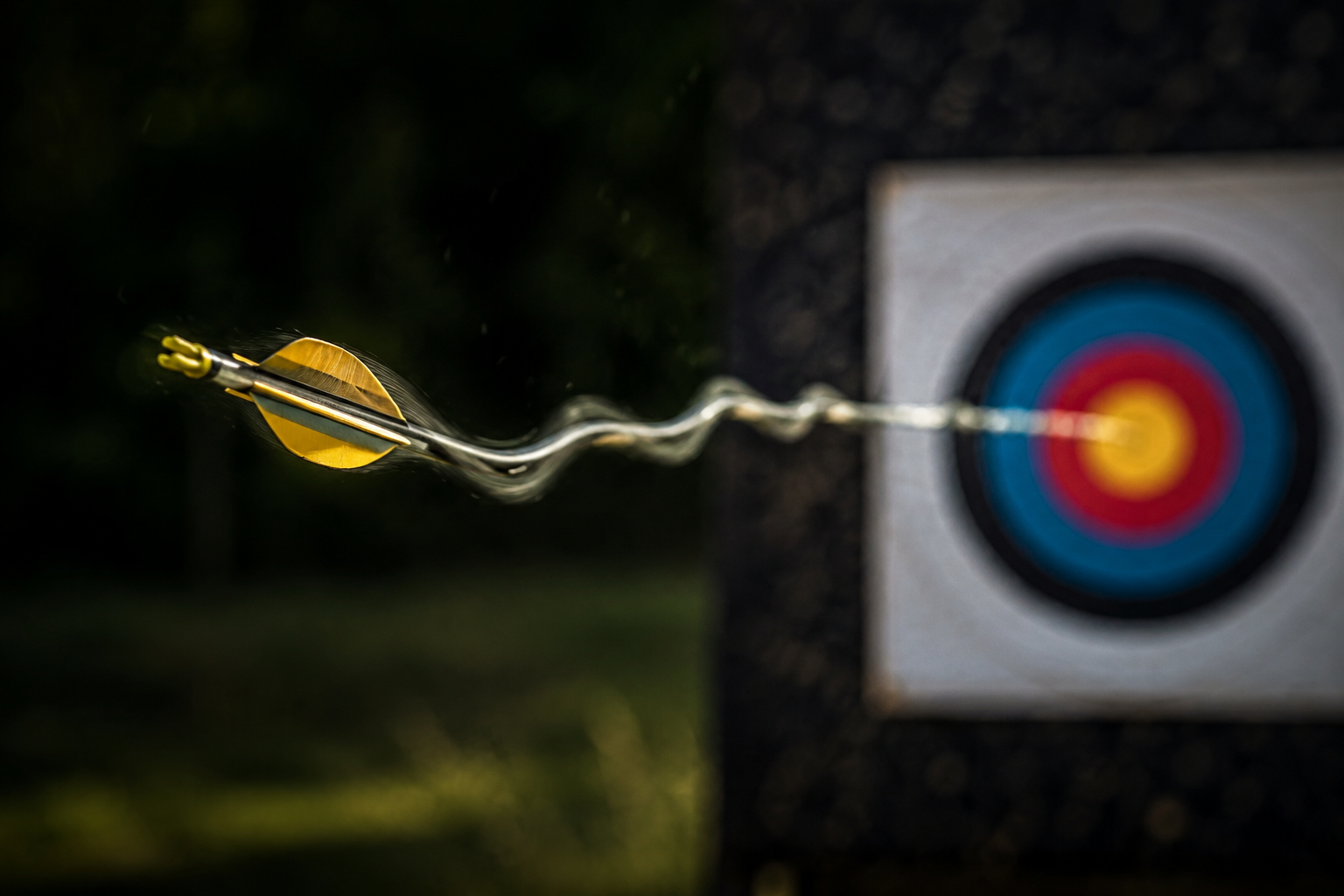
Fishtailing is when arrows wobble side-to-side in flight, usually caused by incorrect arrow spine, a poorly set rest, or nocking point issues.
Affiliate Disclaimer: We are a participant in the Amazon Services LLC Associates Program, an affiliate advertising program designed to provide a means for sites to earn advertising fees by advertising and linking to Amazon.com. As an Amazon Associate I earn from qualifying purchases. We also participate in other affiliate programs.
Quick Answer: Arrow fishtailing happens when your arrows wobble side-to-side during flight, creating a fish-tail pattern. The most common causes are incorrect arrow spine (stiffness), improper arrow rest setup, nock point positioning issues, or release technique problems. Fixing fishtailing typically requires tuning your bow setup to match your arrows or selecting arrows with the correct spine rating for your draw weight and length.

Fishtailing in archery refers to the side-to-side wobbling motion an arrow makes during flight, resembling how a fish’s tail swishes back and forth through water. When you observe your arrow from behind as it travels toward the target, a fishtailing arrow will appear to waggle horizontally rather than flying in a straight, stable line.
This lateral oscillation is different from the natural arrow paradox (the way arrows bend around the bow during release). Fishtailing represents excessive, uncontrolled side-to-side movement that doesn’t dampen quickly and negatively affects accuracy. The wobble typically becomes more pronounced at longer distances as the arrow loses stabilization.
Key characteristics of fishtailing arrows:
For archery beginners, recognizing fishtailing is the first step toward diagnosing and fixing the underlying setup or technique problem.
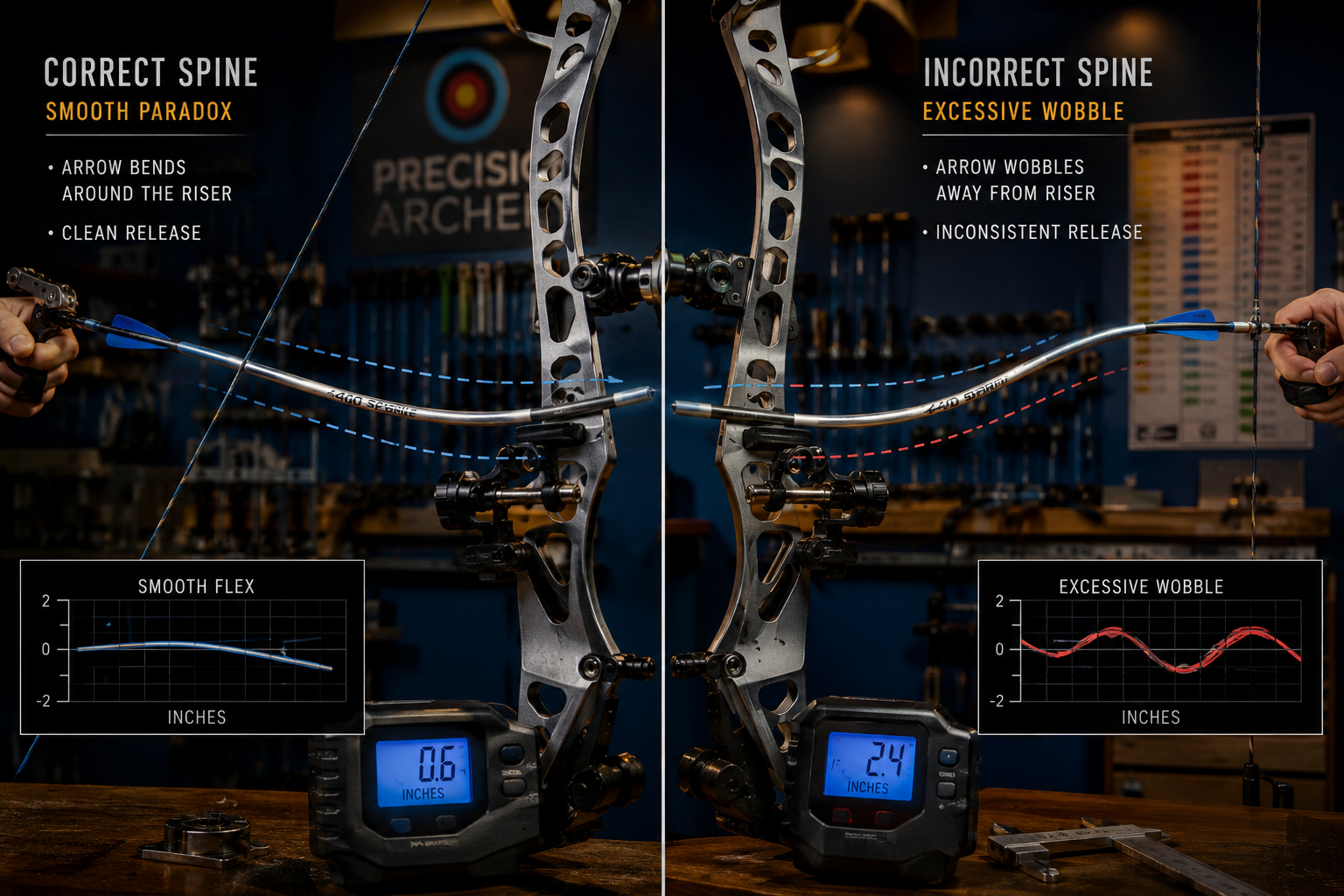
Arrows fishtail due to improper energy transfer during release, causing the arrow to flex excessively or inconsistently as it leaves the bow. The primary culprits include incorrect arrow spine, equipment setup errors, and shooter technique issues that introduce lateral forces during the shot.
Common causes of arrow fishtailing:
The interaction between these factors makes diagnosis tricky. A weak-spined arrow combined with poor release technique creates more severe fishtailing than either problem alone. That’s why systematic troubleshooting works better than randomly changing equipment.
Arrow spine refers to the shaft’s stiffness and its ability to flex properly during release. When spine is too weak for your setup, arrows bend excessively and fishtail to the left (for right-handed shooters). When spine is too stiff, arrows can’t flex enough around the bow and fishtail to the right.
How to identify spine-related fishtailing:
Too weak spine symptoms:
Too stiff spine symptoms:
Arrow manufacturers provide spine charts that match arrow stiffness to your draw weight, draw length, and point weight. A 29-inch draw at 60 pounds requires different spine than a 26-inch draw at the same poundage. Adding heavier broadheads also requires stiffer spine to compensate for the increased front-of-center weight.
Choose stiffer arrows if:
Choose more flexible arrows if:
Fixing fishtailing requires systematic diagnosis and adjustment, starting with the most common causes and progressing to more complex tuning. Begin with paper tuning to identify the direction and severity of the problem, then address issues in order of likelihood.
Step-by-step fishtailing fix process:
Common mistake: Changing multiple variables at once makes it impossible to identify which adjustment solved the problem. Make one change, shoot a group, then evaluate before proceeding.
If you’ve verified proper spine selection and rest setup but still experience fishtailing, the issue likely stems from release technique. Consider working with a coach or filming your shots to identify form inconsistencies.
Yes, arrow rest problems frequently cause fishtailing, particularly when the rest is misaligned, damaged, or incompatible with your arrow setup. The rest is the last point of contact before the arrow flies free, so even small issues here create significant flight problems.
Arrow rest issues that cause fishtailing:
Drop-away rests generally produce cleaner arrow flight than containment-style rests because they eliminate fletching contact. However, they require precise timing adjustment. If your drop-away activates too late, the rising rest will push the arrow sideways as it leaves.
To diagnose rest-related fishtailing:
For archery equipment troubleshooting, the rest should be among your first checkpoints after verifying arrow spine.
Nock point position primarily affects vertical arrow flight (porpoising), but extreme misplacement can contribute to fishtailing by causing the arrow to leave the bow at an angle. When the nock point sits too high, the arrow’s tail rises during release, potentially creating a diagonal flight path that appears as combined fishtailing and porpoising.
The standard nock point position is 1/8 to 1/4 inch above perpendicular to the arrow rest when measured at full draw. This slight upward angle compensates for the arrow’s natural downward flex during release. Setting the nock point too low (at or below perpendicular) causes the arrow tail to drop and can introduce lateral instability.
Nock point positioning guidelines:
While nock point height isn’t the primary cause of pure horizontal fishtailing, correcting it eliminates one variable and helps isolate the true problem. Combined with proper rest height, correct nock positioning ensures the arrow leaves the bow on the intended flight path.
Fishtailing and porpoising are distinct arrow flight problems with different causes and solutions. Fishtailing is horizontal (side-to-side) wobble, while porpoising is vertical (up-and-down) oscillation. Understanding which problem you’re experiencing is essential for effective troubleshooting.
Fishtailing characteristics:
Porpoising characteristics:
Can you have both simultaneously? Yes, and this complicates diagnosis. An arrow with multiple setup problems may exhibit diagonal wobble that combines both patterns. In these cases, address fishtailing first (spine and horizontal rest position) before tackling porpoising (nock point and rest height).
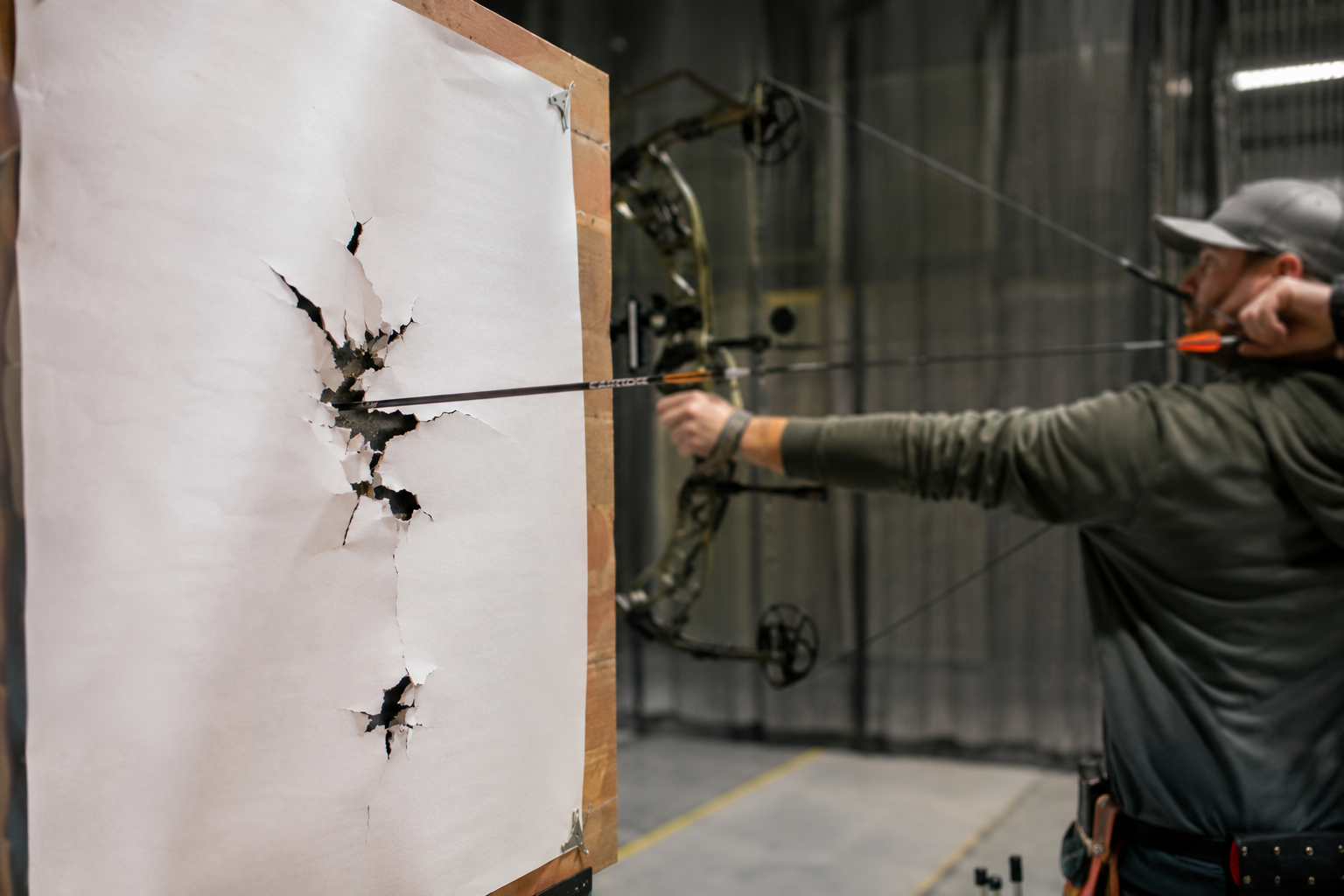
Paper tuning reveals the difference clearly: horizontal tears indicate fishtailing, vertical tears indicate porpoising, and diagonal tears show both problems exist. For new archers learning archery training fundamentals, distinguishing these patterns helps target practice become more productive.
Absolutely. Release technique is one of the most common causes of fishtailing, especially for archers who have properly tuned equipment but still experience inconsistent arrow flight. Torquing the bow handle, punching the trigger, or inconsistent hand position all introduce lateral forces that send arrows wobbling sideways.
Release technique problems that cause fishtailing:
To diagnose release-related fishtailing:
Even perfectly tuned equipment can’t overcome poor release technique. If your arrows group well on some shots but fishtail on others, technique inconsistency is the likely culprit. Consider working with a coach or spending dedicated practice time on release fundamentals before making further equipment changes.
Arrows that fly straight at 10 yards but fishtail at 20 yards reveal minor setup or technique problems that become amplified over distance. At close range, the arrow hasn’t traveled far enough for small instabilities to compound into visible wobble. As distance increases, these issues magnify and become obvious.
This distance-dependent fishtailing typically indicates marginal spine mismatch, slight rest misalignment, or subtle release technique inconsistencies. The arrow leaves the bow with a small amount of lateral energy that dampens slowly. At 10 yards, the arrow still appears stable. By 20 yards, the wobble becomes pronounced.
Why problems worsen with distance:
Testing protocol for distance-dependent fishtailing:
If you’re shooting a compound bow and only experience fishtailing beyond 20 yards, your setup is close but needs fine-tuning. Small adjustments to centershot or trying arrows one spine rating stiffer often solve the problem.
Yes, beginners commonly experience fishtailing because they’re simultaneously learning proper form while working with equipment that may not be optimally tuned. New archers often lack the consistent release technique needed to diagnose whether problems stem from equipment or shooter error, creating a frustrating cycle.
Beginner-specific causes of fishtailing include inconsistent anchor points, varying draw lengths shot-to-shot, death-gripping the bow handle, and target panic that causes flinching. These form issues introduce lateral forces that send arrows wobbling regardless of equipment quality.
Common beginner mistakes that cause fishtailing:
For beginners experiencing fishtailing:
Most beginners benefit from starting with a beginner bow at lower draw weights, which makes form easier to learn and reduces the severity of fishtailing when mistakes occur. As technique improves, equipment tuning becomes more effective because the archer introduces fewer variables.
Arrow fishtailing itself isn’t immediately dangerous, but it indicates underlying problems that can lead to safety issues. Severe fishtailing increases the risk of arrow breakage, unpredictable flight paths, and equipment damage that could cause injury during subsequent shots.
The primary safety concern with fishtailing is unpredictability. An arrow wobbling significantly may impact far from your aiming point, potentially striking outside the target area. In group shooting situations or on ranges with nearby shooters, this unpredictability creates risk for others.
Safety risks associated with fishtailing:
When to stop shooting due to fishtailing:
Address fishtailing problems before continuing practice, especially if you’re shooting hunting bow setups with broadheads. The combination of heavy, sharp points and unstable flight creates unnecessary risk.
Bow tuning is the systematic process of adjusting your equipment to achieve perfect arrow flight. Proper tuning eliminates fishtailing by ensuring the arrow leaves the bow straight and stabilizes quickly. The process requires patience and methodical testing, but the accuracy improvements are dramatic.
Complete bow tuning process for eliminating fishtailing:
Step 1: Verify arrow spine
Step 2: Set up paper tuning station
Step 3: Shoot through paper and evaluate tears
Step 4: Adjust rest position based on tears
Step 5: Fine-tune with bare shaft testing
Step 6: Verify at multiple distances
Step 7: Document your settings
For target archery competitors, professional tuning can mean the difference between winning and placing. Even recreational shooters benefit enormously from properly tuned equipment.
Fletching problems can contribute to fishtailing, though they’re rarely the primary cause. Damaged, improperly aligned, or mismatched fletching fails to stabilize the arrow properly, allowing wobble to persist rather than dampening quickly. However, if your arrows fishtail with good fletching, the problem lies elsewhere in your setup.
Fletching issues that worsen fishtailing:
To diagnose fletching-related fishtailing:
Most modern arrows use plastic vanes in 3-fletch or 4-fletch configurations. Larger vanes (4-inch) provide more stabilization but create more drag. Smaller vanes (2-inch) are faster but require more precise tuning. For arrows experiencing fishtailing, switching to slightly larger vanes can help, but only after addressing spine and rest alignment first.
Choose larger fletching if:
Arrows that fly perfectly with field points but fishtail with broadheads reveal a tuning problem that the field points’ forgiving design was masking. Broadheads have larger profiles and create more wind resistance, amplifying any instability in your setup. This is one of the most frustrating problems for bowhunters.
The additional weight and surface area of broadheads effectively weaken your arrow spine. A 100-grain field point might fly perfectly, but switching to a 125-grain broadhead with large cutting diameter requires stiffer arrows or adjusted tuning to compensate.
Why broadheads reveal fishtailing:
Solutions for broadhead-induced fishtailing:
Broadhead tuning process:
Many experienced hunters maintain separate arrow setups for practice (field points) and hunting (broadheads), accepting that perfect tuning for both isn’t always achievable with a single arrow spine.
What is the most common cause of arrow fishtailing?
Incorrect arrow spine is the most common cause of fishtailing. When arrows are too weak or too stiff for your draw weight, draw length, and point weight combination, they flex improperly during release and wobble side-to-side during flight. Consult manufacturer spine charts to select properly matched arrows.
Can a bad release really cause fishtailing even with perfect equipment?
Yes, release technique problems like torquing the bow handle or punching the trigger introduce lateral forces that cause fishtailing regardless of equipment quality. Even perfectly tuned bows can’t overcome inconsistent release mechanics. Video analysis often reveals technique issues that aren’t obvious to the shooter.
How do I know if my arrow spine is too weak or too stiff?
Too weak spine causes arrows to impact left of center (right-handed shooters) with excessive wobble, while too stiff spine causes right impacts with rigid flight. Paper tuning provides clear diagnosis: left tears indicate weak spine, right tears indicate stiff spine. Bare shaft testing at 20 yards confirms spine match.
Will heavier arrows reduce fishtailing?
Heavier arrows can reduce fishtailing by increasing momentum and reducing the relative impact of small setup flaws. However, adding weight doesn’t fix underlying problems like incorrect spine or poor tuning. Address the root cause first, then optimize arrow weight for your intended use.
Is fishtailing worse with aluminum or carbon arrows?
Carbon arrows are stiffer and less forgiving than aluminum, making spine mismatch more obvious. Aluminum arrows flex more and can mask minor tuning issues. However, properly spined carbon arrows typically fly better than aluminum once tuning is correct. The material matters less than selecting the right spine.
Can I fix fishtailing without paper tuning?
While possible, paper tuning is the most reliable diagnostic method for identifying and correcting fishtailing. Alternative methods include bare shaft testing, group shooting at various distances, and walk-back tuning. However, these require more experience to interpret correctly and take longer to achieve results.
Does arrow length affect fishtailing?
Yes, arrow length directly affects dynamic spine. Longer arrows act weaker (more flexible) while shorter arrows act stiffer. If you cut arrows shorter, you may need to switch to a weaker spine rating. Always check manufacturer spine charts when changing arrow length by more than one inch.
Will a new bow sight fix my fishtailing problem?
No, bow sights don’t affect arrow flight dynamics. Fishtailing is caused by equipment setup issues (spine, rest, nock point) or technique problems, not aiming equipment. A new sight might improve your accuracy once fishtailing is eliminated, but it won’t solve the wobble itself.
How long does it take to properly tune a bow and eliminate fishtailing?
For experienced archers with proper tools, bow tuning typically takes 1-2 hours. Beginners may need 3-4 hours or multiple sessions to work through the process methodically. Professional bow shops can tune your setup in 30-60 minutes if you prefer expert assistance.
Can weather conditions cause arrows to fishtail?
Strong crosswinds can make arrows appear to fishtail by pushing them sideways during flight, but this isn’t true fishtailing (which originates at release). However, wind can make existing fishtailing more visible and problematic. Tune your bow in calm conditions, then test in various weather to understand your equipment’s limitations.
Should I tune my bow differently for indoor vs. outdoor shooting?
Basic tuning principles remain the same, but indoor shooting at shorter distances (20 yards) is more forgiving of minor setup flaws. Outdoor shooting at longer ranges (40+ yards) reveals tuning problems more clearly. Tune for your longest intended shooting distance to ensure good performance at all ranges.
Is it normal for arrows to wobble slightly even when properly tuned?
Yes, all arrows exhibit some flex and oscillation due to archer’s paradox (bending around the bow during release). However, this wobble should dampen quickly within the first 10-15 yards. Persistent, visible fishtailing beyond this distance indicates a tuning or technique problem that needs correction.
Arrow fishtailing is a solvable problem that requires systematic diagnosis and patient adjustment. Whether caused by incorrect arrow spine, equipment setup issues, or release technique flaws, identifying the root cause through paper tuning and methodical testing leads to dramatic accuracy improvements.
Start by verifying your arrows match manufacturer spine recommendations for your specific draw weight and draw length. Then work through rest alignment, nock point positioning, and release technique evaluation. Most fishtailing problems resolve with proper equipment tuning, though persistent issues may require coaching to address form inconsistencies.
Your action plan to eliminate fishtailing:
Remember that tuning is an iterative process. Make one adjustment at a time, test thoroughly, and be patient with the results. The investment in proper setup pays dividends in accuracy, consistency, and shooting enjoyment for years to come.
For additional guidance on archery equipment setup and technique fundamentals, explore our comprehensive resources designed to help archers at every skill level achieve their accuracy goals.