
Newsletter Subscribe
Enter your email address below and subscribe to our newsletter
All voices matter
All voices matter

Most adult beginners should start with 15-25 lb draw weight on a recurve or 20-30 lb on a compound bow, so they can build smooth form before adding power.
 ByTravis

Retire an arrow the moment you spot cracks, splintering, deep scratches, a bent shaft, or loose components - most arrows need replacing after 100-200 shots anyway.
ByTravis
An anchor point is a consistent spot where your drawing hand or string touches your face at full draw, ensuring repeatable shot placement - here's how to find yours.
ByTravis
A D-loop is a small braided-cord loop tied to your bowstring that gives your release aid a consistent attachment point - here's how to tie one properly.
ByTravis
Installing a peep sight means using a bow press to relieve string tension, separating the strands at the right spot, inserting the peep, and serving it in place - about 15-30 minutes.
ByTravis
Uncover the unexpected best compound bows of 2026—are your choices truly optimized for precision or just popular? Find out now.
ByTravis
Take a controlled breath during the draw, exhale partially at anchor, then hold for 3-6 seconds through the aim and release - this steadies your platform and improves accuracy.
ByTravis
Most beginners can hit a target consistently from 20 yards within 3-6 months of regular practice, though reaching competitive intermediate skill takes 1-2 years.
ByTravis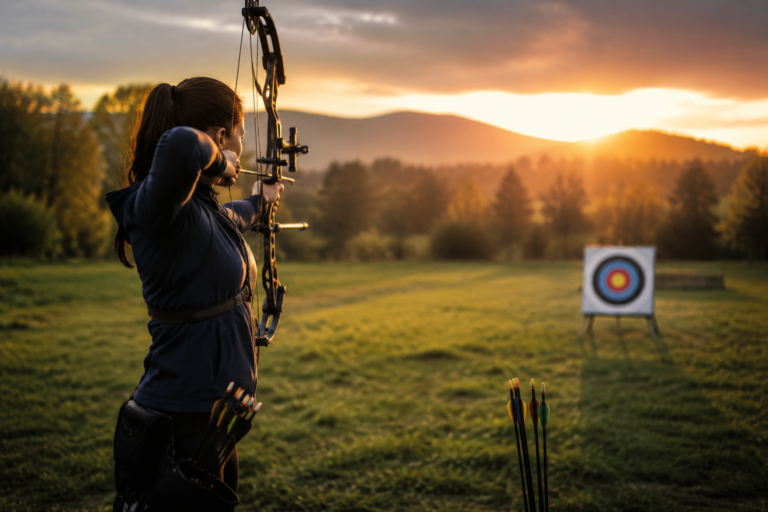
Most archers should practice 3-4 times a week for 60-90 minutes to see consistent improvement without overdoing it - beginners do best with shorter, more frequent sessions.
ByTravis
At 10 yards you can isolate specific skills - anchor consistency, release execution, follow-through - and get immediate feedback without distance variables getting in the way.
ByTravis