Newsletter Subscribe
Enter your email address below and subscribe to our newsletter

All voices matter
All voices matter
 ByTravis
Retire an arrow the moment you spot cracks, splintering, deep scratches, a bent shaft, or loose components - most arrows need replacing after 100-200 shots anyway.
Affiliate Disclaimer: We are a participant in the Amazon Services LLC Associates Program, an affiliate advertising program designed to provide a means for sites to earn advertising fees by advertising and linking to Amazon.com. As an Amazon Associate I earn from qualifying purchases. We also participate in other affiliate programs.
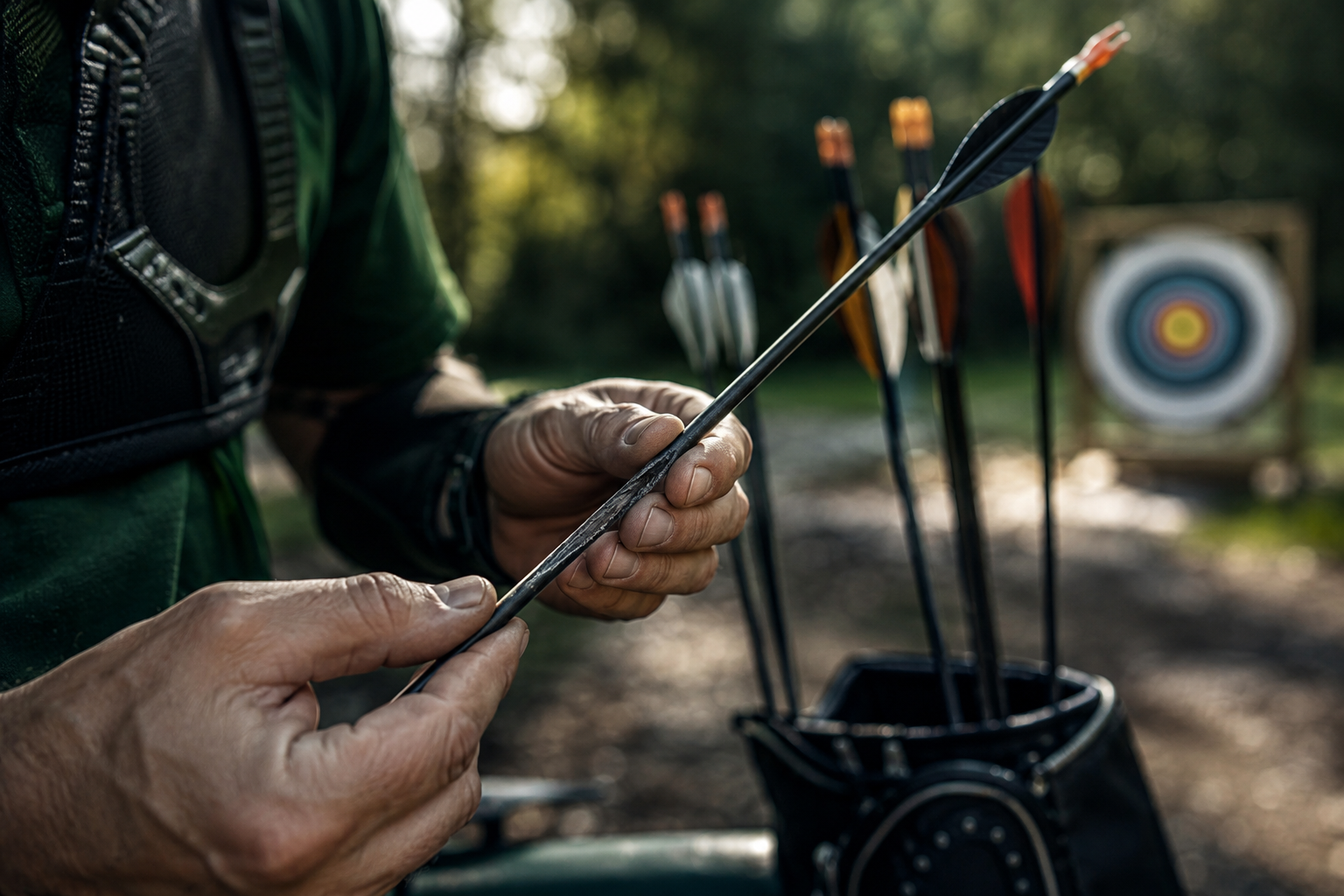
You should retire an arrow immediately when you detect visible cracks, splintering, deep scratches, bent shafts, or loose components during inspection. Most arrows need replacement after 100-200 shots for target practice or sooner if they strike hard surfaces, though this varies significantly based on arrow material, shooting conditions, and impact frequency. Regular pre-shoot inspections are essential because shooting a damaged arrow can cause catastrophic failure that results in serious injury.
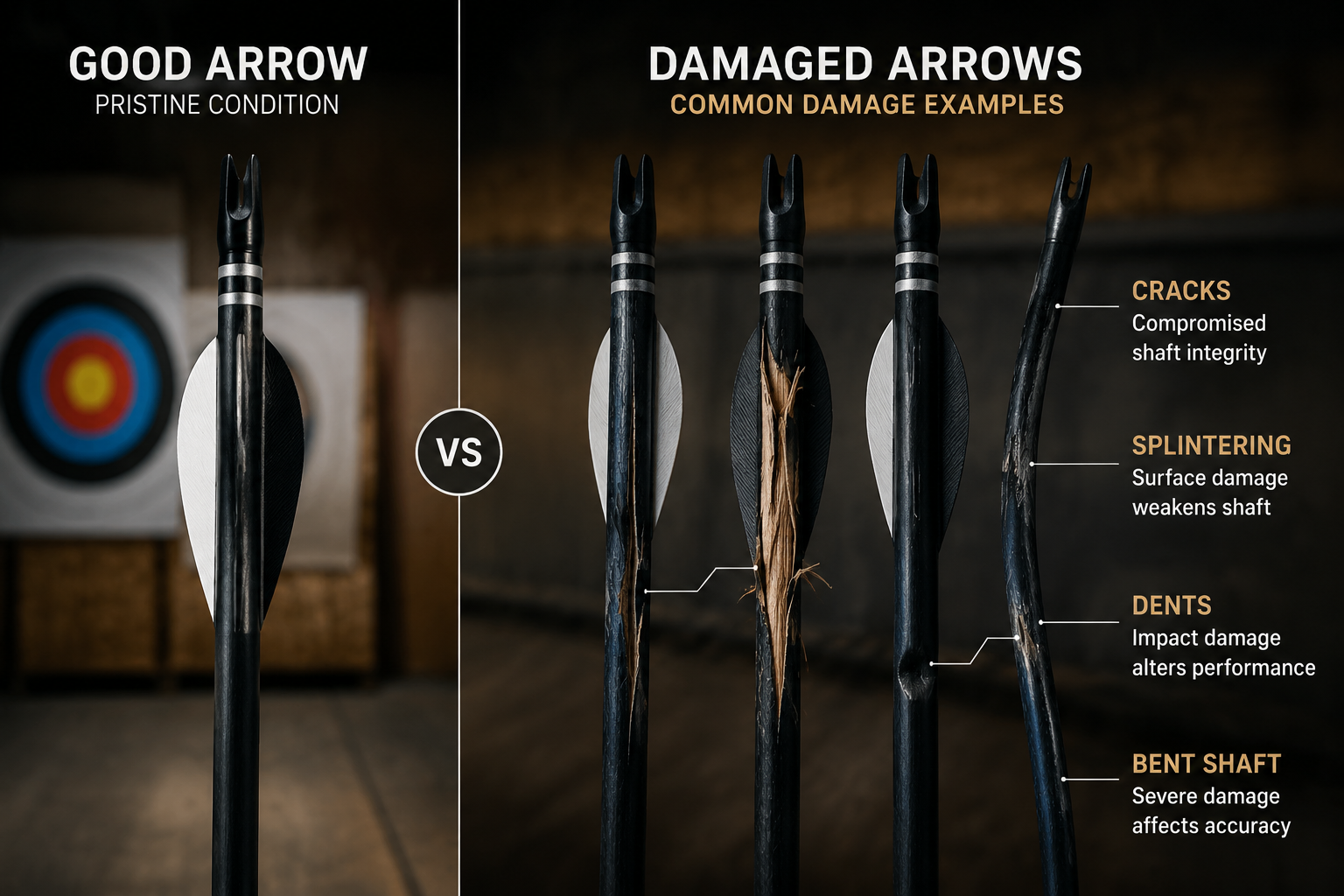
An arrow is too damaged to use when it shows any structural compromise that could cause failure during a shot. The most critical signs include visible cracks in the shaft, splintering (especially in carbon arrows), deep gouges that penetrate beyond the surface coating, bent shafts that don’t return to straight, and loose or damaged inserts.
Critical damage indicators that require immediate retirement:
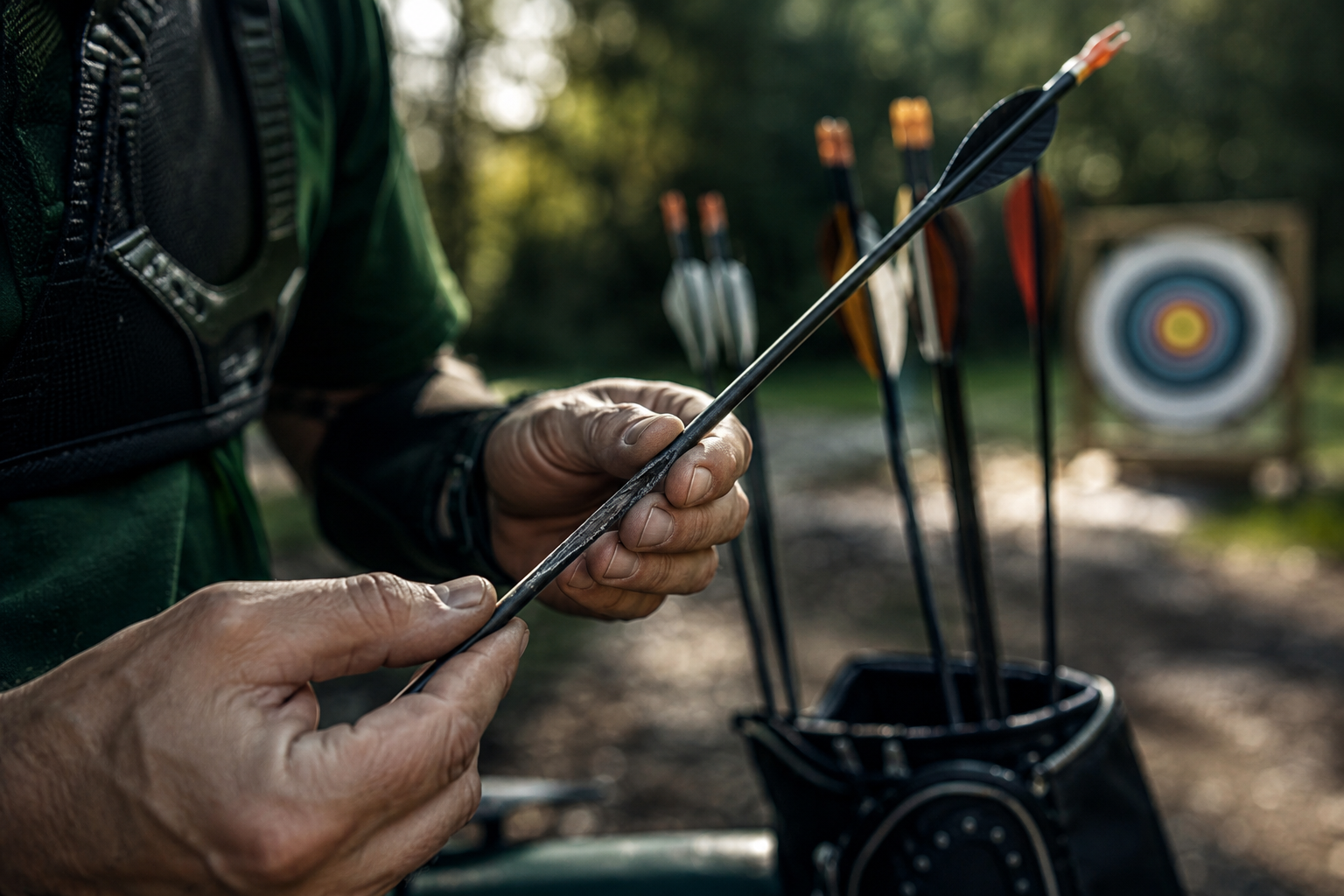
The flex test is your most reliable field inspection method. Hold the arrow at both ends and gently bend it while rotating it through 360 degrees. A damaged arrow will often produce a cracking or popping sound, or you’ll feel an inconsistent flex pattern. If you hear or feel anything unusual, retire the arrow immediately.
Common mistake: Many archers assume small surface scratches are harmless. While minor cosmetic damage may not affect aluminum arrows significantly, even shallow scratches in carbon arrows can indicate deeper structural problems or create stress points that lead to catastrophic failure.
Arrow wear and tear manifests through progressive degradation of components and surface damage that accumulates over time. The most common signs include worn or cracked nocks, loose fletching, faded wraps, surface scratches on the shaft, and worn or loose inserts at the point end.
Progressive wear indicators to monitor:
Not all wear requires immediate retirement. Nocks and fletching can be replaced, and minor surface scratches on aluminum arrows are often cosmetic. However, shaft damage in carbon arrows is cumulative and invisible internal damage can occur even when the surface looks acceptable.
Inspect your arrows after every shooting session, paying special attention to arrows that missed the target or hit the target frame. Arrows that strike hard surfaces experience significantly more stress than those that hit soft targets consistently.
Decision rule: If the wear affects only replaceable components (nocks, fletching, points) and the shaft remains structurally sound, repair the arrow. If the shaft itself shows damage, retire it.
Most target arrows last between 100 and 200 shots under ideal conditions, but this number varies dramatically based on arrow material, shooting environment, target type, and how often arrows miss the target and strike hard surfaces. Competition archers often replace arrows every 50-100 shots to maintain peak accuracy, while recreational shooters may use arrows for 300+ shots if they consistently hit soft targets.
Factors that affect arrow lifespan:
Rather than counting shots, establish an inspection routine. Check arrows before every shooting session and retire any that show damage. Some arrows will last 500+ shots if they never miss the target, while others may need retirement after a single shot into concrete.
For beginners: Expect shorter arrow life because miss rates are higher. Budget for replacing 20-30% of your arrows in the first year as you develop consistency. As accuracy improves, arrow lifespan increases significantly.
For experienced archers: You can often predict which arrows will last longer based on your shooting patterns. Arrows used for close-range practice on quality targets will outlast those used for long-distance shooting or field archery where misses are more common.
Carbon arrows and aluminum arrows have fundamentally different failure modes and lifespans. Carbon arrows typically last 100-200 shots under normal conditions but must be retired immediately when damaged because carbon fiber can fail catastrophically without warning. Aluminum arrows can often be straightened and may last 300-500 shots, but they permanently weaken each time they bend and eventually develop metal fatigue.
Carbon arrow characteristics:
Aluminum arrow characteristics:
The key difference is predictability. Aluminum arrows give you warning before they fail completely, while carbon arrows can explode without any visible prior damage. This makes carbon arrows more dangerous when damaged but more reliable when properly maintained.
Choose carbon arrows if: You prioritize performance, shoot primarily at targets you consistently hit, and commit to rigorous inspection routines.
Choose aluminum arrows if: You’re learning archery, shoot in environments where misses are common, or prefer more forgiving equipment that shows damage clearly.
Never shoot an arrow with any visible crack, regardless of size. Even hairline cracks in carbon arrows can cause the shaft to explode on release, sending sharp carbon fiber fragments toward your bow hand, face, and body at high velocity. Small cracks in aluminum arrows are less immediately dangerous but indicate structural weakness that will worsen with each shot.
Carbon fiber arrows are particularly dangerous when cracked because the material fails suddenly and completely. A small crack indicates that the carbon fiber layers have separated, and the stress of the next shot can cause the entire shaft to disintegrate. This type of failure has caused serious injuries including deep lacerations, embedded fragments, and eye injuries.
Why cracks are non-negotiable:
Aluminum arrows with small cracks are less likely to explode but will bend or break at the crack point, potentially causing the arrow to veer off course or damage your bow. The crack will expand with each shot until the arrow fails completely.
Common mistake: Some archers try to reinforce cracked arrows with tape or glue. This does not restore structural integrity and creates a false sense of security. The arrow will still fail, potentially at an unpredictable moment.
Edge case: If you find a crack during inspection but want to preserve the arrow for parts, you can salvage undamaged components like points, nocks, or fletching before disposing of the shaft. Never attempt to shoot it “one last time.”
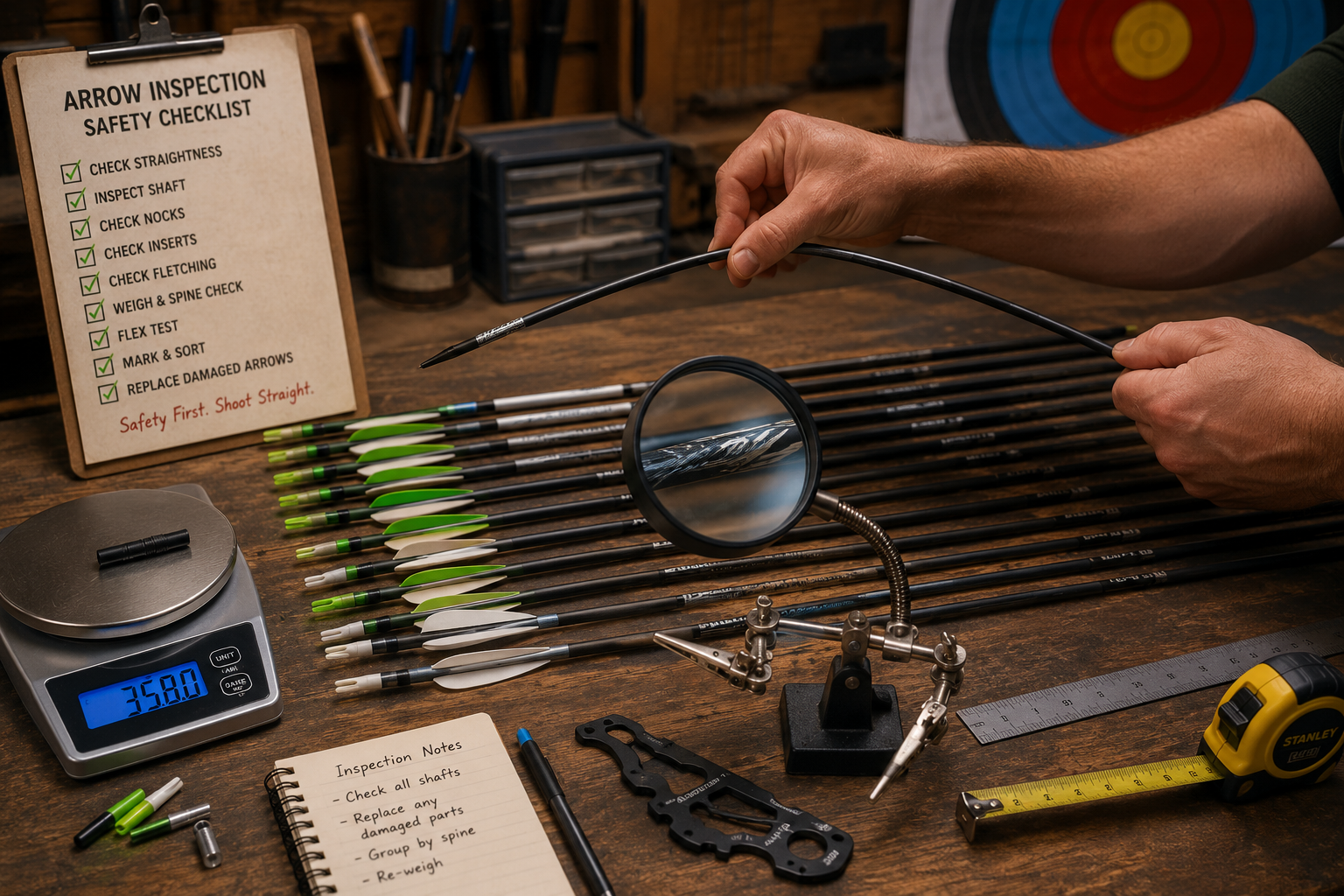
Inspect every arrow before each shooting session using a systematic three-step process: visual inspection, flex test, and component check. This routine takes 30-60 seconds per arrow and prevents most arrow-related injuries and equipment damage.
Step-by-step inspection process:
Visual inspection: Hold the arrow up to good light and slowly rotate it, looking for cracks, splinters, deep scratches, or discoloration that might indicate damage.
Flex test: Hold the arrow at both ends with the shaft horizontal. Gently bend it while slowly rotating it through a full 360-degree turn. Listen for any cracking, popping, or grinding sounds. Feel for inconsistent flex or soft spots.
Component check:
Special attention areas:
Inspection frequency guidelines:
Set up a consistent inspection area with good lighting. Many archers keep a dedicated inspection station with a flat surface for rolling arrows, good overhead lighting, and a magnifying glass for detailed examination of suspicious areas.
For carbon arrows specifically: Pay extra attention to any area that looks slightly different in color or texture, as this can indicate delamination or internal damage. Carbon arrows can have significant internal damage with minimal external signs.
Shooting a damaged arrow can result in catastrophic shaft failure, causing the arrow to explode or break apart during the shot. This sends sharp fragments toward the archer at high velocity, potentially causing deep lacerations, embedded splinters, eye injuries, or damage to the bow. The arrow may also veer unpredictably, creating a safety hazard for anyone in the shooting area.
Potential consequences of shooting damaged arrows:
The most common injury pattern occurs when a carbon arrow with a crack near the nock end explodes during release. The rear portion of the arrow disintegrates, sending carbon fiber splinters into the archer’s bow hand, forearm, and sometimes face. These injuries often require medical attention to remove embedded fragments.
Real-world risk factors:
Archers using higher draw weights face greater risk because the increased force accelerates failure. Similarly, arrows with damage near the nock (where the bowstring applies force) are more likely to fail catastrophically than arrows with damage near the point.
Insurance against injury: The cost of replacing a questionable arrow (typically $8-15) is trivial compared to medical bills, lost shooting time, or permanent injury. When in doubt, retire the arrow.
Expensive arrows don’t necessarily last significantly longer than budget arrows in terms of shot count, but they typically offer better quality control, more consistent materials, and tighter manufacturing tolerances that reduce the likelihood of premature failure. The primary advantage of premium arrows is performance consistency and reliability rather than extended lifespan.
What you get with premium arrows:
What doesn’t change significantly:
The real value of expensive arrows becomes apparent in competitive shooting where consistency matters more than longevity. A set of premium arrows will fly more similarly to each other, making it easier to achieve tight groups. When one arrow needs retirement, the remaining arrows continue to perform predictably.
Budget arrows often have wider manufacturing tolerances, meaning individual arrows within the same dozen may perform slightly differently. This doesn’t necessarily mean they’ll break sooner, but you may notice more variation in flight characteristics.
Decision rule: Choose expensive arrows if you’re competing or have developed consistent form where arrow quality affects your scores. Choose budget arrows if you’re learning, shoot recreationally, or frequently lose or break arrows due to misses. As your skill improves and miss rate decreases, upgrading to premium arrows becomes more cost-effective.
Beginners should inspect arrows more frequently and be more conservative about retirement decisions because they have higher miss rates, less developed inspection skills, and may not recognize subtle damage indicators that experienced archers identify easily. However, the actual retirement criteria remain the same regardless of skill level: any structural damage requires immediate retirement.
Why beginners face different arrow management challenges:
Beginner-specific inspection guidelines:
Inspect every arrow after every shooting session, not just before. This helps you learn what damage looks like and builds good safety habits. When in doubt about whether an arrow is safe, ask an experienced archer or coach to examine it. Most archery shops will also inspect arrows for free.
Create a “questionable” category for arrows you’re unsure about. Set these aside and have them examined by someone with more experience before shooting them again. This conservative approach prevents injuries while you develop inspection expertise.
Budget considerations for beginners:
Expect to replace arrows more frequently during your first year of archery. Budget for replacing 20-40% of your arrows annually as you develop consistency. This is normal and decreases significantly as your accuracy improves. Consider starting with mid-range arrows rather than the cheapest or most expensive options, they offer reasonable durability without major financial loss when damaged.
When beginners can use the same criteria as experienced archers: Once you consistently hit the target (90%+ of shots) and have learned to identify damage through regular inspection practice, you can adopt standard retirement criteria. The key is developing both the shooting consistency that reduces damage and the inspection skills that identify it.
The most common inspection mistakes include performing only visual checks without flex testing, inspecting arrows in poor lighting, continuing to shoot arrows with “minor” damage, and failing to inspect arrows after every miss. These oversights allow damaged arrows to remain in rotation, increasing injury risk and equipment damage.
Critical inspection errors to avoid:
The “it’s probably fine” trap: Many arrow failures occur because archers noticed something questionable but decided to shoot the arrow anyway. If something looks or feels wrong during inspection, trust your instincts and retire the arrow. The cost of replacement is minimal compared to injury risk.
Inspection environment matters: Always inspect arrows in good lighting, preferably natural daylight or bright white LED light. Fluorescent lighting can make it difficult to see subtle cracks or discoloration. Keep a dedicated inspection area with consistent lighting so you can compare arrows under the same conditions.
Group inspection blindness: When inspecting multiple arrows quickly, it’s easy to fall into a rhythm where you stop actually looking carefully at each arrow. Inspect arrows individually with full attention rather than batch-processing them.
Edge case, borrowed or used arrows: If you acquire used arrows or borrow arrows from someone else, perform an especially thorough inspection before shooting them. You don’t know their history, how many shots they have, or what they’ve hit. Many archers recommend against shooting used arrows of unknown history, particularly carbon arrows.
Professional archers typically replace competition arrows every 50-100 shots or every few weeks during active competition seasons, prioritizing consistency and reliability over maximizing arrow lifespan. They maintain separate sets for practice and competition, retiring competition arrows to practice use once they show any signs of wear that might affect performance.
Professional arrow management practices:
Professional archers retire arrows much sooner than recreational shooters because tiny variations in arrow performance affect scores at elite levels. An arrow with 150 shots may still be structurally sound but might have microscopic wear that affects grouping by a few millimeters, enough to cost points in competition.
Cost management: Professional archers often have sponsorships or equipment budgets that allow frequent arrow replacement. They view arrows as consumable equipment similar to bowstrings, replacing them proactively rather than waiting for visible damage.
What recreational archers can learn: While most archers don’t need to replace arrows as frequently as professionals, the principle of proactive replacement has merit. If you’re serious about improving scores, consider maintaining a dedicated competition set that you inspect rigorously and replace conservatively, while using older arrows for casual practice.
Different standards for different disciplines: Olympic recurve archers shooting at 70 meters may replace arrows more frequently than compound archers shooting indoors at 18 meters, because the longer distance amplifies small variations in arrow performance. Field archers who shoot in varied terrain may retire arrows sooner due to higher miss rates and environmental hazards.
Aluminum arrows can often be straightened once or twice using proper arrow-straightening tools, but carbon arrows should never be straightened and must be retired immediately when bent. Each straightening weakens aluminum arrows through work hardening, so they should be inspected carefully after straightening and retired after 2-3 straightening attempts.
Aluminum arrow straightening:
Aluminum arrows can be carefully straightened using an arrow straightener, which applies controlled pressure to bend the shaft back to true. This process works because aluminum is ductile and can be reformed without immediate failure. However, each bend-and-straighten cycle work-hardens the metal, making it more brittle and prone to failure.
Straightening guidelines for aluminum arrows:
Why carbon arrows cannot be straightened:
Carbon fiber is a composite material that maintains its shape through the structural integrity of bonded fiber layers. When a carbon arrow bends, the fibers and resin matrix have separated or broken. Attempting to bend it back doesn’t repair this damage, it simply redistributes the broken fibers. The arrow may look straight but has lost structural integrity and will fail catastrophically.
What can be repaired on any arrow:
What cannot be repaired:
Decision rule: If the shaft itself is damaged (bent, cracked, splintered, or deeply gouged), retire the arrow. If only components are damaged, repair or replace those components and continue using the arrow if the shaft remains sound.
The nock and fletching typically wear out first on arrows that consistently hit targets, while the point and insert area experience the most stress and damage on arrows that miss targets and strike hard surfaces. The shaft itself usually outlasts these components when arrows are used under ideal conditions, making component replacement a key strategy for extending arrow life.
Component wear patterns:
Nocks (fastest wear on target arrows):
Fletching (second fastest wear):
Points and inserts (fastest wear on missed arrows):
Shaft (longest lasting under ideal conditions):
Wear pattern by shooting style:
Target archers who consistently hit soft targets will replace nocks and fletching multiple times before the shaft needs retirement. Field archers and hunters who shoot in varied terrain will often damage shafts before components wear out naturally.
Maintenance strategy: Learn to replace nocks and fletching yourself. These simple repairs cost $1-3 per arrow versus $10-15 for a new arrow. Many archery shops offer fletching services for $3-5 per arrow if you prefer professional work.
When to replace components versus retiring the arrow: Replace components when the shaft remains straight, shows no cracks or deep scratches, passes flex testing, and has no loose inserts. Retire the entire arrow when shaft damage occurs, regardless of component condition.
How can you tell if a carbon arrow is damaged internally?
Perform a flex test by gently bending the arrow while rotating it through 360 degrees and listening for cracking or popping sounds. Internal damage often produces audible sounds or inconsistent flex patterns even when the surface appears undamaged. If you hear anything unusual or feel soft spots, retire the arrow immediately.
Is it safe to shoot arrows that have been stored for several years?
Arrows stored properly in a cool, dry location away from UV light can remain safe for years, but you must inspect them thoroughly before use. Check for degraded nocks, loose fletching, corrosion on points, and any shaft damage. Carbon arrows are more resistant to storage degradation than wooden arrows but should still be flex-tested before shooting.
Can you shoot an arrow with missing fletching?
You can physically shoot an arrow with missing fletching, but it will fly erratically and unpredictably, creating a safety hazard. The arrow may not stabilize properly and could veer off course. Replace the fletching before shooting, or retire the arrow if the shaft was damaged when the fletching detached.
How do you dispose of damaged arrows safely?
Cut damaged arrows into short sections (6-8 inches) to prevent anyone from attempting to use them, then dispose of them in regular trash. For carbon arrows, wear safety glasses and gloves when cutting to avoid carbon fiber splinters. Some archery shops accept damaged arrows for proper disposal.
Do arrows lose accuracy over time even without visible damage?
Arrows can lose accuracy as components wear, weight distribution changes from material loss, and microscopic damage accumulates. Professional archers notice these subtle changes sooner than recreational shooters. If your groups open up with arrows that pass inspection, consider replacing them even without visible damage.
Should you retire all arrows in a set if one fails?
You don’t need to retire an entire set when one arrow fails, but inspect the remaining arrows carefully since they’ve experienced similar use and stress. If multiple arrows from the same set fail within a short period, consider retiring the entire set as they may have manufacturing defects or have reached their service life.
Can extreme temperatures damage arrows?
Extreme heat can soften adhesives holding inserts and fletching, while extreme cold can make carbon fiber more brittle. Avoid leaving arrows in hot cars or exposing them to freezing temperatures for extended periods. Allow arrows to return to room temperature before shooting if they’ve been exposed to temperature extremes.
How do you know if an arrow is too weak or stiff for your bow?
Arrow spine (stiffness) matching is separate from retirement decisions. Improperly spined arrows will show erratic flight patterns, fishtailing, or inconsistent grouping even when new. Consult an arrow spine chart or archery shop to ensure your arrows match your bow’s draw weight and length. Spine issues don’t necessarily mean the arrow is damaged.
Is it worth repairing expensive arrows versus buying new budget arrows?
If the shaft is undamaged, repairing expensive arrows by replacing components (nocks, fletching, points) is cost-effective and maintains the consistency of your matched set. However, if the shaft is damaged, retire the arrow regardless of cost. You cannot repair structural shaft damage safely.
Can you use target arrows for hunting or vice versa?
Target arrows and hunting arrows have different designs optimized for their purposes. While you can physically shoot either for either purpose, hunting arrows are built more robustly for penetration and durability, while target arrows prioritize accuracy and consistency. Using target arrows for hunting risks inadequate penetration, while hunting arrows may be unnecessarily heavy for target practice.
How often should beginners buy new arrows?
Beginners should budget for replacing 20-40% of their arrows in the first year as they develop consistency and accuracy. As your miss rate decreases and you learn proper inspection techniques, replacement frequency will drop significantly. Most intermediate archers replace 10-20% of arrows annually under normal practice conditions.
What’s the difference between retiring an arrow and just using it for practice?
Retiring an arrow means removing it from use entirely due to structural damage that makes it unsafe to shoot. Some archers downgrade competition arrows to practice arrows when they show minor wear but remain structurally sound. However, if an arrow has cracks, splinters, or bent shafts, it must be retired completely, not downgraded to practice use.
Knowing when to retire an arrow is a critical safety skill that every archer must develop. The fundamental rule is simple: retire any arrow with visible cracks, splinters, bent shafts, or loose components immediately. Regular inspection before each shooting session, combined with flex testing and careful examination after misses, prevents most arrow-related injuries and equipment damage.
Carbon arrows require more conservative retirement decisions than aluminum arrows because they fail catastrophically without warning, while aluminum arrows show visible deformation before complete failure. Neither type should be shot with any structural damage, regardless of how minor it appears.
Take these actions today:
Establish a consistent inspection routine that includes visual examination, flex testing, and component checks before every shooting session. Create a dedicated inspection area with good lighting and mark questionable arrows for detailed examination or retirement. Budget for regular arrow replacement as part of your archery expenses, expecting to replace 10-40% of your arrows annually depending on your skill level and shooting conditions.
When in doubt about an arrow’s condition, err on the side of caution and retire it. The cost of a replacement arrow is trivial compared to medical bills, lost shooting time, or permanent injury. Develop the discipline to retire questionable arrows immediately rather than taking unnecessary risks.
Track your arrows’ shot counts and history to make informed retirement decisions. As you gain experience, you’ll develop better judgment about when arrows have reached the end of their safe service life. Until then, be conservative and prioritize safety over economy.