Newsletter Subscribe
Enter your email address below and subscribe to our newsletter

All voices matter
All voices matter
 ByTravis
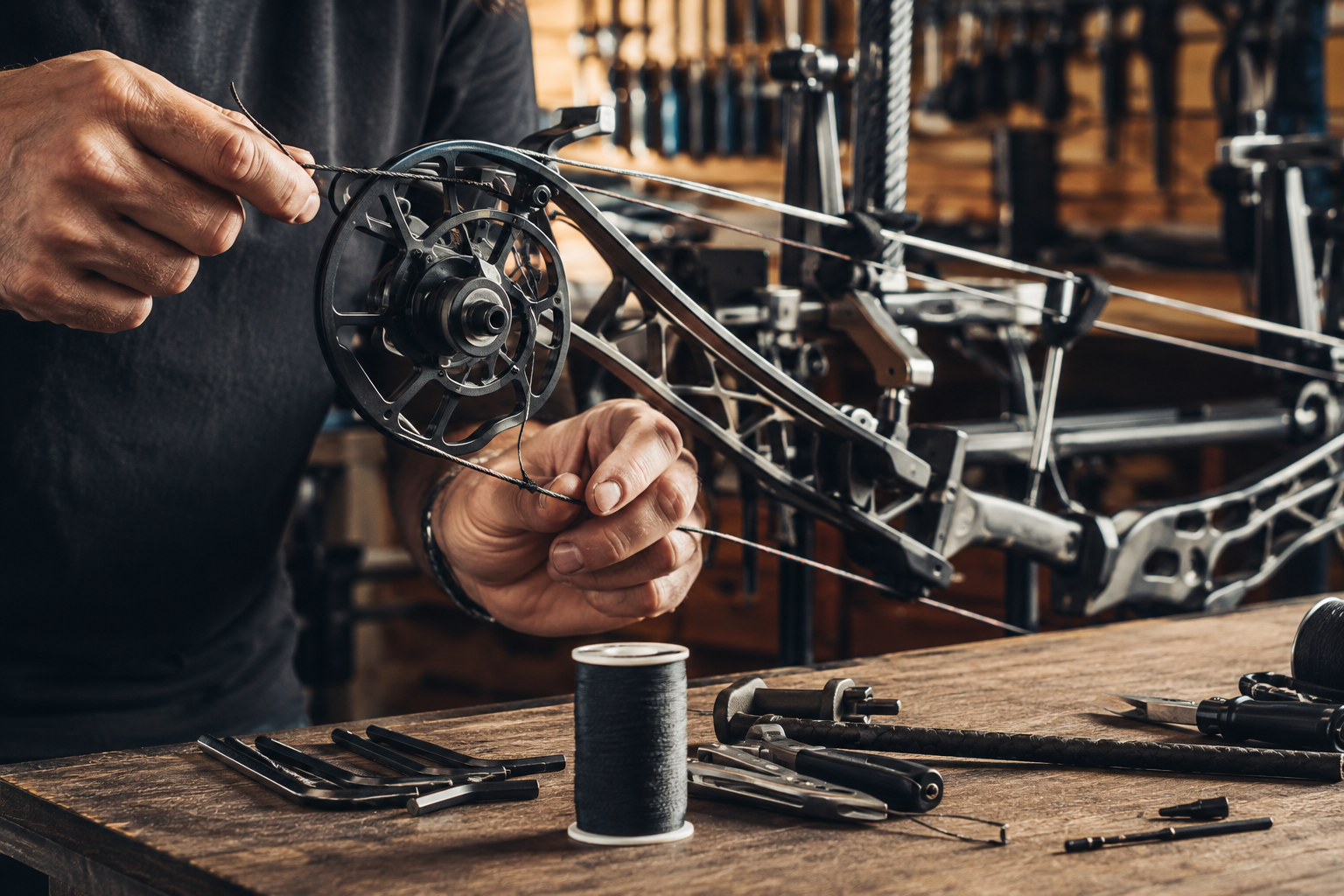
Yes - you can restring a compound bow yourself with the right tools (mainly a bow press), proper safety procedures, and some patience.
Affiliate Disclaimer: We are a participant in the Amazon Services LLC Associates Program, an affiliate advertising program designed to provide a means for sites to earn advertising fees by advertising and linking to Amazon.com. As an Amazon Associate I earn from qualifying purchases. We also participate in other affiliate programs.
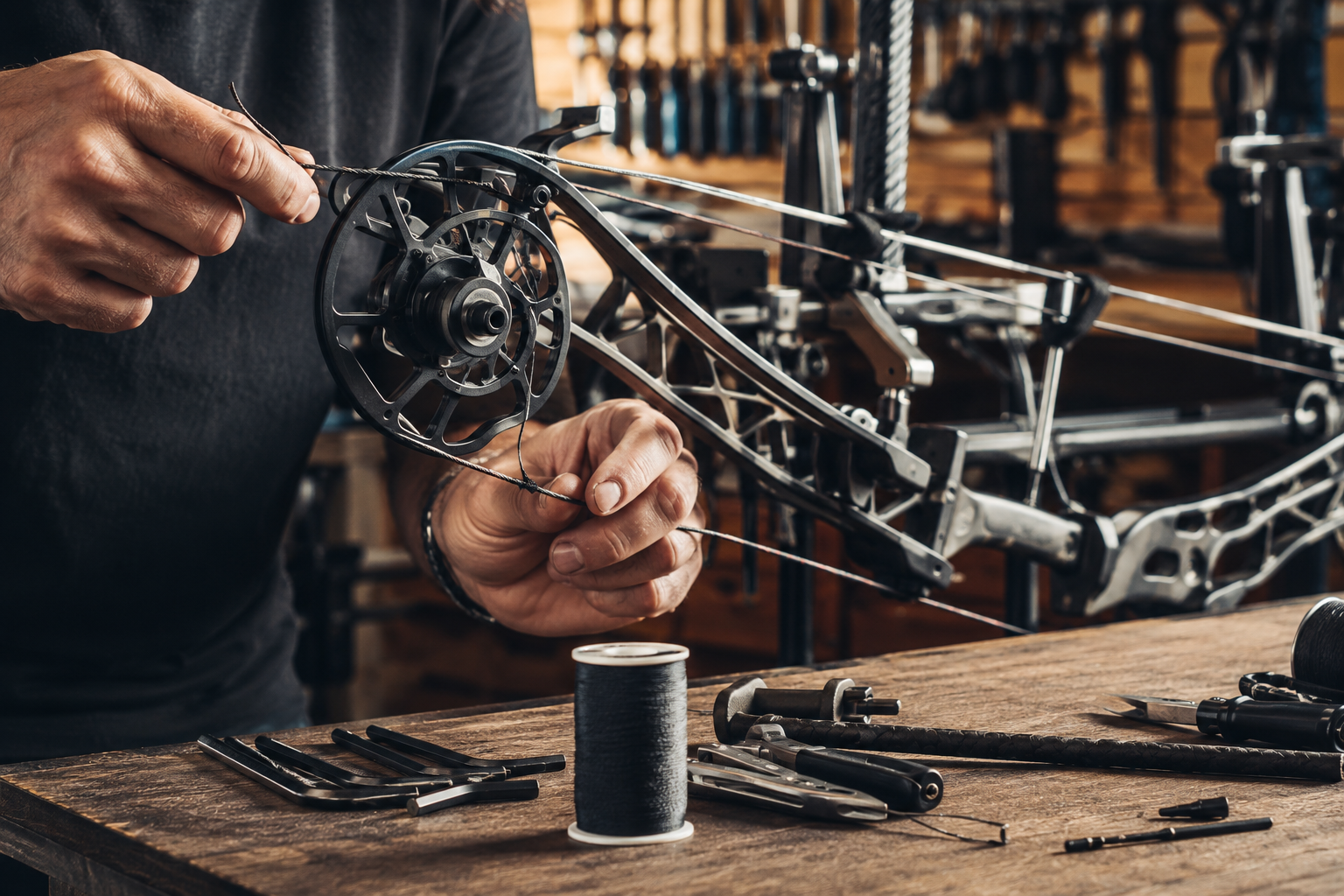
Quick Answer: Yes, you can restring a compound bow yourself if you have the right tools (primarily a bow press), follow proper safety procedures, and take your time to learn the process. While it requires an initial investment in equipment and careful attention to detail, many archers successfully restring their own bows at home, saving money on professional services and gaining valuable maintenance skills.
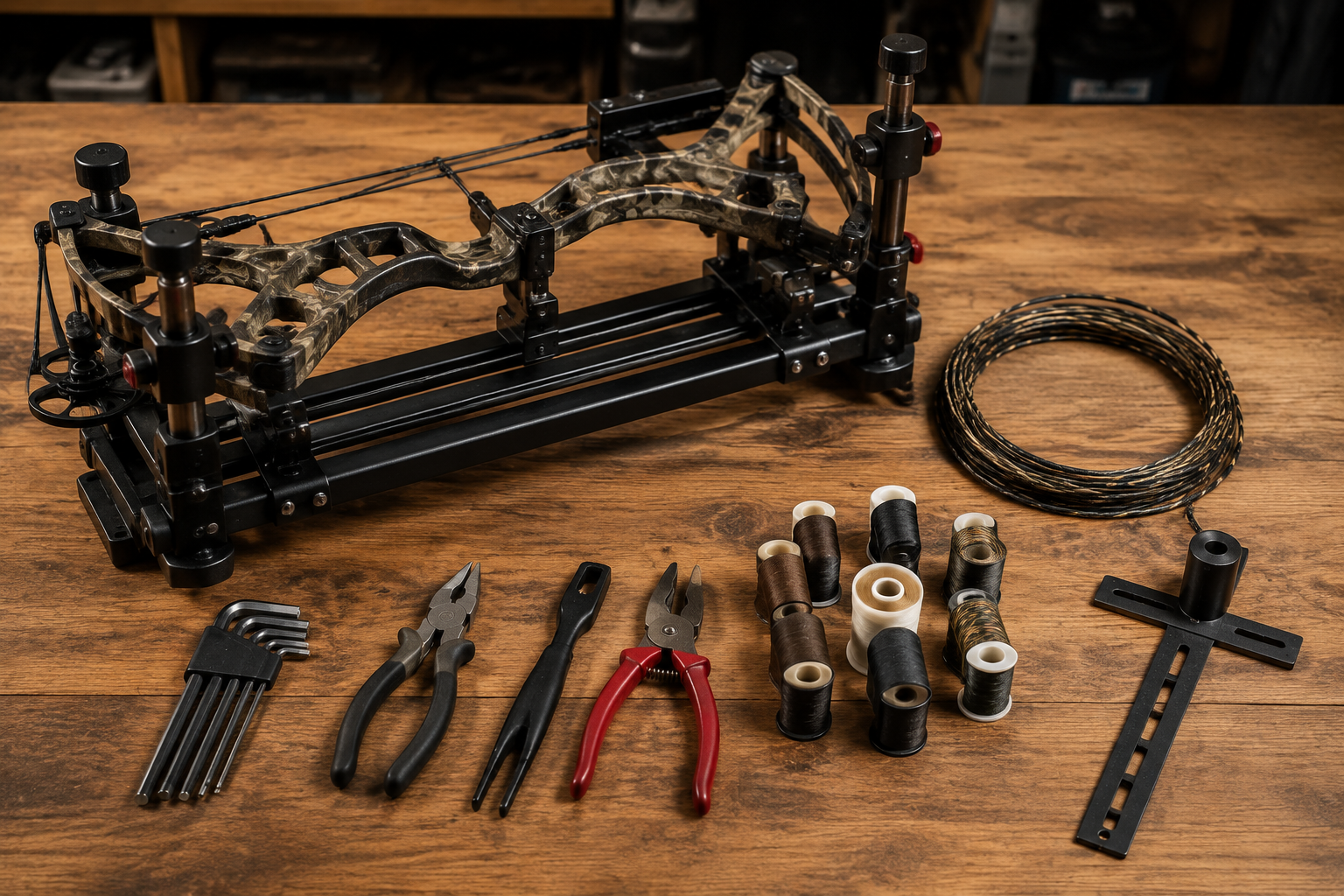
The essential tool for restringing a compound bow is a bow press, which safely compresses the limbs to relieve tension on the string and cables. Without this tool, restringing is nearly impossible and extremely dangerous.
Here’s your complete toolkit for DIY bow restringing:
Required Tools:
Highly Recommended Tools:
Optional but Helpful:
The total investment for a basic home setup ranges from $100-200 if you buy a portable press and essential tools. For archers who shoot regularly, this pays for itself after 2-3 restringing jobs compared to shop prices.
Choose a portable bow press if you have limited space or want to take it to the range. Full-size presses offer more stability and are better if you plan to work on multiple bows or help friends with their equipment.
Professional bow restringing typically costs $75-150 including labor and materials, while doing it yourself costs only $20-40 for replacement strings and cables once you own the necessary tools.
Here’s the cost breakdown:
Professional Shop Service:
DIY First-Time Setup:
DIY Subsequent Restrings:
The break-even point comes after your second or third DIY restring. If you shoot frequently and restring every 12-18 months, you’ll save $200-300 over three years. For archers with multiple bows or those who help friends, the savings multiply quickly.
However, factor in your time investment. Your first DIY restring might take 2-3 hours including setup and learning. Professional shops complete the job in 30-45 minutes while you wait or drop off your bow.
Choose professional service if you own a high-end bow worth $1,000+, need warranty protection, or value the peace of mind that comes with expert installation and tuning.
No, beginners should never attempt to restring a compound bow without a bow press. The limbs store 50-80 pounds of energy under tension, and trying to work around this without proper equipment is extremely dangerous and can result in serious injury or bow damage.
Some experienced archers claim they can change strings using alternative methods like the “two-person method” or limb compression tricks, but these techniques are:
Why a bow press is non-negotiable:
The compound bow’s cam system keeps the limbs under constant tension, even when unstrung. A bow press safely compresses both limbs simultaneously, creating slack in the string and cables so you can remove and replace them. Without this controlled compression, the stored energy in the limbs makes string removal impossible and extremely hazardous.
For beginners specifically:
Start with a portable bow press designed for your bow type (parallel limb or split limb). Watch multiple instructional videos from reputable sources before attempting your first restring. Consider practicing on an older or less expensive bow before working on your primary hunting bow.
If you absolutely cannot afford a bow press, take your bow to a professional shop. The $75-100 service fee is far less than the cost of a damaged bow or medical bills from an injury.
Using a bow press involves securing the bow in the press, slowly compressing the limbs to create slack, removing the old string and cables, installing new ones with correct routing, and carefully releasing the press while checking cam timing. The entire process requires patience and attention to detail.
Step-by-step process:
1. Preparation (10-15 minutes)
2. Secure the Bow (5 minutes)
3. Compress the Limbs (5 minutes)
4. Remove Old String and Cables (10 minutes)
5. Install New String and Cables (15-20 minutes)
6. Release the Press (10 minutes)
7. Final Adjustments (15-30 minutes)
Common mistake to avoid: Rushing the press release. Take your time letting the limbs decompress. Sudden release can cause cables to jump out of their tracks or damage cam bearings.
Incorrectly restringing a compound bow can result in poor accuracy, cam timing issues, limb damage, string derailment during draw, or catastrophic bow failure that causes injury. The consequences range from minor tuning problems to complete bow destruction.
Specific problems from improper restringing:
Cam Timing Issues:
When cables aren’t routed correctly or have unequal tension, the cams won’t synchronize. The top and bottom cams should reach their stopping points simultaneously. Mistimed cams cause:
String Derailment:
If the string doesn’t seat properly in the cam grooves, it can jump off during the draw cycle. This sudden release of energy can:
Limb Damage:
Over-compressing limbs in the press or releasing the press too quickly can:
Incorrect Brace Height:
Using the wrong string length changes brace height (distance from grip to string). Too high or low causes:
Safety Implications:
A bow that’s been restrung incorrectly is a safety hazard. Before shooting, always:
If anything feels wrong, stop immediately and seek professional help. The $50-75 inspection fee is worth avoiding injury or a destroyed bow worth hundreds of dollars.
Take your bow to a professional shop if it’s high-end, under warranty, or you’re uncomfortable with the process; restring it yourself if you shoot frequently, want to save money long-term, and enjoy learning maintenance skills. The decision depends on your experience level, equipment value, and personal priorities.
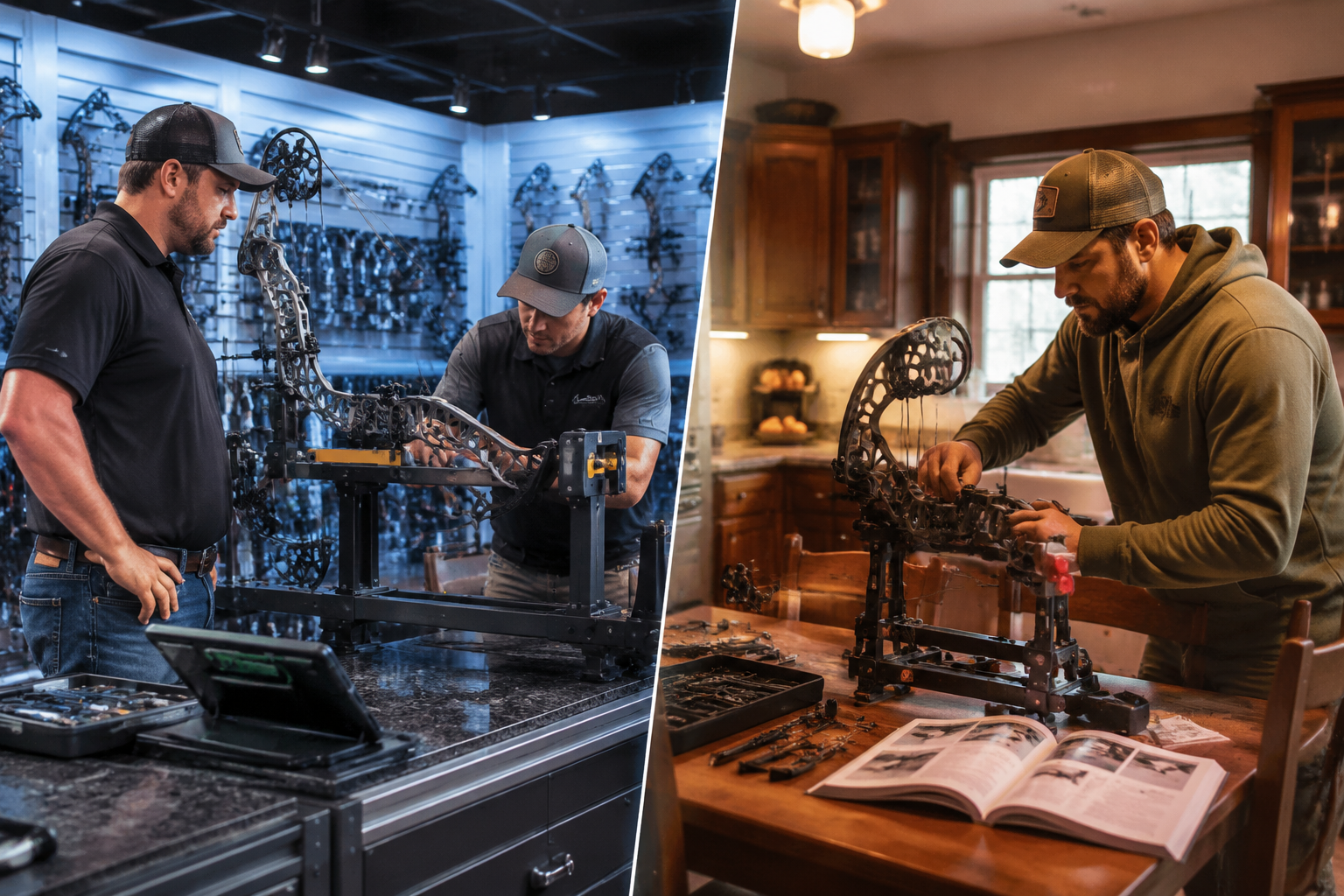
Choose professional shop service when:
Choose DIY restringing when:
Hybrid approach:
Many archers use a combination strategy. They handle routine restringing themselves but take their bow to a shop annually for comprehensive tuning, timing checks, and inspection. This balances cost savings with professional oversight.
For beginners interested in DIY maintenance, consider taking a bow maintenance class offered by many archery shops or clubs. These hands-on sessions teach proper techniques under expert supervision, building confidence before you work on your own bow at home.
The most common DIY restringing mistakes include incorrect cable routing, rushing the bow press release, forgetting to check cam timing, using the wrong string length, and skipping the break-in period. Each of these errors can compromise bow performance or safety.
Top mistakes and how to avoid them:
1. Incorrect Cable Routing
Cables must follow specific paths through the cam system. Mixing up the control cable and buss cable, or routing them through wrong tracks, causes timing problems.
2. Rushing the Press Release
Releasing limb tension too quickly can cause cables to jump out of grooves or damage cam bearings.
3. Ignoring Cam Timing
Failing to verify that both cams reach full draw simultaneously results in poor arrow flight and excessive wear.
4. Wrong String Length
Using a string that’s too long or short changes brace height and affects performance dramatically.
5. Skipping the Break-In Period
New strings stretch during the first 50-100 shots, changing brace height and nocking point position.
6. Over-Tightening or Under-Tightening Components
Limb bolts, cam screws, and other fasteners need proper torque.
7. Forgetting String Wax
New strings need wax to protect fibers and extend life.
8. Not Testing Before Field Use
Taking a newly restrung bow directly to a hunt or competition without thorough testing invites problems.
Edge case to watch for: Some bows have cable slides or rollers that must be positioned correctly during restringing. If your bow has these components, pay special attention to their alignment and movement during the press release.
Your first DIY restring typically takes 2-3 hours including setup, careful cable routing, and final tuning; experienced archers complete the job in 30-60 minutes. Time investment decreases significantly with practice and familiarity with your specific bow model.
Time breakdown by experience level:
First-Time Restring (2-3 hours):
Second or Third Restring (1-2 hours):
Experienced (30-60 minutes):
Factors that affect timing:
Time-saving tips:
Create a restringing checklist that you follow each time. This prevents forgetting steps and reduces decision-making time. Keep your tools organized in a dedicated toolbox so you’re not searching for items mid-process.
Take photos during your first restring and create a reference album on your phone. These visual guides make subsequent restrings much faster because you won’t need to consult manuals or videos.
For archers who maintain multiple bows, batch processing saves time. Set up your workspace once and restring 2-3 bows in a single session rather than setting up separately for each bow.
You don’t need special skills to restring a compound bow, but you do need mechanical aptitude, patience, attention to detail, and the ability to follow instructions carefully. If you can assemble furniture, perform basic car maintenance, or handle other hands-on projects, you can learn to restring a bow.
Skills that help with DIY restringing:
Mechanical Understanding:
You should be comfortable working with tools and understanding how mechanical systems function. Compound bows use cams, cables, and leverage systems that require logical thinking about how components interact.
Manual Dexterity:
Threading cables through small cam grooves and handling serving thread requires reasonably steady hands and good fine motor control. If you struggle with detailed handwork, the process will be more challenging but still learnable with practice.
Visual-Spatial Awareness:
Understanding how cables route through three-dimensional space around cams and through cable slides helps prevent routing errors. Being able to compare your work to reference photos or diagrams is essential.
Patience and Methodical Approach:
Rushing leads to mistakes. Successful DIY restringing requires working slowly, double-checking each step, and being willing to undo work if something doesn’t look right.
Learning Ability:
You need to follow video tutorials or written instructions accurately. The ability to pause, rewind, and carefully observe demonstration videos is valuable for first-time restringing.
What you DON’T need:
Building your skills:
Start by watching multiple tutorial videos specific to your bow type. Different cam systems (single cam, dual cam, binary, hybrid) have unique characteristics. Understanding your specific system before starting builds confidence.
Consider practicing on an older or inexpensive bow before working on your primary equipment. Many archers buy used bows specifically for learning maintenance skills without risking their main hunting or competition bow.
Join online archery forums or local archery clubs where experienced members can answer questions and provide guidance. Having a mentor or knowledgeable friend available during your first restring provides valuable reassurance.
For those interested in getting started with compound bow maintenance, many archery shops offer maintenance workshops where you can learn hands-on under professional supervision.
Portable bow presses cost $60-150, work well for personal use, and store easily but offer less stability; full-size presses cost $200-500, provide superior stability and precision, but require dedicated workshop space. Choose based on your space, budget, and how many bows you’ll service.
Portable Bow Press:
Advantages:
Disadvantages:
Best for: Individual archers with 1-3 bows, limited workspace, occasional restringing needs, or those wanting to test DIY maintenance before investing heavily.
Full-Size Bow Press:
Advantages:
Disadvantages:
Best for: Serious archers with multiple bows, those who help friends with maintenance, anyone planning to work on bows long-term, or archers with dedicated workshop space.
Hybrid option:
Some archers invest in a quality portable press ($100-150) that offers better stability than budget models while maintaining portability. Brands like Last Chance Archery and Bowmaster make well-regarded portable presses that bridge the gap between budget and full-size options.
Decision factors:
Choose a portable press if you live in an apartment, have limited storage, or are still determining whether DIY maintenance is right for you. The lower investment makes it easy to try without major commitment.
Choose a full-size press if you have a garage or workshop, own multiple bows, plan to maintain equipment for years, or want professional-quality results. The higher upfront cost pays off in efficiency and precision over time.
Replace your compound bow string every 1-2 years or after 2,500-5,000 shots, whichever comes first, and immediately if you notice fraying, broken strands, or significant serving separation. Regular inspection and proactive replacement prevent string failure that can damage your bow or cause injury.
Time-based replacement guidelines:
Shot-count guidelines:
Track your approximate shot count if possible. Most modern strings begin showing wear around:
Visual inspection signs requiring immediate replacement:
Critical (replace immediately):
Warning signs (plan replacement soon):
Environmental factors that accelerate wear:
Maintenance to extend string life:
Apply string wax every 2-3 weeks during active shooting seasons. Wax protects fibers from moisture and UV damage while reducing friction. Store your bow in a climate-controlled environment away from direct sunlight when not in use.
Inspect your string before every shooting session. Run your fingers along the entire length, feeling for rough spots, broken fibers, or serving issues. Catching problems early prevents catastrophic failure.
Cost of neglect:
A broken string during draw can cause the bow’s limbs to slam forward violently, potentially cracking the riser, damaging cams, or causing injury. The $20-40 cost of preventive string replacement is trivial compared to $200-500 in bow repairs or medical expenses from injury.
For archers who shoot competitively or hunt, replace strings before the season starts rather than mid-season. Fresh strings ensure consistent performance when it matters most.
Yes, you can damage your compound bow during DIY restringing through over-compression in the press, incorrect cable routing, forcing components, or releasing the press too quickly. However, following proper procedures and working carefully minimizes these risks to acceptable levels for most archers.
Potential damage from DIY restringing:
Limb Damage:
Cam and Axle Damage:
Riser Damage:
String and Cable Damage:
Risk mitigation strategies:
Start with lower-value equipment: Practice on a less expensive bow before working on your primary hunting or competition bow. A $300 bow is a reasonable learning platform; a $1,500 flagship model is not.
Work slowly and deliberately: Most damage occurs when rushing. Set aside adequate time so you’re not tempted to hurry through critical steps.
Use proper equipment: Invest in a quality bow press appropriate for your bow type. Cheap presses that don’t fit properly cause more problems than they solve.
Know when to stop: If something doesn’t look right, feel right, or match your reference materials, stop immediately. Seeking help costs less than repairing damage from pushing forward blindly.
Double-check everything: Before releasing the press, verify cable routing, string seating, and component positioning. Taking an extra 5 minutes to inspect prevents hours of repair work.
Warranty considerations:
Some bow manufacturers void warranties if unauthorized service is performed. Check your warranty terms before attempting DIY maintenance on a new bow. For bows under warranty, professional service may be worth the cost to maintain coverage.
For out-of-warranty bows or manufacturers that allow owner maintenance, DIY restringing carries acceptable risk when done carefully. Thousands of archers successfully maintain their own equipment without incident by following proper procedures and respecting the process.
Modern compound bow strings are typically made from high-performance synthetic fibers, with BCY 452X, 8190, and D97 being the most popular materials; each offers different characteristics for stretch resistance, durability, and speed. Choose based on your bow’s specifications, shooting style, and performance priorities.
Common string materials and their characteristics:
BCY 452X:
BCY 8190:
BCY D97:
BCY X99:
Strand count matters:
String materials come in different strand counts (typically 18-24 strands for compound bows). Higher strand counts provide:
Lower strand counts offer:
Matching material to your bow:
Always check your bow manufacturer’s recommendations. Some bows perform best with specific materials due to cam design, draw weight, or other factors. Using non-recommended materials can affect warranty coverage and performance.
Pre-made vs. custom strings:
Pre-made strings (ready-to-install):
Custom strings (made to order):
For most DIY restringing projects, quality pre-made strings from reputable manufacturers (BCY, Winners Choice, Vapor Trail) provide excellent performance and value. Custom strings make sense for high-end bows, unusual specifications, or archers with specific performance requirements.
Material selection tips:
Choose 452X if you shoot target archery or want maximum consistency with minimal maintenance. Choose 8190 or D97 if you hunt and prioritize arrow speed. For beginner bows or recreational shooting, any quality material will perform well.
Yes, restringing a compound bow at home is safe when you use proper equipment (especially a bow press), follow manufacturer instructions, work slowly and carefully, and respect the stored energy in the limbs. Thousands of archers safely maintain their own equipment by treating the process with appropriate caution.
Safety requirements for DIY restringing:
Essential safety equipment:
Safe working practices:
Before starting:
During the process:
After restringing:
Situations requiring professional help:
Seek professional service if:
Risk comparison:
DIY restringing with proper equipment and procedures carries similar risk to other home maintenance tasks like changing car brakes or electrical outlet replacement. The key is respecting the process, using correct tools, and not taking shortcuts.
The primary danger comes from attempting to work on a compound bow without a bow press or rushing through steps without understanding them. These scenarios create genuine safety hazards. When done properly, DIY restringing is a routine maintenance task that many archers perform safely for decades.
Building confidence safely:
If you’re nervous about your first restring, consider these approaches:
For archers interested in long-term bow ownership and archery training, learning proper maintenance is a valuable skill that enhances your understanding of equipment and saves money over time.
How often should you restring a compound bow?
Replace your compound bow string every 1-2 years or after 2,500-5,000 shots, whichever comes first. Heavy shooters who practice multiple times weekly should restring annually, while occasional shooters can extend to 24 months. Always replace immediately if you notice fraying, broken strands, or serving separation.
Can you restring a compound bow by hand without tools?
No, you cannot safely restring a compound bow without a bow press. The limbs store 50-80 pounds of tension that makes string removal impossible and extremely dangerous without proper equipment. Attempting to restring without a press risks serious injury and bow damage.
How much does a bow press cost for home use?
Portable bow presses suitable for home use cost $60-150, while full-size professional-grade presses range from $200-500. Budget portable models around $60-80 work adequately for occasional personal use, while $100-150 portable presses offer better stability and durability for regular maintenance.
What are the signs that your bow string needs replacing?
Replace your string immediately if you see broken strands, severe fraying, serving separation, dark discoloration, or stretched thin sections. Warning signs that indicate replacement soon include minor fuzzing, serving wear at contact points, wax that won’t absorb, or a string that’s 2+ years old regardless of appearance.
Is it cheaper to restring your own compound bow?
Yes, DIY restringing costs $20-40 for materials versus $75-150 at a professional shop. After the initial tool investment of $100-200, you’ll save $50-100 per restring. The break-even point comes after your second or third DIY restring, making it cost-effective for archers who shoot regularly.
Can restringing a bow wrong damage it permanently?
Yes, improper restringing can cause permanent damage including cracked limbs from over-compression, bent axles from forcing cables, damaged cam bearings, or riser cracks from incorrect press positioning. However, working carefully with proper equipment and following instructions minimizes these risks to acceptable levels.
Do you need to tune a compound bow after restringing?
Yes, you should always re-tune your bow after restringing. New strings stretch during the first 50-100 shots, changing brace height and nocking point position. Check and adjust brace height, verify cam timing, re-set your nocking point, and re-sight your bow before hunting or competition use.
What’s the difference between bow string and bow cable?
The bowstring is the component you draw and release, running from cam to cam through the center of the bow. Cables (control cable and buss cable) run through the cam system and cable guard, controlling cam timing and synchronization. Both work together to store and transfer energy efficiently.
Can you use any string on a compound bow?
No, you must use strings specifically made for your bow’s make, model, and year. String length, material, and strand count must match manufacturer specifications. Using incorrect strings changes brace height, affects cam timing, and can damage your bow or void warranty coverage.
How long does it take to learn to restring a compound bow?
Most archers can successfully complete their first restring in 2-3 hours by following detailed instructions or videos. Your second attempt typically takes 1-2 hours, and with experience, you’ll complete the job in 30-60 minutes. The learning curve is moderate for anyone with basic mechanical aptitude.
Should beginners restring their own compound bows?
Beginners can learn to restring their own bows with proper instruction, equipment, and patience. Start by watching multiple tutorial videos, consider practicing on an inexpensive bow first, and work slowly without rushing. However, if you feel uncomfortable or own a high-value bow, professional service is a safer choice initially.
What happens if you don’t replace your bow string?
An old, worn string can break during draw, causing violent limb movement that may crack the riser, damage cams, break accessories, or cause injury. Worn strings also reduce accuracy, create inconsistent arrow flight, and decrease arrow speed. Regular replacement prevents these problems and ensures safe, reliable performance.
Restringing a compound bow yourself is absolutely achievable for archers willing to invest in proper equipment and take time to learn the process carefully. While it requires a bow press and attention to detail, the skills needed are well within reach of anyone with basic mechanical aptitude and patience.
The financial benefits are clear: after an initial investment of $100-200 in tools, you’ll save $50-100 on every subsequent restring compared to professional shop prices. For archers who shoot regularly and restring annually or biannually, these savings add up to hundreds of dollars over just a few years.
Beyond cost savings, DIY restringing gives you deeper understanding of your equipment, greater independence from shop schedules, and the satisfaction of maintaining your own gear. You’ll be able to restring on your own timeline, whether that’s the evening before a hunt or during off-season preparation.
Your next steps:
Whether you choose DIY maintenance or professional service, regular string replacement is essential for safety and performance. The key is making an informed decision based on your specific circumstances, equipment, and confidence level.
For archers ready to take control of their equipment maintenance, restringing your own compound bow opens the door to greater self-sufficiency and deeper engagement with the sport. With proper preparation and respect for the process, you’ll join thousands of archers who safely and successfully maintain their own bows at home.