
Newsletter Subscribe
Enter your email address below and subscribe to our newsletter

All voices matter
All voices matter

 ByTravis
Dry firing releases a bowstring without an arrow, causing catastrophic damage to limbs, strings, and cams. Learn why it destroys bows and how to prevent it.
Affiliate Disclaimer: We are a participant in the Amazon Services LLC Associates Program, an affiliate advertising program designed to provide a means for sites to earn advertising fees by advertising and linking to Amazon.com. As an Amazon Associate I earn from qualifying purchases. We also participate in other affiliate programs.

Dry firing is releasing a bowstring without an arrow nocked, causing all the stored energy to slam back into the bow itself instead of transferring to an arrow. This violent energy release can instantly crack limbs, splinter risers, snap strings, and destroy cams on compound bows, often rendering the bow unsafe or unrepairable. Even a single dry fire can cause catastrophic damage that costs hundreds of dollars to fix or requires complete bow replacement.
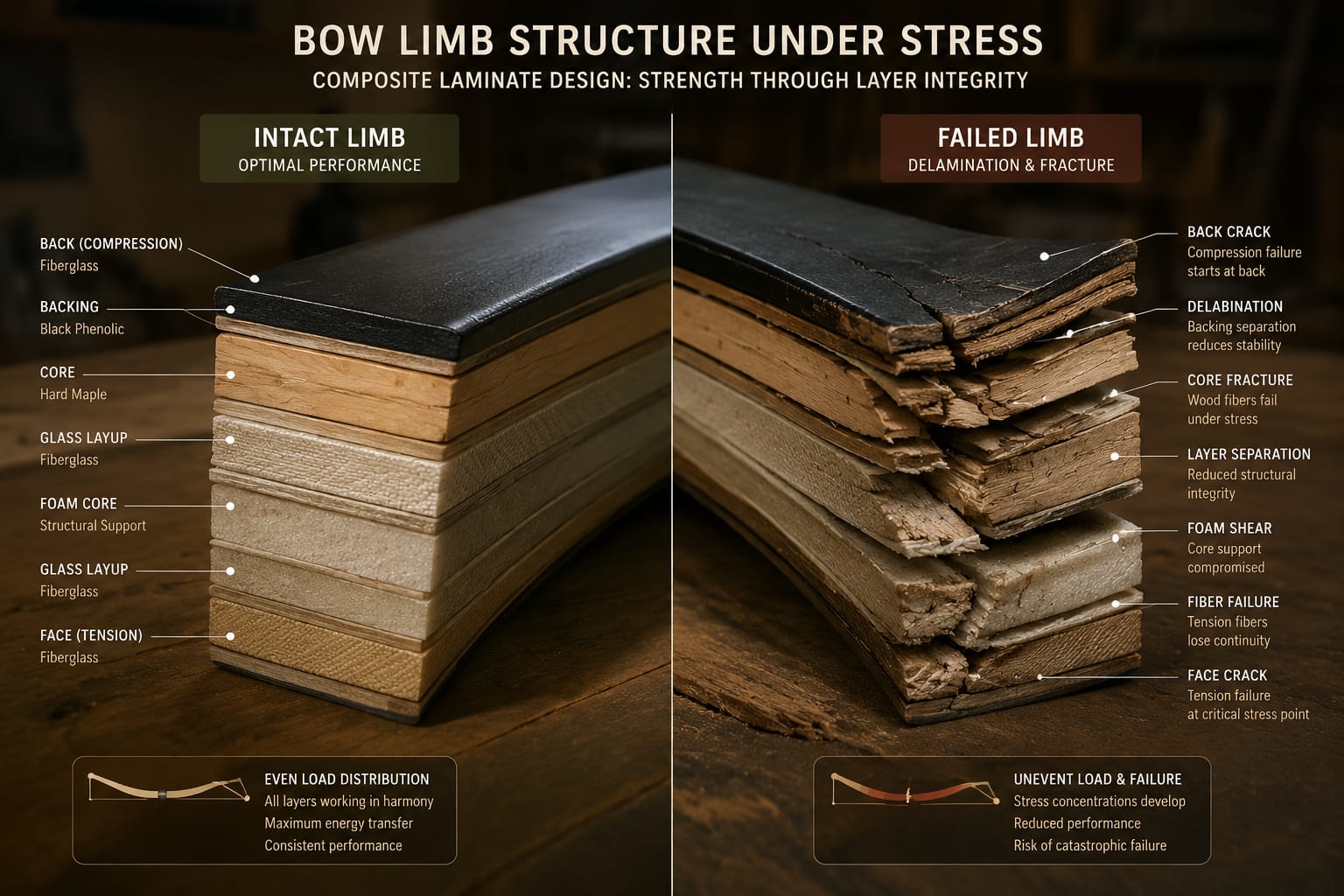
Dry firing a bow means releasing the bowstring without an arrow nocked on it. When you draw a bow, you’re storing mechanical energy in the limbs, and that energy needs somewhere to go when you release the string. Normally, an arrow absorbs about 75-85% of that energy and carries it downrange as kinetic energy. Without an arrow, 100% of that stored energy violently rebounds back into the bow’s structure in milliseconds.
The term “dry fire” comes from firearms terminology, where firing a gun without ammunition can damage the firing pin. In archery, the consequences are often more immediate and visible. The bow essentially shoots itself, with the limbs, riser, string, and cams absorbing an impact they were never designed to handle.
Common scenarios that lead to dry firing:
Even experienced archers occasionally dry fire by accident, which is why understanding the risks matters for everyone who shoots.
Dry firing damages a bow because the energy that should transfer to an arrow instead gets absorbed by the bow’s components as shock waves and vibration. A typical compound bow stores 60-80 pounds of force at full draw, creating roughly 60-90 foot-pounds of kinetic energy. When an arrow is present, it absorbs most of this energy over the length of the power stroke. Without an arrow, the limbs snap forward at maximum velocity and then violently decelerate when the string reaches brace height, creating impact forces that exceed the bow’s design limits.
The physics are brutal: limbs designed to bend smoothly and transfer energy instead experience a sudden reversal of force. The string stops abruptly, sending shock waves through every connection point. Laminated limbs can delaminate (the layers separate), solid limbs can develop stress fractures, and the riser can crack at mounting points where limbs or cams attach.
Why bows can’t handle this stress:
The damage isn’t always immediately visible, which makes dry firing especially dangerous. Microscopic cracks can propagate over subsequent shots until the bow fails catastrophically while you’re at full draw.
When you dry fire a bow, the limbs flex forward at maximum speed, the string races toward brace height with nothing to slow it down, and then everything slams to a stop in a fraction of a second. The immediate result is often a loud crack or bang, violent vibration through the riser, and visible damage to one or more components. In severe cases, limbs can completely shatter, sending splinters flying, or the string can snap and whip back toward the archer.
Immediate damage you might see:
Hidden damage that develops later:
The severity depends on the bow type, draw weight, and how much energy was stored at release. A 70-pound compound bow dry fired at full draw will suffer far more damage than a 25-pound recurve bow dry fired at half draw. But even “minor” dry fires compromise structural integrity and create safety hazards.
A bow can sometimes be repaired after dry firing, but only if the damage is limited to replaceable components like strings, cables, or limbs, and the riser remains structurally sound. Most compound bows with cracked or splintered limbs can have those limbs replaced for $150-$300 plus labor, assuming replacement limbs are available for that model. However, if the riser is cracked, the cams are damaged, or the limbs have delaminated, the bow is usually a total loss because these repairs either aren’t possible or cost more than buying a new bow.
Repairable damage:
Usually unrepairable damage:
The biggest challenge is that many dry fire victims don’t realize the full extent of damage immediately. A bow might seem fine after a dry fire, pass a visual inspection, and then catastrophically fail during the next shooting session when a hidden crack propagates. This is why most bow technicians recommend retiring any bow that’s been dry fired, even if no damage is visible.
Professional inspection is mandatory after any dry fire. Never attempt to shoot a dry fired bow without having a certified bow technician examine every component under magnification and perform a draw cycle test.
The difference between a dry fire and a normal shot comes down to energy distribution. During a normal shot, an arrow absorbs 75-85% of the bow’s stored energy and carries it downrange as kinetic energy, while the remaining 15-25% dissipates through the bow as vibration and heat. In a dry fire, 100% of the energy rebounds into the bow’s structure, creating impact forces 4-6 times higher than normal at critical stress points like limb tips, limb pockets, and cam axles.
Normal shot energy distribution:
Dry fire energy distribution:
The arrow acts as a critical buffer in the energy system. Even a lightweight arrow provides enough mass to smooth out the energy transfer and prevent shock loading. This is why shooting arrows that are too light for your bow’s draw weight (a condition called “underspining”) can cause similar damage to a dry fire, though usually less severe.
Think of it this way: a normal shot is like throwing a baseball, your arm decelerates smoothly as the ball leaves your hand. A dry fire is like punching a concrete wall, all the energy you generated slams back into your joints and bones.
Fixing a dry fired bow typically costs between $150 and $500 depending on which components are damaged, but many dry fired bows are total losses that can’t be economically repaired. Simple repairs like replacing a broken string or cable run $50-$100, while limb replacement costs $150-$300 plus $50-$75 for professional installation and tuning. If the riser is cracked or the cams are damaged, you’re usually looking at $400-$600 in parts and labor, which often exceeds the value of replacing the entire bow.
Typical repair cost breakdown:
| Component Damaged | Parts Cost | Labor Cost | Total Estimate |
|---|---|---|---|
| String/cables only | $30-$60 | $20-$40 | $50-$100 |
| Single limb | $100-$200 | $50-$75 | $150-$275 |
| Both limbs | $200-$400 | $75-$100 | $275-$500 |
| Cam/axle damage | $150-$300 | $75-$150 | $225-$450 |
| Riser crack | Not repairable | N/A | Total loss |
Hidden costs to consider:
The harsh reality is that most bow shops recommend replacing rather than repairing a dry fired bow, especially if it’s more than 3-4 years old. The combination of visible damage, potential hidden damage, and voided warranty makes repairs a risky investment. A $300 repair on a bow originally worth $500 rarely makes financial sense when you can put that money toward a new bow with a fresh warranty.
For beginners choosing their first bow, understanding these costs reinforces why prevention is so much better than cure.

Signs that your bow was dry fired include visible cracks or splinters in the limbs, frayed or broken strings, unusual sounds when drawing the bow, limbs that appear twisted or misaligned, and excessive vibration during the shot cycle. You might also notice the bow no longer holds proper tune, with arrows impacting inconsistently despite no changes to your form or equipment. Any of these symptoms after a suspected dry fire means you should immediately stop shooting and have the bow professionally inspected.
Visual inspection checklist:
Performance symptoms:
The “it seems fine” trap: Many archers dry fire their bow, see no obvious damage, and continue shooting. This is extremely dangerous. Composite limbs can develop internal cracks that aren’t visible on the surface but propagate with each shot until catastrophic failure occurs. Always have a professional inspect the bow with proper lighting and magnification after any dry fire, even if everything looks normal.
Some modern bows include dry fire indicators, small witness marks or tabs that break or move if the bow is dry fired. Check your owner’s manual to see if your bow has this feature and where to look for it.
Compound bows suffer significantly more damage from dry firing than recurve or longbows because they store more energy, have more complex mechanical systems, and use composite limbs that fail more catastrophically under shock loading. A 60-pound compound bow stores roughly 60-70 foot-pounds of energy thanks to its let-off system, while a 60-pound recurve stores about 40-50 foot-pounds. The compound’s cams, cables, and shorter, stiffer limbs create multiple failure points that don’t exist on simpler bow designs.
Why compounds are more vulnerable:
Recurve and longbow advantages:
That said, recurve bows and longbows can absolutely be destroyed by dry firing. Traditional wooden longbows can develop compression fractures on the belly (inside curve) or tension failures on the back (outside curve). Laminated recurve limbs can delaminate just like compound limbs. The damage is just typically less severe and less likely to be catastrophic on the first dry fire.
Bottom line: All bows can be damaged by dry firing, but compound bows are more likely to suffer immediate, catastrophic, and expensive damage. If you shoot a compound bow, dry fire prevention should be your top priority.
Dry firing a bow can absolutely hurt you, potentially causing serious injuries including lacerations from broken limbs or strings, eye injuries from flying debris, hand and wrist injuries from the violent recoil, and bruising or contusions from the bow striking your face or body. When a bow dry fires, components can shatter and send sharp fragments flying at high velocity in unpredictable directions. The string can snap and whip back toward your face, and the riser can twist violently in your hand, potentially breaking fingers or wrists.
Injury risks from dry firing:
Real-world injury scenarios:
A compound bow limb that shatters during a dry fire can send carbon fiber or fiberglass splinters flying at speeds exceeding 100 mph. These fragments can penetrate skin, lodge in eyes, or cause deep lacerations. The string, traveling at 300+ feet per second with no arrow to slow it down, can strike your face or arm with enough force to break skin and cause severe bruising.
The violent recoil can also cause the bow to twist in your grip, potentially breaking fingers if they’re caught in the wrong position. Archers who use mechanical releases are particularly vulnerable because the release stays attached to the string during a dry fire, creating a whipping action that can strike the face or chest.
Safety equipment helps but doesn’t eliminate risk:
The best protection is prevention. Never dry fire intentionally, always verify an arrow is nocked before drawing, and maintain your equipment to prevent accidental dry fires from mechanical failures.
It is never safe to dry fire a modern compound, recurve, or longbow under normal circumstances. Bows are engineered to transfer energy to an arrow, not to absorb that energy internally, and even a single dry fire can cause catastrophic damage or injury. Some bow manufacturers produce specific models designed for draw cycle testing without an arrow, but these are specialized training bows with reinforced construction and significantly reduced draw weights, not standard hunting or target bows.
The only exceptions:
Why “just once” is still dangerous:
Even experienced bow technicians never intentionally dry fire a customer’s bow during inspection or tuning. The risk of damage is 100%, not a possibility. Some archers mistakenly believe that dry firing at partial draw or with reduced draw weight is safe, it’s not. Any release without an arrow creates shock loading that exceeds design limits.
Common myths debunked:
If you need to test a bow’s draw cycle without shooting, use a bow press or draw board that mechanically holds the bow without releasing the string. If you need to let down from full draw without shooting, follow your bow’s specific let-down procedure (usually slowly releasing tension while controlling the string with your release or fingers).
For those new to archery, learning proper archery training techniques includes understanding why dry firing is never acceptable under any circumstances.
Preventing accidental dry fires requires building consistent pre-shot routines, using equipment designed to prevent dry fires, and maintaining your bow properly to avoid mechanical failures. The most effective prevention is a mental checklist you run through before every single shot: verify arrow is nocked, check that the arrow is properly seated on the rest, confirm the nock is fully engaged on the string, and visually confirm the arrow is still in place before beginning your draw.
Pre-shot routine checklist:
Equipment solutions:
Maintenance to prevent mechanical dry fires:
Situational awareness:
The “one more check” rule: Before you start your draw, take one extra second to look at your arrow and confirm it’s properly positioned. This single habit prevents 95% of accidental dry fires.
Dry firing immediately voids the warranty on virtually all compound bows, recurve bows, and crossbows sold by major manufacturers. Bow warranties typically cover manufacturing defects and material failures under normal use, but explicitly exclude damage from misuse, abuse, or dry firing. When you submit a warranty claim for a damaged bow, the manufacturer’s technicians inspect for telltale signs of dry firing, specific crack patterns, impact marks, and stress indicators that are unmistakable, and will deny the claim if dry fire damage is detected.
What bow warranties typically cover:
What warranties explicitly exclude:
How manufacturers detect dry fire damage:
Bow technicians can identify dry fire damage through specific indicators: stress fractures that radiate from high-stress points, delamination patterns consistent with shock loading, string serving damage from excessive speed, and cam bearing failures from rotational shock. These patterns are distinctly different from normal wear or manufacturing defects.
The fine print matters: Always read your bow’s warranty documentation carefully. Some manufacturers offer limited coverage for first-time dry fires if you register your bow and purchase an extended warranty, but this is rare. Most warranties include language like “damage resulting from dry firing is not covered under any circumstances.”
What this means for you: If you accidentally dry fire your bow, don’t attempt to submit a warranty claim for the damage. The claim will be denied, and you’ll waste time and shipping costs. Instead, take the bow to a qualified technician for honest assessment and either pay for repairs or replace the bow.
The limbs typically break first when you dry fire a bow, specifically developing cracks, splinters, or delamination before the string fails. Limbs absorb the majority of the shock energy during a dry fire because they’re flexing at maximum velocity and then violently decelerating when the string reaches brace height. The string experiences extreme speed and tension, but modern bow strings are engineered to handle these forces and usually survive the initial dry fire, though they may develop fraying or serving damage that leads to failure on subsequent shots.
Why limbs fail first:
String failure patterns:
Secondary failure points:
After limbs and strings, the next components to fail are typically:
Failure sequence in a severe dry fire:
The specific failure pattern depends on the bow’s design, draw weight, and how much energy was stored at release. A 70-pound compound bow at full draw will typically shatter limbs immediately, while a 30-pound recurve bow might develop less obvious stress fractures that propagate over time.
Why this matters: Even if your bow appears to survive a dry fire with no visible damage, the limbs likely have microscopic cracks that will grow with each shot. This is why professional inspection is mandatory, what looks like a “lucky escape” is often a ticking time bomb.
Beginner archers commonly dry fire their bows by forgetting to nock an arrow before drawing, using arrows that are too short and fall off the rest during the draw cycle, accidentally triggering mechanical releases before reaching full draw, and failing to verify the arrow is properly seated before beginning the shot sequence. These mistakes stem from incomplete understanding of proper shooting form, rushing through the shot process, and not yet having developed the muscle memory and mental checklists that experienced archers use automatically.
Top beginner dry fire mistakes:
Why beginners are more vulnerable:
Prevention strategies for new archers:
The instructor’s role: Good archery instructors emphasize dry fire prevention from the very first lesson, teaching beginners to treat every draw as if it could be their last if they don’t follow proper procedures. This mindset prevents the casual attitude that leads to accidents.
For those just starting out, checking out resources on beginner bow selection and proper draw weight for beginners can help you choose equipment that’s easier to handle safely while you’re learning.
Can you dry fire a bow once without damage?
No, even a single dry fire can cause immediate catastrophic damage to limbs, strings, and cams, or create hidden stress fractures that lead to failure on subsequent shots. There is no safe number of dry fires, the first one can destroy your bow.
How do I know if my bow is safe after a dry fire?
Only a certified bow technician can determine if your bow is safe after a dry fire by performing a detailed inspection under magnification, checking for cracks, delamination, and stress indicators, and testing the draw cycle. Never shoot a dry fired bow without professional inspection.
Will a dry fire always make a loud noise?
Most dry fires produce a loud crack or bang from the violent energy release, but some dry fires with lower draw weights or partial draws may be quieter while still causing significant damage. Sound level doesn’t correlate with damage severity.
Can I dry fire a crossbow?
No, dry firing a crossbow is even more dangerous than dry firing a vertical bow due to higher energy storage, heavier draw weights, and the potential for the crossbow to explode and send fragments toward your face. Crossbow warranties explicitly exclude dry fire damage.
Does arrow weight affect dry fire damage?
Arrow weight doesn’t affect dry fire damage because in a true dry fire there is no arrow present. However, shooting arrows that are too light for your bow’s draw weight (typically under 5 grains per pound of draw weight) creates similar shock loading and can cause comparable damage.
How long does it take to inspect a bow after dry firing?
A thorough professional inspection takes 30-45 minutes and includes visual examination under magnification, draw cycle testing, and checking all connection points, strings, cables, and accessories. Rush inspections miss hidden damage.
Can I fix a dry fired bow myself?
You should never attempt to repair a dry fired bow yourself unless you’re a certified bow technician with proper tools and training. Improper repairs create safety hazards that can cause the bow to fail catastrophically during use, potentially causing serious injury.
What’s the difference between a dry fire and shooting an arrow that’s too light?
A dry fire has no arrow at all, while shooting an arrow that’s too light (underweight for the bow’s draw weight) provides some energy absorption but not enough to prevent shock loading. Both can damage your bow, but dry firing is typically more severe.
Do bow manufacturers test for dry fire resistance?
Bow manufacturers test their designs under normal shooting conditions but do not engineer bows to survive dry fires. Bows are designed to transfer energy to arrows, not to absorb that energy internally, so dry fire resistance is not a design goal.
Will my homeowner’s insurance cover dry fire damage?
Homeowner’s insurance typically does not cover dry fire damage to bows because it’s considered user error or misuse rather than an accident or covered peril. Check your specific policy, but expect to pay for repairs or replacement out of pocket.
Can you hear a bow crack during a dry fire?
Yes, you often hear a distinct cracking sound during a dry fire as limbs fracture or delaminate, separate from the loud bang of the string impact. Any cracking sound during or after a dry fire indicates serious structural damage.
How much force does a dry fire put on bow limbs?
A dry fire subjects bow limbs to impact forces 4-6 times higher than normal shooting conditions, with peak stress concentrated at limb tips and connection points. A 60-pound bow can experience instantaneous forces exceeding 300 pounds at critical stress points.
Dry firing is one of the most destructive things that can happen to a bow, causing immediate catastrophic damage or hidden stress fractures that lead to dangerous failures later. Understanding what dry firing is and why it destroys bows is essential for every archer, from beginners choosing their first compound bow to experienced shooters who’ve been practicing for years. The physics are unforgiving: without an arrow to absorb the stored energy, 100% of the draw weight force rebounds into the bow’s structure, creating shock loads that exceed design limits and crack limbs, snap strings, and destroy cams.
Your action plan for dry fire prevention:
The good news is that dry fires are almost entirely preventable through proper habits and equipment maintenance. The bad news is that a single moment of inattention can destroy a bow worth hundreds or thousands of dollars and potentially cause serious injury. Make dry fire prevention a non-negotiable part of your shooting routine, and you’ll never have to experience the sickening crack of a bow destroying itself.
Remember: every draw should include a quick check that an arrow is properly nocked and seated. That one-second habit is the difference between a lifetime of safe shooting and a catastrophic equipment failure. Stay safe, shoot smart, and never take shortcuts with bow safety.
For more guidance on proper archery techniques and equipment selection, explore our archery equipment resources and getting started guides.


