Newsletter Subscribe
Enter your email address below and subscribe to our newsletter

All voices matter
All voices matter
 ByTravis
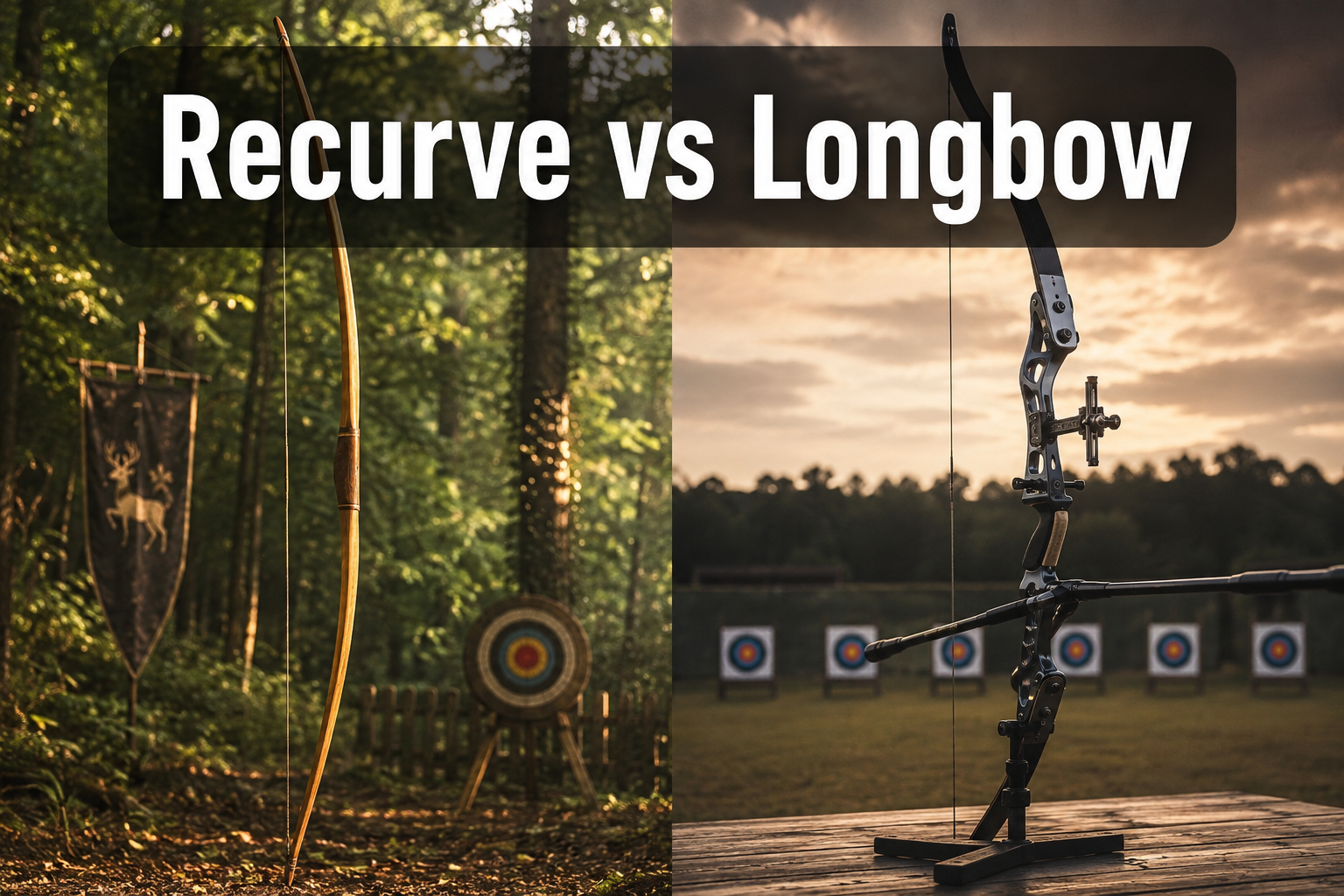
Recurve bows have curved limb tips for faster arrow speeds from a shorter frame, while longbows keep straighter limbs for a smoother draw - here's how they compare for traditional archery.
Affiliate Disclaimer: We are a participant in the Amazon Services LLC Associates Program, an affiliate advertising program designed to provide a means for sites to earn advertising fees by advertising and linking to Amazon.com. As an Amazon Associate I earn from qualifying purchases. We also participate in other affiliate programs.
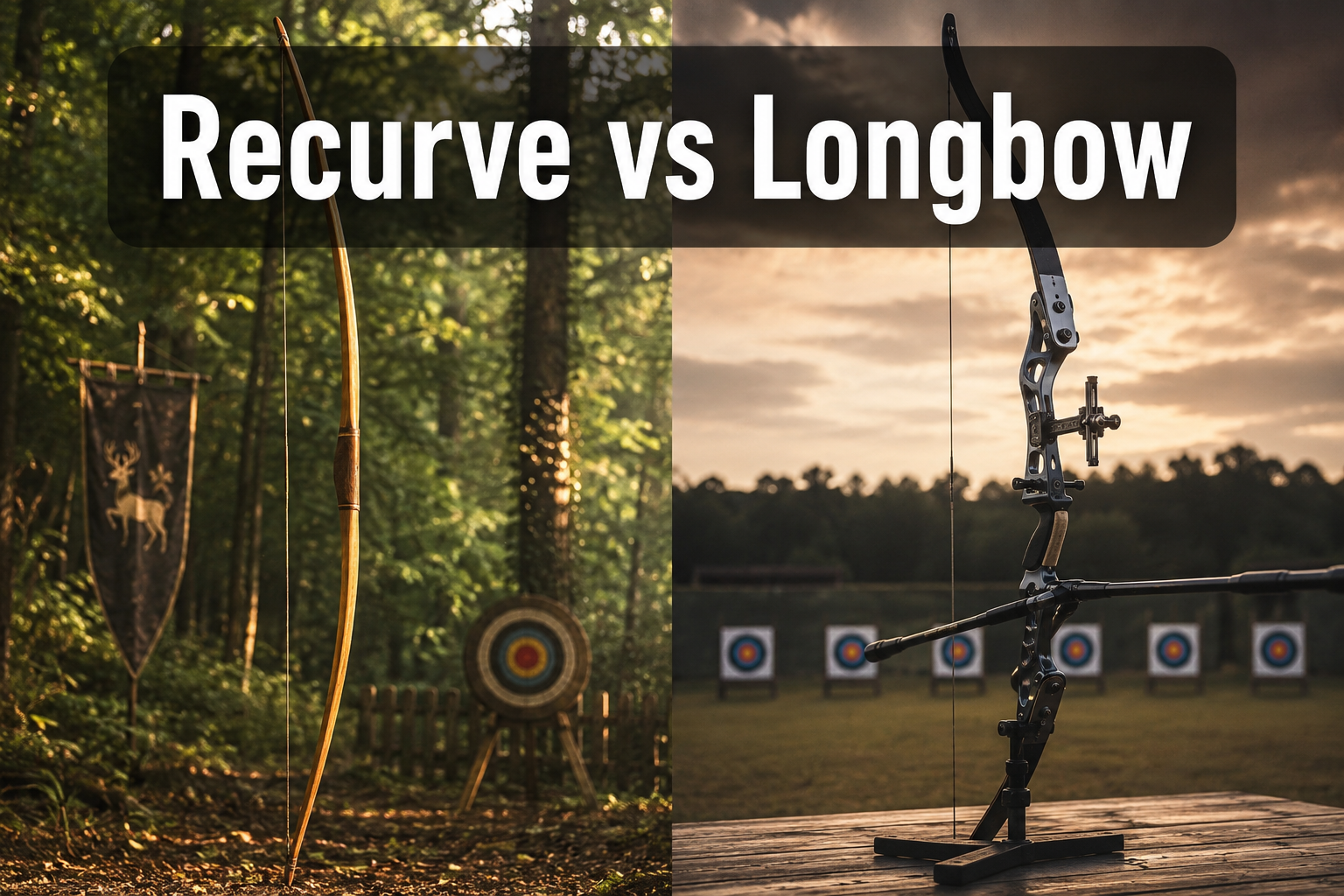
Quick Answer: The recurve bow features curved limb tips that point away from the archer when unstrung, delivering faster arrow speeds and more power from a shorter bow, while the longbow maintains straight or slightly curved limbs throughout its length, offering a smoother draw cycle and simpler design. For traditional archery in 2026, recurves excel in hunting and competitive target shooting due to their efficiency, whereas longbows appeal to historical reenactors and archers who prefer the meditative, instinctive shooting experience of a simpler bow.
A recurve bow has limbs that curve away from the archer when unstrung, creating distinctive “recurve” tips that bend forward toward the target at full draw. A longbow features limbs that remain relatively straight or gently curved in one continuous arc from handle to tip, resembling the letter “D” when strung.
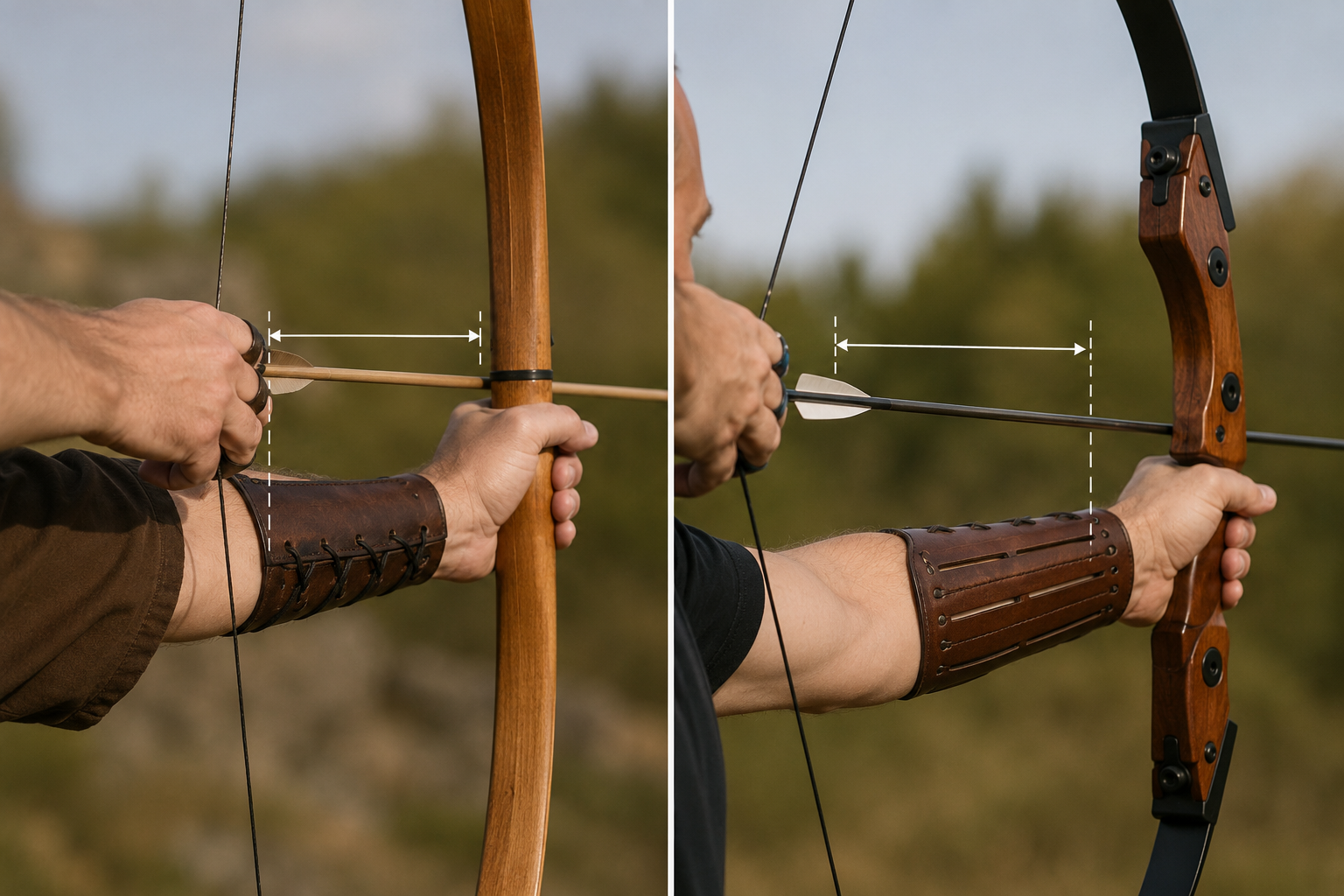
The recurve design stores significantly more energy in the curved limb tips, which snap forward with greater force when released. This mechanical advantage allows recurves to:
Longbows compensate for their simpler geometry through length, typically measuring 66-72 inches for adult archers. The straight-limb design creates a different shooting experience:
Material construction also differs between these bow types. Traditional recurves often use laminated wood, fiberglass, and carbon layers for strength and flexibility. Longbows traditionally rely on single-piece wood construction (yew, osage orange, bamboo) or simple wood laminates, though modern versions incorporate fiberglass backing for durability.
The string angle at full draw creates another key distinction. Recurve bows maintain a more acute string angle, which increases the effective power stroke. Longbows have a gentler string angle, contributing to their characteristic smooth release.
Recurve bows are generally easier for beginners to learn because their shorter length improves maneuverability, their design is more forgiving of form errors, and their efficiency delivers better results with less-than-perfect technique. Most archery instructors recommend recurves for new traditional archers.
Why recurves favor beginners:
Longbow learning challenges:
Longbows demand more precise form from day one. The longer limbs amplify any torque or twisting motion in the bow hand, sending arrows off target. New archers often struggle with the 68-72 inch length, especially in indoor ranges or wooded hunting areas.
The draw cycle feels different too. While smoother overall, longbows require consistent anchor points and release technique to achieve accuracy. Without the recurve’s mechanical advantage, form flaws translate directly into poor arrow flight.
Common beginner mistake: Starting with too heavy a draw weight. Begin with 20-25 pounds for recurves or 25-30 pounds for longbows, focusing on form for at least three months before increasing poundage.
Choose a longbow if: You’re specifically interested in historical archery, medieval reenactment, or traditional bowhunting methods, and you’re willing to invest extra practice time mastering the technique.
At distances under 20 yards with proper form, both recurve and longbow archers achieve similar accuracy, with differences depending more on shooter skill than equipment. Beyond 30 yards, recurves gain a measurable advantage due to flatter arrow trajectory and reduced wind drift from higher arrow speeds.
Factors affecting accuracy:
Arrow velocity plays the biggest role in long-range accuracy. Recurves shooting 15-20 fps faster than longbows experience less arrow drop and wind deflection. At 40 yards, this translates to 3-4 inches less drop and noticeably tighter groups in crosswinds.
Bow stability differs between designs. Recurves typically have more mass in the riser (handle section), creating a steadier aiming platform. Longbows, being lighter overall, require more disciplined form to prevent movement during the shot.
Forgiveness varies by design. Longbows forgive minor release errors better due to their smoother energy transfer. Recurves punish poor releases more harshly but reward good technique with tighter groups.
Practical accuracy benchmarks:
Competition results support the recurve advantage. In traditional archery tournaments allowing both bow types, recurve shooters consistently post higher scores at distances beyond 30 yards, though skilled longbow archers remain competitive at shorter ranges.
Choose based on your accuracy needs: If you’re shooting targets beyond 30 yards or hunting in open terrain, recurves offer measurable accuracy benefits. For instinctive shooting under 25 yards or woodland hunting, longbow accuracy is entirely adequate.
A quality traditional recurve bow suitable for serious practice and hunting costs between $300-600, with entry-level models starting around $200 and premium custom bows reaching $800-1,200. Expect to pay $400-500 for a reliable mid-range recurve from established manufacturers.
Price tiers and what you get:
Budget range ($150-250):
Mid-range ($300-600):
Premium range ($700-1,200+):
Additional costs to budget:
What affects recurve pricing:
Construction quality matters most. Hand-crafted bows using premium materials like maple, bamboo, and carbon cost more but deliver better performance and longevity. Mass-produced bows sacrifice some refinement for affordability.
Common mistake: Buying the cheapest bow available, then upgrading within six months. Invest in a $400-500 bow initially and you’ll use it for years.
Longbows feel harder to draw at the end of the draw cycle due to “stacking,” where draw weight increases more rapidly in the final 2-3 inches before full draw. A 50-pound longbow might feel like 55-60 pounds at full draw, while a 50-pound recurve maintains more consistent weight throughout the draw.
Understanding draw force curves:
Recurve bows store energy efficiently in their curved limbs, creating a relatively flat draw force curve. You pull steadily increasing weight until about 75% of full draw, then the weight plateaus or even decreases slightly.
Longbows have a more linear draw force curve that continues climbing throughout the entire draw. The final inches require disproportionately more force, creating the “stacking” sensation that makes them feel heavier than their rated draw weight.
Factors that worsen longbow stacking:
Solutions if your longbow feels too hard:
Choose a recurve if: You have a draw length over 29 inches, prefer consistent draw weight, or find stacking uncomfortable. Recurves eliminate this issue through their mechanical design.
Recurve bows are better for most traditional archery hunting situations because their compact size improves maneuverability in tree stands and ground blinds, their higher arrow velocity increases effective range to 30-35 yards, and their efficiency delivers more kinetic energy for clean, ethical kills. Longbows remain viable for dedicated hunters willing to limit shots to 20-25 yards.
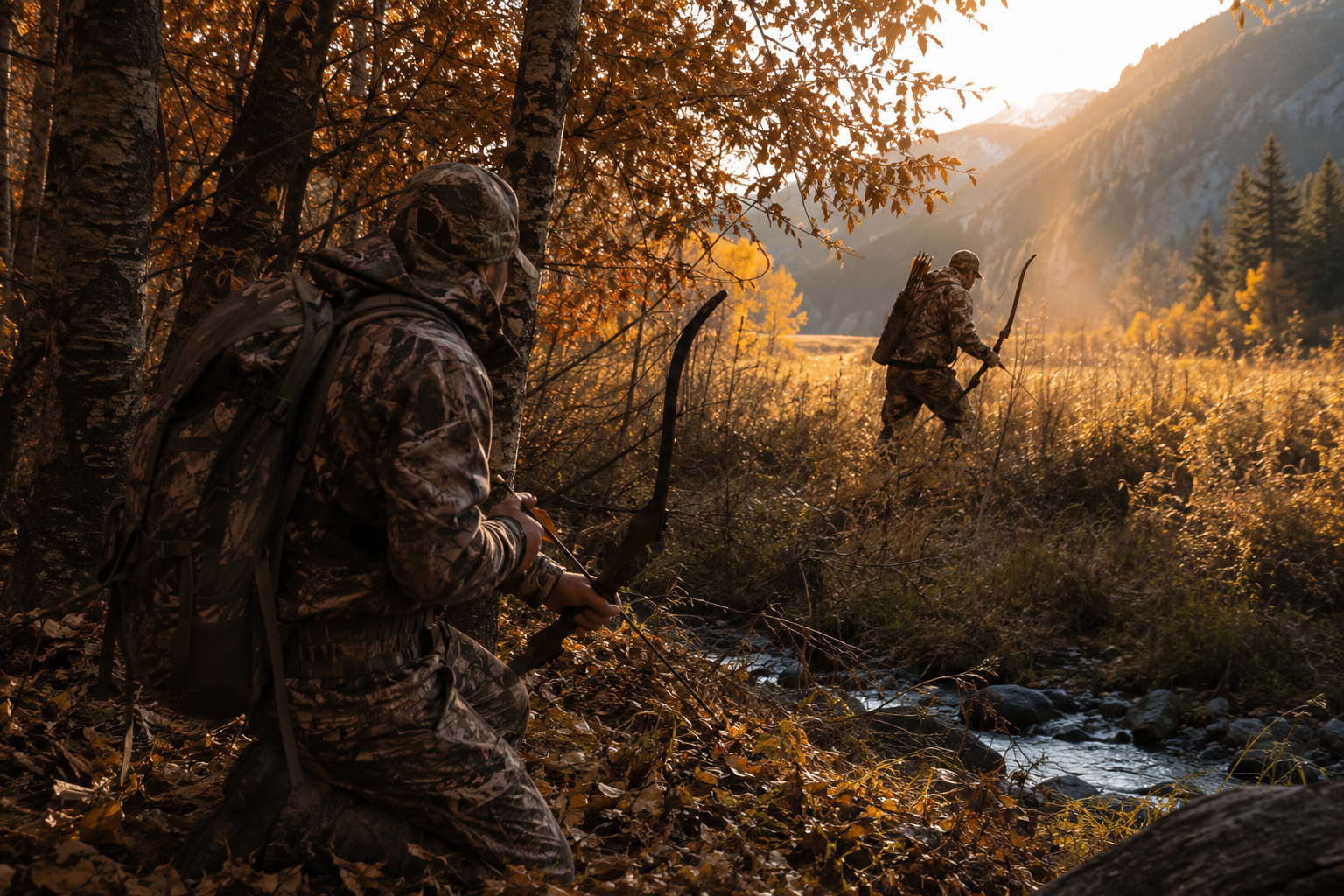
Recurve hunting advantages:
Compact design matters in real hunting scenarios. A 60-inch recurve navigates tree stand ladders, ground blinds, and thick brush far easier than a 70-inch longbow. You can draw and shoot from kneeling or sitting positions without limbs hitting obstacles.
Arrow velocity directly impacts hunting effectiveness. Recurves shooting 175-190 fps deliver:
Effective range expands with recurves. Most traditional bowhunters limit shots to 25-30 yards with longbows but can confidently shoot 30-35 yards with recurves, increasing hunting opportunities.
When longbows work for hunting:
Dedicated longbow hunters succeed by:
Draw weight recommendations:
State regulations sometimes specify minimum draw weights for hunting. Check your local laws before purchasing.
Common hunting mistake: Choosing a bow based on aesthetics rather than practical hunting performance. If you hunt primarily from tree stands in wooded areas, a recurve’s advantages are undeniable.
Longbows are generally better for archers over 6’2″ with draw lengths exceeding 30 inches because longer bows (70-72 inches) accommodate extended draws without excessive stacking and maintain proper limb geometry for tall shooters. However, modern recurves in longer lengths (62-64 inches) also work well for tall archers and may still be preferable for hunting or target competition.
Why height and draw length matter:
Taller archers with longer arms naturally have longer draw lengths. A 6’4″ archer might draw 31-32 inches, while someone 5’8″ typically draws 28-29 inches. Bow length must match draw length for optimal performance.
Longbow length guidelines by height:
Why tall archers often prefer longbows:
The extra length prevents stacking at long draw lengths. A 72-inch longbow drawn 31 inches maintains smooth draw characteristics, while a shorter bow would stack severely. The longer limbs also create better string angles at full draw, improving arrow flight.
Recurve alternatives for tall archers:
Modern recurve manufacturers offer longer models (62-64 inches) that accommodate tall shooters while maintaining recurve advantages. These longer recurves:
Don’t assume you need a longbow just because you’re tall. Test both bow types at your draw length. Many 6’2″+ archers shoot 62-inch recurves successfully.
Common mistake: Short archers (under 5’8″) choosing full-length longbows because they look traditional. A 66-68 inch longbow works better for shorter draw lengths and is easier to handle.
You can use a recurve bow for some medieval reenactment events, but most European medieval reenactment groups require longbows for historical accuracy since recurves were primarily used in Asian and Middle Eastern contexts during the medieval period. Check your specific reenactment society’s rules before purchasing equipment.
Historical context matters:
European medieval archery (1200-1500 AD) centered on the English longbow and similar straight-limbed designs. The famous battles of Crécy, Agincourt, and Poitiers featured longbow archers, making longbows the historically accurate choice for Western European reenactment.
Recurve bows dominated medieval archery in:
Reenactment society requirements:
Society for Creative Anachronism (SCA):
English medieval reenactment groups:
Living history events:
Practical considerations:
If you’re joining a medieval reenactment group, ask about equipment requirements before investing in a bow. Many groups provide loaner equipment for newcomers to try before buying.
Choose a longbow if: You’re interested in English, Welsh, or Western European medieval reenactment. Choose a recurve if you’re portraying Eastern European, Middle Eastern, or Asian historical periods.
The most common mistake when switching from recurve to longbow is maintaining the same aggressive release and follow-through technique, which causes poor arrow flight because longbows require a softer, more relaxed release to avoid hand shock and maintain accuracy. Longbow shooters must also adjust to the longer bow length, different draw cycle, and increased stacking at full draw.
Critical technique adjustments:
Release style must change completely. Recurve shooters often use a crisp, active release with deliberate finger extension. Longbows demand a passive release where fingers simply relax and the string pulls them away. An aggressive release torques the longbow, sending arrows left or right.
Bow hand pressure differs significantly. Recurves tolerate moderate grip pressure, but longbows amplify any torque from squeezing the grip. Longbow shooters must maintain a relaxed, open-palm grip with pressure only on the thumb pad and heel of the hand.
Draw cycle expectations need adjustment. Recurve shooters accustomed to a consistent draw weight throughout the cycle find longbow stacking uncomfortable. Expect the final 2-3 inches to feel significantly heavier.
Mistakes that ruin accuracy:
Adjustment timeline:
Expect 4-6 weeks of regular practice (3-4 sessions per week) to feel comfortable with longbow technique. Your first few sessions will feel awkward, with arrows flying inconsistently. This is normal.
Practice progression:
Don’t give up early. Many archers try longbows for two sessions, struggle with the adjustment, and conclude longbows “don’t work for them.” Give yourself adequate time to adapt.
A flatbow has wide, flat limbs with a rectangular cross-section (typically 1.5-2 inches wide), a recurve has curved limb tips that bend away from the archer, and a longbow has narrow, rounded limbs in a D-shaped cross-section. Flatbows fall between recurves and longbows in performance, offering more speed than longbows but less than recurves, with a uniquely stable shooting experience.
Flatbow characteristics:
Performance comparison:
| Bow Type | Typical Speed | Draw Smoothness | Stability | Complexity |
|---|---|---|---|---|
| Recurve | 175-190 fps | Moderate | Good | Higher |
| Flatbow | 165-180 fps | Very smooth | Excellent | Low |
| Longbow | 160-175 fps | Very smooth | Good | Lowest |
When to choose a flatbow:
Flatbows suit archers who want:
Flatbow disadvantages:
Regional preferences: Flatbows remain popular in the Pacific Northwest and among archers interested in Native American archery traditions. They’re less common in European traditional archery circles.
Longbows are not too slow for traditional target archery competitions, as most traditional events allow both recurves and longbows with separate scoring divisions or handicap systems that account for equipment differences. However, in open competitions where all traditional bows compete together, recurves hold a measurable advantage at distances beyond 30 yards due to their 10-15 fps speed advantage and flatter trajectory.
Competition formats and longbow viability:
Traditional archery tournaments typically use one of three formats:
In separate divisions or with handicaps, longbows compete perfectly well. Skilled longbow archers regularly win their divisions at major traditional tournaments.
In open competition, recurves dominate at longer distances. At 40-50 yard targets, the recurve’s flatter trajectory and reduced wind drift translate to 10-15% higher average scores.
Distance-specific performance:
Popular traditional archery competition formats:
Choose based on your goals: If you want to compete at the highest levels in open traditional divisions, recurves offer better performance. If you enjoy the longbow shooting experience and don’t mind competing in longbow-specific divisions, speed differences don’t matter.
Don’t let competition concerns override personal preference. Many archers shoot longbows exclusively because they enjoy the experience, accepting that they won’t win open traditional divisions.
Archers with shoulder injuries, limited upper body strength, draw lengths under 26 inches or over 31 inches, or those who need a bow for confined spaces like tree stands should avoid longbows. Additionally, beginners seeking the fastest learning curve and hunters requiring maximum effective range are better served by recurves.
Physical limitations that make longbows problematic:
Shoulder issues become worse with longbows because the stacking at full draw places extra stress on the rotator cuff and shoulder joint. Recurves distribute force more evenly throughout the draw cycle, reducing peak shoulder stress.
Limited upper body strength makes managing longbow stacking difficult. If you struggle to draw a 35-40 pound recurve smoothly, you’ll find an equivalent longbow even more challenging.
Very short draw lengths (under 26 inches) mean you’re not drawing the longbow far enough to utilize its full limb length efficiently. A shorter recurve works better for archers with short arms or smaller stature.
Very long draw lengths (over 31 inches) push longbows past their efficient range, causing severe stacking. Even 72-inch longbows struggle at 32+ inch draws.
Situational factors:
Tree stand hunters find 68-72 inch longbows nearly impossible to maneuver. Climbing ladders, drawing in confined spaces, and shooting from seated positions all favor shorter recurves.
Indoor range shooters may face length restrictions. Many indoor ranges limit bow length to 62-64 inches, excluding most longbows.
Frequent travelers struggle with longbow length. Transporting a 70-inch bow requires special cases and creates airline baggage challenges.
Personality and learning style considerations:
Impatient learners who want quick results should choose recurves. Longbows demand patience and consistent practice over months to achieve proficiency.
Analytical archers who enjoy equipment tuning and optimization often prefer recurves, which offer more adjustment possibilities.
This doesn’t mean you can’t shoot a longbow if you fall into these categories, but you should carefully consider whether the challenges outweigh the benefits. Many archers own both bow types and choose based on the situation.
Both recurves and longbows work excellently for instinctive shooting, but longbows offer slight advantages due to their smoother release, reduced hand shock, and more forgiving nature that helps archers maintain focus on the target rather than equipment feel. Choose based on your shooting environment, physical build, and whether you prioritize the meditative shooting experience (longbow) or practical performance (recurve).
Instinctive shooting fundamentals:
Instinctive shooting means aiming by feel and focus rather than using sights or conscious gap estimation. You look at the target, draw, and release while your subconscious mind calculates the trajectory. Both bow types support this approach.
Longbow advantages for instinctive shooting:
Recurve advantages for instinctive shooting:
Decision framework:
Choose a longbow if you:
Choose a recurve if you:
Practice requirements don’t differ significantly. Both bow types require hundreds of shots to develop reliable instinctive accuracy. The bow type matters less than consistent practice.
Common misconception: “Real” instinctive shooting requires a longbow. Many of the world’s best instinctive archers shoot recurves. Choose the bow that feels right to you.
Yes, recurve bows shoot 10-20 fps faster than longbows of equivalent draw weight and draw length because their curved limb tips store more energy and transfer it more efficiently to the arrow. A 50-pound recurve typically shoots arrows at 175-190 fps, while a 50-pound longbow achieves 160-175 fps with the same arrow weight.
Why recurves are faster:
Mechanical advantage comes from the recurve design. When you draw a recurve, you’re bending the limbs and also loading energy into the curved tips. At release, both the limbs and the recurve tips snap forward, transferring more energy to the arrow.
Longer power stroke results from recurve geometry. The effective distance the string pushes the arrow is longer in a recurve because the curved tips extend the power delivery.
Better energy storage occurs in recurve limbs. The curved design allows limbs to store more potential energy per pound of draw weight.
Real-world speed comparisons:
Testing with identical arrows (500 grain weight) and 28-inch draw length:
50-pound draw weight:
60-pound draw weight:
Factors that affect the speed gap:
Does speed matter for your shooting?
Speed matters for:
Speed matters less for:
Don’t choose based on speed alone. A 15 fps difference sounds significant but translates to only 1-2 inches of trajectory difference at 30 yards. Shooting skill and practice matter far more than equipment speed.
Can you hunt deer with a 45-pound longbow?
Yes, a 45-pound longbow can effectively hunt deer with proper shot placement within 20 yards, though 50-55 pounds provides better penetration and margin for error. Use heavy arrows (500+ grains) to maximize kinetic energy and only take broadside or quartering-away shots for ethical kills.
How long does it take to get good at shooting a longbow?
Most archers achieve consistent accuracy at 15-20 yards within 3-4 months of regular practice (3-4 sessions per week), but developing reliable hunting accuracy to 25 yards typically requires 6-12 months. Mastering instinctive shooting at varied distances takes 1-2 years of dedicated practice.
Are recurve bows more accurate than longbows?
Recurve bows are more accurate at distances beyond 30 yards due to faster arrow speeds and flatter trajectories, but at 20 yards and under, accuracy depends primarily on shooter skill rather than bow type. Both designs can achieve excellent accuracy with proper technique and practice.
What draw weight should a beginner start with?
Beginners should start with 20-25 pounds for recurves or 25-30 pounds for longbows, focusing on developing proper form for at least 2-3 months before increasing weight. Starting too heavy causes bad habits, shoulder strain, and frustration that discourages continued practice.
Can you put a sight on a traditional recurve or longbow?
You can physically attach sights to most traditional recurves and some longbows, but doing so removes them from the “traditional” category in most competitions and defeats the purpose of instinctive shooting that defines traditional archery. Most traditional archers shoot without sights.
Why do Olympic archers use recurves instead of longbows?
Olympic archers use recurves because they’re more efficient, more accurate at long distances (70 meters in Olympic competition), and allow for stabilizers and sights that improve consistency. Longbows are too slow and don’t accommodate modern accessories required for Olympic-level competition.
How much does a custom longbow cost?
Custom longbows from respected bowyers cost $600-1,200 depending on wood selection, length, draw weight, and finish options. Premium custom longbows with exotic woods and extensive customization can reach $1,500-2,000, while semi-custom production longbows start around $400-500.
Do you need different arrows for recurves and longbows?
Yes, recurves and longbows typically require different arrow spines (stiffness) even at the same draw weight because they transfer energy differently. Recurves generally need stiffer spines, while longbows work better with more flexible arrows. Always check spine charts for your specific bow.
Can short people shoot longbows effectively?
Short people (under 5’6″) can shoot longbows effectively but should choose shorter models (64-66 inches) matched to their draw length (typically 26-28 inches). Shooting a full-length 70-inch longbow with a short draw length is inefficient and uncomfortable.
What’s the effective hunting range for a recurve vs longbow?
Recurve bows have an effective hunting range of 30-35 yards for experienced archers, while longbows are best limited to 20-25 yards. These ranges assume proper draw weight (45+ pounds), good arrow selection, and consistent accuracy at those distances during practice.
Are longbows harder to string than recurves?
Longbows are generally easier to string than recurves because their straight limbs flex more uniformly and require less force. Recurves need more careful stringing technique to avoid twisting the limbs, though both bow types benefit from using a bow stringer rather than the step-through method.
Which bow type is quieter when shooting?
Longbows are typically quieter than recurves because their straight limbs produce less string slap and vibration. The simpler design and smoother energy transfer create a softer “thump” compared to the sharper “snap” of a recurve release, making longbows preferred for hunting situations requiring stealth.
The choice between recurve and longbow for traditional archery ultimately depends on your specific goals, physical characteristics, and what aspects of archery matter most to you. Recurves offer practical advantages in speed, efficiency, and versatility, making them the better choice for hunters, competitive shooters, and archers seeking maximum performance from a traditional bow. Their compact size, flatter trajectory, and forgiving nature help beginners learn faster while providing experienced archers with the tools to shoot accurately at longer distances.
Longbows reward patience and dedication with a uniquely satisfying shooting experience characterized by smooth draws, quiet shots, and a direct connection to archery’s historical roots. They excel in situations where shooting experience matters as much as results: instinctive shooting at moderate distances, historical reenactment, and the meditative practice that draws many people to traditional archery.
Your next steps:
Remember that many dedicated traditional archers eventually own both bow types, choosing based on the specific shooting situation. You’re not locked into one choice forever. Start with the bow that best matches your immediate needs and interests, develop your skills, and explore the other option when you’re ready. The traditional archery community welcomes all bow types, and the most important factor is simply getting out and shooting.