Newsletter Subscribe
Enter your email address below and subscribe to our newsletter

All voices matter
All voices matter
 ByTravis
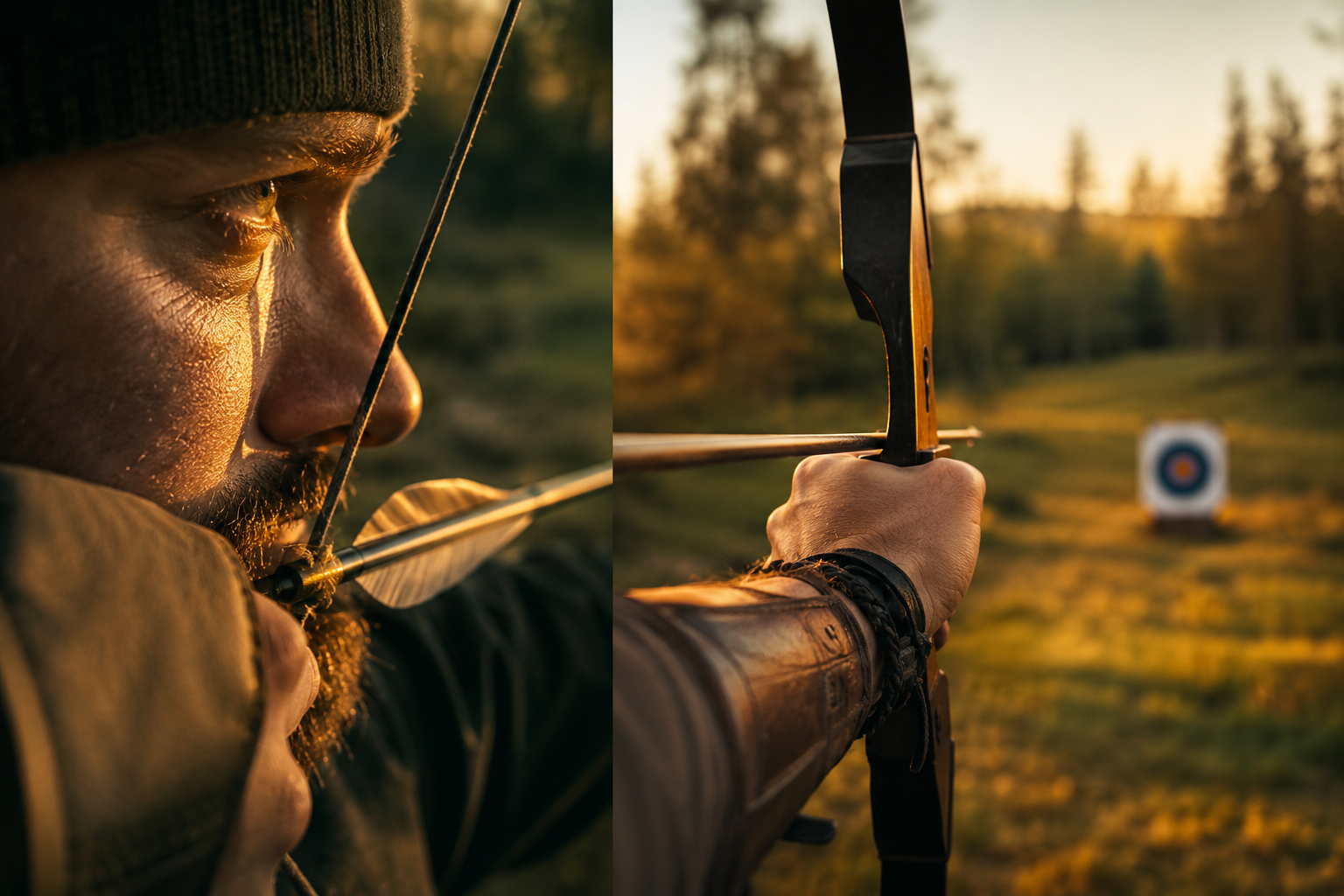
Gap shooting uses the arrow point as a deliberate reference to judge distance, while instinctive aiming relies on subconscious hand-eye coordination - here's how the two traditional methods compare.
Affiliate Disclaimer: We are a participant in the Amazon Services LLC Associates Program, an affiliate advertising program designed to provide a means for sites to earn advertising fees by advertising and linking to Amazon.com. As an Amazon Associate I earn from qualifying purchases. We also participate in other affiliate programs.
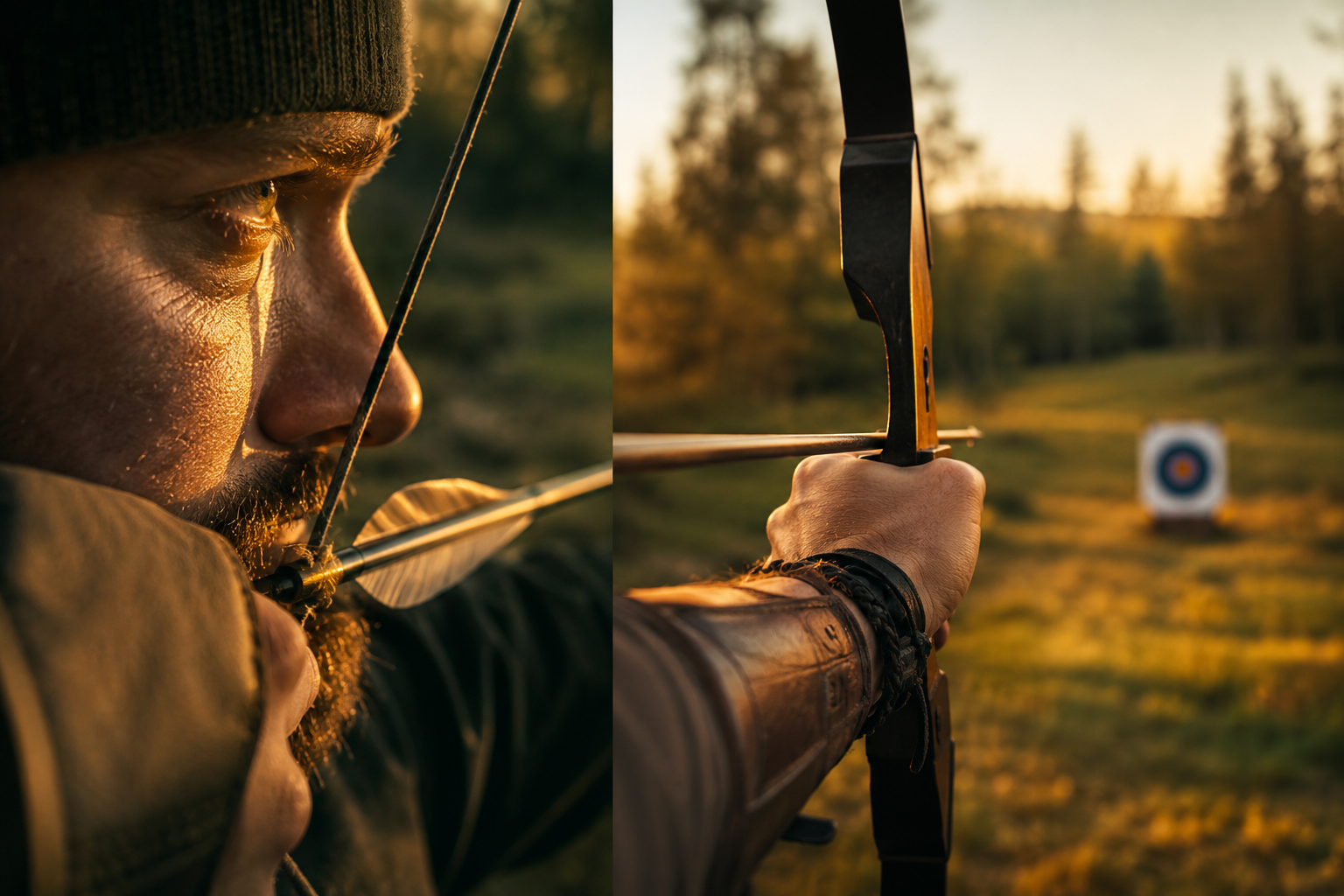
Gap shooting and instinctive aiming represent two fundamentally different approaches to traditional archery. Gap shooting uses the arrow point as a deliberate reference, calculating the visual distance (gap) between the point and target at various ranges. Instinctive aiming relies on subconscious hand-eye coordination without conscious reference points, similar to throwing a ball. Neither method is universally superior; gap shooting typically delivers faster initial accuracy while instinctive aiming offers greater speed and fluidity once mastered.
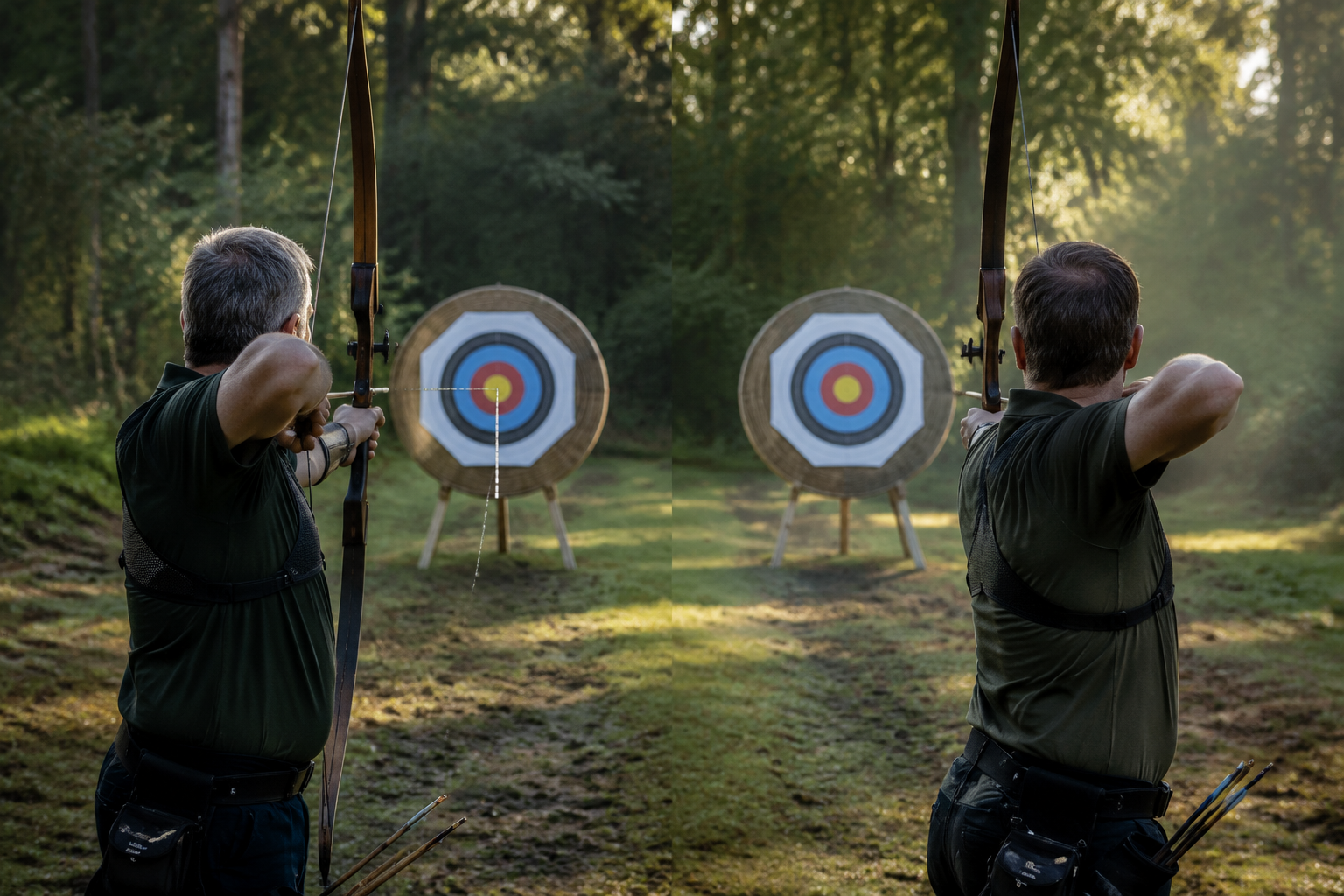
Gap shooting is a traditional archery aiming method where the archer uses the arrow point as a deliberate sight reference, consciously placing it at a specific visual distance above, below, or on the target depending on range. The “gap” refers to the perceived space between where the arrow point appears and where the archer wants the arrow to hit.
At close distances (typically under 15 yards), the arrow point might need to be held below the target because the arrow’s trajectory rises above the line of sight. At medium ranges (15-25 yards), the point might align directly with the target, creating a “point-on” distance. Beyond that range, the archer holds the point progressively higher above the target to compensate for arrow drop.
How gap shooting works in practice:
Gap shooting offers several advantages for traditional archers. It provides a concrete reference system that accelerates the learning curve for beginners. Archers can measure and adjust their gaps systematically, making it easier to diagnose and correct accuracy problems. The method also translates well to target archery where distances are known and consistent.
The primary limitation is that gap shooting requires conscious mental processing during the shot sequence. This can slow shot execution and may introduce tension or overthinking, particularly under pressure. The method also demands accurate distance estimation in field conditions where ranges aren’t marked.
Instinctive aiming is a traditional archery technique that eliminates conscious aiming references, instead relying on the archer’s subconscious hand-eye coordination to direct arrows to the target. The archer focuses intensely on the exact spot they want to hit while the brain and body automatically adjust draw length, anchor point, and release timing to achieve that result.
This method mirrors how humans naturally throw objects. When tossing a ball to someone, you don’t calculate trajectory angles or reference points; you look at your target and your neuromuscular system handles the mechanics. Instinctive archery applies this same principle to shooting a bow.
Core principles of instinctive aiming:
Instinctive shooting excels in dynamic situations where speed and adaptability matter. Hunters appreciate the method because it works equally well at steep uphill or downhill angles, through small shooting windows, and at unknown distances. The lack of conscious aiming also produces smoother, more fluid shot execution once the skill is developed.
The trade-off is a longer learning curve. New archers often struggle with instinctive shooting because it requires surrendering conscious control and trusting a skill that hasn’t yet developed. Progress can feel inconsistent during the first several months, which frustrates shooters accustomed to immediate feedback and measurable improvement.
Both gap shooting and instinctive aiming can achieve comparable accuracy levels when properly mastered, but gap shooting typically delivers more consistent results during the first 3-6 months of practice. The conscious reference system in gap shooting provides immediate feedback and allows systematic correction, giving beginners a faster path to acceptable accuracy.
Research and competitive results show that experienced practitioners of either method can shoot groups of similar size at target distances. The accuracy difference becomes less about the method itself and more about the individual archer’s dedication, practice quality, and natural aptitude.
Accuracy considerations by shooting context:
The consistency factor favors gap shooting for archers who shoot primarily at level ground and known distances. The method’s systematic nature produces predictable results that are easier to maintain across shooting sessions. Instinctive aiming shows more variability day-to-day, particularly when the archer is tired, distracted, or hasn’t shot recently.
Choose gap shooting if you value measurable progress, shoot mostly at targets with known distances, and prefer a logical, systematic approach to skill development. Choose instinctive aiming if you prioritize shooting speed, hunt in varied terrain, and are willing to invest more time for a more adaptable skill set.
Learning gap shooting requires systematic practice at measured distances to establish reliable reference points. Beginners should start at close range where gaps are easier to observe and gradually extend to longer distances as consistency improves.
Step-by-step gap shooting learning process:
Establish your point-on distance: Shoot at a target from various distances until you find the range where your arrow point held directly on the bullseye produces center hits. This is typically between 15-25 yards for most traditional setups.
Map gaps at 5-yard intervals: Starting from your point-on distance, move 5 yards closer and shoot a group. Note how far below the target you need to hold the arrow point for center hits. Repeat moving 5 yards farther than point-on, noting how far above the target to hold.
Create mental reference points: Rather than memorizing numbers, develop visual references. At 10 yards, your gap might be “arrow point on the target’s bottom edge.” At 30 yards, it might be “arrow point on the treetop behind the target.”
Practice distance estimation: Set up targets at unmarked distances and estimate the range before shooting. Check your estimate with a rangefinder and adjust your gap accordingly. This skill is critical for field application.
Shoot from varied positions: Once basic gaps are established, practice from kneeling, sitting, and uneven terrain to ensure your gaps remain consistent regardless of shooting position.
Common beginner mistakes in gap shooting:
Most beginners can establish functional gaps at 10, 15, 20, 25, and 30 yards within 4-6 weeks of regular practice. Consistency improves significantly over the following 2-3 months as the visual references become automatic and distance judgment sharpens.
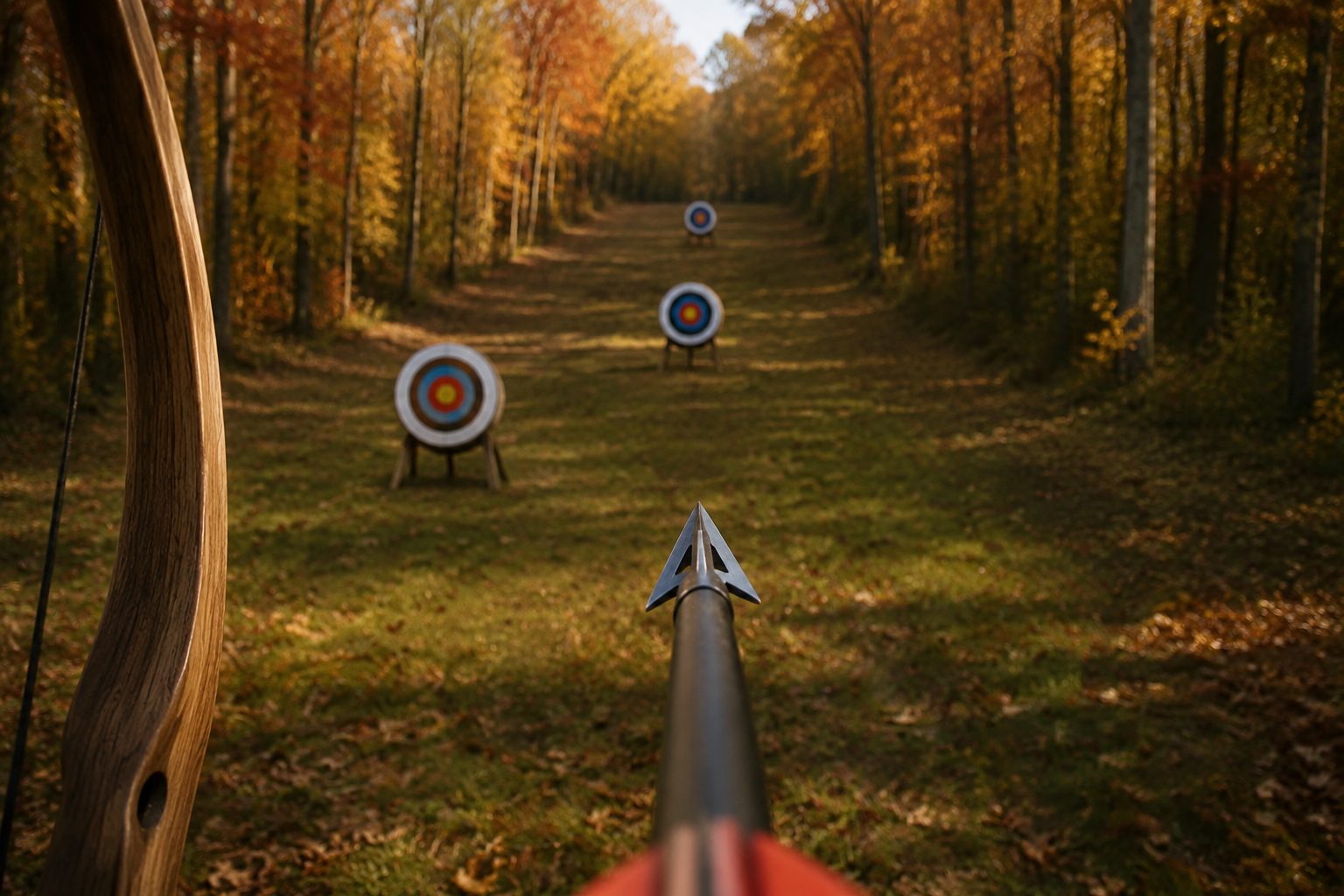
Instinctive aiming generally suits hunting better than target shooting, while gap shooting often proves more effective for competitive target archery. The distinction comes down to the different demands of each activity.
Hunting scenarios favor instinctive aiming because they involve unknown distances, awkward shooting angles, limited shooting windows, and time pressure. A deer doesn’t stand at a marked 20-yard line on level ground. Instinctive shooters can draw and release smoothly when an animal steps into a small opening, without the mental delay of calculating gaps and estimating distance. The method also works identically whether shooting uphill at a steep angle or downhill from a tree stand, situations where gap shooting requires mental adjustments.
Target shooting, particularly at known distances on level ground, plays to gap shooting’s strengths. When you know the target is exactly 25 yards away, you can use your pre-calibrated gap with confidence. The controlled environment eliminates the variables that make gap shooting challenging in the field. Many traditional archery competitions allow gap shooting, and top scorers frequently use this method for its consistency.
Activity-specific considerations:
That said, many successful hunters use gap shooting effectively by developing strong distance estimation skills. Similarly, some target archers prefer instinctive shooting and achieve competitive scores through extensive practice. The “better” method ultimately depends on which technique you’ve invested more time mastering.
Switching from instinctive aiming to gap shooting disrupts established neural pathways and often causes temporary accuracy loss. The brain must learn to override subconscious aiming patterns and replace them with conscious reference points, a transition that typically takes 4-8 weeks of focused practice.
The most common mistake is trying to use both methods simultaneously. Archers often attempt to maintain their instinctive feel while also checking their gap, creating mental confusion that degrades both approaches. The brain cannot effectively process subconscious and conscious aiming simultaneously, resulting in inconsistent shots and frustration.
Specific problems when transitioning to gap shooting:
Target fixation loss: Gap shooting requires shifting some visual attention to the arrow point, breaking the intense target focus that instinctive shooting develops. New gap shooters often find their eyes bouncing between point and target, losing the solid anchor of visual concentration.
Overthinking the shot: Instinctive shooters develop smooth, flowing shot sequences. Adding gap calculation introduces mental steps that can create hesitation, tension, and premature release.
Inconsistent anchor points: Instinctive shooting can tolerate slight anchor variations because the subconscious compensates. Gap shooting magnifies these inconsistencies because the entire reference system depends on repeatable geometry.
Distance obsession: New gap shooters often become fixated on determining exact yardage, delaying shots and creating anxiety about estimation accuracy.
Strategies for a smoother transition:
The reverse transition (gap to instinctive) presents different challenges. Gap shooters must learn to ignore the arrow point completely and trust their subconscious, which feels like shooting blind initially. This transition often takes longer (8-12 weeks) because it requires building entirely new neural pathways rather than modifying existing ones.
Gap shooting works excellently with recurve bows and is one of the most popular aiming methods for traditional recurve archers. The technique is equally applicable to recurve bows, longbows, and other traditional bow styles, though the specific gaps will vary based on bow design, draw weight, and arrow speed.
Recurve bows are particularly well-suited to gap shooting because their design typically provides a clear view of the arrow point at full draw. The recurve’s riser geometry and grip angle position the arrow in the archer’s peripheral vision without obstructing the view of the target, making it easy to reference the point while maintaining target focus.
Recurve-specific gap shooting considerations:
Many Olympic recurve archers use a form of gap shooting when practicing without sights, though they primarily compete with sight systems. The method’s systematic nature aligns well with the technical, repeatable approach that recurve target archery demands.
Longbows also work with gap shooting, though their deeper grip and different geometry sometimes position the arrow differently in the archer’s vision. Some longbow shooters find gap shooting less intuitive than with recurves, but the method remains fully functional with practice and calibration.
Achieving functional accuracy with instinctive aiming typically requires 6-12 months of consistent practice, with most archers needing 100-200 hours of shooting time to develop reliable subconscious calibration. This timeline assumes regular practice sessions (3-4 times per week) with focused attention on proper form and target concentration.
The learning curve for instinctive aiming follows a frustrating pattern. Initial progress is slow and inconsistent, with archers often questioning whether the method works at all. Around the 3-4 month mark, many shooters experience a breakthrough where accuracy suddenly improves and the subconscious aiming system begins functioning reliably. Continued practice refines this skill, with noticeable improvements continuing for 2-3 years.
Factors that accelerate instinctive aiming development:
Realistic accuracy milestones:
Archers with prior experience in other hand-eye coordination sports (baseball, basketball, tennis) often progress faster because they already trust their subconscious targeting systems. Conversely, shooters with extensive gap shooting or sight shooting backgrounds may take longer because they must unlearn the habit of conscious aiming.
The key psychological challenge is continuing through the early months when progress feels invisible. Unlike gap shooting, where you can measure and adjust specific variables, instinctive shooting requires faith that the subconscious is learning even when results don’t immediately reflect it.
Olympic recurve archers use neither gap shooting nor instinctive aiming in competition. They shoot with sophisticated sight systems that include adjustable apertures, scope magnification, and precise click adjustments for different distances. However, many Olympic-level archers practice gap shooting during training to develop better distance judgment and maintain shooting skills when sights aren’t available.
The Olympic recurve discipline represents a different category from traditional archery. Olympic bows feature risers with sight mounts, stabilizers, clickers, and other accessories that place them outside the traditional archery definition. The aiming methods discussed in gap shooting versus instinctive aiming apply specifically to traditional archery, where external sighting devices are not used.
Traditional archery in competitive contexts:
Among competitive traditional archers at national and world championship levels, both methods are well-represented. Gap shooting tends to dominate in target-focused competitions with known distances, while instinctive shooting shows strong representation in field archery and 3D events where adaptability matters more.
The highest-scoring traditional archers typically shoot thousands of arrows annually and have refined their chosen method through years of dedicated practice. At elite levels, the method matters less than the archer’s mastery of it.
Gap shooting inconsistency at mid-range distances typically stems from three primary causes: anchor point variation, distance estimation errors, or the transition through your point-on distance creating visual confusion. The 20-30 yard range is particularly challenging because small form inconsistencies create larger point-of-impact variations at these distances compared to closer ranges.
Anchor point inconsistency is the most common culprit. If your anchor shifts even a quarter-inch between shots, the entire geometric relationship between your eye, arrow, and target changes, invalidating your gap references. At 20-30 yards, this small variation can cause 4-6 inch misses. Check whether your anchor feels identical on every shot by using multiple reference points (corner of mouth, specific tooth, jawbone contact, etc.).
Specific troubleshooting for mid-range gap problems:
Point-on transition zone: If your point-on distance falls between 20-30 yards, you’re shooting through the zone where gaps change from below the target to above it. This transition can create visual confusion. Solution: Establish a precise point-on distance and create clear mental references for distances on either side.
Distance estimation errors: A 5-yard estimation error at 10 yards might cause a 2-inch miss, but the same error at 25 yards can produce a 6-8 inch miss. Solution: Practice with a rangefinder, estimate first, then check actual distance to calibrate your judgment.
Trajectory arc awareness: Arrows follow a curved path, and the steepest part of that curve often occurs in the 20-30 yard range. Small changes in arrow speed (from draw length variation or release inconsistency) affect this range more than closer distances. Solution: Focus on consistent draw length and smooth release.
Visual focus shifting: At mid-range, some archers unconsciously shift focus between the arrow point and target, creating inconsistent aiming. Solution: Maintain primary focus on the target while keeping the arrow point in sharp peripheral awareness.
Diagnostic exercise:
Shoot 6 arrows each at 20, 25, and 30 yards, marking where each group centers. If all three groups are consistently high or low but well-grouped, your gaps need adjustment but your form is solid. If groups are scattered vertically, form inconsistency is the problem. If groups shift left or right between distances, you likely have a release or bow torque issue unrelated to gap shooting.
Many archers find that their gaps don’t scale linearly. The visual gap might increase slowly from 15-20 yards, then jump significantly from 25-30 yards. This is normal and reflects arrow trajectory physics. Create specific mental references for each 5-yard increment rather than trying to interpolate proportionally.
Gap shooting is not considered cheating in traditional archery by the vast majority of archers, organizations, and competitions. Both gap shooting and instinctive aiming are legitimate traditional archery methods, and most traditional archery divisions explicitly allow either approach as long as no mechanical sighting devices are used.
The “cheating” perception occasionally arises from purist perspectives that view instinctive aiming as the only “true” traditional method. This viewpoint represents a minority opinion and isn’t supported by historical evidence. Historical archers used whatever aiming methods worked, including gap shooting, point-of-aim (using ground references), and instinctive techniques.
Competition rules and gap shooting:
The ethical question comes down to competition rules and personal goals. If a competition allows gap shooting, using it is completely legitimate. If you’re shooting for personal satisfaction and prefer the challenge of instinctive aiming, that’s equally valid. Neither method is inherently superior or more “traditional.”
Historical perspective:
Traditional archery encompasses techniques used before modern compound bows and sight systems became dominant in the 1970s-1980s. Historical archers used gap shooting, point-of-aim, and instinctive methods depending on context. English longbowmen, Turkish horse archers, and Native American hunters all developed aiming systems appropriate to their needs, and evidence suggests they used conscious reference points when accuracy mattered.
The traditional archery community generally embraces both methods and respects archers who master either approach. The real divide isn’t between gap and instinctive shooters but between traditional archers (using either method) and modern compound/sight shooters.
The choice between instinctive aiming and gap shooting depends on your shooting goals, learning style, practice availability, and the contexts where you’ll shoot most often. Neither method is universally better; each suits different archer profiles and priorities.
Choose gap shooting if you:
Choose instinctive aiming if you:
Consider a hybrid approach if you:
Age and learning style also influence the decision. Younger archers and those with strong kinesthetic learning preferences often adapt to instinctive aiming more quickly. Analytical thinkers and those who prefer structured learning typically find gap shooting more intuitive initially.
Physical factors matter too. Archers with vision issues that affect depth perception may find gap shooting’s concrete references easier to use than instinctive aiming’s reliance on distance judgment. Conversely, those with excellent natural hand-eye coordination often excel with instinctive methods.
The most important factor is commitment. Whichever method you choose, dedicate at least 3-6 months of consistent practice before evaluating results. Switching methods frequently prevents mastery of either approach and leads to frustration.
Combining gap shooting and instinctive aiming is possible but requires careful sequencing and clear understanding of how each method functions. Attempting to use both simultaneously typically degrades performance because the conscious processing of gap shooting conflicts with the subconscious automation of instinctive aiming.
The most successful hybrid approach involves mastering one method first, then gradually incorporating elements of the other while maintaining the primary technique as your foundation. Most archers who develop effective hybrid systems start with gap shooting and later add instinctive elements, though the reverse path also works.
Effective hybrid approach (gap shooting foundation):
This progression creates “gap-informed instinctive shooting” where you maintain gap awareness as a backup system but primarily shoot instinctively. The gap knowledge provides confidence and a fallback when the instinctive system feels uncertain.
Alternative hybrid approach (instinctive foundation):
When hybrid approaches fail:
Many experienced traditional archers naturally develop hybrid systems after years of practice. They maintain strong target focus and fluid execution (instinctive characteristics) while having subconscious awareness of where their arrow point should appear (gap awareness). This integration happens organically through extensive practice rather than deliberate combination of methods.
For most archers, the recommendation is to choose one method, master it completely, and only then consider whether adding elements of the other method serves your specific shooting goals. The hybrid approach works best for versatile shooters who need to perform well in both target and hunting contexts.
What is the main difference between gap shooting and instinctive aiming?
Gap shooting uses the arrow point as a conscious aiming reference, with the archer deliberately positioning it at specific distances above or below the target based on range. Instinctive aiming eliminates conscious references, relying on subconscious hand-eye coordination while focusing entirely on the target.
Which aiming method is easier for beginners to learn?
Gap shooting is typically easier for beginners because it provides immediate, measurable feedback and a systematic framework for improvement. Most new archers achieve functional accuracy with gap shooting within 4-8 weeks, while instinctive aiming usually requires 6-12 months to develop reliable subconscious calibration.
Can you switch between gap shooting and instinctive aiming?
You can switch between methods, but expect a 4-8 week transition period with reduced accuracy as your brain adapts to the new aiming process. Commit fully to one method during the transition rather than mixing approaches, which creates mental confusion and inconsistent results.
Do professional traditional archers prefer one method over the other?
Professional traditional archers use both methods successfully depending on their discipline. Target archers often prefer gap shooting for its consistency at known distances, while field archers and hunters frequently choose instinctive aiming for its adaptability to varied terrain and unknown distances. Top competitors exist in both camps.
How do you know which gap to use at different distances?
Establish gaps through systematic practice at measured distances, starting with your point-on range where the arrow point held on target produces center hits. Shoot at 5-yard intervals above and below point-on, noting where the arrow point must appear for accurate shots. Create visual references rather than memorizing numbers.
Does instinctive aiming work at long distances?
Instinctive aiming works at any distance where you can clearly see the target and have practiced enough to calibrate your subconscious system. Experienced instinctive shooters regularly achieve accuracy at 40-50 yards and beyond, though the method requires more extensive practice at longer ranges than gap shooting.
What is point-on distance in gap shooting?
Point-on distance is the range at which holding your arrow point directly on the target produces center hits, requiring no gap above or below. This distance varies based on bow setup, draw length, and arrow speed, but typically falls between 15-25 yards for most traditional recurve setups.
Can you use gap shooting while hunting?
Gap shooting works effectively for hunting if you develop strong distance estimation skills and practice from varied positions and angles. Many successful hunters use gap shooting, though it requires mental adjustments for steep uphill or downhill shots where standard gaps don’t apply directly.
Why do some archers say instinctive aiming is more authentic?
Some archers view instinctive aiming as more authentic because it eliminates conscious calculation and feels more intuitive, similar to how historical archers might have shot. However, historical evidence shows archers used various aiming methods including gap shooting, making both approaches historically valid.
How many arrows per day should you shoot to learn instinctive aiming?
Shoot 50-100 arrows per practice session, 3-4 times per week for optimal instinctive aiming development. Quality matters more than quantity; maintain perfect form and intense target focus on every shot rather than shooting high volumes with poor concentration.
What causes gap shooting to stop working suddenly?
Sudden gap shooting failures usually stem from anchor point changes, equipment modifications (different arrows, string, or brace height), or form breakdown under pressure. Verify your anchor is consistent, check that equipment hasn’t changed, and practice your shot sequence without aiming to restore smooth execution.
Is it harder to learn instinctive aiming if you already know gap shooting?
Learning instinctive aiming after gap shooting can be more challenging because you must unlearn the habit of using conscious references and trust your subconscious system. The transition typically takes 8-12 weeks of dedicated practice, longer than learning instinctive aiming from the beginning.
Gap shooting and instinctive aiming represent two proven paths to traditional archery accuracy, each with distinct advantages that suit different shooting contexts and archer preferences. Gap shooting delivers faster initial progress through systematic reference points and excels in target archery at known distances. Instinctive aiming requires greater patience and practice investment but ultimately provides faster shot execution and superior adaptability to varied terrain and angles.
The choice between gap shooting vs instinctive aiming (traditional) should align with your primary shooting activities, learning style, and long-term goals. Target archers seeking consistent scores at measured distances typically benefit from gap shooting’s measurable framework. Hunters navigating unpredictable field conditions often find instinctive aiming’s subconscious automation more practical. Neither method is inherently superior; both can achieve excellent accuracy when properly mastered.
Take action on your aiming method decision:
Start by honestly assessing where you’ll shoot most often and what accuracy timeline you need. If you want reliable accuracy within 2-3 months for target shooting, begin with gap shooting. If you hunt in varied terrain and can invest 6-12 months in skill development, instinctive aiming may serve you better long-term.
Commit to your chosen method for at least 90 days of consistent practice before evaluating results or considering alternatives. Document your practice sessions, noting what works and what needs adjustment. Consider working with an experienced traditional archery coach who can verify your form consistency, which is critical for either method.
Most importantly, remember that the aiming method is just one component of traditional archery success. Consistent anchor points, smooth release, proper bow setup, and quality arrows matter as much as whether you use gap shooting or instinctive aiming. Master the fundamentals first, then refine your chosen aiming approach through dedicated, mindful practice.