Newsletter Subscribe
Enter your email address below and subscribe to our newsletter

All voices matter
All voices matter
 ByTravis
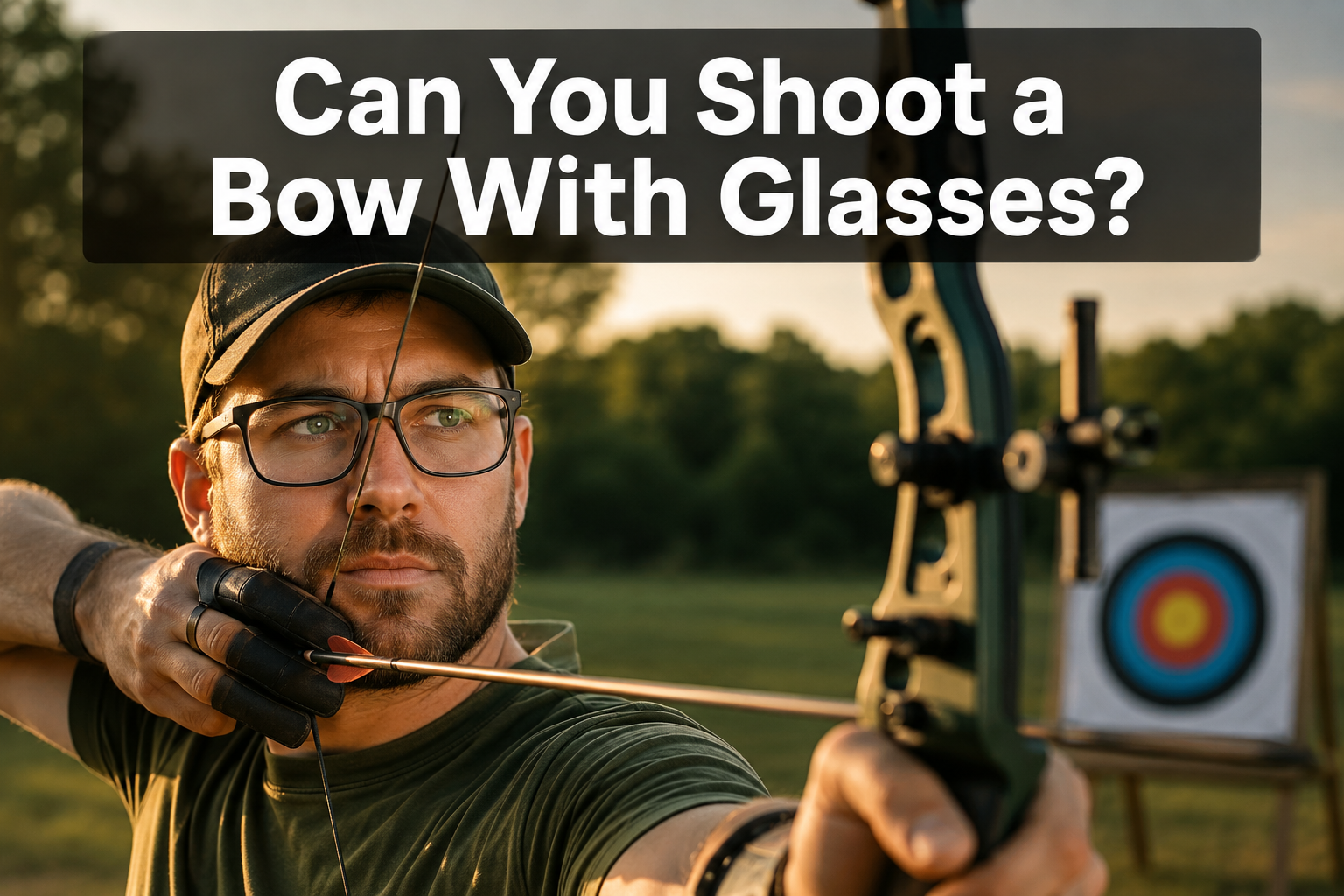
Yes - you can shoot a bow while wearing glasses. Thousands of archers, including Olympic competitors, do it with the right technique and eyewear adjustments.
Affiliate Disclaimer: We are a participant in the Amazon Services LLC Associates Program, an affiliate advertising program designed to provide a means for sites to earn advertising fees by advertising and linking to Amazon.com. As an Amazon Associate I earn from qualifying purchases. We also participate in other affiliate programs.
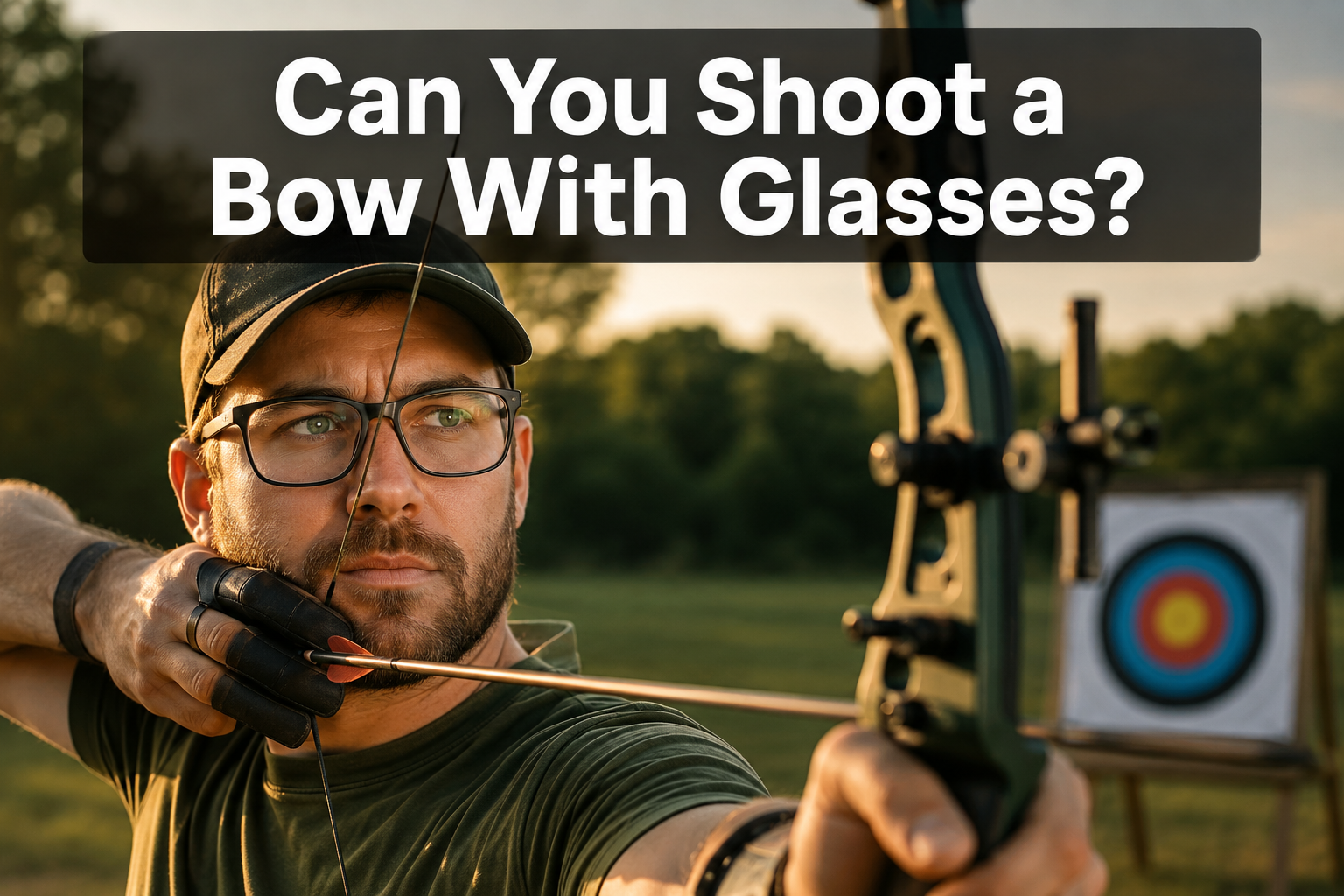
Quick Answer: Yes, you can absolutely shoot a bow while wearing glasses. Thousands of archers, including Olympic competitors and professional hunters, wear prescription eyeglasses while shooting. With proper technique, equipment adjustments, and the right eyewear, glasses will not hinder your accuracy or performance in archery.
Yes, wearing glasses while doing archery is completely normal and widely practiced. Prescription eyeglasses do not disqualify you from any form of archery, whether you’re shooting recreationally, competitively, or hunting. The key is ensuring your glasses fit securely and don’t interfere with your anchor point (where your hand touches your face at full draw) or your sight picture.
Most archers who need vision correction choose to wear their glasses because clear sight is essential for accuracy. Archery requires you to see both your target clearly and, depending on your shooting style, your sight pins or arrow tip. Glasses provide the necessary correction without the maintenance requirements of contact lenses.
What makes glasses work for archery:
The main consideration is choosing frames that don’t extend too far from your face or have thick temples that might interfere with your bowstring or anchor point.
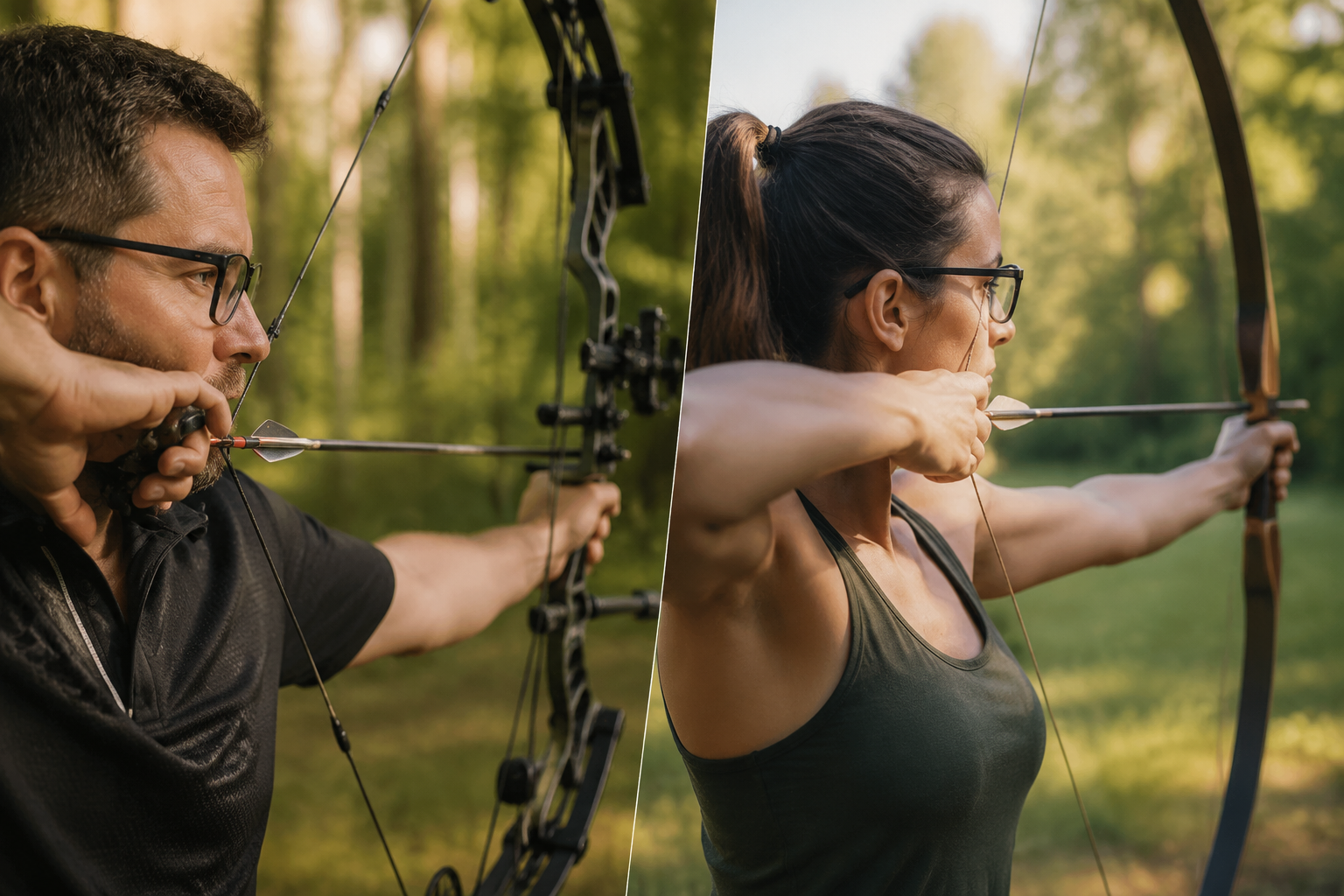
Glasses typically do not get in the way when shooting a bow if you use proper form and choose appropriate frames. The bowstring passes several inches from your face when released, so standard eyeglasses won’t contact the string. However, your anchor point and head position may need minor adjustments compared to shooting without glasses.
The most common interference occurs with the bow sight or peep sight alignment rather than physical contact with the bow itself. Your glasses add distance between your eye and the sight system, which can be easily compensated for by adjusting sight positioning or choosing a longer peep sight.
Potential interference points and solutions:
Archers who shoot with proper form (head upright, consistent anchor) rarely experience physical interference from glasses. The adjustments needed are typically minor and become automatic with practice.
Neither archery glasses nor contact lenses are universally better, the choice depends on your personal comfort, shooting style, and specific vision needs. Both options allow for successful archery at all skill levels, and many archers switch between them based on conditions or preferences.
Contact lenses offer advantages in peripheral vision and equipment compatibility, particularly with peep sights on compound bows. They eliminate frame interference entirely and won’t fog up in humid conditions. However, they require daily maintenance, can dry out during long shooting sessions, and may cause discomfort in dusty outdoor environments.
Glasses provide consistent vision correction without touching your eyes, require no special maintenance during shooting, and offer protection from debris and UV rays. They’re immediately adjustable (you can take them off if needed) and don’t carry the risk of lens displacement or eye irritation during extended practice.
Choose contact lenses if you:
Choose glasses if you:
Many competitive archers use both depending on the situation. Olympic recurve shooters often prefer glasses because they don’t use peep sights, while compound archers may lean toward contacts for optimal peep alignment.
Preventing glasses from fogging during archery requires managing temperature differences between your face and the lenses, plus ensuring adequate airflow. Anti-fog coatings, proper frame positioning, and environmental management will keep your vision clear throughout your shooting session.
Fogging occurs when warm, moist air from your face contacts cooler lens surfaces. This is most common during physical exertion in cool weather or when moving between temperature zones (like entering an indoor range from outside).
Effective anti-fog solutions for archery:
For persistent fogging issues, prescription shooting glasses with anti-fog coatings built into the lenses provide the most reliable solution. These sport-specific glasses are designed with archery and shooting sports in mind, featuring coatings that outperform consumer anti-fog products.
Avoid touching the inside of your lenses with your fingers, as skin oils reduce the effectiveness of anti-fog treatments. Clean lenses with proper lens cleaner and microfiber cloths only.
Prescription shooting glasses designed specifically for archery offer significant advantages over standard eyeglasses. These specialized glasses feature impact-resistant lenses, adjustable nose pieces, wrap-around designs for peripheral protection, and coatings optimized for outdoor shooting conditions.
Sport-specific archery glasses address the unique demands of the sport: extended outdoor use, need for side protection, variable lighting conditions, and the requirement for stable positioning during the shot sequence. They typically cost between $150-$400 depending on prescription complexity and lens options.
Key features of archery-specific prescription glasses:
Popular brands for prescription archery glasses include Wiley X, Randolph Engineering, Decot Sport Glasses, and Pilla. Many of these manufacturers work directly with optometrists to provide custom prescriptions in sport-specific frames.
When ordering prescription shooting glasses, specify that you need them for archery. The optical center of the lens can be positioned to optimize your sight picture based on your shooting style and dominant eye position.
Yes, you can use a peep sight with glasses, though it requires proper setup to ensure the peep aligns correctly with your eye position behind the lenses. The key is adjusting the peep sight’s position on the bowstring and potentially using a longer peep sight tube to account for the distance your glasses add between your eye and the string.
A peep sight is a small circular aperture installed in the bowstring of a compound bow that helps align your eye with the bow sight. When you draw the bow, you look through the peep to see your sight pins and target. Glasses add approximately 12-20mm of distance between your eye and where it would naturally be without glasses.
Setup adjustments for using a peep sight with glasses:
Many compound bow archers successfully use peep sights with glasses. The alternative is switching to a “no-peep” sight system or using a verifier lens (a small lens inserted in the peep sight that can correct vision, potentially eliminating the need for glasses).
If you’re struggling with peep alignment while wearing glasses, a professional bow technician can adjust your peep position and evaluate your form to optimize the setup. Contact lenses are an alternative if peep sight issues persist, though proper setup usually resolves the problem.
Olympic archers wear both glasses and contact lenses depending on personal preference, with no clear majority either way. Vision correction choice is entirely individual, and top-level competitors have achieved Olympic medals using both glasses and contacts.
In Olympic recurve archery (the style used in the Olympics), archers don’t use peep sights, which makes glasses slightly more common since there’s no peep alignment concern. The shooting style involves both eyes open and focusing on the target while using peripheral vision to align the arrow tip or sight, making either glasses or contacts equally viable.
Notable considerations for Olympic-level archery:
For compound archery (not currently an Olympic event but featured in World Championships), the distribution is similar, though some compound archers prefer contacts for optimal peep sight alignment.
The takeaway for recreational archers: if Olympic athletes compete successfully with glasses, they’re certainly adequate for any level of archery. Your vision correction choice should be based on comfort and personal preference rather than perceived performance advantages.
Glasses sliding down during archery typically result from improper frame fit, perspiration, or head position changes during the shot sequence. This problem is easily solved with frame adjustments, anti-slip accessories, or switching to sport-specific frames designed for active use.
Sliding glasses disrupt your sight picture and require you to adjust between shots, which introduces inconsistency. The issue is most common during warm weather shooting or extended practice sessions when perspiration increases.
Solutions for sliding glasses:
If adjustments don’t solve the problem, your frames may simply be too large or heavy for archery. Sport frames designed for shooting and other active pursuits feature secure-fit designs that stay in place during movement and physical activity.
Avoid the temptation to constantly push your glasses up between shots, as this introduces an inconsistent variable into your shooting routine. Address the root cause with proper frame fitting instead.
Safety glasses are required at most organized archery ranges, clubs, and competitions, regardless of whether you need vision correction. Eye protection standards vary by facility, but ANSI Z87.1-rated impact-resistant eyewear is the most commonly required specification.
The requirement exists because archery involves potential eye hazards: splintering arrows, ricochets, equipment failure (particularly string or cable breaks), and debris from targets. While serious eye injuries in archery are rare, they can be severe, making protective eyewear a standard safety practice.
Common safety eyewear requirements:
If you already wear prescription glasses, they may meet safety requirements if they have impact-resistant lenses (polycarbonate or Trivex). Standard plastic or glass lenses typically don’t meet impact resistance standards. Check with your optician or range safety officer to verify your glasses meet the required specifications.
For those who don’t need vision correction, non-prescription safety glasses designed for shooting sports are inexpensive (typically $15-$50) and provide adequate protection. Many archers who wear contacts choose to wear non-prescription safety glasses over their contacts for added protection.
The best prescription eyewear for bow hunting combines impact protection, anti-fog performance, camouflage or low-visibility frames, and durability for outdoor conditions. Purpose-built hunting glasses with prescription lenses outperform standard eyeglasses in the field by addressing the specific challenges of hunting environments.
Bow hunting presents unique eyewear challenges: variable lighting from dawn to dusk, temperature changes causing fogging, need for camouflage, exposure to branches and debris, and the requirement for silent equipment that won’t spook game.
Top features for bow hunting prescription eyewear:
Recommended prescription hunting glasses brands:
Many bow hunters use prescription inserts that fit behind protective outer lenses. This system allows you to maintain one prescription insert while swapping outer lenses for different light conditions or activities.
For budget-conscious hunters, prescription safety glasses with added anti-fog treatment and a camouflage retention strap provide adequate performance at lower cost ($100-$200 versus $300-$500 for premium hunting-specific glasses).
Yes, you can shoot instinctive archery with glasses without any significant disadvantage. Instinctive archery relies on hand-eye coordination and subconscious aiming rather than mechanical sights, making it potentially even more compatible with glasses than sight-based shooting methods.
Instinctive archery (also called intuitive shooting) involves focusing on the target while your subconscious mind calculates the trajectory, similar to throwing a ball. You don’t consciously aim using reference points; instead, you look at what you want to hit and let your body execute the shot. This method is common with traditional bows, longbows, and recurves without sights.
Why glasses work well for instinctive shooting:
The only consideration is ensuring your glasses provide clear vision at the distances you’re shooting. Instinctive archers need good depth perception and target clarity, which properly prescribed glasses provide.
Some instinctive archers prefer shooting with both eyes open, which glasses accommodate better than some contact lens prescriptions (particularly if you have different prescriptions in each eye). The wide field of view through modern glasses supports the target-focused awareness instinctive shooting requires.
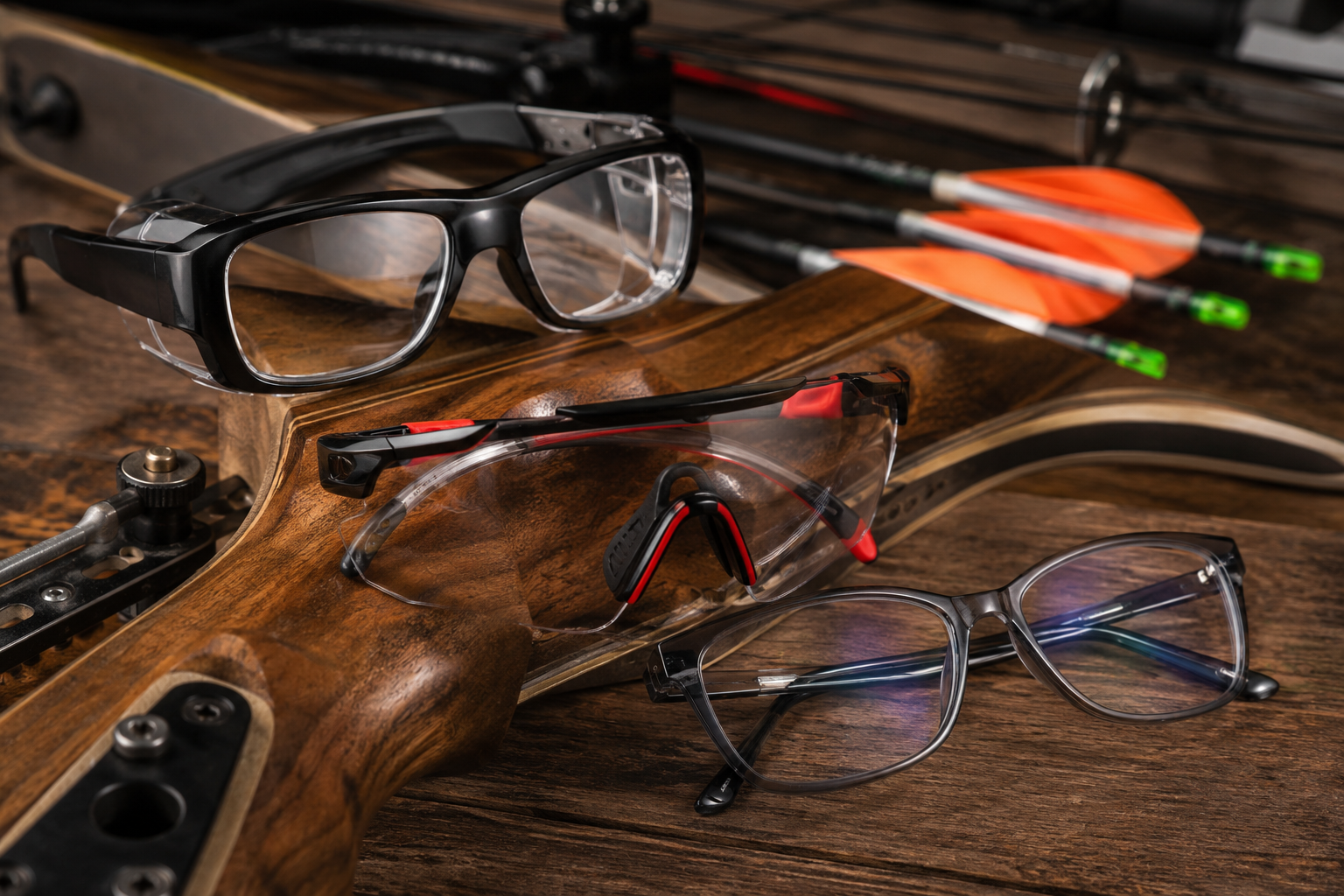
You don’t necessarily need special glasses for compound bow shooting, but sport-specific shooting glasses offer advantages in durability, fit, and compatibility with compound bow sights and peep sights. Standard prescription glasses work fine for many compound archers, especially beginners, but dedicated shooting glasses optimize the experience.
Compound bows use mechanical sights and peep sights, which create specific visual requirements. You need to see clearly through a small peep aperture, align multiple sight pins, and maintain focus on the target, all while your glasses remain stable during the draw and shot.
When standard glasses are sufficient:
When to consider shooting-specific glasses:
Shooting glasses designed for compound archery typically feature adjustable components that let you fine-tune the fit for your specific anchor point and head position. This adjustability ensures the optical center of the lens aligns perfectly with your sight picture through the peep.
Many compound archers start with their everyday glasses and upgrade to shooting-specific eyewear once they’ve developed consistent form and identified specific needs. This approach avoids unnecessary expense while you’re still learning.
Archers wearing glasses commonly experience fogging, frame slippage, sight alignment difficulties, and anchor point inconsistency. These problems are predictable and have well-established solutions that allow glasses-wearing archers to shoot as accurately as those without vision correction.
Understanding these common issues helps you troubleshoot problems quickly rather than assuming glasses are incompatible with archery. Most problems stem from equipment setup or frame selection rather than fundamental incompatibility.
Most frequent glasses-related archery problems:
| Problem | Cause | Solution |
|---|---|---|
| Fogging lenses | Temperature difference, poor airflow | Anti-fog coating, ventilated frames, proper fit |
| Sliding frames | Loose fit, perspiration | Adjust temples, anti-slip grips, sport retention strap |
| Peep sight misalignment | Incorrect peep position for glasses | Adjust peep height, use larger peep, consider longer tube |
| Inconsistent anchor point | Frame thickness varies contact | Establish anchor that accounts for frames, ensure consistent head position |
| Limited peripheral vision | Wide frames, thick temples | Choose low-profile frames, wrap-around sport designs |
| Lens scratches | Outdoor debris, improper cleaning | Impact-resistant lenses, proper storage, microfiber cleaning |
| Glare from lenses | Reflective coatings, sun angle | Anti-reflective coating, adjust shooting position |
Quick troubleshooting approach:
Most archers find that one or two adjustments eliminate glasses-related issues entirely. If problems persist after trying standard solutions, consult with both an optician (for frame fit) and a bow technician (for equipment setup).
Beginners should wear whichever vision correction they use most comfortably in daily life. Starting archery with your normal glasses or contacts eliminates one variable while you’re learning basic form, allowing you to focus on technique rather than adapting to new eyewear.
New archers face enough learning challenges, stance, grip, anchor point, release, follow-through, without adding the complexity of unfamiliar vision correction. If you normally wear glasses, wear them for archery. If you typically use contacts, start with contacts.
Beginner recommendations by current vision correction:
As you develop consistent form and identify your shooting style preferences, you can experiment with different eyewear options. Many archers discover that what works for daily life also works perfectly for archery.
Beginner timeline for eyewear decisions:
The exception is if your current eyewear is clearly problematic (constantly sliding, severe fogging, damaged lenses). In those cases, address the eyewear issue immediately, as inconsistent vision will prevent you from developing proper technique.
Can you shoot a bow if you’re nearsighted?
Yes, nearsighted archers shoot successfully with prescription glasses or contact lenses that correct their distance vision. Clear sight of the target is essential for accuracy, so proper vision correction is actually advantageous. Many Olympic and professional archers are nearsighted and compete at the highest levels with corrected vision.
Will my bowstring hit my glasses?
No, your bowstring will not hit your glasses if you maintain proper shooting form. The string passes several inches from your face when released. If your string is contacting your glasses, your head position or anchor point needs correction, as this indicates a form problem that could cause injury regardless of eyewear.
Can I wear sunglasses while shooting archery?
Yes, you can wear sunglasses while shooting archery outdoors, and many archers do to reduce glare and eye strain. Prescription sunglasses or photochromic lenses that adjust to light conditions work well. Ensure sunglasses fit securely and don’t alter your anchor point or sight picture compared to your regular glasses.
Do I need different glasses for indoor versus outdoor archery?
You don’t need different prescription glasses for indoor versus outdoor archery, though some archers prefer different lens tints. Indoor shooting typically uses clear lenses, while outdoor shooting may benefit from light tint or photochromic lenses. The prescription itself remains the same; only the lens tint might change based on lighting conditions.
How do I keep my glasses from getting hit by arrows?
Glasses are not at risk of being hit by your own arrows during normal shooting. The arrow travels forward away from your face. The risk comes from other archers’ equipment failures or ricochets, which is why impact-resistant safety glasses are required at most ranges. Always follow range safety rules and maintain awareness of other shooters.
Can I get prescription lenses in archery-specific frames?
Yes, most archery and shooting sports eyewear manufacturers offer prescription lens options. You can order custom prescription lenses in sport-specific frames through specialized retailers or by working with an optometrist who partners with shooting sports eyewear companies. Costs typically range from $200-$500 depending on prescription complexity and frame choice.
What if I only need reading glasses?
If you only need reading glasses for close-up vision, you typically won’t need them for archery since you’re focusing on distant targets. However, you may need them to see sight pins clearly on compound bows. Some archers use a small magnifying lens (called a verifier) installed in the peep sight instead of wearing reading glasses.
Are progressive lenses good for archery?
Progressive lenses can work for archery but require careful fitting to ensure the distance vision portion aligns with your sight line. Some archers find progressives problematic because head position changes can shift which lens zone they’re looking through. Single-vision distance lenses or separate shooting glasses often work better for consistent sight picture.
Can glasses protect my eyes in archery?
Standard prescription glasses provide some eye protection but may not meet impact resistance standards required for archery safety. Polycarbonate or Trivex lenses offer impact protection, while standard plastic or glass lenses do not. Verify your lenses meet ANSI Z87.1 standards if you’re relying on them for safety protection.
Should I get anti-reflective coating on archery glasses?
Yes, anti-reflective coating is beneficial for archery glasses as it reduces glare and improves visual clarity, especially in variable lighting conditions. The coating eliminates reflections from the back surface of the lens that can interfere with your sight picture. Most sport-specific shooting glasses include anti-reflective coating as standard.
How often should I replace my archery glasses?
Replace archery glasses when your prescription changes, lenses become scratched enough to impair vision, frames no longer fit securely, or coatings deteriorate. For active archers shooting multiple times per week, sport-specific glasses typically last 2-3 years before showing significant wear. Have your prescription checked annually to ensure optimal vision correction.
Can I shoot a bow with only one eye?
Yes, you can shoot a bow with only one eye or with one eye closed. Many archers close or cover their non-dominant eye to eliminate double vision or improve focus. If you have vision in only one eye, archery is fully accessible, though you may need to adjust your shooting style and equipment setup to compensate for reduced depth perception.
Shooting a bow with glasses is not only possible but common among archers at every skill level, from beginners to Olympic competitors. The key to success lies in proper equipment setup, secure-fitting frames, and consistent shooting form that accounts for your eyewear.
Whether you choose standard prescription glasses, sport-specific shooting glasses, or contact lenses, each option offers a viable path to accurate and enjoyable archery. The most important factor is clear vision, being able to see your target and sights distinctly matters far more than which type of vision correction you use.
Your next steps:
Remember that thousands of successful archers wear glasses, proving that vision correction and archery excellence are fully compatible. Focus on developing proper form and consistent technique, your glasses will become a natural part of your shooting routine rather than an obstacle to overcome.