
Newsletter Subscribe
Enter your email address below and subscribe to our newsletter
All voices matter
All voices matter

 ByTravis
Most adult beginners should start with 15-25 lb draw weight on a recurve or 20-30 lb on a compound bow, so they can build smooth form before adding power.
Affiliate Disclaimer: We are a participant in the Amazon Services LLC Associates Program, an affiliate advertising program designed to provide a means for sites to earn advertising fees by advertising and linking to Amazon.com. As an Amazon Associate I earn from qualifying purchases. We also participate in other affiliate programs.
Most adult beginners should start with a draw weight between 15-25 pounds for recurve bows and 20-30 pounds for compound bows. Children typically begin with 10-15 pounds, while older adults or those with limited upper body strength should consider starting at 15-20 pounds. The right draw weight allows you to draw smoothly, hold steady, and release cleanly without straining or shaking.
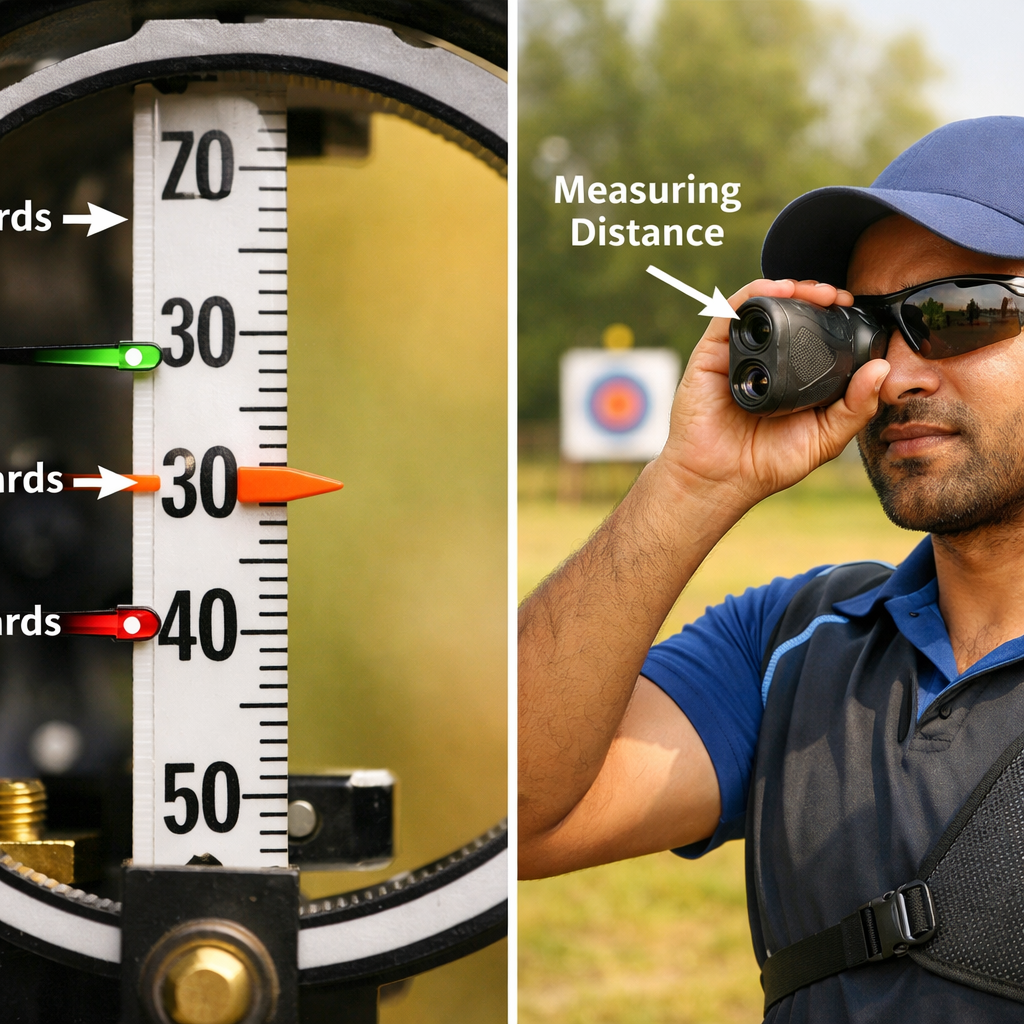
Draw weight is the amount of force measured in pounds required to pull a bowstring back to full draw length. For recurve and traditional bows, this weight remains constant throughout the draw, while compound bows reach peak weight midway through the draw before “letting off” to a lower holding weight.
Understanding draw weight is essential because it directly affects your shooting accuracy, form development, and injury risk. A bow’s draw weight determines:
Draw weight is typically marked on the bow’s lower limb and represents the force needed at a standard 28-inch draw length. If your draw length differs, the actual weight you pull will vary by approximately 2-3 pounds per inch of difference.
Choose based on what you can comfortably draw and hold for 30 seconds, not what sounds impressive or what you think you’ll eventually need. Starting lighter always beats starting too heavy.
Adult beginners should start with 15-25 pounds for recurve bows and 20-30 pounds for compound bows, regardless of their general fitness level. This range allows you to focus on developing proper shooting form, building archery-specific muscles, and practicing for extended sessions without fatigue or injury.
Here’s how to choose within that range:
For recurve bows:
For compound bows:
The most common mistake is starting too heavy because it “feels easy” during the first few draws. After 50-100 shots in a practice session, that weight becomes significantly harder to manage, and your form deteriorates rapidly.
A good test: If you can’t draw the bow 20 times in a row while maintaining perfect form and without your arms shaking, it’s too heavy. Drop down 5 pounds and reassess.
Children need significantly lighter draw weights than adults because their skeletal and muscular systems are still developing. Starting a child with too heavy a draw weight can cause growth plate injuries, chronic pain, and permanent aversion to the sport.
Recommended draw weights by age:
These ranges assume average physical development. Athletic children who participate in sports year-round might handle the higher end, while smaller or less active children should start at the lower end.
Key differences between kids and adults:
Never let a child “grow into” a bow that’s too heavy. Their form will suffer permanently, and they’ll likely quit before developing the strength needed. Buy adjustable youth bows or plan to upgrade every 1-2 years as they grow.
Measuring your correct starting draw weight involves testing both your maximum capability and your sustainable shooting weight. Your starting draw weight should be 40-50% of what you can physically pull, not the maximum you can manage for one shot.
Step-by-step testing process:
Physical indicators you’re at the right weight:
Red flags the weight is too heavy:
Professional coaches recommend videoing yourself shooting to check form consistency across a full practice session.

Yes, starting with too high a draw weight is the single most common mistake in archery and can cause injuries, ingrain bad habits, and significantly delay your progress. Excessive draw weight forces your body to compensate with poor mechanics that become extremely difficult to correct later.
Immediate consequences of too-heavy draw weight:
Long-term problems that develop:
How to know if you started too heavy:
The fix: Immediately drop to a lighter draw weight, even if it feels “too easy.” Spend 4-8 weeks rebuilding proper form with the lighter weight. Your accuracy will improve dramatically, and you’ll progress faster than if you’d struggled with the heavy bow.
Many Olympic-level coaches start all students, regardless of strength, at 15-20 pounds for the first month to establish perfect form before gradually increasing weight.
Recurve and compound bows feel dramatically different at the same marked draw weight because of how they store and release energy. Compound bows use cams and pulleys to create “let-off,” reducing the holding weight by 65-80% once you reach full draw, while recurve bows maintain constant weight throughout.
Key differences:
Recurve bows:
Compound bows:
Practical example: A 20 lb recurve bow and a 30 lb compound bow with 70% let-off require similar holding strength (20 lbs vs 9 lbs), but the compound requires more strength during the draw cycle.
Choose recurve if:
Choose compound if:
Both types are excellent for beginners. The draw weight ranges differ because of the mechanical advantages, not because one is “easier” overall.
Shooting a draw weight that’s too heavy for your current strength level causes a cascade of form problems, potential injuries, and skill development issues that can take months to correct. Your body will automatically compensate for the excessive weight by recruiting the wrong muscle groups and adopting poor mechanics.
Physical problems that develop:
Form issues that become habits:
Accuracy and progression problems:
Mental and psychological effects:
The solution is simple but requires ego management: Drop to a lighter draw weight immediately. Most archers who make this change see accuracy improvements within 1-2 practice sessions and wonder why they struggled so long with excessive weight.
Increasing draw weight should be a gradual, systematic process based on consistent performance at your current weight, not a timeline or arbitrary goals. Most archers can safely increase draw weight by 2-5 pounds every 4-6 weeks if they’re practicing regularly and maintaining good form.
Signs you’re ready to increase draw weight:
How to increase safely:
Recommended progression timeline:
Why adjustable draw weight bows are valuable:
Common mistakes when increasing weight:
Maximum practical draw weights: Most target archers stabilize at 35-45 lbs for recurve and 50-60 lbs for compound. Hunters typically need 40-50 lbs for recurve and 50-70 lbs for compound, depending on game species and regulations.
Draw weight recommendations should be based on individual strength, body mechanics, and goals rather than gender. While average upper body strength differs between men and women statistically, the overlap is substantial, and many women are stronger than many men, making gender-based recommendations overly simplistic.
Reality of strength differences:
Recommended starting weights by individual factors:
For anyone (regardless of gender) who:
Why gender-specific recommendations are problematic:
Better approach – test individual capability:
Historical context: Many top female Olympic archers shoot 40-48 lb recurve bows, which is similar to or higher than many male recreational archers. Success in archery depends far more on consistency, form, and mental game than raw strength.
The bottom line: Use the general beginner recommendations (15-25 lbs recurve, 20-30 lbs compound) as a starting point, then adjust based on your individual testing and performance, not your gender.
Adjustable draw weight bows are ideal for beginners because they allow you to start light, build strength gradually, and increase weight without buying entirely new equipment. The best options offer wide adjustment ranges (typically 15-30 lbs or 20-40 lbs) and maintain good performance across the entire range.
Key features to look for:
Types of adjustable bows:
Adjustable compound bows:
Adjustable recurve bows:
Takedown recurve bows:
What to avoid:
Budget considerations:
The investment pays off: Spending $300 on an adjustable bow that lasts 2-3 years is more economical than buying three fixed-weight bows at $150 each as you progress.
For most adult beginners shooting recurve bows, 20 pounds is the better choice, while those starting with compound bows can consider 25-30 pounds because of let-off. The decision should be based on your current upper body strength, previous athletic experience, and whether you prioritize form development or faster progression to hunting weights.
Choose 20 pounds (recurve) or 25 pounds (compound) if:
Choose 25 pounds (recurve) or 30 pounds (compound) if:
The 20 vs 30 pound decision for different goals:
Target archery focus: Start at 20 lbs
Hunting focus: Start at 25-30 lbs (compound only)
Recreational/casual archery: Start at 20 lbs
Real-world test: Go to an archery shop and shoot 20 arrows with a 20 lb bow, then 20 arrows with a 30 lb bow. If your groups are significantly tighter with the 20 lb bow, that’s your answer. If they’re similar and you felt comfortable with both, you can start at the higher weight.
The honest truth: Almost no one regrets starting too light, but many regret starting too heavy. When in doubt, go lighter.
Beginners make predictable mistakes when selecting their first bow’s draw weight, usually driven by ego, misinformation, or pressure from well-meaning but misguided advice. Avoiding these errors will save you money, prevent injuries, and accelerate your skill development significantly.
Mistake 1: Choosing based on hunting requirements instead of current ability
Many beginners select 40-50 lb bows because that’s the minimum legal hunting weight in their state, then struggle for months with poor form. You can’t hunt effectively if you can’t shoot accurately, and you can’t shoot accurately if your bow is too heavy.
Better approach: Start at an appropriate beginner weight, build perfect form, then increase gradually to hunting weight over 6-12 months.
Mistake 2: Testing draw weight with only 1-2 draws
A bow that feels manageable for two draws in a shop will feel dramatically heavier after 50 draws in practice. Your muscles fatigue, your form deteriorates, and what seemed easy becomes a struggle.
Better approach: Ask to shoot 20-30 arrows at the shop, or rent the bow for a full practice session before buying.
Mistake 3: Comparing yourself to other archers
“My friend shoots 45 lbs and he’s my size” or “The guy at the range said 30 lbs is too light for a man” are terrible reasons to choose draw weight. Everyone’s strength, body mechanics, and progression rate differ.
Better approach: Base your decision on your own testing and performance, not comparisons or peer pressure.
Mistake 4: Buying non-adjustable bows to save money
A $150 fixed-weight bow seems economical until you need to buy a $200 heavier bow six months later, then another $250 bow six months after that. You’ll spend $600 total instead of $300 for one adjustable bow.
Better approach: Invest in adjustable draw weight equipment from the start, even if it costs more initially.
Mistake 5: Ignoring pain signals
“It hurts a little but I’ll get used to it” is how you develop chronic injuries. Pain is your body telling you the weight is too heavy or your form is wrong. Ignoring it leads to tendonitis, rotator cuff damage, and months of forced rest.
Better approach: Any pain beyond normal muscle fatigue means you need to reduce weight or fix your form immediately.
Mistake 6: Rushing to increase weight
Adding 5 pounds every week because you’re impatient leads to form breakdown and injury. Your muscles might adapt that quickly, but your tendons and connective tissue need more time.
Better approach: Increase weight only every 4-6 weeks, and only if your form remains perfect at the current weight.
Mistake 7: Choosing based on bow shop recommendations without context
Some shops push heavier bows because they’re more profitable or because the staff doesn’t understand proper progression. “Most people start at 30 lbs” doesn’t mean you should.
Better approach: Seek advice from certified coaches or experienced archers who prioritize your long-term development over a quick sale.
Mistake 8: Believing you need heavy draw weight for accuracy
Accuracy comes from consistent form and practice, not draw weight. Olympic archers shooting 40 lb recurves are far more accurate than beginners shooting 50 lb compounds.
Better approach: Focus on form and consistency at lighter weights. Accuracy will follow, and you can add weight later.
Yes, older adults (typically 50+) should absolutely start with lower draw weights, usually 15-20 pounds for recurve bows and 20-25 pounds for compound bows, regardless of their general fitness level. Age-related changes in connective tissue, joint health, and recovery capacity make lighter starting weights both safer and more effective for skill development.
Why older adults need lighter starting weights:
Benefits of starting light for older beginners:
Recommended progression for older adults:
Many older archers never need to exceed 25-30 pounds:
Special considerations:
Success stories: Many archers start in their 60s or 70s with 15-20 lb bows and progress to competitive shooting at local clubs. Age is not a barrier to archery success when you start appropriately and progress sensibly.
The key message: There’s no shame in starting light or staying at lower draw weights. Archery is about precision, consistency, and enjoyment, not proving strength. A 70-year-old shooting tight groups with a 20 lb bow is far more impressive than a 30-year-old struggling with a 40 lb bow.
What draw weight do Olympic archers use?
Olympic recurve archers typically use 40-50 pounds for men and 35-45 pounds for women, which is much lighter than most beginners expect. These weights allow for maximum accuracy and consistency over hundreds of shots in competition while still providing sufficient arrow speed for 70-meter distances.
Can I hunt with a 30 pound draw weight?
A 30 pound draw weight is generally insufficient for ethical hunting of big game like deer, which typically requires 40-50 pounds minimum depending on state regulations. However, 30 pounds is adequate for small game hunting and fishing (bowfishing) in most jurisdictions. Always check your local hunting regulations for minimum draw weight requirements.
How long does it take to build up to hunting draw weight?
Most beginners can progress from 20-25 pounds to hunting weight (40-50 pounds) in 6-12 months with consistent practice 2-3 times per week. Athletes with existing upper body strength may progress faster (4-6 months), while older adults or those with limited fitness may need 12-18 months. Rushing this progression increases injury risk significantly.
Is 40 pounds too heavy for a beginner?
Yes, 40 pounds is too heavy for almost all beginners, regardless of general fitness level. This weight will cause form problems, increase injury risk, and slow your skill development. Even strong adults should start at 20-25 pounds to build proper archery-specific muscles and technique before progressing to heavier weights.
What happens if my draw length is longer than 28 inches?
Draw weight increases by approximately 2-3 pounds for every inch your draw length exceeds 28 inches (the standard measurement length). If you have a 30-inch draw length and the bow is marked 25 pounds, you’ll actually be pulling about 29-31 pounds. Factor this into your starting weight selection.
Can you decrease draw weight on any bow?
Compound bows with adjustable limb bolts can typically be decreased by 10-15 pounds from their maximum rating by backing out the bolts. Recurve bows with takedown designs can be decreased by swapping to lighter limbs. One-piece recurve bows and traditional longbows have fixed draw weights that cannot be adjusted.
Should I start heavier if I plan to hunt?
No, you should still start at appropriate beginner weights (20-25 lbs) even if your goal is hunting. Building perfect form at lighter weights allows you to progress to hunting weights faster and more safely than struggling with heavy draw weight from day one. Most hunters reach appropriate draw weights within 6-12 months of starting.
What draw weight do professional archers recommend for beginners?
Professional coaches and organizations like USA Archery recommend 15-25 pounds for adult beginners, with most suggesting starting at the lower end (15-20 lbs) to prioritize form development. This recommendation is consistent across Olympic coaches, hunting instructors, and recreational archery programs.
How do I know if I’m ready to increase draw weight?
You’re ready to increase draw weight when you can shoot 100+ arrows in a session without form breakdown, your groups are consistently tight, you can hold at full draw for 30+ seconds without shaking, and you experience no pain or excessive soreness after practice. Most archers meet these criteria after 4-6 weeks at each weight level.
Is there a difference in draw weight for left vs right-handed bows?
No, draw weight recommendations are identical for left and right-handed bows. Hand dominance affects which eye you use for aiming and which hand draws the string, but it doesn’t change the strength requirements or appropriate starting weights.
Can I use resistance bands to build archery strength faster?
Yes, archery-specific resistance band exercises can help build the back and shoulder muscles used in drawing a bow. However, they should supplement, not replace, actual shooting practice. The most effective strength building comes from shooting regularly at an appropriate draw weight and gradually increasing as you improve.
What draw weight is best for 3D archery competitions?
For beginner 3D archery, start with the same weights recommended for target archery (20-25 lbs recurve, 25-30 lbs compound). As you progress, most 3D competitors use 40-50 pounds for recurve and 50-60 pounds for compound, which provides sufficient arrow speed for outdoor distances while maintaining accuracy.
Choosing the right draw weight for your first bow is one of the most important decisions you’ll make as a beginning archer. The evidence is clear: starting lighter (15-25 lbs for recurve, 20-30 lbs for compound) leads to better form, faster skill development, fewer injuries, and more enjoyment than starting too heavy.
Ignore the temptation to prove your strength or rush toward hunting weights. Every Olympic medalist, professional hunter, and master archer started with light draw weights and progressed gradually. The archer who starts at 20 pounds and increases systematically will surpass the archer who struggles with 40 pounds within just a few months.
Your action steps:
Remember that archery is a lifelong sport where consistency and accuracy matter far more than raw power. A 20-pound bow in skilled hands will outperform a 40-pound bow in struggling hands every single time. Start light, build solid fundamentals, and enjoy the journey of steady improvement.
The perfect draw weight for you is the one that allows you to shoot with good form, practice frequently without pain, and progress steadily toward your goals. That weight is almost certainly lighter than you think, and that’s exactly as it should be.


