
Newsletter Subscribe
Enter your email address below and subscribe to our newsletter
All voices matter
All voices matter

 ByTravis
Bowhunter education teaches archery hunters the skills, safety protocols, and ethics required to hunt with bows - most states require it before issuing an archery hunting license.
Affiliate Disclaimer: We are a participant in the Amazon Services LLC Associates Program, an affiliate advertising program designed to provide a means for sites to earn advertising fees by advertising and linking to Amazon.com. As an Amazon Associate I earn from qualifying purchases. We also participate in other affiliate programs.
Bowhunter education is a specialized training program that teaches archery hunters the skills, safety protocols, and ethical practices required for hunting with bows and crossbows. Most states require completion of a bowhunter education course before issuing archery hunting licenses, particularly for first-time hunters or those born after a certain year. The certification covers equipment knowledge, shot placement, tracking wounded game, treestand safety, and hunting regulations specific to archery seasons.

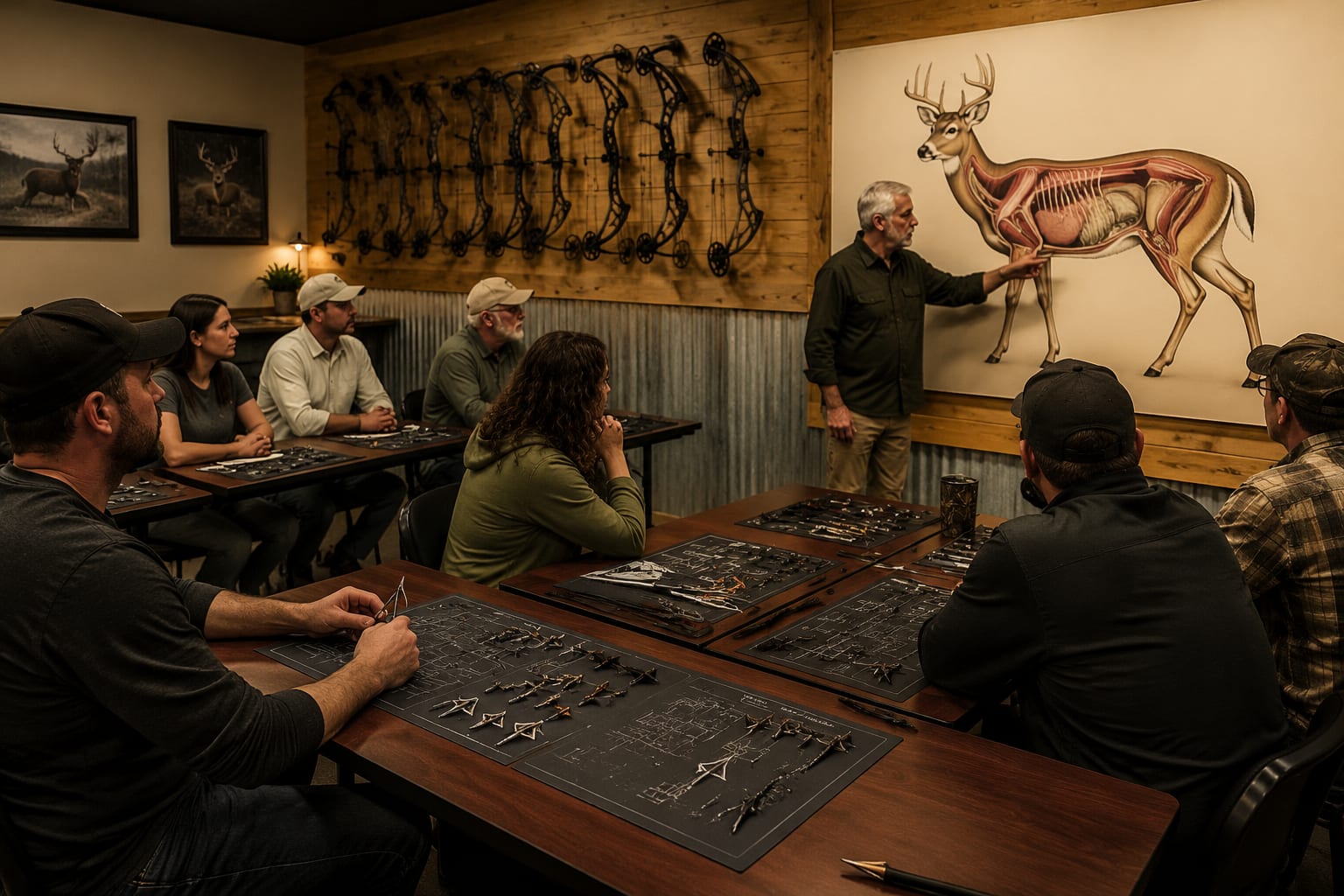
Bowhunter education certification is an official credential issued by state wildlife agencies or approved organizations that verifies a hunter has completed training in archery hunting techniques, safety protocols, and ethical practices. The certification demonstrates that the holder understands bow mechanics, proper shot placement on game animals, tracking methods, and state-specific regulations governing archery seasons.
The program was developed to reduce hunting accidents, improve hunter success rates, and promote ethical hunting practices specific to archery. Unlike firearms, bows require hunters to get much closer to game animals and demand different skills for humane kills.
What the certification includes:
The International Bowhunter Education Program (IBEP) sets standards that most states follow, ensuring consistency in curriculum and certification requirements across North America. This standardization allows hunters to use their certification when hunting in multiple states.
Whether you need bowhunter education to hunt with a bow depends entirely on your state’s regulations, your age, and when you were born. Most states require the certification for first-time hunters or those born after a specific cutoff year, typically ranging from 1972 to 1985.
Common requirement patterns by state:
Choose bowhunter education if:
Even when not legally required, many experienced hunters take bowhunter education courses to refine their skills and learn updated techniques. The course provides valuable information that can significantly improve hunting success and safety.
Bowhunter education and general hunter education are distinct programs with different focuses, though some states accept general hunter education as a substitute for bowhunter-specific training. General hunter education covers firearms safety, hunting ethics, and basic wildlife management, while bowhunter education concentrates exclusively on archery equipment and techniques.
Key differences:
| Aspect | General Hunter Education | Bowhunter Education |
|---|---|---|
| Primary focus | Firearms safety and handling | Bow and arrow mechanics |
| Equipment covered | Rifles, shotguns, muzzleloaders | Compound bows, recurves, crossbows |
| Shot placement | General vital zones | Archery-specific shot angles |
| Range considerations | Firearm effective ranges (50-300+ yards) | Bow effective ranges (15-40 yards) |
| Tracking emphasis | Basic blood trailing | Detailed arrow penetration and blood sign analysis |
| Safety topics | Firearm handling, tree stand basics | Treestand safety, draw-weight management, arrow inspection |
When you need both:
Some states require completion of both courses. General hunter education serves as the foundation for all hunting activities, while bowhunter education provides specialized archery training. Hunters who plan to use both firearms and archery equipment during different seasons should complete both programs.
When one substitutes for the other:
Certain states accept general hunter education as sufficient for bow hunting, particularly if the general course includes an archery component. However, this varies significantly by jurisdiction, so hunters should verify their specific state’s requirements before assuming one certification covers all hunting methods.
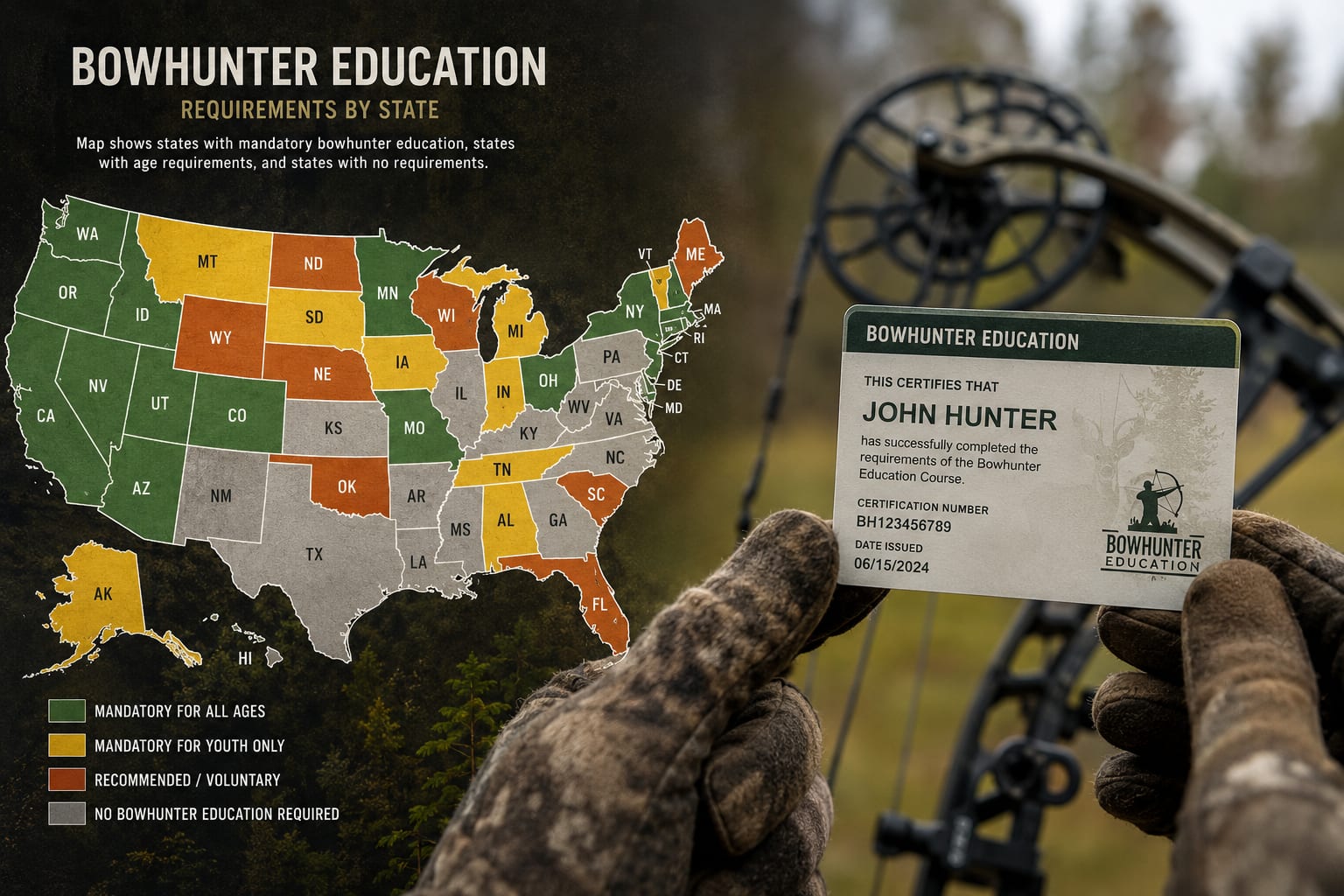
State requirements for bowhunter education vary significantly across the United States, with regulations changing periodically as wildlife agencies update their policies. As of 2026, approximately 35 states have some form of bowhunter education requirement, though the specifics differ considerably.
States with mandatory bowhunter education for most hunters:
States that accept general hunter education for bow hunting:
Many states including Texas, Michigan, and California require general hunter education but do not mandate separate bowhunter certification. In these jurisdictions, completing the basic hunter education course qualifies hunters to purchase archery licenses.
States with no mandatory hunter education:
A small number of states including South Dakota and Wyoming do not require hunter education for adult hunters, though they strongly recommend it and may require it for youth hunters.
Important considerations:
The National Rifle Association and state wildlife agencies maintain updated databases of current requirements that hunters should consult when planning hunts in unfamiliar states.
Bowhunter education courses typically cost between free and $35, depending on the state, delivery method, and whether you choose online or in-person instruction. Many states subsidize or fully fund the programs through hunting license fees and federal wildlife conservation grants, making them accessible to all prospective hunters.
Typical cost breakdown:
Additional costs to consider:
Cost comparison by delivery method:
States that offer multiple delivery options typically charge more for online courses because they include interactive modules and automated testing systems. However, online courses save money on travel and time away from work, making them cost-effective overall for many hunters.
Financial assistance:
Some states and hunting organizations offer scholarships or fee waivers for youth hunters, military veterans, or low-income individuals. Contact your state wildlife agency to inquire about available assistance programs.
Yes, most states now offer online bowhunter education courses that allow you to complete the majority or all of the training from home. As of 2026, approximately 45 states provide online options, though the format and requirements vary between fully online courses and hybrid programs that combine online study with mandatory in-person field days.
Three common online formats:
Advantages of online bowhunter education:
Limitations to consider:
Common mistake: Assuming all states accept online certification from any provider. Always verify that your chosen online course is approved by the state where you plan to hunt. Using an unapproved provider may result in invalid certification that wildlife officers won’t accept.
Most states use approved providers like Hunter Ed, Kalkomey, or their own state-specific platforms. These providers maintain databases that automatically report your completion to state wildlife agencies, streamlining the license purchase process.
Bowhunter education courses cover a comprehensive curriculum focused on archery equipment, hunting techniques, safety protocols, and ethical practices specific to bow hunting. The International Bowhunter Education Program establishes core standards that most state programs follow, ensuring hunters receive consistent, thorough training.
Core curriculum topics:
Equipment and mechanics:
Shooting skills and accuracy:
Hunting techniques:
Safety protocols:
Ethics and responsibility:
Regulations and legal requirements:
The course typically includes scenario-based questions that test your ability to make ethical decisions in realistic hunting situations, preparing you for the judgment calls you’ll face in the field.
Whether experienced hunters need bowhunter education depends on state law, not hunting experience. Many states exempt hunters who obtained their first hunting license before a specific year or who completed general hunter education decades ago, but others require bowhunter certification regardless of experience level.
Exemption criteria in states that recognize experience:
States that require certification regardless of experience:
Some jurisdictions mandate bowhunter education for all archery hunters, including those with decades of experience. These states view the certification as an ongoing safety and ethics requirement rather than a one-time educational milestone.
Why experienced hunters benefit from taking the course:
Even when not legally required, bowhunter education offers value to experienced hunters:
Common mistake experienced hunters make:
Assuming their general hunting experience or decades-old hunter education certificate satisfies current bowhunter education requirements. State regulations have evolved significantly, and many older certifications don’t meet current standards for archery-specific training. Always verify your certification status with your state wildlife agency before purchasing an archery license.
Experienced hunters who move to new states should pay particular attention to residency requirements and whether their home-state certification transfers through reciprocity agreements.
Crossbow hunting requirements vary significantly by state, with some jurisdictions treating crossbows as archery equipment requiring bowhunter education, others classifying them separately, and some requiring only general hunter education. As of 2026, crossbow regulations continue to evolve as more states expand crossbow access during archery seasons.
Three common regulatory approaches:
Crossbows classified as archery equipment: States like Pennsylvania and New York require bowhunter education for crossbow hunting during archery seasons, treating crossbows the same as compound bows and recurves.
Separate crossbow requirements: Some states allow crossbow hunting with only general hunter education, not requiring archery-specific training because crossbows function more like firearms in terms of range and mechanics.
Special crossbow permits: Certain jurisdictions issue crossbow permits to hunters with disabilities or those over a specific age (commonly 65+) without requiring bowhunter education, while able-bodied hunters must complete the course.
Why crossbow requirements differ:
The debate centers on whether crossbows provide an unfair advantage during archery seasons due to their easier learning curve, longer effective range, and ability to be held at full draw indefinitely. States that require bowhunter education for crossbows aim to ensure hunters understand archery ethics and shot placement, while those that don’t view crossbows as distinct enough from firearms to warrant separate training.
What crossbow hunters should know:
Edge case: A few states allow crossbow use during archery seasons without any hunter education requirement for adult hunters, while simultaneously requiring bowhunter education for vertical bow use. This creates confusion, so always consult current regulations directly from your state wildlife agency.
Bowhunter education courses typically require 4-12 hours to complete, depending on the delivery format, your prior hunting knowledge, and whether the program includes mandatory field days. Online courses generally take less time than in-person classes because you can skip through familiar material and work at your own pace.
Time requirements by format:
Fully online courses:
In-person courses:
Hybrid courses:
Factors that affect completion time:
Planning your schedule:
Most online courses allow you to save your progress and return later, so you don’t need to complete everything in one sitting. In-person courses require attendance at scheduled times, so plan accordingly and register early as classes often fill up before archery season.
Common mistake: Rushing through the course the night before you plan to buy your hunting license. Some states have processing delays of 24-48 hours between course completion and when your certification appears in the license system. Complete your course at least a week before you need your license to avoid delays.
Hunting without required bowhunter education is a violation of state wildlife regulations that can result in significant fines, license revocation, confiscation of equipment, and in some cases criminal charges. Wildlife conservation officers actively check hunter credentials in the field, and penalties have increased in recent years as states emphasize compliance with education requirements.
Common penalties by severity:
First offense (minor violation):
Repeat offenses or aggravating factors:
Serious violations (hunting without any license plus no education):
Additional consequences:
Beyond legal penalties, hunting without proper certification can result in:
Interstate wildlife violator compact:
Most states participate in this agreement, which shares information about hunting violations across state lines. A violation in one state can result in license suspension in your home state and any other participating jurisdiction, effectively ending your hunting privileges nationwide until you resolve the violation.
What to do if you’re cited:
If a conservation officer issues a citation for hunting without bowhunter education, comply with all instructions, complete the required course immediately, and pay fines promptly. Attempting to hunt in another state before resolving the violation will compound your legal problems.
Most bowhunter education certifications transfer between states through reciprocity agreements, meaning a certificate earned in one state is recognized as valid in most other states. As of 2026, approximately 48 states participate in reciprocal recognition of bowhunter education credentials, though hunters should always verify acceptance before purchasing out-of-state licenses.
How reciprocity works:
States that follow International Bowhunter Education Program (IBEP) standards generally accept certifications from other IBEP-compliant states. When you complete an approved course, your certification is entered into a national database that state wildlife agencies can access when you apply for hunting licenses.
Verification process for out-of-state hunting:
States with special requirements:
A small number of states require additional training or testing for non-residents:
Keeping your certification accessible:
What if your certification isn’t recognized:
In rare cases where a state doesn’t accept your certification, you’ll need to complete that state’s specific bowhunter education course. This most commonly occurs when:
Common mistake: Assuming that because you completed bowhunter education decades ago, your certification is still valid and transferable. While most certifications don’t expire, some older programs didn’t meet current IBEP standards. If your certification is more than 20 years old, verify its current validity with your state wildlife agency before planning an out-of-state hunt.
New hunters frequently make avoidable errors when completing bowhunter education that can delay certification, result in failed exams, or lead to confusion about requirements. Understanding these common pitfalls helps ensure a smooth certification process.
Registration and enrollment mistakes:
During the course:
Equipment and field day errors:
After completion:
Exam-specific mistakes:
Edge case to avoid: Some hunters complete bowhunter education but then wait years before actually bow hunting. Regulations change frequently, so if more than 2-3 years pass between certification and your first hunt, review current regulations even though your certification remains valid.
Children who want to bow hunt typically need bowhunter education, though specific age requirements, minimum hunting ages, and supervision rules vary significantly by state. Most states allow children to take bowhunter education courses starting at age 9-12, but may not permit them to hunt independently until they’re older, usually 12-16 depending on the jurisdiction.
Common age-based requirements:
Minimum age to take bowhunter education:
Minimum age to bow hunt:
Supervision requirements for youth hunters:
States that allow young children to hunt typically require:
Benefits of youth bowhunter education:
Special youth programs:
Many states offer:
Choosing the right format for children:
In-person courses work better for most kids because:
Online courses may work for mature children who:
Parental involvement recommendations:
Common mistake parents make: Pushing children into hunting before they’re genuinely interested or developmentally ready. While bowhunter education provides excellent training, children should demonstrate genuine interest in hunting and the maturity to handle weapons safely before participating in actual hunts.
How much does bowhunter education cost?
Bowhunter education typically costs between free and $35 depending on your state and chosen delivery method. Approximately 15 states offer completely free courses, while others charge $15-$30 for online programs or $10-$20 for in-person instruction. Some states use a hybrid model with online study plus a mandatory field day costing $20-$35 total.
Can I take bowhunter education online in all states?
No, not all states offer fully online bowhunter education. As of 2026, about 25 states provide completely online courses, approximately 15 require hybrid programs with online study plus mandatory in-person field days, and the remaining states offer only in-person instruction or have varying requirements. Always verify your state’s approved delivery methods before enrolling.
Is bowhunter education the same as hunter education?
No, bowhunter education and general hunter education are different programs. General hunter education covers firearms safety, basic hunting ethics, and wildlife management, while bowhunter education focuses exclusively on archery equipment, bow-specific techniques, shot placement for arrows, and challenges unique to bow hunting. Some states require both certifications depending on the hunting methods you plan to use.
Does my bowhunter education certificate expire?
Bowhunter education certificates typically do not expire and remain valid for life in most states. Once you complete the course and receive certification, you don’t need to renew it. However, regulations change frequently, so hunters should review current rules periodically even though their certification remains valid indefinitely.
What happens if I fail the bowhunter education exam?
If you fail the bowhunter education exam, most programs allow you to retake it after reviewing the material you missed. Online courses typically let you retake failed sections immediately or after a brief waiting period at no additional cost. In-person courses may require you to attend another session or take a makeup exam. Most programs have no limit on retake attempts.
Can I hunt in other states with my bowhunter education certificate?
Yes, most states recognize bowhunter education certificates from other states through reciprocity agreements. Approximately 48 states accept certifications from other jurisdictions that follow International Bowhunter Education Program standards. However, always verify that your specific certification is accepted before purchasing an out-of-state hunting license.
Do I need bowhunter education if I only hunt on private land?
Yes, bowhunter education requirements apply regardless of whether you hunt on public or private land. State wildlife regulations mandate certification based on the hunting method and hunter characteristics (age, birth year, prior licenses), not on land ownership. Hunting on private land without required certification carries the same penalties as violations on public land.
At what age can my child take bowhunter education?
Most states allow children to take bowhunter education starting at age 9-12, though specific minimums vary by jurisdiction. Some states have no minimum age if the child can comprehend the material, while others require children to be at least 10 years old. Even after certification, children typically must hunt under direct adult supervision until they reach the state’s minimum independent hunting age, usually 14-16.
Is bowhunter education required for crossbow hunting?
Crossbow hunting requirements vary significantly by state. Some states classify crossbows as archery equipment and require bowhunter education, others require only general hunter education, and some have separate crossbow-specific requirements. Additionally, certain states allow crossbow use only during firearms seasons rather than archery seasons. Verify your specific state’s crossbow regulations before assuming bowhunter education is sufficient.
How long does it take to complete bowhunter education?
Bowhunter education typically takes 4-12 hours to complete depending on the format. Fully online courses usually require 5-10 hours of self-paced study and testing. In-person courses take 8-12 hours spread over one intensive day or multiple evening sessions. Hybrid programs with online study plus mandatory field days total 7-11 hours split between home study and in-person attendance.
What topics are covered in bowhunter education?
Bowhunter education covers bow types and mechanics, arrow components and selection, shooting form and accuracy, shot placement and anatomy, tracking wounded game, treestand safety, hunting ethics, fair chase principles, state-specific regulations, equipment maintenance, range estimation, and wildlife conservation. The curriculum emphasizes skills and knowledge specific to archery hunting rather than general hunting topics.
Can experienced hunters skip bowhunter education?
Whether experienced hunters can skip bowhunter education depends entirely on state law, not experience level. Many states exempt hunters who obtained licenses before certain cutoff years or who were born before specific dates, but other states require certification for all archery hunters regardless of experience. Verify your state’s specific exemption criteria rather than assuming experience grants an exemption.
Bowhunter education serves as the foundation for safe, ethical, and successful archery hunting across North America. The certification ensures hunters understand the unique challenges of bow hunting, from equipment selection and maintenance to shot placement and game recovery. While requirements vary by state, the investment of 4-12 hours and typically less than $35 provides lifetime certification recognized across most jurisdictions.
Take these next steps to get started:
Verify your state’s requirements: Visit your state wildlife agency website to confirm whether you need bowhunter education based on your age, birth year, and prior hunting experience.
Choose your course format: Decide between fully online, in-person, or hybrid courses based on your learning style, schedule, and state options. Register early if selecting in-person instruction, as classes fill quickly before archery season.
Gather necessary materials: If taking an online course, ensure you have reliable internet access and 5-10 hours available over several days. For in-person courses, verify what equipment you need to bring and mark all session dates on your calendar.
Complete the course thoroughly: Don’t rush through the material. Take notes on shot placement, tracking techniques, and state-specific regulations you’ll reference during actual hunts.
Verify certification in state database: After completing the course, confirm your certification appears in your state’s license system before attempting to purchase your hunting license.
Practice your skills: Bowhunter education provides knowledge, but proficiency requires practice. Spend time at archery ranges working on accuracy, form, and shooting from various positions before hunting season.
Review regulations annually: Even though your certification doesn’t expire, hunting regulations change frequently. Review current rules each year before hunting to ensure compliance with season dates, bag limits, and equipment requirements.
Whether you’re a first-time hunter or an experienced outdoorsman expanding into archery, bowhunter education equips you with the skills and knowledge to hunt responsibly, ethically, and successfully. The certification opens doors to archery seasons across North America while contributing to the conservation efforts that sustain wildlife populations for future generations.


