
Newsletter Subscribe
Enter your email address below and subscribe to our newsletter
All voices matter
All voices matter

 ByTravis
Yes - nearly all US states require a valid hunting license to bowhunt, and many also require a bowhunter education course before you can buy one.
Affiliate Disclaimer: We are a participant in the Amazon Services LLC Associates Program, an affiliate advertising program designed to provide a means for sites to earn advertising fees by advertising and linking to Amazon.com. As an Amazon Associate I earn from qualifying purchases. We also participate in other affiliate programs.

Yes, nearly all states in the U.S. require a valid hunting license to bowhunt legally, and many also mandate completion of a bowhunter education course before you can purchase that license. The specific requirements vary by state, with some offering exemptions for private property owners, youth hunters, or senior citizens. Hunting without the proper license can result in fines ranging from $100 to over $1,000, plus potential loss of hunting privileges.
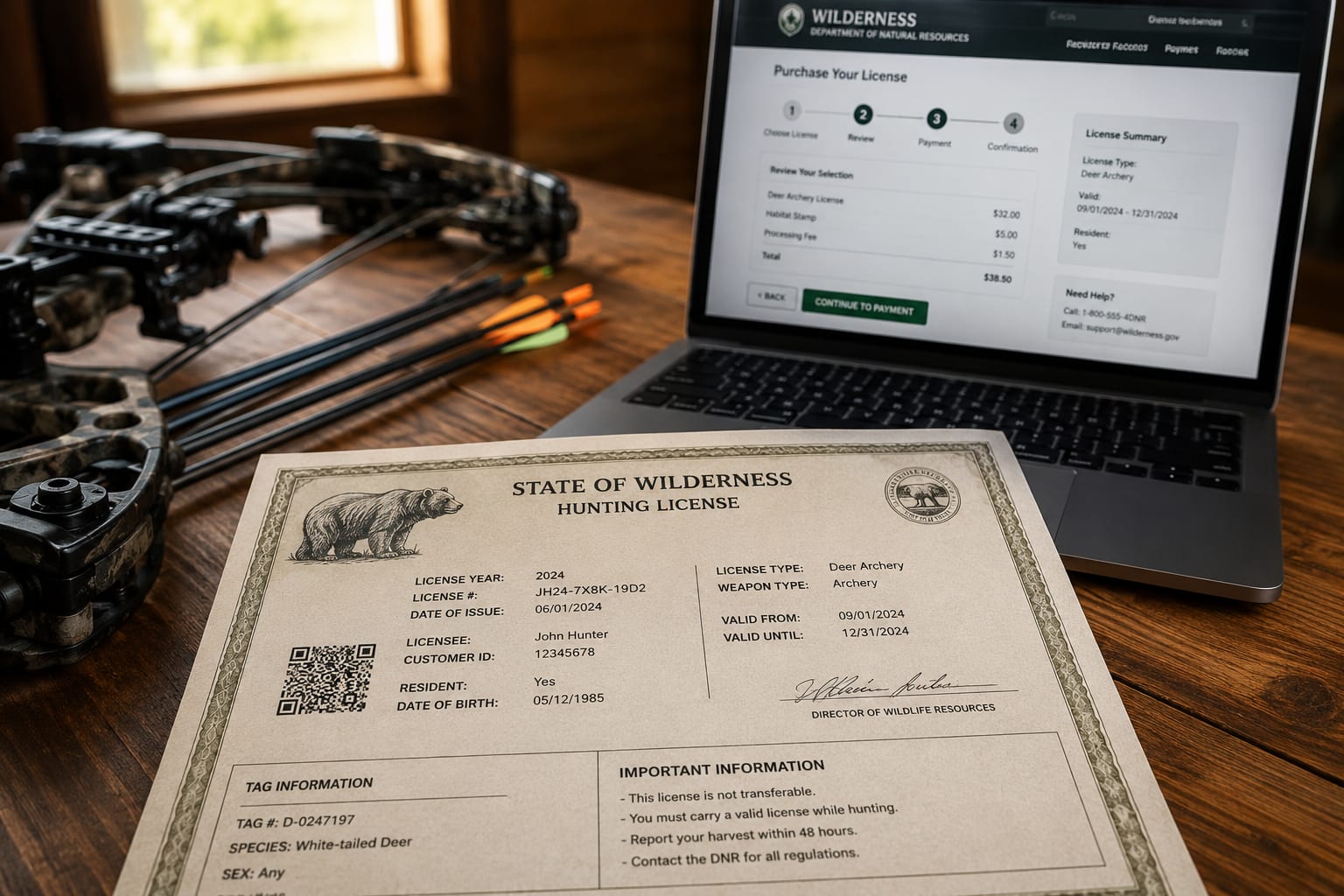
A bowhunting license is typically not a separate document but rather a general hunting license that authorizes you to hunt with archery equipment during designated bow seasons. In most states, the same base hunting license covers firearms, archery, and other legal hunting methods, with the weapon type and season determining when and how you can hunt.
The key distinction lies in season-specific regulations rather than the license itself. Bow seasons usually open earlier than firearms seasons and may allow hunting in areas where firearms are restricted. Some states do require additional stamps or permits for specific game species, such as deer, turkey, or elk, which you must purchase in addition to your base hunting license.
A few states that structure licenses differently:
The hunting license serves as your legal authorization to pursue game animals, while state regulations dictate which weapons you can use during specific seasons. Always verify your state’s current requirements, as regulations change periodically.
Your standard hunting license covers bowhunting in 45 states without requiring a separate archery-specific permit. The base hunting license grants you the authority to hunt with legal weapons during their respective seasons, and archery equipment falls under that umbrella authorization.
However, you will need to purchase additional tags or stamps for specific game species in most states. These species-specific permits work in conjunction with your base license:
Five states do offer or require archery-specific endorsements:
Common mistake: Assuming your fishing license or previous year’s hunting license remains valid. Hunting licenses expire annually in all states, and you must renew before each season. Some states offer multi-year options, but single-year licenses are standard.
License costs vary dramatically based on residency status, age, and the specific game you intend to hunt. Resident hunting licenses typically range from $10 to $50 for the base permit, while non-resident licenses can cost $100 to $600 or more.
Resident license cost ranges for 2026:
Non-resident licenses are significantly more expensive:
Additional costs beyond the base license:
Choose a resident license if: You’ve lived in the state for at least six consecutive months (12 months in some states) and can provide proof of residency such as a driver’s license, utility bills, or voter registration. The savings compared to non-resident fees often exceed $200 for deer hunting alone.
Many states offer lifetime licenses that eliminate annual renewal requirements. These range from $250 to $1,500 depending on your age at purchase, with significant discounts for youth buyers. A lifetime license purchased at age 10 in Tennessee costs $300, while the same license at age 50 costs $1,000.
No, most states require a valid hunting license even when hunting on property you own. Only a handful of states offer landowner exemptions, and these typically come with strict acreage requirements and other conditions.
States with landowner exemptions (as of 2026):
Important restrictions even with exemptions:
Why most states require licenses even on private property: License fees fund state wildlife management programs, habitat conservation, and enforcement. These programs benefit all hunters by maintaining healthy game populations. Even if you hunt exclusively on your own land, the wildlife you pursue is managed as a public trust resource.
Common mistake: Assuming that because you own the land, all hunting regulations are optional. Season dates, bag limits, and legal hunting hours apply regardless of property ownership. Only the license requirement itself may be waived in exemption states.
If you’re unsure about your state’s landowner exemption rules, contact your state wildlife agency directly. Penalties for hunting without a license apply equally on private and public land.
Hunting without a valid license is a criminal offense in all 50 states, typically classified as a misdemeanor that carries fines, equipment confiscation, and loss of hunting privileges. Penalties escalate significantly for repeat offenders or if you’ve taken game illegally.
First-offense penalties typically include:
Enhanced penalties for aggravating factors:
Restitution values for common game animals (examples from various states):
Beyond legal penalties, a hunting violation creates a permanent record in the Interstate Wildlife Violator Compact, a system shared by 48 member states. A license suspension in one state typically results in denial of hunting privileges in all member states until you’ve satisfied the penalties and waiting period.
Real-world enforcement: Game wardens have authority to check licenses without probable cause while you’re engaged in hunting activities. They can stop you in the field, at access points, or even at your vehicle if you’re transporting game or hunting equipment. Refusing to show your license when requested is itself a violation in most states.
The risk-to-reward ratio of hunting without a license is extremely unfavorable. A $30 license costs far less than even the minimum fine, and the long-term consequences of losing hunting privileges outweigh any short-term savings.
Youth hunting license requirements vary significantly by state, with most offering either free licenses, reduced fees, or complete exemptions for hunters under age 16. However, even when licenses aren’t required, youth hunters must typically be accompanied by a licensed adult and complete hunter education courses.
Common youth license structures:
Free or reduced-cost youth licenses (ages 12-15):
Complete exemptions (no license required):
States with notable youth requirements:
Hunter education requirements for youth:
Most states require hunter education certification before a young person can hunt independently, even with a valid license. The minimum age to take hunter education courses is typically 10-12 years old. Certification is valid for life and transfers to all states.
Mentored or apprentice hunting programs (available in 38 states as of 2026):
Choose youth exemptions if: Your child is under the minimum age for independent hunting and you’ll be hunting together. This allows them to experience the sport while learning safety and ethics under your direct guidance.
Common mistake: Assuming a youth exemption means no rules apply. Young hunters must still follow bag limits, season dates, and legal shooting hours. In many states, the supervising adult is legally responsible for any violations committed by the youth hunter.

Crossbow regulations differ from traditional archery in most states, with some jurisdictions treating crossbows as firearms rather than archery equipment. This distinction affects when you can hunt, where you can hunt, and what permits you need.
Three regulatory approaches to crossbows:
1. Crossbows legal during archery season (32 states):
2. Crossbows restricted to firearms season or special permits (12 states):
3. Crossbows legal with separate permit or during limited timeframes (6 states):
Key differences between crossbow and vertical bow regulations:
States that recently changed crossbow regulations:
Medical/disability crossbow permits:
If you have a physical condition that prevents you from using a vertical bow, most states offer disability permits that authorize crossbow use during archery season. Requirements typically include:
Choose a crossbow if: You have physical limitations that make drawing a vertical bow difficult, or you’re new to bowhunting and want a more accessible entry point. However, verify your state’s regulations first, as some still restrict crossbow use during prime early archery seasons.
Common mistake: Assuming that because crossbows are legal in your state, they’re legal during all seasons and in all areas. Always check the specific season dates and zone restrictions in your state’s hunting regulations digest.
All 50 states now offer online hunting license purchases through official state wildlife agency websites or authorized third-party vendors. Online purchasing is the fastest and most convenient method, with licenses typically available for immediate download or printing.
Official state wildlife agency websites:
Each state operates its own online licensing portal. Search for “[Your State] hunting license” or visit your state’s Department of Natural Resources, Fish and Wildlife, or Game and Fish agency website. These official portals offer:
Authorized third-party vendors:
Many states also authorize retail partners to sell licenses online and in-store:
National multi-state platforms:
What you’ll need to purchase online:
Step-by-step online purchase process:
Digital licenses and mobile apps:
Most states now accept digital licenses displayed on smartphones as legal proof of licensure. State-specific apps include:
Common mistake: Waiting until the day before season opens to purchase your license online. While most systems process licenses instantly, technical issues, website maintenance, or verification delays can occur. Purchase at least 3-5 days before your planned hunt to avoid last-minute problems.
Choose online purchasing if: You want immediate access to your license, prefer to avoid in-person transactions, or need to purchase outside of normal business hours. The convenience and instant confirmation make online purchasing the preferred method for most hunters in 2026.
Yes, 39 states require completion of a hunter education course before you can purchase your first hunting license, and this requirement applies to bowhunting. The certification is valid for life and recognized in all states, making it a one-time educational investment that opens hunting opportunities nationwide.
Hunter education requirements by state (2026):
Mandatory for all first-time hunters (39 states):
Mandatory for youth only (5 states):
No mandatory hunter education (6 states):
Bowhunter-specific education:
While general hunter education courses cover archery basics, several organizations offer specialized bowhunter education:
These specialized courses are optional in all states but provide valuable skills beyond basic hunter education requirements. They’re particularly beneficial for hunters transitioning from firearms to archery.
Course formats available:
Traditional in-person courses:
Online hunter education:
Hybrid courses:
How long does hunter education take?
Topics covered in hunter education:
Choose bowhunter-specific education if: You plan to hunt exclusively with archery equipment and want in-depth training on shot placement, tracking wounded game, and equipment selection. The specialized knowledge significantly improves success rates and ethical hunting practices.
Common mistake: Assuming that because you’re experienced with firearms, you don’t need education for bowhunting. Archery hunting requires different skills, particularly regarding effective range, shot placement, and tracking. Even experienced firearms hunters benefit from bowhunter-specific training.
All 50 states require some form of hunting license for bowhunting, though the specific license types, costs, and exemptions vary. No state allows unrestricted bowhunting without any form of authorization or permit.
License requirements by region:
Northeast (All require licenses):
Southeast (All require licenses):
Midwest (All require licenses):
West (All require licenses):
Alaska and Hawaii:
States with the most restrictive requirements:
States with the most accessible requirements:
Federal lands and tribal lands:
Military base hunting:
Common mistake: Assuming that because you have a license in your home state, you can hunt in neighboring states without additional permits. Each state requires its own license, and non-resident fees are significantly higher than resident costs. Plan ahead and budget accordingly for out-of-state hunts.
Yes, a hunting license is legally required regardless of how frequently you hunt, and the cost is minimal compared to the penalties for hunting without one. Beyond legal compliance, license fees directly fund wildlife conservation programs that maintain the hunting opportunities you enjoy.
Cost-benefit analysis for occasional hunters:
Annual costs for basic bowhunting:
Value received:
What your license fees fund:
According to the U.S. Fish and Wildlife Service, hunting license fees combined with excise taxes on hunting equipment (Pittman-Robertson Act) generate over $1.5 billion annually for wildlife conservation. Even if you hunt only once per year, your license contributes to these essential programs.
Alternatives to annual licenses:
Lifetime licenses:
Multi-year licenses:
Day or short-term licenses:
Choose an annual license if: You hunt at least once per season and want the flexibility to hunt multiple days without restriction. The cost averages less than $10 per month, making it one of the most affordable outdoor recreation activities.
Common mistake: Letting your license expire and hunting on the assumption that enforcement is unlikely. Game wardens specifically target opening weekends and popular hunting areas, and the risk of getting caught far outweighs the license cost.
License application errors can delay your hunting season or result in purchasing the wrong permits. Understanding common mistakes helps ensure you’re properly licensed before heading afield.
Top licensing mistakes and how to avoid them:
1. Waiting until the last minute
2. Not completing hunter education first
3. Buying the wrong license type
4. Forgetting required stamps or permits
5. Claiming resident status incorrectly
6. Not carrying physical or digital license while hunting
7. Hunting before license effective date
8. Overlooking age-based discounts or exemptions
9. Not understanding tag systems
10. Ignoring license expiration dates
Documentation checklist before purchasing:
Verification before heading afield:
Common mistake specific to bowhunters: Assuming your archery equipment is legal without checking state-specific requirements. Minimum draw weight, arrow length, and broadhead specifications vary by state. Verify your equipment meets legal standards before the season opens.
Senior hunting license requirements vary by state, with approximately 30 states offering free or reduced-cost licenses for hunters age 65 and older. However, complete exemptions are rare, and most seniors still need some form of license or permit.
Senior license benefits by state (2026):
Free lifetime licenses (10 states):
Free annual licenses (15 states):
Reduced-cost senior licenses (12 states):
No senior discount (13 states):
Important limitations on senior exemptions:
Even when licenses are free or discounted, seniors typically must still:
States with the best senior hunting benefits:
Disability accommodations for senior hunters:
Many states offer additional accommodations for senior hunters with mobility limitations:
How to apply for senior license benefits:
Common mistake: Assuming senior exemptions apply to out-of-state hunting. Senior discounts and free licenses almost always apply only to residents. Non-resident seniors pay full non-resident rates in most states.
Choose senior license options if: You’re at or near the qualifying age and plan to hunt regularly. Free or reduced-cost licenses make hunting more accessible for retirees on fixed incomes, and the savings can be substantial over multiple years.
Can I use my hunting license from one state in another state?
No, hunting licenses are state-specific and not transferable. You must purchase a separate license for each state where you plan to hunt. However, hunter education certification is recognized nationwide, so you won’t need to retake the course when hunting in different states.
How long does it take to get a hunting license?
Online purchases provide instant access in most states, allowing you to download and print your license immediately. In-person purchases at retail locations also provide same-day licenses. If you need to complete hunter education first, allow 2-4 weeks for course completion and certification processing.
Do I need a hunting license to practice archery on my property?
No, you only need a hunting license when actively pursuing or taking wild game. Target practice, 3D archery courses, and recreational shooting on private property don’t require a hunting license. However, local ordinances may restrict archery practice in residential areas.
Can I buy a hunting license if I have a felony conviction?
Eligibility depends on your state and the nature of the conviction. Federal law prohibits firearm possession for convicted felons, but archery equipment is not classified as a firearm. Most states will issue hunting licenses to felons for bowhunting, though wildlife-related convictions may result in permanent license denial. Contact your state wildlife agency for specific guidance.
What’s the difference between a hunting license and a deer tag?
A hunting license is your general authorization to hunt, while a deer tag is a species-specific permit that allows you to harvest one deer. You need both the base license and the appropriate tag for the species you’re hunting. Tags are often sold separately and may be limited in quantity.
Do I need a hunting license to hunt on federal land?
Yes, federal lands (National Forests, BLM land, Wildlife Management Areas) require valid state hunting licenses. The state where the federal land is located has jurisdiction over hunting regulations. Some federal areas have additional restrictions or permit requirements beyond the state license.
Can I get a refund on my hunting license if I don’t use it?
Most states do not offer refunds on hunting licenses once purchased, as the fees fund annual conservation programs regardless of individual use. A few states allow refunds within a short window (typically 30 days) if you haven’t used any tags or harvested any game. Check your state’s specific refund policy before purchasing.
How do I replace a lost hunting license?
Log in to your state’s online licensing system and reprint your license at no cost. Most states maintain digital records of all licenses purchased, making replacement simple. If you purchased in-person and don’t have online access, contact your state wildlife agency for a duplicate license (small fee may apply).
Do military members get hunting license discounts?
Many states offer free or reduced-cost licenses for active-duty military members, particularly for residents stationed out-of-state. Approximately 35 states provide some form of military discount. Veterans may also qualify for reduced fees in some states. Bring military ID when purchasing.
Can I hunt immediately after buying my license online?
Yes, in most states your license is valid immediately upon purchase and payment confirmation. However, verify the “valid from” date printed on your license, as some states have specific effective dates. For limited-draw hunts, you must wait until you’re selected and receive your permit.
What happens to my hunting license if I move to a new state?
Your license remains valid in the issuing state until its expiration date, but you cannot use it in your new state of residence. Once you establish residency in your new state (typically 6-12 months), you can purchase a resident license there. Your hunter education certification transfers to all states.
Do I need separate licenses for bow and gun season?
No, your hunting license covers both archery and firearms seasons. The same base license authorizes hunting with any legal weapon during its respective season. However, you may need separate tags for different seasons if your state issues season-specific permits (archery deer tag vs. firearms deer tag).
Bowhunting license requirements are straightforward: nearly every state requires a valid hunting license, most mandate hunter education for first-time buyers, and additional species-specific tags are typically necessary for big game. The investment is minimal compared to the value received, with resident licenses ranging from $10 to $50 and the fees directly funding the wildlife conservation programs that sustain hunting opportunities.
Take these steps before your next bowhunting season:
The question “Do you need a license to bowhunt?” has a clear answer: yes, with very few exceptions. The license system protects wildlife populations, funds conservation, and ensures ethical hunting practices continue for future generations. The small annual investment grants access to millions of acres of hunting land and supports the outdoor heritage that makes bowhunting possible.
For specific guidance on your state’s requirements, contact your state wildlife agency directly or visit their official website. Regulations change periodically, and staying informed ensures you remain compliant while enjoying your time afield.


