
Newsletter Subscribe
Enter your email address below and subscribe to our newsletter

All voices matter
All voices matter

 ByTravis
Archery is a legitimate workout for upper body strength, core stability, and muscular endurance - drawing a bow repeatedly burns roughly 140-280 calories per hour.
Affiliate Disclaimer: We are a participant in the Amazon Services LLC Associates Program, an affiliate advertising program designed to provide a means for sites to earn advertising fees by advertising and linking to Amazon.com. As an Amazon Associate I earn from qualifying purchases. We also participate in other affiliate programs.
Archery is a legitimate workout that primarily builds upper body strength, core stability, and muscular endurance rather than cardiovascular fitness. Drawing a bow repeatedly engages the shoulders, back, arms, and core muscles, burning approximately 140-280 calories per hour depending on bow type and shooting intensity. While it won’t replace traditional cardio or full-body strength training, archery offers a unique combination of physical conditioning, mental focus, and low-impact exercise suitable for various fitness levels.

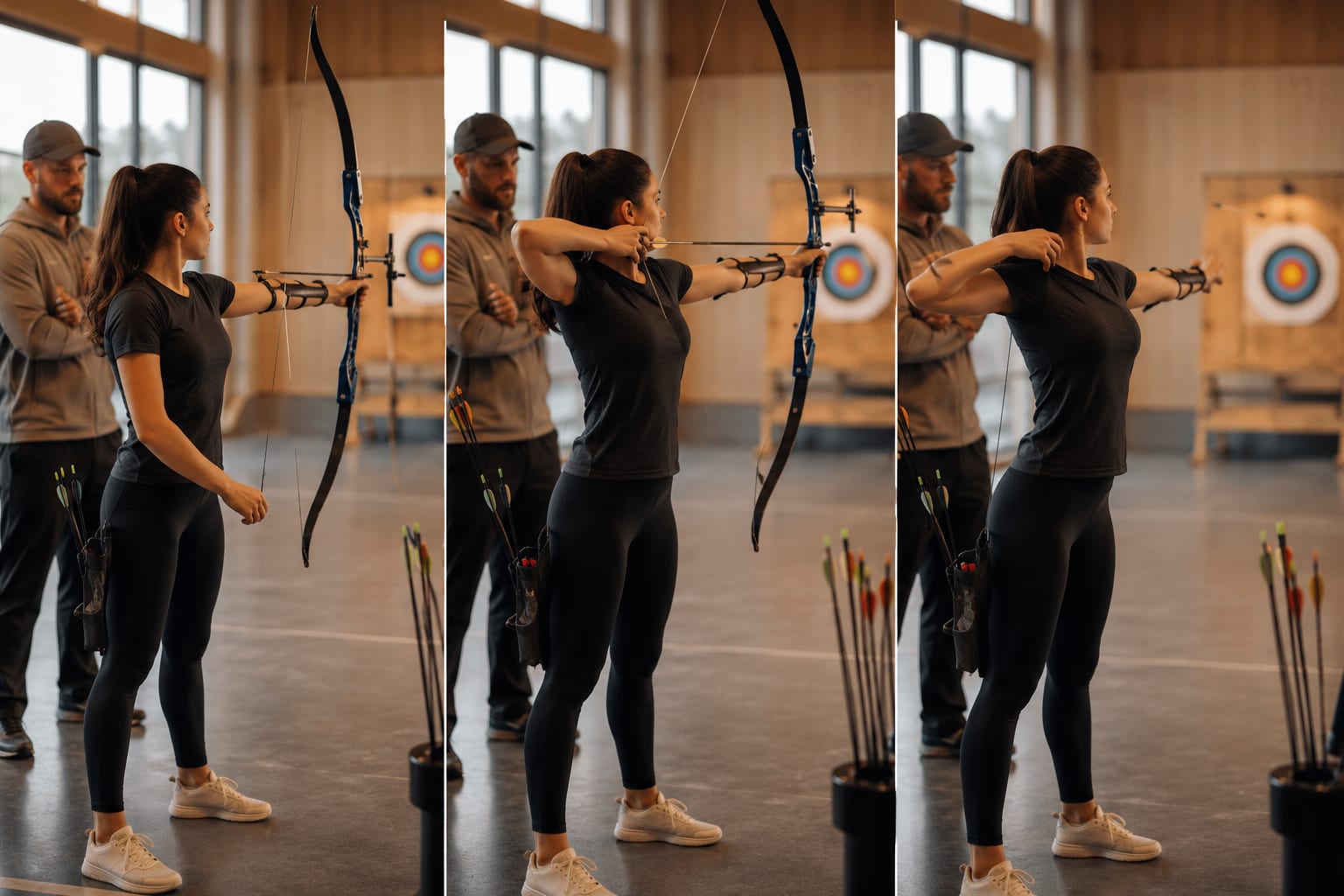
Archery engages multiple muscle groups simultaneously, with the heaviest demand placed on the upper body and core. The primary muscles worked include the deltoids (shoulders), rhomboids and trapezius (upper back), latissimus dorsi (mid-back), rotator cuff muscles, biceps and triceps (arms), forearm flexors and extensors, and the entire core musculature including obliques and lower back stabilizers.
Upper Body Muscle Engagement:
Core and Stabilization:
The core muscles work continuously to maintain proper shooting posture and transfer force from the lower body through the torso to the upper body. The obliques prevent torso rotation, while the lower back and abdominal muscles maintain spinal alignment during the draw and hold phases.
Lower Body Involvement:
While less intensive than upper body engagement, the legs and glutes maintain a stable shooting stance, particularly during field archery or 3D courses where terrain varies. Target archery involves minimal lower body work, but the legs still provide the foundation for proper form.
Choose recurve bows if you want maximum muscle engagement and traditional technique. Choose compound bows if you prefer mechanical advantage that reduces hold weight by 65-80%, allowing longer aiming periods with less muscular fatigue.
Archery burns approximately 140-280 calories per hour depending on bow type, draw weight, shooting frequency, and body weight. Target archery with a recurve bow typically burns 140-180 calories per hour, while compound bow shooting burns slightly less at 100-140 calories per hour due to the let-off feature that reduces holding weight.
Calorie Burn by Activity Type:
The calorie expenditure increases significantly when walking between targets or navigating outdoor courses. Field archery and 3D competitions can burn 40-60% more calories than stationary target shooting due to the added cardiovascular component of walking varied terrain while carrying equipment.
Factors Affecting Calorie Burn:
Body weight plays a substantial role in total calories burned. A 150-pound person shooting recreationally burns approximately 140 calories per hour, while a 200-pound person burns closer to 190 calories performing the same activity. Draw weight also matters; pulling a 45-pound bow requires more energy than a 25-pound bow, though the difference is less dramatic than many assume.
Common mistake: Overestimating archery’s calorie burn compared to dedicated cardio activities. An hour of archery burns roughly the same calories as slow walking, not jogging or cycling.
Archery functions primarily as a strength and muscular endurance activity rather than cardiovascular exercise. The sport builds isometric strength, improves muscular endurance in the upper body and core, and develops postural muscles, but it provides minimal cardiovascular conditioning since heart rate rarely reaches aerobic training zones during typical shooting sessions.
Strength Training Benefits:
Archery develops functional strength through repetitive resistance work. Drawing a bow 50-100 times per session creates muscular fatigue similar to moderate resistance training. The isometric hold at full draw (typically 2-8 seconds) builds static strength in the back and shoulders, while the drawing motion itself provides concentric muscle contraction.
Cardiovascular Limitations:
Target archery keeps heart rate in the 90-110 bpm range for most shooters, well below the 120-150 bpm threshold for aerobic conditioning. The activity pattern involves brief exertion followed by rest periods (walking to retrieve arrows, scoring, waiting for shooting lines), preventing sustained cardiovascular elevation.
Muscular Endurance Development:
The repetitive nature of archery excels at building muscular endurance. Shooting 100-200 arrows in a practice session requires the same muscle groups to perform repeatedly against resistance, similar to high-repetition weight training. This endurance component becomes particularly noticeable in competition settings where archers shoot 60-144 arrows in a single round.
If your goal is cardiovascular fitness, archery alone won’t suffice. If you want upper body strength and postural improvement without high-impact stress, archery delivers measurable results.
Archery can contribute to weight loss as part of a comprehensive fitness and nutrition plan, but it should not be relied upon as a primary weight-loss activity. The modest calorie burn of 140-280 calories per hour means you would need to shoot for 12-25 hours weekly to create the 3,500-calorie deficit required to lose one pound, assuming no dietary changes.
Weight Loss Considerations:
The most effective approach combines archery with dietary modifications and additional cardiovascular exercise. Archery provides the strength training component while walking, cycling, or swimming addresses the cardio deficit. Many archers find the sport’s engaging nature makes it easier to maintain consistent physical activity compared to repetitive gym routines.
Realistic Expectations:
Shooting 2-3 times weekly for 90 minutes burns approximately 420-840 calories per week, equivalent to losing roughly one pound every 4-8 weeks through archery alone. This modest rate can be meaningful over months and years, particularly when archery replaces sedentary activities rather than adding to an already active lifestyle.
Body Composition Changes:
Even without significant weight loss, regular archery practice changes body composition by building lean muscle mass in the upper body and core. Increased muscle mass slightly elevates resting metabolic rate, creating a small but cumulative advantage for long-term weight management.
Edge case: Field archery and 3D courses that involve substantial walking can burn 50-100% more calories than target archery, making them more effective for weight management while maintaining the sport’s technical and mental engagement.

Neither archery nor gym workouts are universally “better” because they serve different fitness purposes and appeal to different preferences. Gym workouts offer superior cardiovascular conditioning, comprehensive muscle development, and measurable progressive overload, while archery provides functional upper body strength, mental focus training, and skill development in an engaging sport context.
Gym Workout Advantages:
Archery Advantages:
Comparison Table:
| Factor | Gym Workouts | Archery |
|---|---|---|
| Calorie burn (per hour) | 300-600+ | 140-280 |
| Upper body strength | High (targeted) | Moderate (functional) |
| Cardiovascular benefit | High | Low |
| Lower body development | High | Minimal |
| Core engagement | Moderate-High | Moderate |
| Mental focus requirement | Low-Moderate | High |
| Skill progression | Linear | Complex |
| Joint impact | Variable | Low |
| Time to visible results | 4-8 weeks | 8-12 weeks |
Optimal Approach:
The most effective fitness strategy combines both activities. Use gym workouts for cardiovascular health, leg development, and systematic strength progression, while archery provides upper body endurance, mental training, and an engaging activity that maintains long-term adherence to physical activity.
Choose archery if you need low-impact exercise, value skill development alongside fitness, or struggle with gym motivation. Choose gym workouts if you want comprehensive fitness development, faster results, or specific athletic performance goals.
No, you do not need exceptional strength to start archery because equipment can be matched to your current fitness level. Beginner bows start as light as 15-20 pounds of draw weight, which most adults can handle regardless of prior strength training. Proper technique relies more on skeletal alignment and back muscle engagement than raw arm strength.
Starting Strength Requirements:
Most adults can comfortably begin with draw weights of 20-25 pounds for women and 25-30 pounds for men, though individual variation is substantial. Youth archers often start with 10-15 pound bows. These lighter weights allow beginners to focus on form development without muscular fatigue compromising technique.
Technique Over Strength:
Proper archery form uses skeletal structure and large back muscles rather than arm strength alone. The bow arm creates a bone-on-bone alignment that supports draw weight structurally, while the back muscles (not the biceps) perform the drawing motion. This mechanical advantage means technique often matters more than raw strength.
Progressive Development:
Archery naturally builds the specific strength it requires. Beginners who shoot 2-3 times weekly typically increase draw weight by 2-5 pounds every 4-8 weeks as their muscles adapt. This gradual progression allows the body to develop strength safely without injury risk from starting too heavy.
Common mistake: Male beginners often choose draw weights that are too heavy (40-50 pounds) because they feel they “should” be strong enough. This leads to poor form, rapid fatigue, and potential injury. Starting lighter and progressing gradually produces better long-term results.
Archery is an excellent exercise option for seniors because it provides low-impact strength training, improves balance and posture, and can be adapted to virtually any fitness level or physical limitation. The sport’s stationary nature eliminates fall risk while still engaging major muscle groups, and the mental focus component helps maintain cognitive function.
Senior-Specific Benefits:
Practical Considerations:
Seniors should start with lighter draw weights (15-25 pounds) and consider compound bows with let-off features that reduce holding weight by 65-80%. This allows proper aiming time without excessive muscular fatigue. Many ranges offer adaptive equipment including release aids that reduce hand strength requirements and stabilizers that make bows easier to hold steady.
Medical Considerations:
Seniors with rotator cuff issues, severe arthritis, or recent shoulder surgery should consult physicians before starting archery. However, many seniors with these conditions successfully participate using modified techniques or lighter equipment. The sport’s adaptability makes it accessible even with physical limitations that would preclude many other activities.
If you have good upper body mobility but limited lower body function, archery can be performed seated with minimal modification. If you have shoulder concerns, start with very light draw weights and progress slowly under professional instruction.
The most common archery injuries include rotator cuff strain, medial epicondylitis (golfer’s elbow), lateral epicondylitis (tennis elbow), lower back pain, and finger injuries from improper release technique. Most injuries result from overuse, excessive draw weight, or poor form rather than acute trauma, making them largely preventable through proper progression and technique.
Upper Body Overuse Injuries:
Back and Core Issues:
Lower back pain frequently affects archers who lack core strength or maintain improper posture during shooting. The asymmetric loading pattern of archery can create muscle imbalances if not addressed through complementary exercises. Thoracic spine stiffness also develops from prolonged shooting sessions without mobility work.
Prevention Strategies:
Warning signs: Sharp pain during or after shooting, persistent soreness lasting more than 48 hours, reduced range of motion, or clicking/popping sensations in joints all indicate potential injury requiring rest and possibly professional evaluation.
Shooting 2-3 times per week for 60-90 minutes per session produces noticeable fitness improvements within 6-8 weeks for most beginners. This frequency allows adequate recovery between sessions while providing sufficient training stimulus for muscular adaptation. More frequent shooting (4-5 times weekly) accelerates skill development but offers diminishing returns for pure fitness benefits.
Optimal Training Frequency:
Expected Timeline for Results:
Beginners typically notice increased muscular endurance in the shoulders and back within 2-3 weeks, though this manifests as reduced fatigue rather than visible muscle growth. Visible postural improvements and slight muscle definition appear around 6-8 weeks with consistent practice. Measurable strength gains (ability to comfortably increase draw weight) occur every 4-8 weeks.
Volume Considerations:
Total arrow count matters more than session duration for fitness adaptation. Shooting 80-120 arrows per session provides adequate training stimulus without excessive fatigue. Competitive archers may shoot 200-300 arrows per session, but this volume serves skill development more than fitness improvement.
Recovery Requirements:
The repetitive nature of archery requires at least 48 hours between sessions for optimal muscle recovery, particularly for beginners. Shooting daily often leads to overuse injuries rather than faster fitness gains. Active recovery activities like light cardio, stretching, or complementary strength training can be performed on non-shooting days.
Edge case: If combining archery with comprehensive gym training, 1-2 archery sessions weekly may suffice for maintaining sport-specific fitness while avoiding overtraining the shoulders and back.
Yes, archery builds upper body strength, particularly in the back, shoulders, and arms, though the strength gains are more functional and endurance-oriented than the hypertrophy produced by traditional weight training. Regular archery practice increases pulling strength, improves postural muscle endurance, and develops shoulder stability, but it won’t produce the muscle mass gains of dedicated bodybuilding-style training.
Strength Development Pattern:
Archery creates strength through high-repetition resistance work. Drawing a 30-pound bow 100 times per session totals 3,000 pounds of cumulative work, similar to performing multiple sets of rows or pull exercises. This volume builds muscular endurance and moderate strength but lacks the progressive overload intensity needed for maximum strength development.
Specific Strength Gains:
Limitations for Strength Building:
Archery provides unilateral (one-sided) training that can create muscle imbalances if not addressed. The bow arm receives primarily isometric work while the drawing arm performs dynamic contractions, leading to asymmetric development. Additionally, the resistance remains constant rather than progressively increasing, which limits long-term strength gains once adaptation occurs.
Complementary Training:
Combining archery with balanced strength training produces optimal results. Add pushing exercises (push-ups, bench press) to balance the pulling emphasis, train the non-dominant side to prevent imbalances, and include progressive resistance training for continued strength development beyond archery’s natural plateau.
Archery is generally excellent for people with knee problems because it requires minimal lower body stress and can be performed entirely from a standing or seated position without impact or deep knee flexion. For back pain, the answer is more nuanced: archery can improve postural strength and reduce pain caused by weak back muscles, but it may aggravate existing disc issues or acute back injuries if form is poor.
Knee-Friendly Aspects:
Target archery involves standing relatively still in a comfortable stance with minimal weight shifting or knee bending. Unlike running, jumping, or squatting activities, archery places virtually no stress on knee joints, making it suitable even for people with severe osteoarthritis, previous knee surgery, or chronic knee pain. Field archery involves walking but on generally flat terrain at a controlled pace.
Back Pain Considerations:
Archery strengthens the postural muscles (rhomboids, middle trapezius, erector spinae) that support proper spinal alignment. Many archers with chronic back pain from weak postural muscles report improvement after several months of regular shooting. However, the asymmetric loading and torso rotation involved in archery can aggravate herniated discs, acute muscle strains, or inflammatory back conditions.
Proper Form for Back Health:
Maintaining neutral spine alignment throughout the shot sequence is critical for back safety. Common form errors that stress the back include excessive torso rotation, leaning backward during the draw, and collapsing the core during the hold phase. Working with a qualified coach to establish proper form prevents back stress and maximizes the postural benefits.
Modifications for Back Issues:
Consult a physician before starting archery if you have acute back pain, recent back surgery, diagnosed disc problems, or any condition causing nerve pain or numbness.
The primary downsides of archery as exercise include limited cardiovascular benefit, asymmetric muscle development, potential for overuse injuries, relatively low calorie burn, and the time and cost investment required for equipment and range access. Additionally, archery’s stationary nature means it doesn’t develop lower body strength or provide the comprehensive fitness benefits of more complete exercise programs.
Physical Limitations:
Practical Barriers:
Archery requires more initial investment than many fitness activities. Basic equipment costs 200-500 dollars for entry-level gear, and range memberships or per-visit fees add ongoing expense. Finding suitable practice facilities can be challenging in some areas, and the learning curve is steeper than simple activities like walking or basic gym exercises.
Time Efficiency:
Archery is relatively time-inefficient for pure fitness goals. An hour of shooting burns fewer calories and provides less comprehensive conditioning than an hour of circuit training, swimming, or cycling. The sport’s value lies in its combination of physical, mental, and skill development rather than maximum fitness return per time invested.
Social and Scheduling Constraints:
Many ranges have limited hours or require advance booking. Group shooting sessions follow specific schedules that may not align with personal availability. Unlike activities you can do anytime (running, home workouts), archery often requires coordination with facility access and sometimes other participants.
Despite these limitations, archery’s unique combination of physical training, mental discipline, and engaging skill development creates high adherence rates that often outweigh its pure fitness limitations.
A beginner archery workout routine should include a proper warm-up, 50-80 arrows shot with focus on form over speed, complementary strength exercises for muscle balance, and cool-down stretching. This structure builds archery-specific fitness while preventing injury and establishing proper movement patterns that support long-term development.
Pre-Shooting Warm-Up (10 minutes):
Main Shooting Session (45-60 minutes):
Shoot in sets of 6 arrows (one end) with 2-3 minute breaks between ends to retrieve arrows and rest. Quality repetitions with proper form matter more than total volume.
Complementary Strength Training (20-30 minutes, 2x per week on non-shooting days):
Cool-Down (5-10 minutes):
Weekly Schedule Example:
Progression guidelines: Increase arrow volume by 10-20 arrows every 2-3 weeks as endurance improves. Consider increasing draw weight by 2-5 pounds every 6-8 weeks once you can shoot 80+ arrows with consistent form and minimal fatigue.
Archery cannot fully replace going to the gym because it lacks the cardiovascular conditioning, lower body development, and comprehensive strength training that gym workouts provide. However, archery can serve as the primary upper body and core training component of a fitness program when combined with other activities that address its gaps, such as walking, cycling, or bodyweight exercises for the lower body.
What Archery Provides:
What Archery Lacks:
Hybrid Approach:
Many archers successfully maintain fitness without traditional gym memberships by combining archery with complementary home-based activities. This might include archery 2-3 times weekly for upper body work, walking or cycling 2-3 times weekly for cardio, and bodyweight exercises (push-ups, squats, planks) 2 times weekly for balance and lower body strength.
When Archery Alone Is Sufficient:
For individuals whose primary goals are recreational fitness, stress management, and maintaining basic strength rather than athletic performance or body composition changes, archery combined with general daily activity may provide adequate physical conditioning. This is particularly true for older adults or those with physical limitations that make traditional gym exercises challenging.
When Gym Access Remains Important:
If your goals include significant weight loss, muscle building, athletic performance, or comprehensive fitness, gym access (or equivalent home equipment) remains valuable. The controlled environment, equipment variety, and ability to systematically progress resistance make gyms more efficient for pure fitness development.
The optimal approach treats archery as a specialized strength and skill activity within a broader fitness program rather than as a complete replacement for comprehensive exercise.
How long does it take to build muscle from archery?
Visible muscle development from archery typically takes 8-12 weeks of consistent practice (2-3 sessions weekly). You’ll notice increased muscular endurance and reduced fatigue within 2-3 weeks, but visible definition in the shoulders and back requires 2-3 months. Archery builds lean, functional muscle rather than significant mass.
Is archery harder than it looks for fitness?
Yes, archery is significantly more physically demanding than most people expect. Beginners often experience substantial shoulder and back fatigue after just 20-30 arrows. The combination of holding steady aim while maintaining draw weight creates muscular challenge that isn’t apparent to observers.
Can you get fit just doing archery?
You can improve upper body strength and postural fitness through archery alone, but you cannot achieve comprehensive fitness without adding cardiovascular exercise and lower body training. Archery addresses specific fitness components well but leaves significant gaps in overall conditioning.
What is the best bow weight for fitness benefits?
For fitness benefits, choose a draw weight that allows you to shoot 60-80 arrows with proper form before significant fatigue. This typically means 25-35 pounds for beginners, 35-45 pounds for intermediate archers, and 45-55 pounds for advanced practitioners focused on fitness rather than just accuracy.
Does archery give you abs?
Archery engages core muscles throughout the shooting process, which can improve core strength and endurance, but it won’t create visible abdominal definition without low body fat percentage achieved through diet and additional exercise. The core work is real but insufficient alone for aesthetic abs.
Is archery good for posture?
Yes, archery is excellent for posture improvement because it strengthens the rhomboids, middle trapezius, and rear deltoids that pull shoulders back and counteract forward slouching. Many archers notice improved daily posture after 6-8 weeks of regular practice.
Can archery cause shoulder problems?
Archery can cause shoulder problems if you use excessive draw weight, shoot with poor form, or increase volume too quickly. However, when practiced correctly with appropriate progression, archery typically strengthens shoulders and reduces injury risk in daily activities.
How many arrows should I shoot per workout?
Beginners should shoot 40-60 arrows per session, intermediate archers 80-120 arrows, and advanced archers 120-200 arrows. Quality practice with proper form matters more than volume; stop shooting when fatigue compromises technique regardless of arrow count.
Is archery better than yoga for fitness?
Archery and yoga serve different fitness purposes and aren’t directly comparable. Yoga provides flexibility, mobility, balance, and mind-body connection with minimal strength building. Archery builds upper body strength and endurance with minimal flexibility work. Many archers benefit from combining both practices.
Can overweight people do archery?
Yes, people of any body size can participate in archery successfully. The sport is highly adaptable to different body types and fitness levels through equipment selection and technique modification. Many overweight individuals find archery more accessible and sustainable than high-impact activities.
Does archery count as strength training?
Archery counts as muscular endurance training and moderate strength training for the upper body, but it doesn’t provide the progressive overload or comprehensive muscle targeting of dedicated strength training programs. It’s best categorized as functional strength work rather than pure strength training.
What muscles are sore after archery?
New archers typically experience soreness in the shoulders (especially rear deltoids), upper back (rhomboids and middle trapezius), forearms, and sometimes the core muscles. The bow-side shoulder and drawing-side back muscles usually feel the most soreness initially.
Archery delivers legitimate fitness benefits as a specialized upper body and core workout that builds functional strength, improves posture, and provides engaging physical activity with high adherence rates. While it cannot replace comprehensive fitness programs due to limited cardiovascular conditioning and lower body development, archery excels as a complementary activity that addresses specific fitness components while offering mental discipline and skill progression that pure exercise often lacks.
The sport’s accessibility across age ranges and fitness levels, combined with its low-impact nature, makes it particularly valuable for people with joint issues, mobility limitations, or those who struggle with motivation for traditional exercise. Beginners can start with minimal strength requirements and progress naturally as their bodies adapt to the specific demands of drawing and holding a bow.
Actionable Next Steps:
Assess your fitness goals: If you want comprehensive fitness, plan to combine archery with cardio and lower body training. If you seek upper body conditioning with engaging skill development, archery may serve as your primary activity.
Find local resources: Research archery ranges, clubs, or coaches in your area. Many facilities offer beginner classes that include equipment rental, eliminating the initial investment barrier.
Start conservatively: Choose draw weights 5-10 pounds lighter than you think you can handle. Focus on proper form and gradual progression rather than immediate intensity.
Establish a balanced routine: Plan 2-3 archery sessions weekly with complementary exercises on alternate days. Include pushing movements, core work, and cardiovascular activity to address archery’s limitations.
Track your progress: Monitor both fitness metrics (draw weight increases, arrows shot before fatigue, postural improvements) and skill development (accuracy, consistency, scoring) to maintain motivation.
Prevent injury: Warm up properly, progress gradually, and stop shooting when form deteriorates. Address any persistent soreness or discomfort before it develops into injury.
Archery offers a unique combination of physical conditioning, mental training, and skill mastery that creates sustainable long-term engagement with physical activity. Whether used as a primary fitness pursuit or as part of a broader exercise program, archery provides measurable benefits for strength, posture, and overall well-being when practiced consistently with proper technique and realistic expectations.


