
Newsletter Subscribe
Enter your email address below and subscribe to our newsletter

All voices matter
All voices matter

 ByTravis
Follow-through means holding your form for 2-3 seconds after release - keeping the bow arm extended and release hand anchored while you watch the arrow hit.
Affiliate Disclaimer: We are a participant in the Amazon Services LLC Associates Program, an affiliate advertising program designed to provide a means for sites to earn advertising fees by advertising and linking to Amazon.com. As an Amazon Associate I earn from qualifying purchases. We also participate in other affiliate programs.

Follow-through in archery is the continuation of proper shooting form after the arrow leaves the bow, typically held for 2-3 seconds until the arrow impacts the target. This phase involves maintaining bow arm extension, keeping the release hand anchored near the face, and holding head position steady while watching the arrow’s flight. Proper follow-through ensures consistency, reveals form flaws, and directly impacts accuracy by preventing premature movement that can torque the bow or disturb arrow flight during the critical milliseconds after release.
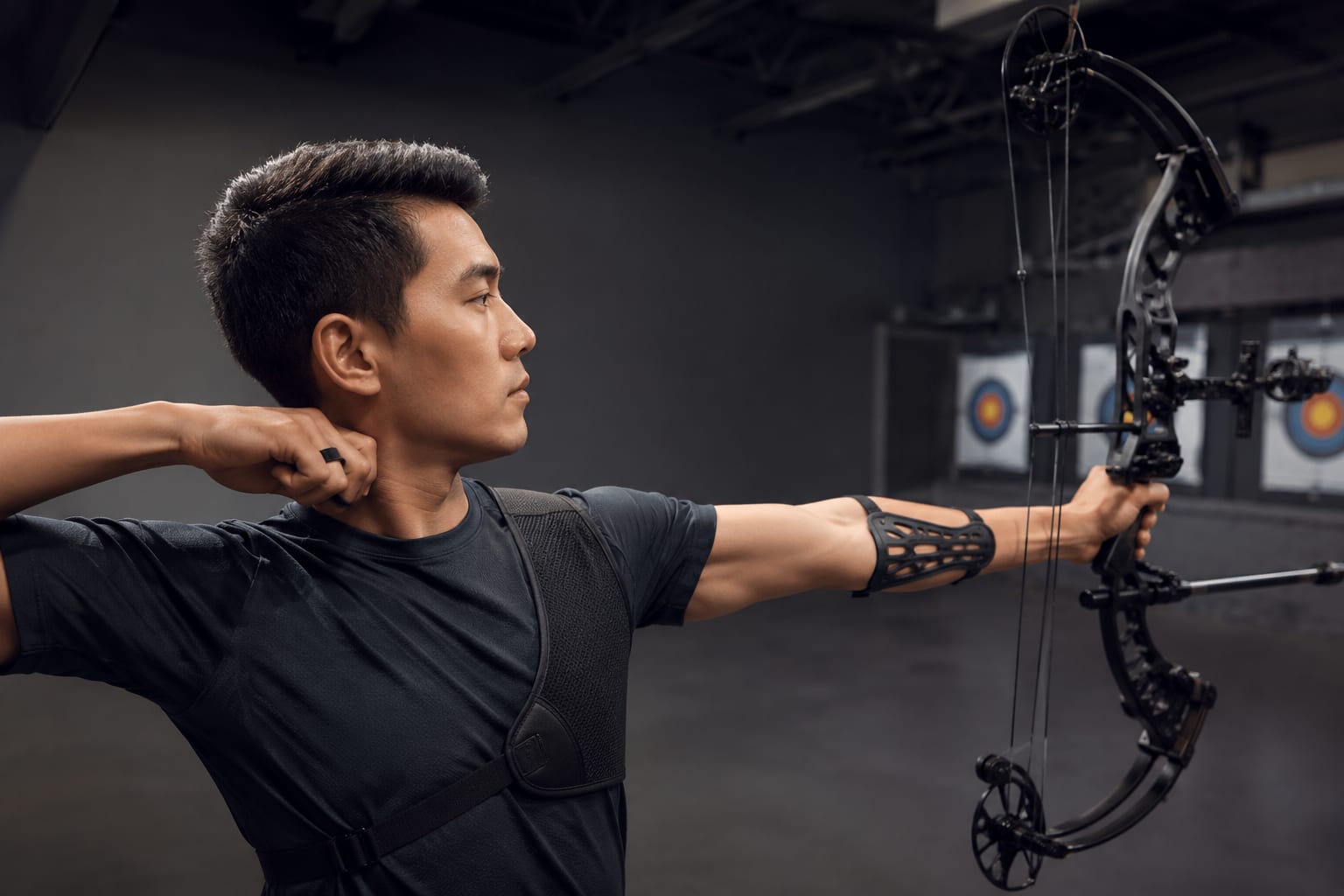
Follow-through in archery refers to maintaining your complete shooting form after the arrow has left the bow until it strikes the target. This means your bow arm stays extended, your release hand remains at or near your anchor point, your head stays in position, and your body alignment doesn’t collapse. The follow-through is not a separate action you perform but rather the natural continuation of proper form throughout the shot cycle.
The follow-through phase typically lasts 2-3 seconds from the moment of release until arrow impact. During this time, the archer should remain as still as a statue, creating what instructors call a “freeze frame” position. This static hold allows you to observe the arrow’s flight path, note any deviations, and ensure that no premature movement disrupted the shot.
Key components of proper follow-through include:
The follow-through reveals the quality of your entire shot sequence. If your form collapses immediately after release, it indicates tension, anticipation, or improper execution earlier in the shot cycle.
Follow-through is critical because the arrow remains in contact with or influenced by the bow for approximately 15-25 milliseconds after you release the string. During this brief window, any movement in your bow arm, torque in your grip, or shift in your body position can deflect the arrow and send it off target. The follow-through ensures you maintain stability during this vulnerable phase when the arrow is most susceptible to disturbance.
Beyond the mechanical benefits, follow-through serves as a diagnostic tool. When you hold your position after the shot, you can feel and observe what your body did during release. A collapsed bow arm, twisted torso, or pulled head becomes immediately apparent. This feedback loop is essential for identifying and correcting form flaws that would otherwise remain hidden.
Specific benefits of proper follow-through:
Archers who skip or rush follow-through typically see larger group sizes and inconsistent point of impact. The difference can be measured: proper follow-through can tighten groups by 2-4 inches at 20 yards for intermediate archers.
You should hold your follow-through position for 2-3 seconds after release, or until the arrow strikes the target, whichever feels more natural for your shooting rhythm. This duration ensures the arrow has completely cleared the bow’s influence zone and allows you to observe the full flight path. Competitive archers often hold slightly longer, around 3-4 seconds, to reinforce consistency under pressure.
The exact duration matters less than the quality of the hold. A genuine 2-second freeze with perfect form beats a sloppy 5-second hold where you’re already collapsing. Beginners should err on the side of holding longer, as this builds the habit of completing each shot rather than rushing to the next arrow.
Factors that influence follow-through duration:
For practice sessions, use a consistent count in your head: “one-thousand-one, one-thousand-two, one-thousand-three.” This creates a rhythm and prevents the common mistake of dropping form the instant you hear the arrow hit the target.
Both release and follow-through are equally critical and interdependent components of accurate shooting. The release initiates arrow flight, while the follow-through ensures nothing disrupts that flight during the critical milliseconds after release. A clean release with poor follow-through will still produce inconsistent results, just as perfect follow-through cannot compensate for a jerky, punched release.
The release is the moment the string leaves your fingers or release aid, ideally happening as a surprise with no conscious trigger pull. The follow-through is what happens immediately after and reveals whether your release was truly clean. If your release hand flies away from your face or your bow arm collapses instantly, your release likely involved tension or anticipation.
How they work together:
Think of release and follow-through as two sides of the same coin. You cannot separate them in practice. Drills that improve release quality simultaneously improve follow-through, and vice versa. Focus on both equally rather than prioritizing one over the other.
The most frequent follow-through error is dropping the bow arm immediately after release, often called “collapsing.” This happens when archers anticipate the shot and relax their bow arm too soon, causing the bow to dip downward while the arrow is still being influenced by the string. This single mistake accounts for more low hits than any other form flaw.
Another common problem is pulling the head away from the string path, usually from fear of being hit by the string or release hand. This head movement changes your eye position relative to the sight or arrow, effectively changing your aim point mid-shot. The result is inconsistent vertical and horizontal placement.
Additional frequent mistakes:
These mistakes often stem from rushing, fatigue, or lack of awareness. Video recording your shooting reveals follow-through flaws that you cannot feel in the moment. Even experienced archers benefit from periodic video analysis to catch subtle form degradation.
Blank bale shooting is the most effective home practice method for building follow-through discipline. Set up a target butt without any aiming point at a distance of 5-10 feet, then shoot while focusing entirely on form rather than accuracy. Without the distraction of trying to hit a specific spot, you can concentrate on holding your follow-through position for a full 3-4 seconds after each release.
Mirror work provides immediate visual feedback without shooting arrows. Stand in front of a full-length mirror in your shooting stance, draw your bow (or use a stretch band), and practice your release and follow-through while watching yourself. This allows you to see exactly what your body does after release and make real-time corrections.
Effective home practice drills:
Practice follow-through separately from accuracy work. Dedicate specific sessions to form reinforcement where you don’t care where the arrow hits. This mental separation prevents the common trap of sacrificing form to chase tighter groups.

Yes, follow-through directly affects accuracy by preventing premature movement during the 15-25 milliseconds the arrow remains influenced by the bow after release. Studies of high-speed archery footage show that even tiny movements in bow arm position or grip pressure during this window can deflect the arrow by several inches at 20 yards. Consistent follow-through eliminates this variable and produces tighter, more predictable groups.
The accuracy impact is measurable. Archers who implement disciplined follow-through typically see group sizes shrink by 20-40% within a few practice sessions. The improvement is most dramatic for intermediate shooters who have decent aim but inconsistent results. Advanced archers already have good follow-through, which is partly why they’re advanced.
How follow-through impacts specific accuracy problems:
The relationship between follow-through and accuracy is so strong that experienced coaches can often diagnose accuracy problems simply by watching an archer’s follow-through position. A bow arm that drops consistently produces consistent low hits; a release hand that flies away produces horizontal stringing.
Beginners should focus on exaggerated, deliberate follow-through holds of 3-4 seconds with conscious attention to each component: bow arm stays up, release hand stays back, head stays still. This overcorrection builds the neural pathways for proper form before bad habits solidify. New archers benefit from verbal cues or a coach saying “hold” after each shot to prevent premature collapse.
Advanced shooters have internalized follow-through to the point where it happens automatically, but they still maintain the same positions. The difference is that experienced archers can feel subtle deviations immediately and self-correct, while beginners often don’t notice they’ve collapsed until they review video. Advanced shooters also integrate follow-through seamlessly into their shot sequence rather than thinking of it as a separate step.
Beginner follow-through priorities:
Advanced shooter refinements:
The progression from beginner to advanced follow-through takes 6-12 months of consistent practice. The technique doesn’t change, but the execution becomes smoother and more reliable. Beginners should not try to rush this process by skipping the deliberate, conscious phase.
Your release hand should end up relaxed and naturally positioned near your face, typically along your jawline or slightly behind your ear, depending on your anchor point and release style. The fingers should be gently curled, not straight or clenched, indicating that you released the string smoothly rather than opening your fingers forcefully. The back of your hand often faces upward or slightly outward.
For finger shooters using a Mediterranean release (three fingers under the arrow), the release hand typically moves backward 2-4 inches along the jaw after release, driven by the string’s forward motion. This backward movement should be smooth and controlled, not a violent snap. Your hand should look relaxed, as if you’re gently touching your face, not pressing hard or pulling away.
Release hand indicators of good form:
Warning signs of poor release:
Take photos or video of your release hand position after several shots. If it looks different each time, your release lacks consistency. If it looks tense or unnatural, you’re likely forcing the release rather than letting it happen.
Yes, professional and Olympic-level archers consistently hold their follow-through for 2-4 seconds after every shot, even in high-pressure competition situations. Watch any Olympic archery final and you’ll see athletes maintain their shooting position until the arrow strikes the target, then smoothly lower their bow. This discipline is one of the distinguishing characteristics that separates elite shooters from recreational archers.
Professional archers hold follow-through not because they’re trying to impress judges but because it works. At the elite level, where winning margins are measured in millimeters, any inconsistency in form translates directly to lost points. The follow-through hold ensures that every shot receives the same mechanical treatment, eliminating a major variable in the accuracy equation.
How professionals use follow-through:
Different archery disciplines show slight variations. Olympic recurve shooters typically hold longer and more deliberately than field archers or traditional shooters, but all competitive archers at high levels maintain some form of follow-through discipline. The principle is universal even if the execution varies.
Shots that consistently go left (for right-handed archers) typically result from torquing the bow grip during or immediately after release. When you twist the bow handle clockwise (from the archer’s perspective) or collapse your bow arm to the left, the bow face rotates and pushes the arrow left. This often happens when you anticipate the shot and tense your bow hand, or when you drop your bow arm prematurely and it falls to the left.
Another common cause is pulling your release hand away from your face in a leftward direction rather than straight back along your jawline. This lateral movement of the release hand can pull the string slightly left during the final milliseconds of arrow contact, deflecting the shot. The problem compounds if you also turn your head or shoulders left to watch the arrow.
Specific causes of left misses related to follow-through:
Corrections to try:
If your shots go right instead of left, the causes are typically the opposite: bow hand torque counterclockwise, bow arm drifting right, or release hand pulling right. The diagnostic process remains the same.
The “hold and count” drill builds follow-through discipline by forcing you to maintain position for a specific duration. After each release, count slowly to three before lowering your bow, regardless of where the arrow hit. This removes the temptation to drop form immediately after a good shot or collapse in frustration after a bad one. Practice this drill at blank bale first, then transfer it to target shooting.
Partner feedback drills provide external accountability. Have a shooting partner watch your follow-through and call out any collapse, head movement, or early bow drop. They should say “hold” after each release and “down” only after you’ve maintained position for 3 seconds. This external cue prevents the unconscious form degradation that happens when you’re focused on aiming.
Additional effective drills:
Dedicate at least 20% of your practice time to form-focused drills rather than accuracy-focused shooting. The investment in follow-through discipline pays dividends in competition when pressure makes it harder to maintain good form.
Yes, follow-through remains important for close shots and instinctive shooting, though it may look slightly different than the extended holds used in Olympic recurve shooting. Even at close range where the arrow reaches the target in a fraction of a second, premature movement can still deflect the shot. The arrow is influenced by the bow for the same 15-25 milliseconds regardless of target distance.
Instinctive shooters and traditional archers typically use a more dynamic follow-through where the bow arm may move slightly and the release hand follows through more naturally rather than freezing in place. However, they still maintain body position and avoid collapsing or dropping the bow until the arrow hits. The principle of “complete the shot” applies across all archery styles.
Follow-through adaptations for different shooting styles:
The closer the shot, the less time you have to observe arrow flight, but the follow-through still serves its primary purpose: preventing premature movement during the critical milliseconds after release. A 5-yard shot still requires follow-through discipline, even if you don’t hold for a full 3 seconds.
Inconsistent follow-through usually stems from lack of a defined shot routine. Create a specific, repeatable sequence that includes follow-through as a non-negotiable final step. Write down your shot sequence, including “hold follow-through for 3 seconds” as the second-to-last step (before “lower bow and assess shot”). Practice this sequence on every arrow until it becomes automatic.
Video analysis reveals inconsistency that you cannot feel. Record 10-20 shots and watch them back-to-back, specifically observing your follow-through position. Note which shots show good holds and which show collapse, then correlate those observations with arrow placement. This visual feedback creates awareness that translates to better kinesthetic sense during shooting.
Strategies to build consistency:
Common causes of inconsistency and fixes:
| Cause | Fix |
|---|---|
| Rushing shots | Implement mandatory pause between shots |
| Fatigue | Reduce arrow count per session; focus on quality |
| Lack of awareness | Video every practice session for first month |
| No defined routine | Write down shot sequence and memorize it |
| Pressure/competition nerves | Practice follow-through under simulated pressure |
| Boredom with form work | Vary drills but maintain follow-through focus |
Consistency develops over weeks and months, not days. Expect gradual improvement rather than instant transformation. Track your follow-through quality in a shooting journal, rating each practice session on a 1-10 scale for follow-through discipline.
How long should I hold my follow-through after releasing an arrow?
Hold your follow-through position for 2-3 seconds after release, or until the arrow strikes the target. This ensures the arrow has completely cleared the bow’s influence and allows you to observe the full flight path for diagnostic purposes.
Can poor follow-through cause my arrows to hit low?
Yes, dropping your bow arm immediately after release is the most common cause of low arrow impacts. The bow arm collapse happens while the arrow is still being influenced by the bow, causing it to angle downward.
Should my release hand move after I let go of the string?
Your release hand should move naturally backward 2-4 inches along your jawline, driven by the string’s forward motion. This movement should be smooth and relaxed, not forced or jerky, with fingers naturally curled.
Do I need to hold follow-through on every practice shot?
Yes, maintaining follow-through on every shot builds muscle memory and consistency. Skipping follow-through on practice shots creates bad habits that will appear during competition or hunting situations when you need reliability most.
What’s the difference between follow-through and holding at full draw?
Holding at full draw is the pause before release when you’re aiming and preparing to shoot. Follow-through is maintaining your shooting position after release until the arrow hits the target. Both are important but serve different purposes in the shot sequence.
Why do I automatically drop my bow arm after shooting?
Automatic bow arm collapse usually indicates anticipation of the shot or tension during the release. Your body is reacting to the expected recoil rather than maintaining form. Blank bale practice and conscious focus on holding position can retrain this response.
Is follow-through more important for recurve or compound bows?
Follow-through is equally important for both recurve and compound bows. While compound bows have let-off and release aids that change the feel of the shot, the arrow is still influenced by the bow for the same critical milliseconds after release.
How can I remember to hold my follow-through during competition?
Incorporate follow-through into your pre-shot routine as a non-negotiable step. Use a mental cue like counting “one, two, three” after each release, or visualize holding position as part of your shot sequence before you even draw the bow.
Should beginners focus on follow-through or aiming first?
Beginners should develop follow-through discipline from their very first shots, even before worrying about accuracy. Good follow-through is easier to learn initially than to fix later after bad habits have formed. Practice form at blank bale before introducing aiming.
Can I practice follow-through without shooting arrows?
Yes, you can practice follow-through using resistance bands or a bow trainer, going through your full draw and release sequence while focusing on holding position. Mirror work also helps you see and feel proper follow-through position without shooting.
What does it mean if my follow-through position changes from shot to shot?
Inconsistent follow-through position indicates lack of a repeatable shot routine or loss of focus during the shot sequence. This inconsistency directly translates to inconsistent arrow placement. Video analysis and deliberate practice of a defined routine will improve consistency.
Do Olympic archers really hold their follow-through that long?
Yes, Olympic and professional archers consistently hold follow-through for 2-4 seconds on every competitive shot. This discipline is one of the key factors that separates elite shooters from recreational archers and contributes significantly to their consistency under pressure.
Mastering how to follow through after the shot is essential for consistent, accurate archery at any skill level. The follow-through is not an afterthought but an integral part of the shot sequence that prevents premature movement during the critical milliseconds when the arrow is still influenced by the bow. By maintaining bow arm extension, keeping your release hand near your face, and holding your head position steady for 2-3 seconds after release, you eliminate a major source of inconsistency and create a diagnostic window to identify form flaws.
The path to reliable follow-through starts with awareness and deliberate practice. Implement blank bale shooting sessions focused entirely on form rather than accuracy, use video analysis to reveal unconscious collapse or movement, and develop a non-negotiable shot routine that includes follow-through as a mandatory final step. Whether you’re a beginner building foundational habits or an advanced archer refining consistency, dedicating practice time specifically to follow-through discipline will tighten your groups and improve your shooting percentage.
Start your next practice session with a simple commitment: hold every follow-through for a full 3 seconds, regardless of where the arrow hits. This single change, practiced consistently over several weeks, will transform your shooting more than any equipment upgrade or aiming technique adjustment. The follow-through is where good shots are preserved and bad habits are revealed. Make it a priority, and watch your archery reach new levels of consistency and accuracy.


