
Newsletter Subscribe
Enter your email address below and subscribe to our newsletter

All voices matter
All voices matter

 ByTravis
A well-maintained compound bow typically lasts 15 to 25 years or more, though strings, cables, and cams need replacing every 2-5 years depending on use.
Affiliate Disclaimer: We are a participant in the Amazon Services LLC Associates Program, an affiliate advertising program designed to provide a means for sites to earn advertising fees by advertising and linking to Amazon.com. As an Amazon Associate I earn from qualifying purchases. We also participate in other affiliate programs.

Quick Answer: A well-maintained compound bow typically lasts 15 to 25 years or longer, with the frame and limbs often outlasting other components. However, strings, cables, and cams require replacement every 2-5 years depending on usage, while the riser (main frame) can last indefinitely if not damaged. Proper storage, regular maintenance, and shooting frequency determine whether your bow reaches the upper end of this range or needs replacement sooner.
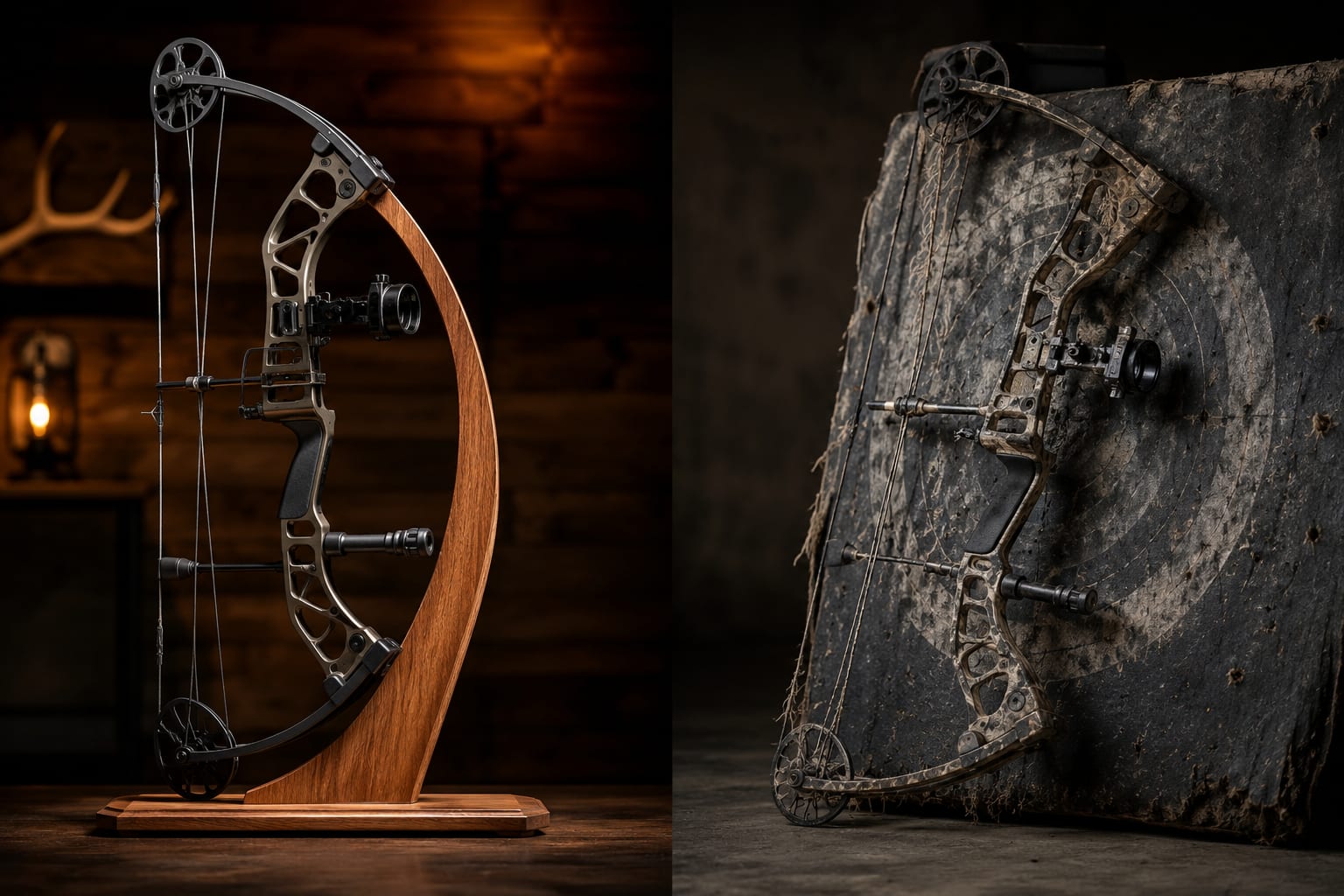
The average compound bow lasts between 15 and 25 years when properly maintained, though many quality bows continue performing well beyond three decades. The riser (main frame) and limbs represent the most durable components, often lasting the lifetime of the archer, while consumable parts like strings, cables, and bearings require periodic replacement.
Several factors influence this lifespan range:
Usage intensity plays the biggest role. A bow shot 50 times per year will last significantly longer than one used for 5,000 shots annually. Tournament archers who practice daily may need to replace components every 1-2 years, while recreational hunters shooting a few dozen arrows per season can expect their bow to last 20+ years with minimal part replacement.
Storage conditions dramatically affect longevity. Bows stored in climate-controlled environments away from direct sunlight, extreme temperatures, and humidity last considerably longer than those kept in hot garages, damp basements, or vehicle trunks where temperature swings stress materials.
Build quality and materials create the foundation for longevity. Modern compound bows use aluminum or carbon risers that resist corrosion and maintain structural integrity for decades. Limbs made from composite materials (fiberglass, carbon fiber) maintain their flex characteristics longer than older wood or basic fiberglass designs.
Common mistake: Many archers assume their bow is “worn out” when only the strings need replacement. Before retiring a bow, have a professional inspect the riser, limbs, and cams, these components rarely fail and often have decades of life remaining even when strings show wear.
Compound bow strings and cables typically last 2 to 5 years or approximately 2,500 to 5,000 shots before requiring replacement. Serious target archers often replace strings annually, while recreational hunters may go 3-5 years between replacements depending on shot count and maintenance habits.
Signs your strings need replacement:
Factors that shorten string life:
Choose string replacement if: You shoot more than 50 times per month, notice any fraying, or your bow hasn’t had new strings in 3+ years. The $75-150 investment in quality replacement strings far outweighs the risk of string failure during a shot, which can cause injury and damage your bow.
Compound bows and recurve bows offer different durability profiles, with recurve bows having fewer parts that can fail but compound bows providing better long-term structural longevity. A quality recurve bow can last 30-50 years with minimal maintenance, while a compound bow’s mechanical components require more attention but the frame itself often outlasts recurve limbs.
Durability comparison:
| Aspect | Compound Bow | Recurve Bow |
|---|---|---|
| Main structure lifespan | 20-30+ years | 30-50+ years |
| Limb replacement frequency | 10-20 years | 5-15 years (more stress) |
| String replacement | Every 2-5 years | Every 2-4 years |
| Moving parts | Cams, bearings, cables (need maintenance) | None (simpler design) |
| Maintenance requirements | Moderate to high | Low |
| Failure points | Multiple (strings, cables, cams, bearings) | Primarily limbs and string |
| Storage sensitivity | Moderate (mechanical parts) | Low (fewer components) |
Compound bow advantages:
Recurve bow advantages:
Decision rule: Choose a compound bow if you want consistent performance with periodic maintenance, or a recurve if you prefer simplicity and minimal upkeep. For longevity, both can last decades, but compounds require more attention to mechanical components while recurves demand careful limb inspection.
Replacing compound bow components ranges from $75 for strings to $400+ for limbs, with most maintenance falling in the $100-250 range for typical wear items. Understanding replacement costs helps you budget for long-term bow ownership and decide whether repair or replacement makes financial sense for older bows.
Component replacement costs (2026 estimates):
Labor costs for professional service:
When replacement makes sense: If your bow is worth less than $300 and needs limbs ($200+) plus strings ($100+), investing $300+ in repairs rarely makes financial sense. However, for quality bows worth $600+, spending $200-300 on maintenance every few years preserves a valuable piece of equipment.
Common mistake: Delaying string replacement to save $100-150 often results in string failure that damages cams ($200+) or limbs ($300+), turning a $150 maintenance item into a $500+ repair bill.
Your compound bow needs replacement when you notice structural damage to the riser or limbs, persistent accuracy problems after professional tuning, or when repair costs exceed 50-60% of the bow’s current value. While most components can be replaced, certain failures indicate the bow has reached the end of its safe, usable life.
Critical warning signs requiring immediate replacement:
Performance indicators:
Safety considerations:
Bows showing structural damage pose serious injury risks. A catastrophic limb or riser failure during draw can cause severe facial injuries, broken bones, or eye damage. Never shoot a bow with visible cracks, regardless of how minor they appear.
Choose replacement if: Your bow is 15+ years old with multiple worn components, discontinued parts are unavailable, or total repair costs approach the price of a new entry-level bow ($400-500). Modern bows offer significant performance improvements that often justify upgrading even when repairs are technically possible.
Yes, a compound bow can easily last 20 years or longer with proper care, regular maintenance, and appropriate storage. Many archers successfully shoot bows that are 25-30 years old, and the main structural components (riser and limbs) often remain functional for 40+ years when well-maintained.
Essential care practices for 20+ year lifespan:
Storage requirements:
Maintenance schedule:
Usage practices:
Real-world example: Many tournament archers from the 1990s still shoot Hoyt, Mathews, and PSE models from that era for recreational purposes. While they’ve replaced strings multiple times and possibly cams or limbs once, the core bow remains functional and safe after 25-30 years.
Decision rule: If you shoot fewer than 2,000 times per year, store properly, and maintain regularly, expect your quality compound bow to last 20-30 years. Budget an additional $100-200 every 2-3 years for consumable parts (strings, cables) and your bow will likely outlast your interest in the sport.

Compound bows wear out faster due to excessive shot volume, improper storage conditions, lack of maintenance, and shooting practices that stress components beyond design limits. Understanding these accelerating factors helps you avoid premature wear and maximize your bow’s lifespan.
Primary wear accelerators:
Environmental factors:
Usage patterns:
Maintenance neglect:
Shooting mistakes:
Common mistake: Many archers believe expensive bows don’t need maintenance. Premium bows use advanced materials that still require regular care, neglecting a $1,200 bow accelerates wear just as quickly as ignoring a $400 model.
Compound bows should receive professional service every 6 to 12 months for regular shooters (1,000+ shots annually) or annually for recreational archers who shoot occasionally. Tournament competitors and serious hunters benefit from pre-season tune-ups, while casual shooters can extend service intervals to 18 months if they perform basic maintenance themselves.
Service schedule by usage level:
Heavy use (3,000+ shots/year):
Moderate use (1,000-3,000 shots/year):
Light use (under 1,000 shots/year):
What professional service includes:
DIY maintenance between services:
Choose professional service if: You notice any performance changes, hear unusual noises, see visible wear, or haven’t had service in 12+ months. The $40-75 investment in professional inspection prevents costly repairs and ensures safe operation.
Expensive compound bows typically last 5 to 10 years longer than budget models due to superior materials, better manufacturing tolerances, and more durable components. A premium bow ($800-1,500) often remains functional for 25-30+ years, while budget bows ($300-500) average 15-20 years before major component failures or obsolescence make replacement more practical than repair.
Quality differences that affect longevity:
Materials:
Manufacturing precision:
Component quality:
Replacement part availability:
Performance over time:
Premium bows maintain their original performance characteristics longer. After 10 years, a quality bow with new strings often shoots nearly as well as when new, while budget bows may show accuracy decline, increased noise, or tuning difficulties even with fresh strings.
Value consideration: A $1,000 bow lasting 25 years costs $40/year, while a $400 bow lasting 15 years costs $27/year. However, the premium bow typically offers better performance, easier maintenance, and higher resale value, often making it the better long-term investment for serious archers.
Decision rule: Choose a premium bow if you plan to shoot regularly for 10+ years, want consistent performance, and value long-term reliability. Budget bows work well for beginners uncertain about long-term commitment or casual shooters who won’t stress components heavily.
Several common mistakes dramatically shorten compound bow lifespan, with dry firing, storage neglect, and deferred maintenance topping the list. Avoiding these errors can extend your bow’s functional life by 5-10 years and prevent costly repairs or premature replacement.
Critical mistakes to avoid:
1. Dry firing (releasing without an arrow)
2. Storing in extreme environments
3. Neglecting string maintenance
4. Ignoring warning signs
5. Over-tightening limb bolts
6. Using damaged arrows
7. Improper transportation
8. DIY repairs beyond skill level
9. Shooting maximum draw weight constantly
10. Skipping professional inspections
Most costly mistake: Continuing to shoot a bow with visible damage “just one more time.” A $150 string replacement becomes a $500+ repair when delayed string failure damages cams and limbs.
A 10-year-old compound bow is generally safe to shoot if it has been properly maintained, shows no structural damage, and passes professional inspection. However, bows of this age should receive thorough examination by a certified technician before continued use, with particular attention to limbs, strings, and cam condition.
Safety inspection checklist for older bows:
Critical safety checks:
Performance indicators:
When a 10-year-old bow is safe:
When to retire a 10-year-old bow:
Manufacturer recommendations:
Most bow manufacturers don’t specify retirement ages but recommend periodic inspection. Some suggest replacing limbs every 10-15 years regardless of appearance, while others state properly maintained bows have indefinite lifespans for the main structure.
Decision rule: Have any bow 10+ years old inspected by a certified bow technician before shooting. The $40-60 inspection cost provides peace of mind and prevents potential injury from undetected damage. If the bow passes inspection and receives fresh strings, it’s likely safe for continued use.
Compound bow cams typically last 10 to 15 years or longer with proper maintenance and lubrication, often outlasting multiple sets of strings and cables. The cam bodies themselves rarely fail, but bearings, bushings, and cam grooves show wear that eventually requires replacement or refurbishment.
Cam component lifespan:
Cam bodies (aluminum or composite):
Bearings and bushings:
String grooves:
Signs your cams need attention:
Maintenance to extend cam life:
Replacement costs and availability:
Cam replacement costs $100-300 per cam depending on model. Premium brands typically stock cams for 10-15 years after discontinuation, while budget brands may have limited availability after 5 years. Some older models require complete cam system replacement rather than individual cams.
Choose cam replacement if: You notice persistent wobble, hear grinding noises, see visible cracks, or experience chronic timing issues. Worn cams affect accuracy and can damage strings, making timely replacement important for performance and safety.
Beginners should replace their first compound bow when they’ve outgrown its draw weight or draw length specifications, developed consistent form that reveals the bow’s performance limitations, or when they’ve committed to archery long-term and want features their starter bow lacks. Most beginners upgrade after 1-3 years, though a quality first bow can serve well for 5+ years if properly fitted initially.
Signs it’s time to upgrade:
Physical outgrowth:
Skill development:
Commitment indicators:
When to keep your first bow:
Upgrade timing strategies:
Year 1: Keep first bow unless it’s clearly wrong size or extremely low quality Year 2-3: Upgrade if you’re shooting regularly and have clear goals Year 4+: If first bow still fits and performs, no urgent need to replace
Smart upgrade approach:
Budget consideration: A well-fitted $500 bow that matches your current needs outperforms a poorly-fitted $1,000 bow. Focus on proper fit and features rather than price alone.
Decision rule: Replace your first bow when physical changes make it unshootable, when your skills clearly exceed its capabilities, or when specific goals require features it lacks. Otherwise, invest in quality arrows, professional coaching, and practice time, these improve performance more than equipment upgrades for developing archers.
Leaving a modern compound bow strung does not damage it over time, as these bows are designed to remain under tension indefinitely. Unlike traditional recurve or longbows, compound bow limbs experience relatively constant stress whether strung or unstrung due to the limb bolt pre-load, making storage while strung perfectly safe for the bow’s lifespan.
Why compound bows differ from traditional bows:
Limb stress mechanics:
Design considerations:
Storage recommendations:
Safe to leave strung:
Consider unstringing for:
Actual risks of leaving strung:
The primary risks aren’t limb damage but practical concerns:
Unstringing process:
Compound bows require a bow press to safely remove strings, not a casual process like unstringing a recurve. This mechanical requirement makes frequent stringing/unstringing impractical and unnecessary.
Manufacturer positions:
Major manufacturers (Hoyt, Mathews, PSE, Bowtech) state their bows can remain strung indefinitely without damage. Warranty terms don’t require unstringing for storage, confirming this practice doesn’t void coverage.
Common misconception: Many archers believe unstringing extends limb life significantly. While theoretically true, the practical difference is negligible, perhaps months added to a 20-year lifespan, and doesn’t justify the hassle and cost of frequent bow press use.
Decision rule: Leave your compound bow strung during active shooting seasons and between regular use. Unstring only for extended storage (6+ months), shipping, or if manufacturer specifically recommends it for your model. Focus maintenance efforts on string care, which affects longevity far more than strung vs. unstrung storage.
How many shots can a compound bow handle before wearing out?
A quality compound bow can handle 50,000 to 100,000+ shots over its lifetime before the riser or limbs show significant wear, though strings require replacement every 2,500-5,000 shots and other components need periodic service. The main structure typically outlasts the archer’s interest rather than wearing out from shot count alone.
Can you rebuild an old compound bow to make it last longer?
Yes, you can rebuild an old compound bow by replacing strings, cables, cams, limbs, and bearings to extend its functional life by 10-15 years. However, rebuilding only makes economic sense for quality bows worth $600+ or models with sentimental value, as costs can reach $300-500 for complete component replacement.
What’s the most common reason compound bows fail prematurely?
String failure from lack of maintenance is the most common reason compound bows fail prematurely, often leading to secondary damage to cams and limbs when strings break during draw or release. Regular string waxing and timely replacement every 2-5 years prevents most premature bow failures.
Do compound bows lose power as they age?
Compound bows typically lose 2-5% of draw weight over 10-15 years due to limb material relaxation and component wear, though this loss is gradual and often imperceptible to shooters. Fresh strings and proper limb bolt adjustment can restore most lost performance, making age-related power loss minimal for well-maintained bows.
Should I buy a used compound bow that’s 5 years old?
A 5-year-old used compound bow is an excellent purchase if it’s from a quality brand, shows no structural damage, and is priced 40-60% below original retail. Have a pro shop inspect it before purchase ($30-50) and budget $100-150 for fresh strings to ensure safe, reliable performance.
How do I know if my compound bow limbs are still good?
Compound bow limbs are still good if they show no visible cracks, delamination, or splintering, draw smoothly without unusual noises, and maintain consistent performance after tuning. Any visible damage, stress marks near limb pockets, or changes in draw weight indicate limbs need professional inspection or replacement.
What happens if I shoot a compound bow with old strings?
Shooting a compound bow with old strings risks sudden string failure that can cause facial injuries, damage cams and limbs, and potentially destroy the bow. Old strings (5+ years or showing fraying) should be replaced immediately, as the $100-150 replacement cost is minimal compared to injury risk and potential $500+ repair bills.
Can extreme cold damage a compound bow?
Extreme cold (below 0°F) can make compound bow materials brittle and increase breakage risk, particularly for strings and cables. Allow cold bows to warm gradually to room temperature before shooting, and avoid leaving bows in freezing vehicles overnight to prevent material stress and potential damage.
How long do compound bow limbs last before replacement?
Compound bow limbs typically last 15 to 25 years before requiring replacement, with many quality limbs remaining functional for 30+ years under normal use. Limbs usually outlast multiple string sets and other components, requiring replacement only after structural damage, material fatigue, or when pursuing performance upgrades.
Is it worth repairing a 15-year-old compound bow?
Repairing a 15-year-old compound bow is worth it if the bow is a quality model worth $600+ when new, replacement parts are available, and repair costs stay under 40-50% of a comparable new bow’s price. For budget bows or those requiring extensive repairs ($400+), replacement with a modern model usually offers better value.
Do compound bows need to be stored in cases?
Compound bows don’t require case storage when kept indoors but benefit from cases for protection during transport and storage in uncontrolled environments. Wall-mounted storage in climate-controlled spaces works well for home storage, while padded hard cases prevent damage during vehicle transport and protect against temperature extremes.
What’s the difference in lifespan between aluminum and carbon risers?
Aluminum and carbon risers offer similar 20-30+ year lifespans when properly maintained, with aluminum being slightly more durable against impact damage while carbon offers better vibration damping and weight savings. Both materials resist corrosion and maintain structural integrity indefinitely under normal use, making material choice more about performance preferences than longevity.
A well-maintained compound bow can serve you faithfully for 20 to 30 years or more, with the main structure often outlasting your involvement in the sport. The key to maximizing your bow’s lifespan lies in regular maintenance, proper storage, and timely replacement of wear items like strings and cables every 2-5 years.
Take these actions to extend your bow’s life:
Remember that most compound bows don’t “wear out” in the traditional sense, they become obsolete or are replaced by choice rather than necessity. The riser and limbs can last decades, while consumable parts like strings require periodic replacement regardless of bow age.
Whether you’re shooting a brand-new flagship model or a quality bow from 15 years ago, proper care and maintenance matter more than age. Schedule that professional inspection, replace those worn strings, and your compound bow will reward you with reliable performance for decades to come.


