Newsletter Subscribe
Enter your email address below and subscribe to our newsletter

All voices matter
All voices matter
 ByTravis
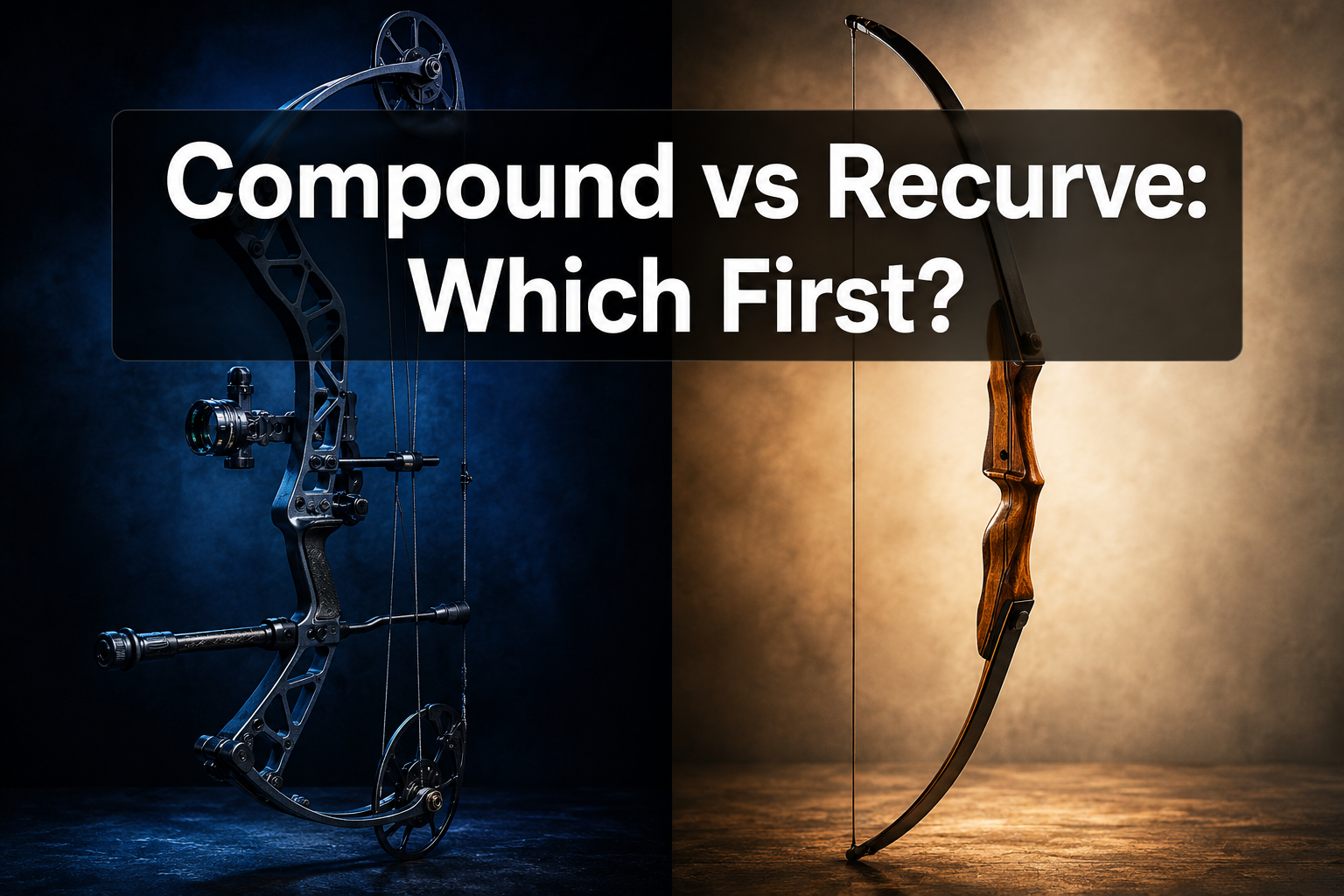
Discover whether compound or recurve bows are better for beginners. Compare costs, learning curves, maintenance, and find which bow type matches your archery goals.
Affiliate Disclaimer: We are a participant in the Amazon Services LLC Associates Program, an affiliate advertising program designed to provide a means for sites to earn advertising fees by advertising and linking to Amazon.com. As an Amazon Associate I earn from qualifying purchases. We also participate in other affiliate programs.
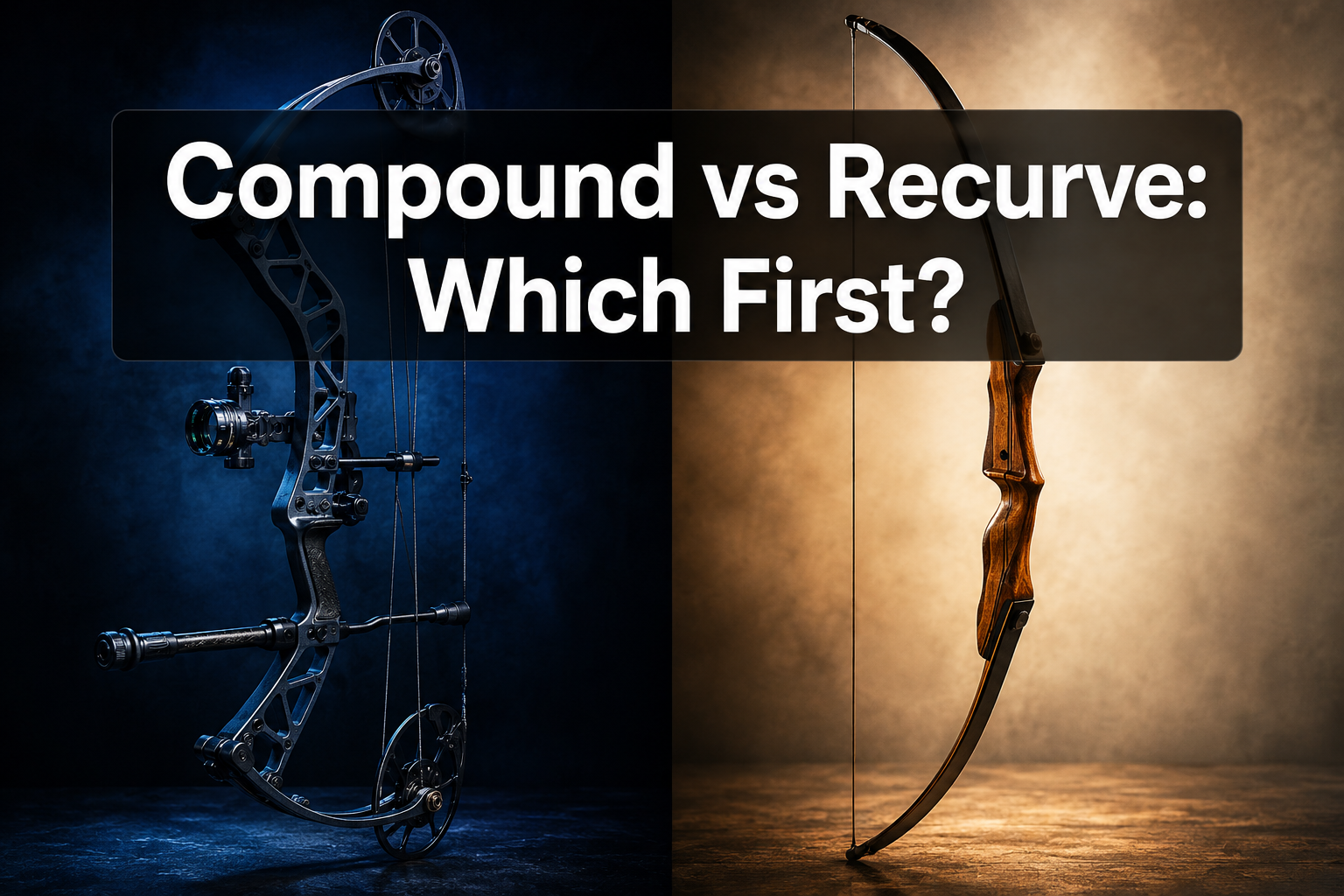
Quick Answer: Most archery instructors recommend beginners start with a recurve bow because it teaches fundamental form, requires no mechanical maintenance, costs less upfront, and builds the muscle memory that transfers to any bow style. Compound bows offer easier accuracy and less physical strain but can mask poor technique. Your choice depends on your goals: recurve for Olympic-style target archery or traditional shooting, compound for hunting or competitive target archery with let-off assistance.
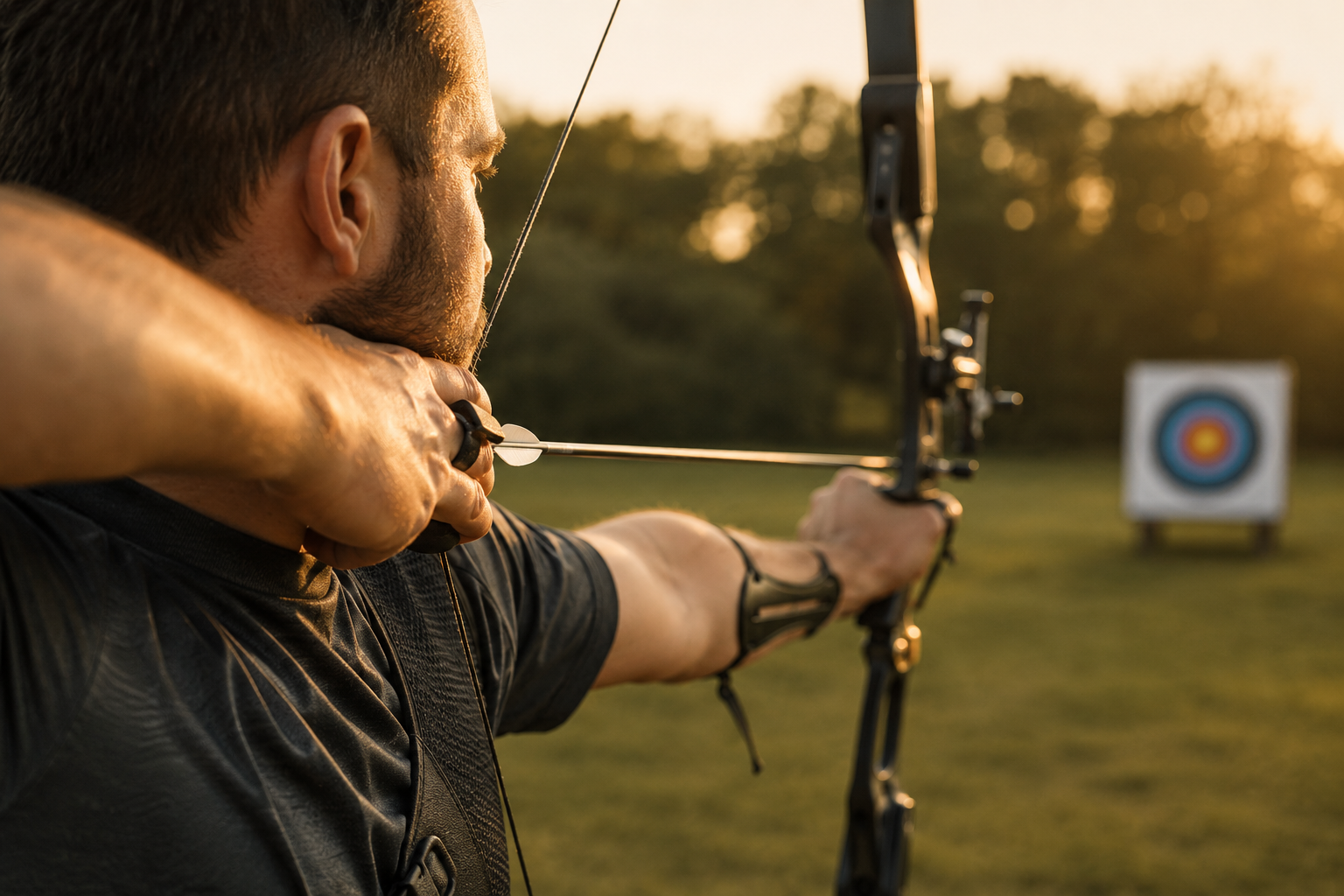
Compound bows use a system of cables, pulleys (cams), and eccentric wheels that create mechanical advantage, allowing archers to hold significantly less weight at full draw through “let-off.” Recurve bows feature curved limbs that bend away from the archer, storing energy through limb flex alone with no mechanical assistance.
The mechanical differences create distinct shooting experiences:
Compound bow characteristics:
Recurve bow characteristics:
The compound’s mechanical advantage makes it easier to aim steadily because you’re holding less weight, but the recurve’s simplicity means fewer things can go wrong and less maintenance.
Recurve bows are generally easier for absolute beginners to learn because they have fewer moving parts, require no tuning or maintenance, and provide immediate feedback on shooting form. Compound bows are easier to shoot accurately once set up properly, but they can mask poor technique that will limit long-term progress.
Why recurve is recommended for learning:
When compound makes sense for beginners:
A common mistake beginners make is choosing compound first for the “easier accuracy,” then struggling to improve beyond a plateau because the let-off system allowed them to develop inconsistent form. The bow compensates for technique flaws that would be obvious with a recurve.
Beginner recurve bow packages typically cost $150-400 and include the riser, limbs, string, arrow rest, and basic accessories. Entry-level compound bow packages range from $300-600 and include the bow, sights, arrow rest, quiver, and sometimes arrows, with additional costs for release aids ($20-80) and professional setup ($50-100).
Recurve cost breakdown:
| Item | Price Range |
|---|---|
| Entry recurve package (riser + limbs) | $150-300 |
| Arrows (6-12) | $40-80 |
| Finger tab or glove | $10-25 |
| Arm guard | $10-20 |
| Basic sight (optional) | $30-60 |
| Total startup cost | $210-485 |
Compound cost breakdown:
| Item | Price Range |
|---|---|
| Entry compound package | $300-500 |
| Release aid | $20-80 |
| Arrows (6-12) | $50-100 |
| Professional setup/tuning | $50-100 |
| Arm guard | $10-20 |
| Total startup cost | $430-800 |
Beyond initial purchase, recurve bows require minimal maintenance, replace the string every 1-2 years ($15-30) and occasionally replace an arrow rest ($5-15). Compound bows need string and cable replacement every 2-3 years ($80-150 installed), cam timing checks, and periodic professional tuning to maintain accuracy.
For budget-conscious beginners, recurve offers a lower financial commitment while learning whether archery will become a long-term pursuit.
Olympic archery exclusively uses recurve bows because the International Olympic Committee and World Archery Federation established recurve as the standard to emphasize athletic skill, consistency, and technique over mechanical advantage. The recurve format tests the archer’s physical conditioning, mental focus, and ability to execute perfect form under pressure without assistance from let-off systems.
The Olympic recurve discipline requires:
Olympic recurve archers use stabilizers, sights, and clickers (draw-check devices), but the fundamental challenge remains executing consistent technique while holding full draw weight. This creates a pure test of athletic ability that aligns with Olympic values.
Compound archery has its own competitive circuits, including World Archery Championships and the World Games, but it remains separate from the Olympic program. Many archers compete in both disciplines, but the skills are distinct enough that specialization typically produces better results.
Switching from recurve to compound is straightforward and typically takes 2-4 weeks to adjust to the mechanical differences, while maintaining the fundamental form and muscle memory developed with recurve. Archers who start with recurve generally transition to compound more successfully than those who attempt the reverse because recurve builds the foundational technique that compound shooting relies upon.
What transfers from recurve to compound:
What requires adjustment:
Many successful compound archers started with recurve, including numerous professional hunters and 3D competition shooters. The reverse transition (compound to recurve) is more challenging because compound’s let-off can allow inconsistent form that becomes painfully obvious when switching to recurve’s constant draw weight.
If you’re uncertain about your long-term archery goals, starting with recurve provides the most flexibility to explore different disciplines later without relearning fundamental technique.
Compound bows dominate modern hunting because their let-off allows hunters to hold at full draw while waiting for the perfect shot angle, their faster arrow speeds provide flatter trajectories for accurate range estimation, and their mechanical advantage enables use of heavier draw weights for better penetration. Recurve bows are legal and effective for hunting but require more skill, closer shots (typically under 25 yards), and greater physical conditioning.
Compound advantages for hunting:
Recurve advantages for hunting:
Most state wildlife agencies require minimum draw weights for hunting (typically 35-40 pounds for deer), which both bow types can achieve. However, compound bows make it easier to practice with hunting-weight equipment because you’re only holding 20-30 pounds at full draw during aiming.
Recurve hunting requires dedication to practice, excellent stalking skills to get within effective range, and the discipline to pass on marginal shots. Compound hunting is more forgiving and accessible for hunters who want archery season opportunities without years of traditional archery training.
Compound bows require more strength to initially draw back to full draw, but significantly less strength to hold steady while aiming due to 60-80% let-off. Recurve bows require less strength to begin the draw but demand constant muscle engagement to hold the full draw weight throughout the aiming process, making them more physically demanding overall.
Strength comparison:
For a 40-pound draw weight bow:
Physical demands of each:
Compound shooting:
Recurve shooting:
Beginners often start with 15-25 pound recurves or 30-40 pound compounds. The recurve’s lower starting weight allows new archers to focus on form without struggling to hold the bow steady. Compound’s let-off means beginners can use hunting-weight bows (40-50 pounds) sooner in their development.
A common mistake is choosing too heavy a draw weight for either bow type. Start lighter than you think necessary, you can always upgrade limbs (recurve) or adjust poundage (compound) as strength develops. Poor form from overbowing causes more missed shots than slightly lower arrow speed.
The most common mistakes new recurve archers make include gripping the bow handle too tightly (causing torque and left-right misses), inconsistent anchor points (changing where the string touches the face), and collapsing the bow arm immediately after release instead of maintaining follow-through. These errors are interconnected, tension in the bow hand often stems from inadequate back tension and poor alignment.
Critical mistakes to avoid:
1. Death grip on the bow handle
2. Inconsistent anchor point
3. Peeking at the arrow
4. Using arm muscles instead of back
5. Choosing too heavy a draw weight
6. Skipping the bow sling
New recurve archers should film themselves shooting or work with a coach for the first 500-1000 arrows. Bad habits formed early become deeply ingrained and difficult to correct later.
Compound bows require significantly more maintenance than recurve bows, including regular string and cable inspection, cam timing verification, rest and sight adjustments, and periodic professional tuning to maintain accuracy. Recurve bows need only occasional string replacement and simple limb bolt adjustments that most archers can perform themselves.
Compound maintenance requirements:
Regular tasks (every 500-1000 shots):
Annual or as-needed:
Recurve maintenance requirements:
Regular tasks (every 1000-2000 shots):
Annual or as-needed:
The compound’s complexity means more can go wrong. Cables can stretch unevenly, cams can go out of time, and the bow can become unshootable until professionally serviced. A recurve with a broken string can be restrung in the field with a spare string and a bow stringer.
For archers who enjoy tinkering and learning bow mechanics, compound maintenance can be rewarding. For those who want to focus on shooting rather than equipment, recurve’s simplicity is a major advantage.
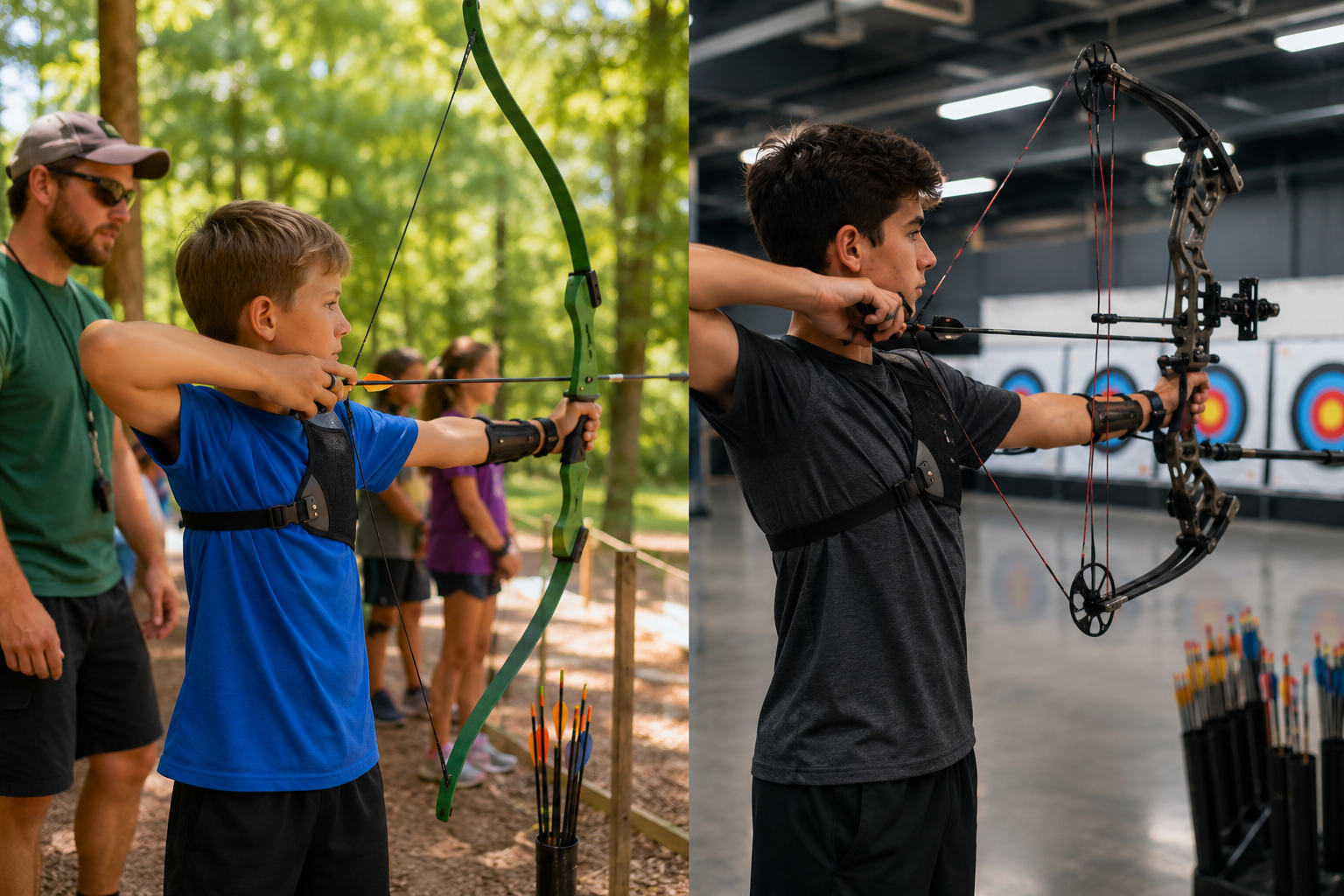
Children typically start with recurve bows between ages 6-8 because they’re lighter, simpler to operate, and easily adjustable as the child grows, while compound bows are generally introduced around ages 12-14 when the child has sufficient strength for the draw cycle and coordination for release aids. The child’s physical development, interest level, and supervision availability matter more than age alone.
Recurve for younger children (6-11 years):
Advantages:
Recommended specs:
Compound for older children (12+ years):
Advantages:
Recommended specs:
Decision factors beyond age:
The National Archery in Schools Program (NASP) uses Genesis compound bows with no let-off, which bridges the gap between recurve and compound by teaching proper form while introducing mechanical bows. This can be an excellent middle ground for 10-12 year olds.
Never rush a child into compound just because it seems more advanced. Recurve builds better fundamentals, and children who master recurve first typically transition to compound more successfully in their teens.
Starting with compound bow can allow bad habits to develop because the let-off system and mechanical release mask form inconsistencies that would be immediately obvious with recurve, particularly issues with back tension, anchor consistency, and follow-through. However, with proper instruction and awareness, beginners can learn correct technique on compound from the start.
Habits compound can hide:
1. Inconsistent anchor point
2. Punching the trigger
3. Lack of follow-through
4. Poor bow arm structure
5. Grip pressure
Preventing bad habits on compound:
Many successful compound archers learned on compound from the start. The key is intentional focus on technique rather than just hitting the target. If you’re self-teaching, compound’s ability to hide mistakes becomes a liability. With coaching, either bow type can build solid fundamentals.
Recurve bows are generally better for backyard target practice because they’re quieter (important for neighbor relations), require less space due to lower arrow speeds, need minimal setup and maintenance, and allow quick shooting sessions without extensive equipment preparation. Compound bows work well for backyard practice if you have adequate space (30+ yards) and noise isn’t a concern.
Recurve advantages for backyard shooting:
Compound advantages for backyard shooting:
Space and safety considerations:
Minimum safe distances:
Backstop requirements:
Noise management:
Recurve bows produce 70-80 decibels at the shooting line (similar to normal conversation). Compound bows produce 85-95 decibels (similar to lawnmower at distance). Adding string silencers and limb dampeners reduces noise for both types.
If your backyard is small (under 30 yards deep) or you have close neighbors, recurve is the more practical choice. Many suburban archers practice recurve in the backyard and shoot compound at ranges or in competition.
Check local ordinances before setting up backyard archery, some municipalities restrict bow use within city limits or require specific setback distances from property lines.
Most archers achieve consistent accuracy at 20 yards (6-inch groups) within 3-6 months with compound bows versus 6-12 months with recurve bows, assuming regular practice of 2-3 sessions per week. Compound’s let-off and mechanical advantages accelerate initial accuracy, while recurve’s constant feedback builds deeper skill that pays off in long-term consistency and versatility.
Skill development timeline:
Compound progression (2-3 sessions/week, 50-100 arrows/session):
Recurve progression (2-3 sessions/week, 50-100 arrows/session):
Factors that accelerate learning:
Factors that slow learning:
“Good” is subjective, a hunter needs different skills than an Olympic recurve archer or 3D compound shooter. Define your goals specifically: “I want to consistently hit a 6-inch circle at 30 yards” or “I want to score 500+ in a 300-round” gives you measurable progress markers.
Both bow types reward dedicated practice. Compound gets you accurate faster, but recurve builds deeper understanding of archery fundamentals that makes you a more versatile archer long-term.
The choice between compound and recurve for your first bow depends on your specific goals, physical capabilities, budget, and learning preferences. Recurve is the better choice for most beginners because it builds fundamental skills, costs less, requires minimal maintenance, and provides the flexibility to explore any archery discipline later. Choose compound if you have specific hunting goals, physical limitations that make holding draw weight difficult, or you’re certain you want to pursue compound-specific competitions.
Choose recurve first if you:
Choose compound first if you:
The hybrid approach:
Many archers eventually shoot both bow types for different purposes, recurve for technique practice and traditional shooting, compound for hunting and competition. Starting with recurve gives you the option to add compound later without relearning fundamentals. Starting with compound often means staying with compound because the transition to recurve requires significant technique adjustment.
Next steps:
The “right” choice is the one that keeps you shooting. Both compound and recurve offer lifelong learning, physical and mental challenge, and the satisfaction of hitting your target. The best bow is the one you’ll practice with consistently, whether that’s the elegant simplicity of recurve or the mechanical precision of compound.
Can you hunt with a recurve bow?
Yes, recurve bows are legal for hunting in all states that allow bowhunting, typically requiring minimum draw weights of 35-40 pounds for deer. Recurve hunting is more challenging than compound hunting because you must hold full draw weight while aiming and typically need to get within 25 yards or closer for ethical shots.
How much draw weight do I need for target archery?
Beginners should start with 15-25 pounds for recurve or 30-40 pounds for compound, focusing on form rather than power. Olympic recurve archers typically use 40-50 pounds, while competitive compound archers use 50-60 pounds, but these weights are reached after years of development.
Do I need a release aid for compound bow?
While not technically required, 95% of compound archers use release aids because they provide more consistent releases than fingers and are necessary for using a peep sight effectively. Release aids range from $20 for basic wrist-strap models to $150+ for back-tension releases.
Can you put sights on a recurve bow?
Yes, recurve bows can be shot with sights (Olympic recurve style), without sights using the arrow tip as reference (barebow style), or with traditional instinctive shooting. The riser must have threaded holes for sight mounting, which most modern recurves include.
Which bow type is more accurate?
Compound bows are mechanically more accurate due to let-off, sights, and release aids, with top compound archers shooting groups under 2 inches at 50 yards. However, skilled recurve archers achieve remarkable accuracy through technique alone, with Olympic archers consistently hitting 4-inch circles at 70 meters (77 yards).
How often should I practice archery as a beginner?
Three 30-45 minute sessions per week is ideal for beginners, shooting 50-100 arrows per session. This frequency builds muscle memory without causing fatigue or overuse injuries. Quality practice with focus on form beats high-volume shooting every time.
Can I teach myself archery or do I need lessons?
While self-teaching is possible using online resources, 3-5 lessons with a certified instructor will save months of frustration and prevent bad habits that are difficult to correct later. Most archery clubs offer beginner group lessons for $50-150 that provide excellent value.
What’s the difference between Olympic recurve and barebow?
Olympic recurve allows sights, stabilizers, and clickers (draw-check devices) but requires finger release. Barebow prohibits sights and stabilizers, requiring archers to aim using gap shooting or instinctive methods. Both use recurve bows but are separate competitive divisions.
Do compound bows break easily?
Modern compound bows are durable and reliable when properly maintained, but they have more components that can fail than recurve bows. Strings and cables wear out every 2-3 years, and cams can go out of time if the bow is dry-fired (shot without an arrow) or dropped.
What arrows should I buy for my first bow?
Beginners should buy arrows specifically matched to their bow’s draw weight and draw length, typically carbon or aluminum arrows in the $6-12 per arrow range. A pro shop can help you select properly spined arrows, using incorrect arrows causes poor accuracy and can be dangerous.
Is archery expensive to maintain?
Recurve archery costs $50-150 per year for string replacement, arrow repairs, and target maintenance. Compound archery costs $150-300 per year including string/cable service, arrow replacement, and professional tuning. Both are relatively affordable compared to many sports.
Can I switch bow hands if I’m cross-dominant?
Yes, and you should. If you’re right-handed but left-eye dominant (or vice versa), shoot with your dominant eye’s hand for better accuracy. This feels awkward initially but becomes natural within weeks and dramatically improves aiming consistency.