
Newsletter Subscribe
Enter your email address below and subscribe to our newsletter
All voices matter
All voices matter

 ByTravis
Brace height is the distance from the bow's grip to the string at rest - shorter brace heights mean faster arrows but demand better form, while longer ones are more forgiving.
Affiliate Disclaimer: We are a participant in the Amazon Services LLC Associates Program, an affiliate advertising program designed to provide a means for sites to earn advertising fees by advertising and linking to Amazon.com. As an Amazon Associate I earn from qualifying purchases. We also participate in other affiliate programs.

Quick Answer: Brace height is the distance from the deepest part of the bow’s grip to the bowstring at rest, typically measured in inches. Shorter brace heights (6-6.5 inches) generate faster arrow speeds but demand better shooting form, while longer brace heights (7-8 inches) are more forgiving of technique errors but sacrifice some velocity. This fundamental measurement directly affects both bow performance and shooter experience.
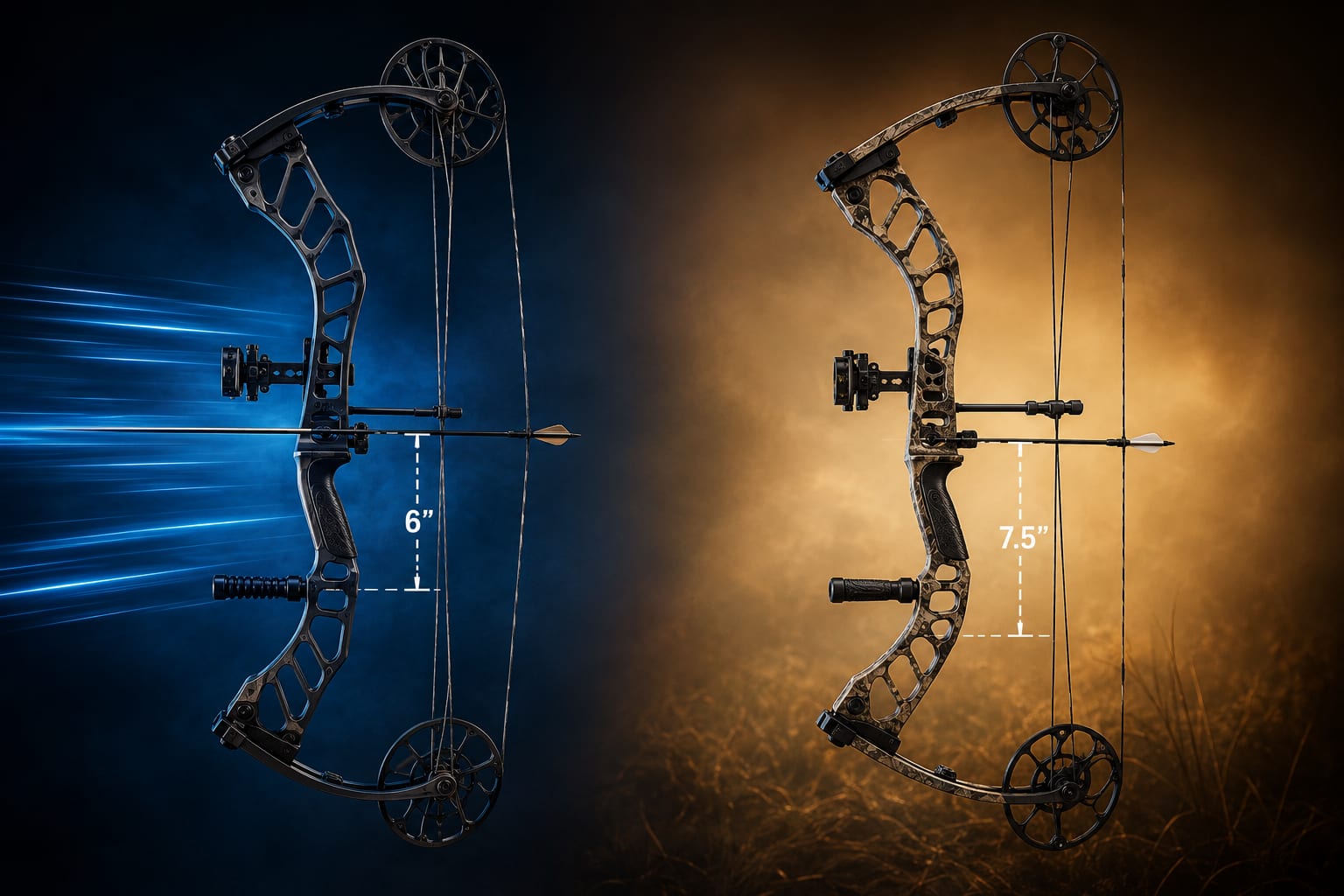
Brace height is the perpendicular distance from the pivot point of the bow grip (the deepest part where your hand rests) to the bowstring when the bow is at rest and not drawn. This measurement, expressed in inches, represents the starting position of your arrow before you draw the bow and fundamentally influences how the bow performs.
On modern compound bows, brace height typically ranges from 5.75 inches to 8 inches. Recurve bows generally have longer brace heights, often between 7.5 and 9.5 inches. Traditional longbows can exceed 6-7 inches depending on design.
Why this measurement matters: Brace height determines how long the bowstring stays in contact with the arrow during the shot cycle. A shorter brace height means the string must travel farther forward before reaching its resting position, keeping the arrow on the string longer and transferring more kinetic energy. A longer brace height means the string reaches its rest position sooner, releasing the arrow earlier in the power stroke.
Think of it this way: if your bow has a 6-inch brace height and you draw it 28 inches, the string travels 22 inches during the shot. If your bow has a 7-inch brace height with the same 28-inch draw, the string only travels 21 inches. That extra inch of power stroke translates directly to arrow speed.
Shorter brace heights produce faster arrow speeds because they extend the power stroke, the distance the bowstring travels while pushing the arrow. For every quarter-inch reduction in brace height, you typically gain 3-5 feet per second (fps) in arrow velocity, assuming all other factors remain constant.
The physics behind the speed advantage:
For example, a bow with a 6-inch brace height shooting a 400-grain arrow at 70 pounds might achieve 310 fps. The same bow setup with a 7-inch brace height would likely drop to 298-302 fps, a meaningful difference for hunters concerned with arrow drop and kinetic energy at longer distances.
Common mistake: Chasing speed by dropping brace height too aggressively. If you reduce brace height beyond your skill level, the accuracy losses from poor form will cost you more yardage than the speed gains provide. A 310 fps arrow that misses the vitals is worthless compared to a 300 fps arrow that hits perfectly.
Shorter brace heights shoot faster because they maximize the distance over which the bowstring can accelerate the arrow. When the string starts farther from the grip, it must travel a longer path to return to rest, maintaining contact with the arrow nock throughout this extended journey.
This extended power stroke allows the bow’s limbs to transfer more of their stored potential energy into the arrow’s kinetic energy. The string literally pushes the arrow for a longer time and distance, similar to how a longer rifle barrel allows expanding gases to accelerate a bullet over a greater distance.
The energy transfer equation:
However, this speed advantage comes with a critical tradeoff: the longer the string stays in contact with the arrow, the more time your shooting form errors have to influence arrow flight. A shaky release, torqued grip, or inconsistent anchor point will affect the arrow throughout the entire extended power stroke.
Neither short nor long brace height is universally “better”, the right choice depends on your skill level, shooting discipline, and priorities. Short brace heights (6-6.5 inches) excel at generating arrow speed, while long brace heights (7.5-8 inches) excel at masking form inconsistencies.
Choose a shorter brace height (6-6.5 inches) if:
Choose a longer brace height (7-7.5+ inches) if:
The middle ground (6.75-7.25 inches): Most modern hunting bows fall in this range because it balances reasonable speed (290-310 fps) with enough forgiveness for real-world hunting scenarios. This sweet spot works for the majority of archers who want good performance without demanding perfect execution on every shot.
Edge case: Elite competitive target archers often choose longer brace heights despite the speed penalty because they’re shooting known distances where arrow drop is predictable. For them, the consistency advantage of a forgiving bow outweighs the speed benefit they don’t need.
Beginners should choose bows with brace heights of 7 inches or longer because these measurements forgive the form inconsistencies that all new archers experience. A longer brace height reduces the time the bowstring can be influenced by shaky hands, inconsistent releases, and grip torque, the most common beginner mistakes.
Why beginners need forgiveness over speed:
A 7-7.5 inch brace height minimizes how much these errors affect arrow flight because the string releases the arrow sooner, before the mistakes have time to compound. This builds confidence through better groups, which encourages more practice, which improves form faster.
Practical recommendation: If you’re buying your first compound bow, prioritize brace heights of 7 inches or more even if the bow shop staff suggests a faster model. You can always upgrade to a speed bow once your form solidifies. Starting with an unforgiving 6-inch brace height often leads to frustration, bad habits, and abandoned equipment.
What to avoid: Don’t let marketing claims about “speed bows” tempt you into a short brace height before you’re ready. A 330 fps bow that you can’t shoot accurately is far less effective than a 295 fps bow that you can put in a 3-inch group at 40 yards.

A 7-inch brace height is not too short for hunting, in fact, it represents an excellent middle ground for most hunting applications. This measurement provides enough forgiveness for field shooting conditions while delivering sufficient arrow speed for ethical kills at typical hunting distances (20-40 yards for most game).
Why 7 inches works well for hunting:
Most modern hunting bows fall between 6.5 and 7.5 inches specifically because this range balances real-world needs. Bowhunting rarely happens from a comfortable shooting bench, you’re often shooting from awkward angles, in cold weather with bulky clothing, with elevated heart rate from hiking or buck fever.
When 7 inches might be too short:
When you might want shorter than 7 inches:
To measure brace height accurately, you need a bow square (a T-shaped measuring tool) or a standard ruler. Place the flat edge of the measuring tool against the bowstring, then measure the perpendicular distance to the deepest part of the grip, the pivot point where the bow would rotate in your hand.
Step-by-step measurement process:
Common measurement mistakes:
Why accurate measurement matters: Brace height should fall within the manufacturer’s specified range, typically a window of about 0.25-0.5 inches. If your measurement falls outside this range, your bow needs tuning. Too short risks string slap and poor arrow flight; too long reduces performance and may indicate string stretch or improper setup.
Quick check without tools: While not precise, you can estimate brace height using your fist. For most adults, a closed fist is roughly 3-4 inches. If you can fit nearly two fists between the grip and string, you’re around 7 inches. This rough check helps identify major problems but isn’t accurate enough for proper tuning.
Brace height doesn’t directly affect accuracy, your shooting form does. However, brace height significantly influences how much your form errors impact arrow flight, which indirectly affects your practical accuracy in real shooting conditions. Longer brace heights mask form mistakes, making it easier to shoot consistent groups despite imperfect technique.
How brace height influences consistency:
Think of it this way: if you have perfect form, brace height won’t affect your accuracy, you’ll shoot tight groups regardless. But if your form has flaws (and everyone’s does to some degree), a longer brace height will produce tighter groups than a shorter one with the same imperfect technique.
Real-world example: An archer with a slight tendency to torque the grip might shoot 3-inch groups at 30 yards with a 7.5-inch brace height. The same archer with the same form flaw might shoot 5-inch groups with a 6-inch brace height because the longer power stroke magnifies the torque effect.
When brace height matters most for accuracy:
Choose longer brace height if: You notice your groups open up significantly when shooting in field conditions compared to controlled practice. This indicates your form breaks down under stress, and a forgiving bow will help maintain consistency.
Professional target archers typically use brace heights between 7.5 and 8 inches because consistency and forgiveness matter more than arrow speed in competition. These longer brace heights help maintain tight groups across hundreds of arrows in a tournament, where mental and physical fatigue can degrade form.
Why pros choose longer brace heights:
Professional bowhunters vary more widely: Hunting pros often use brace heights between 6.5 and 7.5 inches depending on their hunting style. Western hunters pursuing elk and mule deer at longer ranges often choose shorter brace heights (6-6.75 inches) for the speed advantage. Eastern whitetail hunters frequently opt for 7-7.5 inches since their shots are typically closer and forgiveness matters more.
3D archery competitors split the difference: These shooters face unknown distances and awkward shooting positions, similar to hunting. Most competitive 3D archers choose 6.75-7.25 inch brace heights to balance the speed needed for flat trajectory at unknown distances with enough forgiveness for field shooting positions.
What this means for you: Don’t assume you need the same setup as professionals. Elite archers have thousands of hours of practice creating muscle memory that compensates for unforgiving equipment. Unless you’re shooting at a similar volume and skill level, you’ll likely benefit from more forgiveness than the pros use.
The forgiveness versus speed tradeoff is the fundamental compromise in bow design, and brace height is the primary control for this balance. Every quarter-inch of brace height you add increases forgiveness but costs approximately 3-5 fps of arrow velocity, a tradeoff you cannot avoid with current bow technology.
Understanding the physics of the tradeoff:
Quantifying the tradeoff:
| Brace Height | Typical Speed (fps) | Forgiveness Level | Best For |
|---|---|---|---|
| 5.75-6.25″ | 320-340 | Low | Expert shooters, speed-critical applications |
| 6.25-6.75″ | 305-325 | Medium-Low | Experienced archers, western hunting |
| 6.75-7.25″ | 290-310 | Medium | Most hunters, intermediate shooters |
| 7.25-7.75″ | 280-300 | Medium-High | Beginners, target archery, close-range hunting |
| 7.75-8.25″ | 270-290 | High | New archers, maximum consistency priority |
Making the right choice for your situation:
Common mistake: Obsessing over the speed difference. The 15-20 fps difference between a 6.5-inch and 7.5-inch brace height translates to only 1-2 inches of additional drop at 40 yards. If your form isn’t consistent enough to hold a 3-inch group, that extra speed won’t help you, but the forgiveness might.
The most common mistake when choosing brace height is prioritizing speed over shooting ability, leading archers to select shorter brace heights than their skill level can handle effectively. This results in poor accuracy, frustration, and often bad habits developed while fighting an unforgiving bow.
Top mistakes archers make:
1. Chasing advertised speed numbers
Manufacturers market speed aggressively, but IBO speed ratings (measured at 70 lbs, 30-inch draw, 350-grain arrow) rarely reflect your actual shooting setup. A bow advertised at 340 fps might only achieve 290 fps with your draw length, draw weight, and hunting arrow, negating the speed advantage of its short brace height.
2. Ignoring shooting frequency
If you only shoot a few times before hunting season, you don’t have the muscle memory to handle a short brace height consistently. Weekend warriors almost always benefit from longer brace heights, even if they shot well with short brace heights when they practiced daily.
3. Buying based on others’ recommendations
Your friend’s perfect 6-inch brace height bow might be terrible for you. Shooting style, physical build, experience level, and even hand size affect how brace height impacts your shooting. Always shoot before buying.
4. Not considering hunting conditions
A bow that shoots great at the range in summer clothing might be a nightmare in a treestand wearing heavy winter gear. Bulky clothing restricts movement and increases the chance of string contact with your arm or clothing, problems that longer brace heights minimize.
5. Assuming shorter is always faster
While generally true, bow design matters enormously. A well-designed bow with a 7-inch brace height and efficient cams might outperform a poorly designed bow with a 6-inch brace height. Don’t choose based on brace height alone.
6. Forgetting about comfort
Shorter brace heights often feel “harsher” to shoot, more vibration, more noise, more hand shock. If a bow isn’t comfortable, you won’t practice with it, and lack of practice hurts accuracy more than any equipment choice.
How to avoid these mistakes: Shoot multiple bows with different brace heights before buying. Pay attention to your group sizes, not just how the bow feels on one shot. Shoot 20-30 arrows and measure your groups, that’s the only honest assessment of whether a brace height works for you.
Yes, you can change brace height on your bow by twisting or untwisting the bowstring, but only within a narrow range specified by the manufacturer, typically about 0.25 to 0.5 inches total adjustment. Twisting the string shortens it and increases brace height; untwisting lengthens it and decreases brace height.
How to adjust brace height:
Why the adjustment range is limited:
When to adjust brace height:
What you cannot do: You cannot convert a 6-inch brace height bow into a 7.5-inch brace height bow through string adjustment. Major brace height changes require different bow geometry, different riser design, limb pockets, and cam systems. If you need a significantly different brace height, you need a different bow.
Professional help recommended: If you’re uncomfortable adjusting your bowstring or unsure about proper twist count, visit a pro shop. Incorrect string twisting can create safety hazards or damage your bow.
If brace height is too low (below manufacturer specifications), you’ll experience string slap, painful contact between the bowstring and your forearm after the shot, along with poor arrow flight, excessive noise, and potential safety issues. A too-low brace height means the string travels farther forward than designed, often making contact with your bow arm or clothing.
Problems caused by too-low brace height:
String slap and arm bruising
The most immediate and painful problem. When brace height is too short, the string’s forward travel extends far enough to hit your forearm, even with proper shooting form. This causes bruising, welts, and flinching that ruins accuracy.
Erratic arrow flight
Arrows may porpoise (fishtail vertically) or show inconsistent grouping because the extended power stroke amplifies any form inconsistencies. The bow becomes extremely unforgiving, making consistent shooting nearly impossible.
Excessive noise and vibration
Too-short brace height often causes the string to slap against the bow’s cables or other components, creating loud noise that spooks game and indicates inefficient energy transfer.
Cam timing issues
On dual-cam bows, operating below spec can throw cam synchronization off, causing one cam to hit the end of its rotation before the other. This creates tuning nightmares and potential equipment damage.
Safety concerns
Extreme cases of too-low brace height can stress bow components beyond their design limits, potentially causing limb failure or string derailment, serious safety hazards.
How to identify too-low brace height:
The fix: Add twists to your bowstring to increase brace height back into the manufacturer’s specified range. If you’re already at maximum twist count and still below spec, you need a new, shorter string. Never operate a bow below its minimum specified brace height.
Yes, longer brace height is definitively more forgiving for bad form because it reduces the time the bowstring stays in contact with the arrow, limiting how much shooting errors can influence arrow flight. This shorter power stroke means form mistakes like grip torque, inconsistent release, and poor anchor points have less time to deflect the arrow off course.
Why longer brace height forgives form errors:
Reduced error amplification time
When the string releases the arrow sooner (longer brace height), there’s less time for your shaky hands, twisted grip, or jerky release to push the arrow off its intended path. The arrow escapes before the error fully manifests.
Less sensitivity to release timing
A longer brace height is less sensitive to exactly when and how you trigger your release. Punching the trigger or plucking the string still hurts accuracy, but the impact is smaller than with a short brace height.
More tolerance for grip pressure
Squeezing or torquing the bow grip affects arrow flight less with a longer brace height because the arrow leaves before the torque fully transfers through the riser to the arrow rest.
Better performance under stress
When your form degrades due to cold weather, adrenaline, or fatigue, a longer brace height maintains better accuracy than a short one. This is why it’s called “forgiving”, it forgives your mistakes.
Quantifying the forgiveness difference:
An archer with moderate form inconsistencies might shoot:
The same archer with perfect form would shoot 2-inch groups regardless of brace height. The difference is how much the bow magnifies imperfection.
Important clarification: Longer brace height doesn’t fix bad form, it just reduces how much bad form hurts your accuracy. You should still work on improving technique regardless of your bow’s brace height. Think of a forgiving bow as training wheels: helpful while learning, but not a substitute for developing proper skills.
When forgiveness matters most: Hunting situations where you’re cold, tired, excited, or shooting from awkward positions. A forgiving bow keeps your arrows in the vitals even when your form isn’t perfect, which in real hunting conditions, it often isn’t.
What is the ideal brace height for hunting?
The ideal brace height for hunting is typically 6.75 to 7.5 inches, balancing adequate arrow speed for ethical kills with enough forgiveness for real-world field conditions. Most hunters benefit from 7 inches as a middle ground that handles adrenaline and awkward shooting positions while delivering sufficient velocity.
Can brace height be too long?
Yes, brace height can be too long if it exceeds manufacturer specifications, causing reduced arrow speed, potential cam timing issues, and inefficient energy transfer. While longer brace heights are more forgiving, going beyond the designed range (typically over 8 inches on compounds) sacrifices too much performance and may indicate string or setup problems.
How much speed do you lose per inch of brace height?
You typically lose 12-20 fps per inch of brace height increase, or roughly 3-5 fps per quarter-inch. This varies based on bow design, draw weight, and arrow weight, but the relationship is consistent: shorter brace height equals faster arrows, with the tradeoff being reduced forgiveness.
Does brace height affect draw length?
No, brace height does not affect your draw length, which is measured from the nock point to the throat of the grip at full draw. However, brace height does affect the power stroke (the distance the string travels during the shot), which influences arrow speed independently of draw length.
What brace height do Olympic archers use?
Olympic recurve archers typically use brace heights between 8 and 9.5 inches because Olympic archery prioritizes consistency over speed at known distances. The longer brace height helps maintain tight groups across 72 arrows in competition, where mental and physical fatigue can degrade form.
Is 6 inch brace height good for beginners?
No, a 6-inch brace height is generally too unforgiving for beginners who are still developing consistent shooting form. Beginners should start with 7 inches or longer to mask the form inconsistencies that all new archers experience, building confidence through better accuracy while learning proper technique.
How often should I check my brace height?
Check your brace height every 2-3 months during active shooting seasons, after string replacement, and whenever you notice changes in arrow flight or bow performance. New strings stretch during the first 100-200 shots, often requiring brace height adjustment after the break-in period.
Can I use the same arrows with different brace heights?
Yes, you can use the same arrows with different brace heights, but you may need to retune your bow because brace height changes affect arrow spine requirements slightly. The arrow rest position, nocking point, and cam timing may need adjustment when you significantly change brace height.
Does brace height affect bow noise?
Yes, brace height affects bow noise, shorter brace heights typically produce more noise and vibration because the longer power stroke creates more shock when the string reaches its rest position. Longer brace heights generally shoot quieter because the string travels less distance and stops more gently.
What’s the shortest safe brace height?
The shortest safe brace height is whatever the bow manufacturer specifies as the minimum, typically around 5.75 to 6 inches for modern speed bows. Operating below manufacturer specifications risks string slap, poor arrow flight, equipment damage, and potential safety hazards from overstressed components.
Will increasing brace height fix string slap?
Yes, increasing brace height often fixes string slap by moving the bowstring’s rest position farther from your forearm. If you’re experiencing string slap despite proper form, add twists to your bowstring to increase brace height within the manufacturer’s specified range, which typically eliminates forearm contact.
Do heavier arrows work better with shorter brace heights?
Heavier arrows can help tame the harshness of shorter brace heights by absorbing more of the bow’s energy, reducing hand shock and noise. However, heavier arrows don’t make a short brace height more forgiving of form errors, they just make the shooting experience more comfortable while maintaining the same sensitivity to technique.
Brace height represents one of the most important specifications on your bow, directly controlling the fundamental tradeoff between arrow speed and shooting forgiveness. Shorter brace heights (6-6.5 inches) deliver faster arrows by extending the power stroke, making them ideal for experienced archers who need maximum velocity and have the consistent form to handle an unforgiving bow. Longer brace heights (7-8 inches) sacrifice some speed but mask form errors, making them perfect for beginners, infrequent shooters, and anyone prioritizing consistency over raw performance.
For most archers, a brace height around 7 inches provides the best balance, enough speed for effective hunting at typical distances while maintaining sufficient forgiveness for real-world shooting conditions. Don’t let marketing hype about speed bows push you into a shorter brace height than your skill level can handle. The 15-20 fps you gain from a 6-inch versus 7-inch brace height won’t matter if your groups open up by several inches.
Your next steps:
Remember: the best brace height is the one that helps you put arrows where you aim them consistently. Speed means nothing if you can’t hit your target, and forgiveness is worthless if you never practice. Choose the brace height that matches your current ability and shooting frequency, then focus on developing the skills that make any bow shoot accurately.


